
Executive Overview
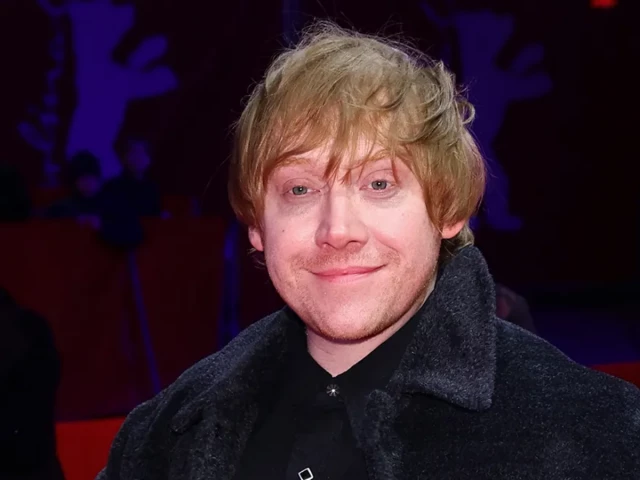
Nearly two decades after the cinematic conclusion of the cultural phenomenon that defined a generation, the world of wizardry is welcoming back one of its foundational pillars. Rupert Grint, globally recognized for immortalizing the lovable, fiercely loyal, and strategically brilliant Ron Weasley across all eight Harry Potter feature films, is officially set to reprise the iconic role. However, this time, the magic is moving from the silver screen to the vibrant, high-stakes boards of Broadway.
Grint will step into the robes of an adult Ron Weasley in the smash-hit stage production Harry Potter and the Cursed Child at New York’s historic Lyric Theatre. His strictly limited 17-week engagement is scheduled to commence on February 2, 2027, and will run through May 30, 2027. This casting coup marks a monumental milestone not only for the theatrical production—which has continually shattered box office records since its inception—but also for millions of global fans who have watched Grint grow from an eleven-year-old newcomer into a seasoned, internationally acclaimed actor and father.
The announcement bridges a gap of nearly twenty years, offering a rare and poetic intersection between actor and character. Both Grint and the fictional Ron Weasley have traversed the tumultuous landscape of childhood into the complex, grounding responsibilities of parenthood. While Grint’s return is poised to generate unprecedented ticket demand and massive economic returns for Broadway, it also represents a rare moment in contemporary entertainment history where a principal actor from a legendary cinematic franchise returns to expand upon their legacy in a live, theatrical medium.
Read Also
Detailed Chronology: From Hogwarts Great Hall to the Broadway Stage
The Early Years: Discovering the Ginger-Haired Wizard
The narrative of Rupert Grint’s association with Ron Weasley began in the year 2000. An 11-year-old Grint, hailing from Hertfordshire, England, submitted a rap video detailing why he deserved the part after seeing a casting call on Newsround. That bold audition secured him the role of a lifetime in Chris Columbus’s cinematic adaptation of J.K. Rowling’s Harry Potter and the Sorcerer’s Stone (released as Philosopher’s Stone internationally).
For the next decade, Grint’s adolescence played out on global movie screens. Alongside co-stars Daniel Radcliffe (Harry Potter) and Emma Watson (Hermione Granger), Grint navigated the awkwardness of growing up under an intense microscope, filming eight blockbuster features back-to-back. When the final installment, Harry Potter and the Deathly Hallows – Part 2, wrapped production and hit theaters in 2011, Grint, along with his peers, stepped away from the wizarding world, looking to stretch his artistic wings in independent cinema, television, and theatre.
Expanding the Craft: Venturing Beyond the Wizarding World
Post-Harry Potter, Grint deliberately distanced himself from mainstream fantasy blockbusters to cultivate a diverse acting resume. He transitioned smoothly into the theatrical world, making his critically acclaimed West End debut in Jez Butterworth’s gritty dark comedy Mojo at the Harold Pinter Theatre, starring alongside Ben Whishaw and Ryan Fletcher.
His theatrical ambitions soon crossed the Atlantic. In 2014, Grint made his highly anticipated Broadway debut in Terrence McNally’s hit comedy It’s Only a Play at the Gerald Schoenfeld Theatre. Performing alongside industry heavyweights such as Matthew Broderick, Nathan Lane, Megan Mullally, and F. Murray Abraham, Grint proved that his comedic timing and stage presence extended far beyond the soundstages of Leavesden Studios.
On television, Grint earned critical praise for his work in series such as Crackle’s Snatch (serving as both star and executive producer), the psychological thriller miniseries The ABC Murders alongside John Malkovich, and M. Night Shyamalan’s critically lauded Apple TV+ psychological horror series Servant, in which he delivered a chillingly nuanced performance as Julian Pearce across four seasons.
The 2027 Homecoming: The Cursed Child Era
The announcement of Grint’s return to the Harry Potter universe via Broadway represents a full-circle moment that few actors experience. Setting his sights on the Lyric Theatre in Manhattan, Grint will inhabit a mature version of Ron Weasley—a man balancing the perils of the Ministry of Magic, the complexities of marriage to Hermione Granger, and the trials of raising teenage children.
The transition from film to stage requires a distinct set of physical and emotional adjustments. While film allows for nuanced micro-expressions captured by close-up lenses, theatre demands vocal projection, physical presence, and the stamina to sustain a multi-character narrative arc eight times a week. Grint’s extensive theatrical background positions him uniquely to meet these demands, ensuring that his rendition of adult Ron Weasley honors the cinematic legacy while breathing fresh, dynamic life into the live performance space.
Supporting Context & Metrics: The Phenomenon of The Cursed Child
To fully grasp the magnitude of Rupert Grint’s upcoming Broadway run, one must examine the staggering cultural and financial footprint of Harry Potter and the Cursed Child since its premiere.
The Play’s Genesis and Global Reach
Penned by Jack Thorne, based on an original story by J.K. Rowling, John Tiffany, and Jack Thorne, Harry Potter and the Cursed Child premiered in London’s West End at the Palace Theatre in July 2016. Conceived as a two-part theatrical epic, the production stunned critics and audiences alike with its breathtaking practical stage illusions, emotional depth, and seamless continuation of the beloved lore.
The narrative is set 19 years after the epilogue of Harry Potter and the Deathly Hallows. It shifts the primary focus to the next generation—specifically Harry and Ginny’s youngest son, Albus Severus Potter, and his unlikely friendship with Scorpius Malfoy, the son of Draco Malfoy. Together, they grapple with family legacies, time travel, and dark forces, while the adult iterations of Harry, Ron, and Hermione navigate the anxieties of middle-aged parenthood.
Box Office Dominance and Cultural Impact
The numbers surrounding Harry Potter and the Cursed Child are historic:
- Global Attendance: According to data from The Guardian, the production has sold well over 14 million tickets across its various international iterations, which have included London, New York, Melbourne, Hamburg, Tokyo, and Toronto.
- New York Revenue: The Broadway production alone, housed inside a comprehensively renovated and customized Lyric Theatre, has generated an astronomical $532 million-plus in ticket sales, cementing it as one of the most commercially successful plays in Broadway history.
- Critical Acclaim: The original West End production swept the Laurence Olivier Awards, winning a record-breaking nine awards, including Best New Play. The Broadway transfer mirrored this success by winning six Tony Awards in 2018, including Best Play.
The Legacy Casting Trend
Grint is not the first original film actor to transition into the stage production, though his casting marks a watershed moment. Most notably, Tom Felton—who played the antagonist-turned-complex-father Draco Malfoy across all eight films—is currently performing as adult Draco in the Broadway production.
However, scheduling dynamics dictate that fans hoping for a cinematic reunion on the New York stage will miss out by a narrow margin. Industry reports indicate that Felton’s run is slated to conclude on January 3, 2027, just weeks before Grint takes over the baton in February. This sequential casting strategy by producers Sonia Friedman and Colin Callender keeps the production fresh, continually drawing legacy fans back to the theatre to witness different eras of the franchise’s cinematic alumni breathe new life into the script.
Official Statements and Personal Reflections
The announcement of Grint’s casting was accompanied by deeply reflective statements from the actor himself, as well as the masterminds behind the theatrical production.
Rupert Grint on Fatherhood and Full-Circle Moments
Taking to Instagram to share the news with his millions of followers, Grint struck a nostalgic chord with a simple yet evocative caption: "Dusting off the old robes. New York – see you all in February."
In subsequent statements released to entertainment outlets like Deadline, Grint elaborated on the emotional weight of returning to the character that defined his formative years:
"Ron Weasley has been a part of me since I was 11 years old and I can’t wait to meet him again in this stage of life. There is something so full-circle and so special about stepping back into Ron’s shoes now when we are both fathers; it is somehow both very familiar and completely new."
Grint further emphasized the significance of returning to Broadway—a city and theatrical community that embraced him over a decade ago—for a project of this magnitude. For an actor who spent his youth sharing the screen with talking chess pieces and flying broomsticks, exploring Ron’s adult vulnerabilities, domestic life, and enduring humor in a live setting offers a profoundly therapeutic artistic evolution.
Producers Sonia Friedman and Colin Callender on Legacy
Renowned theatrical producers Sonia Friedman and Colin Callender issued a joint statement praising Grint’s enduring connection to the character and his growth as a performer:
"He is not simply revisiting a role from his past. He is continuing a journey he began as a child and carrying it forward with all the life and experience he has gained since filming concluded."
The producers underscored that Grint’s cinematic portrayal of Ron established an archetype for modern cinema—a character defined not by innate magical supremacy or aristocratic lineage, but by unwavering loyalty, self-deprecating humor, and extraordinary bravery in the face of insurmountable odds. Bringing those qualities to the Broadway stage through the lens of a mature, seasoned actor is expected to elevate the emotional stakes of the production to unprecedented heights.
Future Outlook: What Grint’s Casting Means for Theatre and the Wizarding World
As the theatrical industry looks ahead to early 2027, the implications of Rupert Grint’s casting extend far beyond a standard limited engagement.
Economic and Tourism Impact on Broadway
Broadway’s post-pandemic recovery has relied heavily on event-driven, high-profile productions that can attract both domestic theatergoers and international tourists. The inclusion of an original Harry Potter film lead playing an adult version of his iconic character is a masterclass in audience acquisition. Travel agencies, hospitality sectors in Manhattan, and ticketing platforms are already anticipating a massive surge in bookings for the February–May 2027 window. Fans from Europe, Asia, and across the Americas are expected to descend upon Times Square, turning Grint’s 17-week run into a global cultural pilgrimage.
Setting a Precedent for Franchise Longevity
Grint’s transition into The Cursed Child sets a fascinating precedent for other long-running entertainment franchises. In an era dominated by reboots, remakes, and legacy sequels, the decision to have original actors age into theatrical continuations offers a sustainable, highly artistic alternative to digital de-aging or cinematic re-casting. It validates theatre as a legitimate and prestigious medium for franchise continuation, proving that live performance can offer closure, evolution, and emotional depth that screen mediums sometimes struggle to achieve over decades.
A Gift to the Fandom
Ultimately, the primary beneficiaries of this casting announcement are the fans. For a generation that grew up reading the books under bedcovers with flashlights and queuing outside cinemas at midnight, seeing Rupert Grint step back into the world of wizardry as a father mirrors their own journey into adulthood.
When the lights go down at the Lyric Theatre on February 2, 2027, and the familiar strains of John Williams’s timeless motifs mingle with the rich soundscape of the stage play, time will effectively fold in on itself. The boy who once spilled magic beans and worried about spiders will return home—older, wiser, and carrying the torch forward into a bright, magical future.


Comments
Facebook App ID not configured. Please add it in the Customizer.