
EXECUTIVE OVERVIEW
In the high-stakes, multi-billion-dollar global art market, the hammer price is rarely the final cost. Behind every gavel drop lies an increasingly hefty surcharge known as the buyer’s premium—a mandatory fee tacked onto the winning bid that serves as a primary financial lifeblood for major auction houses. In a series of calculated moves that signal shifting economic pressures and a race toward standardized industry pricing, international auction titans Christie’s and Bonhams have quietly updated their fee structures.
The adjustments, implemented or announced to take effect in late 2026, continue an aggressive multi-year trend of fee inflation across the elite auction sector. Christie’s latest adjustment brings its fee schedule into strict parity with its arch-rival, Sotheby’s, which famously instituted its own steep fee hikes earlier in the year. Meanwhile, Bonhams has rolled out its first pricing overhaul in over three years, reshaping its tiered brackets and introducing a punishing 30% rate on the lowest tier of sales to offset mounting operational costs, fund digital modernization, and sustain specialized client services.
Read Also
Together, these changes underscore a transitional era for the fine art and luxury goods market. As auction houses face escalating overhead, competitive bidding landscapes, and a demand for heightened transparency and digital integration, collectors are being forced to absorb a greater share of the financial burden. This comprehensive report examines the structural mechanics of these new fees, analyzes the broader economic context within the "Big Three" auction houses, and evaluates what these shifts mean for the future of fine art collecting.
The Anatomy of the Buyer’s Premium: A Vital Revenue Engine
To understand the significance of these recent announcements, one must first understand the fundamental economics of the auction business. Historically, auction houses derived their revenue primarily from vendor commissions—fees charged to the consignor selling the artwork. However, over the past four decades, the introduction and rapid escalation of the buyer’s premium have transformed the financial architecture of the trade.
The buyer’s premium is a sliding-scale surcharge calculated as a percentage of the final hammer price. While consignors often negotiate zero-commission deals or even receive portions of the buyer’s premium (or "seller’s guarantees") to secure high-profile estates and trophy artworks, the unyielding upward creep of these fees highlights how heavily auction houses rely on buyers to generate gross margins.
For the average collector, institutional buyer, or art advisor, these premiums are no longer negligible line items; they represent a significant calculation in portfolio management and bidding strategies. A 30% premium on a mid-market lot can instantly strain a collector’s budget, forcing a reassessment of maximum bidding thresholds across all collecting categories, from contemporary paintings to rare antiquities.
Detailed Breakdown: Christie’s Reaches Industry Parity
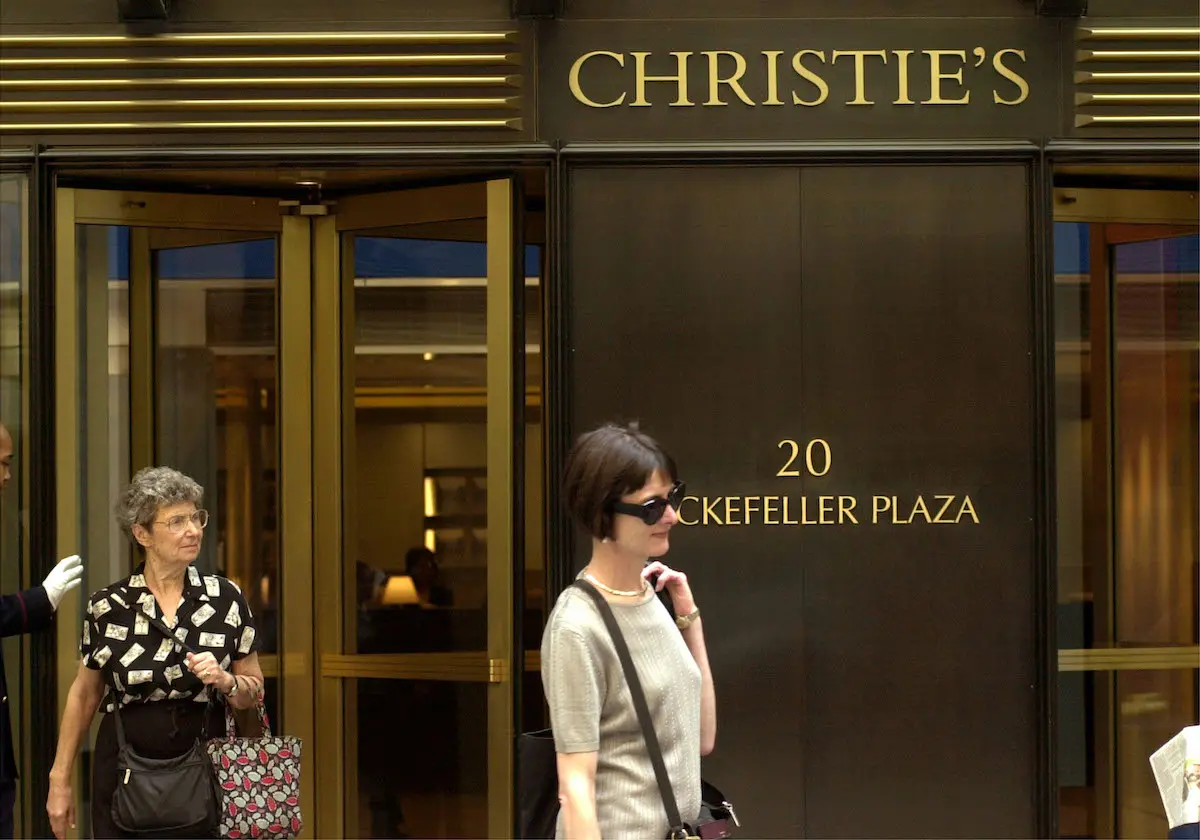
Following an internal business review, Christie’s formally instituted a revised buyer’s premium structure. Effective September 1, the house updated its tier thresholds to match the aggressive pricing models set earlier by Sotheby’s.
Under the updated Christie’s framework, the new fee distribution is structured as follows:
- 28% of the hammer price for each lot up to and including £1.5 million or $2 million.
- 22% of the hammer price for amounts ranging from above £1.5 million / $2 million up to and including £6 million or $8 million.
- 15% of the hammer price for any amount exceeding the £6 million / $8 million threshold.
This move represents another incremental adjustment for the house. As recently as September 2025, Christie’s operated under a slightly more forgiving bracket, charging 27% on amounts up to £1 million ($1.5 million); 22% from £1 million ($1.5 million) to £6 million ($8 million); and 15% on amounts above that threshold. By expanding the first tier up to $2 million and raising the rate to 28%, Christie’s effectively captures higher yields on the vast majority of mid-to-upper-tier transactions that routinely pass through its salerooms.
Crucially, Christie’s has carved out wine departments from this updated structure, maintaining specialized terms for oenology sales, while all other fine art and luxury departments fall neatly into line with Sotheby’s February 2026 benchmark. This synchronization among the market leaders signals a de facto consolidation of standard buyer fees at the upper echelon of the art trade.
Bonhams Redesigns Its Tiers: A New Era Under New Ownership and Leadership
While Christie’s adjustment represents a fine-tuning of existing top-tier brackets, Bonhams has executed a much more sweeping restructuring of its fee schedule. Set to take effect on October 1, the changes mark the first time Bonhams has altered its buyer’s premium structure since 2023.
The overhaul affects virtually all sale categories, though notable exclusions remain for wine and whisky, coins and medals, and cars and motorcycles—specialized markets that operate under distinct commercial dynamics and competitive pressures.
The revised Bonhams rate card introduces a novel five-tier pricing matrix:
- 30% on the first £25,000 or $35,000 of the hammer price.
- 28% for amounts ranging from £25,001 to £500,000 ($35,000 to $750,000).
- 25% for amounts from £500,001 to £1 million ($750,000 to $1.5 million).
- 21% from £1 million to £5 million ($1.5 million to $7.5 million).
- 14% on any amount exceeding £5 million ($7.5 million).
To contextualize this shift, it is worth reviewing the previous Bonhams structure, which charged 28% on the first £40,000 ($50,000) of the hammer price; 27% from £40,001 to £800,000 ($50,000 to $1 million); 21% on amounts from £800,000 to £4.5 million ($1 million to $6 million); and 14.5% on amounts exceeding £4.5 million ($6 million).

The most striking aspect of the new Bonhams structure is the lowering of the threshold for the highest percentage bracket (£25,000 / $35,000, down from £40,000 / $50,000) coupled with an aggressive leap to a 30% baseline fee. For emerging collectors and participants in regional or lower-value sales, this represents a stark increase in the cost of acquisition.
Supporting Context & Metrics: The Competitive Landscape of the "Big Three"
To fully grasp the motivations behind these cascading fee hikes, one must look at the broader landscape occupied by the major auction houses—Christie’s, Sotheby’s, and Bonhams—alongside aggressive market disruptors like Phillips.
The Sotheby’s Precedent
Sotheby’s ignited the current wave of fee adjustments in February 2026, when it implemented structural hikes linked to its ongoing corporate and legal recalibrations, including high-profile restitution battles and strategic investments in digital infrastructure. By matching Sotheby’s rates, Christie’s has eliminated any structural arbitrage that buyers might have previously exploited by choosing one house over another based purely on administrative overhead.
Phillips and "Priority Bidding"
As the traditional houses continue to lean into higher flat-rate premiums, competitors like Phillips are experimenting with alternative structural incentives. In 2025, Phillips rolled out a completely new fee structure centered around "priority bidding." This system allows registered bidders to enter binding written bids ahead of a live sale. In exchange for the early commitment and liquidity security provided to the house, these bidders benefit from a significantly lower buyer’s premium.
Phillips’ innovative model highlights an industry-wide tension: while traditional houses choose to extract more revenue through uniform fee increases, mid-tier and alternative competitors are seeking ways to incentivize early capital commitment without alienating their buyer base.
Official Statements and Institutional Rationale
Auction house executives are acutely aware that raising fees risks alienating collectors, particularly during periods of macroeconomic uncertainty. Consequently, leadership teams have rushed to justify the adjustments by pointing toward specialized expertise, enhanced digital infrastructure, and the rising costs of global operations.
In an official announcement detailing the restructuring, Bonhams Chief Executive Officer Seth Johnson framed the fee increases as a necessary investment in client services and technological modernization:
"We at Bonhams want to be able to continue to offer our clients the level of specialist expertise that they rely on for authentication, provenance, and valuation across a wide range of price points, as well as further invest in improving their digital experience," Johnson stated. "This is the first change we have made to our buyer’s premium in more than three years, and the adjustments have been made to properly reflect the value that Bonhams as a global auction house provides."
Similarly, Christie’s positioned its move as the direct result of comprehensive internal evaluations. In a press statement sent to ARTnews, the house noted that the alterations were instituted simply "following an internal business review"—a diplomatic phrasing that masks the intense financial calculations required to maintain profit margins amid fluctuating global art sales volumes.
Behind closed doors, industry insiders point to several escalating cost centers:
- Physical Infrastructure: Maintaining flagship salerooms in global cultural capitals such as New York, London, Paris, and Hong Kong incurs staggering real estate overhead. Bonhams, for instance, recently celebrated the grand opening of its sprawling new 57th Street headquarters in Manhattan—a multimillion-dollar investment that requires immediate capitalization.
- Digital Transformation: As live-streamed auctions and online bidding platforms become the primary interface for global collectors, houses must spend heavily on software development, cybersecurity, high-definition streaming studios, and user experience design.
- Talent Acquisition: Retaining top-tier international specialists, catalogers, and legal teams skilled in navigating complex cross-border provenance disputes, anti-money laundering compliance, and restitution claims demands competitive compensation packages.
Future Outlook: What the Fee Hikes Mean for Collectors and the Market
As the dust settles on these autumn policy rollouts, the art market faces a clear reality: the era of escalating transaction costs is far from over.
For high-net-worth collectors, institutional buyers, and independent art advisors, these developments demand a strategic shift in how acquisitions are budgeted. With top-tier houses like Christie’s and Sotheby’s now locking arms at a 28% entry-level premium, and Bonhams pushing the envelope with a 30% rate on lower-tier lots, the financial cushion required to participate in public auctions has grown noticeably thinner.
Several key trends are likely to emerge in the wake of these changes:
- Greater Scrutiny on Consignments: Buyers may increasingly push back against high hammer prices if they factor in the compounding effect of a 28% to 30% surcharge, potentially cooling aggressive bidding wars on over-estimated lots.
- Rise of Private Sales: Driven by the desire to avoid public buyer’s premiums and seller commissions alike, an increasing volume of trophy art transactions will likely migrate away from public auction rooms and into private treaty channels.
- Alternative Bidding Models: As Phillips demonstrates with its priority bidding structure, market participants may increasingly gravitate toward platforms that offer creative fee-mitigation strategies, forcing traditional auction houses to eventually introduce loyalty discounts or tiered volume rebates for frequent buyers.
Ultimately, while auction houses maintain that these fees are essential for preserving the gold standard of authentication, scholarship, and global logistics, the burden of financing the modern art market’s high-tech, high-overhead machinery rests squarely on the shoulders of the collector. As margins tighten and competition intensifies, the true cost of acquiring art will remain one of the most hotly debated subjects in the global creative economy.





Comments
Facebook App ID not configured. Please add it in the Customizer.