
Executive Overview
In the contemporary literary landscape, the intersection of structured discipline and raw, unbridled creativity remains a battleground for aspiring and established writers alike. The latest weekly poetry prompt issued by Writer’s Digest—curated and steered by the publication’s resident poetry expert, Robert Lee Brewer—seeks to bridge this gap by introducing an unlikely muse: the multifaceted, shadowy world of crime.
This installment of the ongoing writing challenge invites wordsmiths to explore the vast spectrum of criminality through verse. Whether drawing inspiration from the rain-slicked, moral ambiguity of classic noir cinema, digesting the harrowing details of a contemporary true-crime documentary, dissecting the sterile greed of white-collar financial malfeasance, or tongue-in-cheek penalizing of "fashion crimes," the prompt offers a sprawling canvas.
Far from being a rigid mandate, the prompt functions as a conceptual springboard. It challenges creators to transcend conventional thematic boundaries, proving that poetic meter and rhyme schemes can successfully accommodate subjects typically reserved for detective novels, investigative journalism, and courtroom dramas.
Read Also
Simultaneously, this literary exercise is underpinned by a broader pedagogical mission. By coupling creative prompts with foundational resources—specifically Brewer’s comprehensive compendium, The Complete Guide to Poetic Forms—Writer’s Digest continues its decades-long tradition of demystifying the mechanical mechanics of poetry. This report provides an exhaustive investigation into the mechanics of the crime poetry prompt, examines the historical and modern intersections of verse and criminality, evaluates the role of poetic frameworks in modern writing pedagogy, and explores the broader implications of these digital literary communities on the craft of poetry.
Detailed Chronology: The Evolution of the Weekly Poetic Challenge
To understand the significance of the crime poetry prompt, one must trace the chronological development of the digital writing workshop model utilized by Writer’s Digest. Over the past decade, the platform has systematically dismantled the ivory-tower isolation historically associated with poetry, replacing it with an interactive, crowd-sourced digital arena.
Phase One: The Inception of Digital Prompts
In the early days of literary blogging, prompts were rudimentary—often a single sentence or a restricted word count designed to jump-start stagnant imaginations. However, under the stewardship of Robert Lee Brewer, these prompts evolved into thematic deep dives. The chronology of these weekly challenges follows a deliberate pedagogical arc:
- The Springboard Era: Prompts transitioned from abstract concepts ("write about a tree") to narrative catalysts ("write a poem from the perspective of an inanimate object").
- The Genre-Blending Phase: Recognizing the appetite for genre fiction and hybrid writing styles, the platform began introducing prompts that borrowed tropes from speculative fiction, romance, and thrillers.
- The Cross-Disciplinary Integration: The crime poetry prompt represents the current apex of this evolution, fusing traditional verse forms with narrative journalism, forensic psychology, and pop-culture true-crime fixations.
Phase Two: The Mechanics of Submission and Community Engagement
The rollout of the crime poetry prompt followed the established digital cadence of the Writer’s Digest poetry community:
- The Prompt Drop: Published early in the weekly cycle, the prompt outlines the thematic parameters while explicitly reminding writers that constraints are meant to be expanded, not obeyed blindly.
- The Craft Anchor: Each prompt is paired with a specific educational resource—in this case, an advertisement and reference to The Complete Guide to Poetic Forms, grounding whimsical creativity in technical proficiency.
- The Featured Example: Brewer frequently provides an original piece of verse to set a tone, demonstrate accessibility, and break the ice for participating writers. For this week, Brewer offered "Following Up," a lighthearted, deceptively simple piece that contrasts the dark nature of crime with a romantic, metrical shift:
It ain’t no big deal;
it ain’t no crime;
but when I see you
I start to rhyme… - The Disqus Ecosystem: Community participation is channeled through Disqus, a third-party moderation and commenting interface. Writers must establish verified accounts to share their work, creating a decentralized yet moderated peer-review ecosystem. This barrier to entry—though minor—filters out casual spam and fosters a serious, dedicated community of practice.
Supporting Context & Metrics: The Intersection of Poetry and Crime
Why crime? At first glance, the clinical, evidentiary world of criminal investigation and the emotive, metaphorical realm of poetry appear diametrically opposed. Law enforcement relies on facts, timelines, ballistics, and forensic accounting. Poetry relies on ambiguity, rhythm, imagery, and emotional resonance.
However, cultural metrics and literary history indicate a profound, enduring synergy between the two domains.
The True-Crime Boom and Literary Consumption
In the digital age, public obsession with true crime has reached unprecedented heights. Podcasts, streaming docuseries, and investigative journalism dominate cultural discourse. According to recent media consumption studies, true crime remains one of the top-performing genres across audio and video platforms.
By tying the poetry prompt to this cultural zeitgeist, Writer’s Digest taps into an existing reservoir of public engagement. Writers are not being asked to invent narratives in a vacuum; they are invited to process a cultural fixation through an artistic lens. A poet watching a modern courtroom trial observes the same dramatic tension, linguistic posturing, and moral degradation that classical dramatists explored, but views it through the lens of modern accountability.
The Typology of Crime in Verse
The prompt cleverly categorizes criminality into distinct vectors, each demanding a different poetic register:
- Violent Crime & Noir: Requires sensory-heavy, atmospheric language. Think neon lights, cigarette smoke, blood on pavement, and moral gray areas reminiscent of Dashiell Hammett or Raymond Chandler. The poetic form here often mirrors the hardboiled detective monologue—cynical, observant, and rhythmic.
- White-Collar Crime: Demands irony, satire, and structural precision. The cold abstraction of embezzlement, insider trading, and corporate fraud translates well into structured forms like sonnets or villanelles, where strict rules mirror the bureaucratic red tape of financial institutions.
- Fashion Crimes: A playful subversion of the prompt. By including aesthetic misdemeanors (clashing prints, outdated silhouettes, faux pas), the prompt acknowledges that not all crimes threaten life and limb; some merely offend the visual sensibilities, inviting humorous, mock-serious verse.
The Technical Backbone: The Complete Guide to Poetic Forms
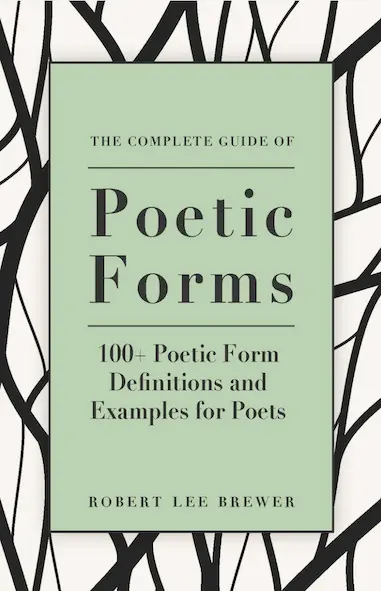
Contextually, no exploration of verse can succeed without structural integrity. Brewer’s highlighted work, The Complete Guide to Poetic Forms, serves as the technical anchor for this initiative. Cataloging more than 100 poetic forms—from the rigid requirements of the pantoum and sestina to the liberating openness of free verse—the guide provides the vocabulary necessary to elevate a simple thematic poem into a masterclass of form.
When writing a crime poem, form can become content. For instance:
- A villanelle, with its obsessive repetition of two specific lines, can mimic the cyclical, haunting nature of a cold case or a lingering obsession with a true-crime documentary.
- A haiku, with its strict syllable count, forces the poet to distill a violent, chaotic crime scene down to its most stark, arresting visual components.
- A ballad, historically used to recount notorious outlaws and tragic local murders (such as traditional folk ballads of the American frontier), provides a direct ancestral link to modern true-crime narratives.
Official Statements & Expert Insights
To contextualize the pedagogical philosophy driving these weekly prompts, industry experts and educational theorists point to the necessity of structured play in artistic development. While official statements from Writer’s Digest editorial staff consistently emphasize accessibility, the underlying methodology is rooted in rigorous creative writing pedagogy.
Robert Lee Brewer on the Philosophy of the Prompt
Though functioning informally within the blog’s conversational tone, Brewer’s pedagogical stance is clear throughout his stewardship of the poetry community. His core philosophy rests on two pillars: demystification and expansion.
In discussions surrounding his approach to poetic instruction, Brewer has frequently emphasized that poetry should not feel like an inaccessible academic artifact locked behind university gates. By introducing unorthodox prompts—such as crime, humor, or mundane daily occurrences—he lowers the psychological barrier to entry. A writer intimidated by the concept of "writing a serious poem" may find themselves entirely comfortable writing a noir-style poem about a stolen donut or a fictional bank heist.
Furthermore, Brewer’s reminder that “these prompts are springboards to creativity. Use them to expand your possibilities, not limit them” serves as an official manifesto against dogmatic writing instruction. It grants poets permission to mutate the prompt, deviate halfway through, or abandon the central conceit entirely if the creative impulse steers them toward a superior destination.
The Role of Peer Validation in the Digital Workshop
The inclusion of the Disqus comment integration is not merely a logistical utility; it is a vital component of modern literary pedagogy. Educational theorists specializing in creative writing emphasize the importance of the "workshop model"—the process by which creators present raw work to an audience of peers and receive constructive feedback.
By migrating this model into a digital, asynchronous format, Writer’s Digest creates a global micro-workshop. Writers from diverse geographic, cultural, and socioeconomic backgrounds converge on a single blog post, sharing poems inspired by the same prompt. An aspiring poet in rural Ohio reads a noir poem penned by an urban writer in London, cross-pollinating styles and expanding their stylistic horizons.
Future Outlook: The Digital Future of Poetic Instruction and Community Writing
As the literary landscape continues its migration from print-exclusive models to hybrid digital ecosystems, initiatives like the Writer’s Digest poetry prompts offer a glimpse into the future of writing education.
1. The Gamification of Creative Writing
The trend toward prompt-driven, challenge-based writing indicates a shift in how writers seek inspiration. In an attention economy saturated with distractions, structured prompts act as cognitive anchors. Looking forward, we can anticipate a rise in gamified literary spaces where writing exercises are paired with leaderboards, peer-review quotas, and thematic seasons. While some traditionalists view gamification with skepticism, its ability to cultivate daily writing habits and pull dormant creators out of isolation is undeniable.
2. The Evolution of Hybrid Genres
The crime poetry prompt is emblematic of a broader literary movement: the collapse of strict genre boundaries. Contemporary readers and writers are increasingly uninterested in maintaining strict silos between poetry, genre fiction, and narrative journalism. In the future, we will likely see more crossover forms—such as true-crime poetry chapbooks, noir verse novels, and investigative journalism rendered in structured meter.
3. Community Resilience and Moderation Challenges
As digital spaces grow, maintaining the intellectual and creative safety of online workshops remains a critical challenge. The reliance on moderated platforms like Disqus ensures that communities remain constructive, but platforms must continually adapt to changing digital norms. The success of the Writer’s Digest poetry community proves that when guidelines are clear, moderation is fair, and prompts are intellectually stimulating, healthy online creative spaces can thrive indefinitely.
Conclusion
The Writer’s Digest crime poetry prompt is far more than a whimsical weekly exercise. It is a calculated intersection of cultural fixation, technical craft, and community-driven pedagogy. By challenging writers to map the dark contours of criminality onto the structured architecture of verse—and backing that challenge with comprehensive resources like The Complete Guide to Poetic Forms—the platform continues to shape the way modern poets think, write, and collaborate. Whether producing a gritty noir vignette, a satirical indictment of white-collar greed, or a lighthearted verse about a fashion faux pas, participants in these weekly challenges are not merely answering a prompt; they are actively participating in the evolution of contemporary poetry.


Comments
Facebook App ID not configured. Please add it in the Customizer.