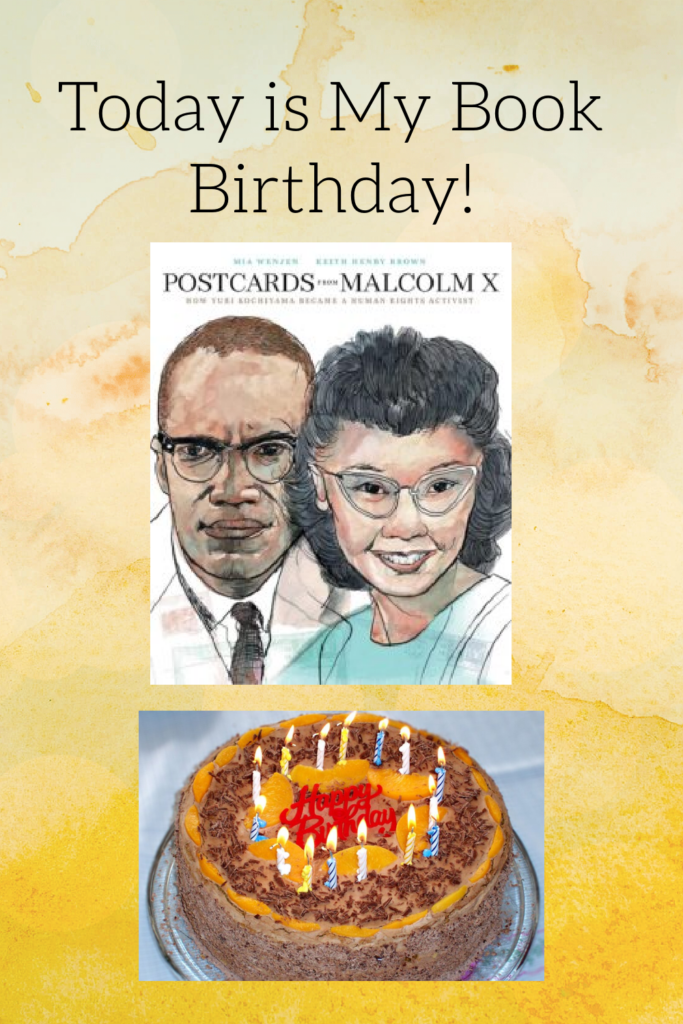
Today marks a monumental literary milestone for author Mia Wenjen with the official release and "book birthday" of Postcards from Malcolm X: How Yuri Kochiyama Became a Human Rights Activist. Published by Red Comet Press and vividly brought to life through the illustrations of Keith Henry Brown, this powerful new picture book biography (tailored for readers ages 7 and up) explores the extraordinary life of Yuri Kochiyama. More than a simple historical retrospective, the book delivers a moving portrait of an ordinary woman who transformed into an iconic human rights advocate, highlighting her profound, history-shaping bond with civil rights leader Malcolm X.
At its core, Postcards from Malcolm X is designed to spark essential conversations about intersectional, cross-racial solidarity. By tracing Kochiyama’s journey from a small-town Californian girl who was initially oblivious to systemic racism to a fearless activist on the front lines of Harlem’s civil rights struggles, Wenjen and Brown offer young readers a masterclass in empathy, bridge-building, and civic courage. Featuring original archival postcards penned by Malcolm X himself, extensive back matter, and a detailed historical timeline, the book serves as both an immersive work of history and an urgent, inspiring call to action for the next generation of changemakers.
Detailed Chronology: The Evolution of an Activist
To truly understand the impact of Postcards from Malcolm X, one must examine the transformative crucible of Yuri Kochiyama’s life. Her evolution was neither accidental nor instantaneous; it was forged through personal tragedy, political upheaval, and a relentless commitment to equity.
1. The Formative Years and the Illusion of the "All-American" Life
Long before she became a fixture in the New York civil rights movement, Kochiyama grew up as a self-described naive "All-American" girl in California. During her childhood and high school years, systemic racism was not a reality that directly touched her everyday existence. Blessed with exceptional writing talents honed as a high school journalist and gifted with natural social-emotional intelligence, she possessed an innate leadership style that naturally drew people together. However, her bubble of insulation was shattered permanently by the outbreak of World War II.
2. World War II and the Awakening
The geopolitical fallout of Pearl Harbor completely upended Kochiyama’s world. Her family, like more than 120,000 other Japanese Americans, was forcibly removed from their home and subjected to unconstitutional mass incarceration in American concentration camps. Compounding this unimaginable trauma, her father died following brutal treatment and neglect while detained by the FBI. These state-sanctioned injustices shattered her worldview, igniting a political and social awakening. She began channeling her writing skills, empathy, and leadership capabilities into advocacy, initially supporting Japanese American soldiers returning from war before setting her sights on broader horizons.
3. The 1963 Courthouse Encounter and the Harlem Struggle
Kochiyama’s journey eventually brought her to New York City, where she immersed herself in the vibrant, high-stakes civil rights activism of Harlem. In 1963, a fateful handshake at a courthouse with Malcolm X sparked a mentorship and friendship that would define the rest of her life.
Initially, the meeting was met with skepticism. As a bona fide civil rights celebrity, Malcolm X naturally questioned the motivations of a Japanese American woman stepping into Black-led organizing spaces. However, Kochiyama proved her dedication through persistent action, showing up repeatedly to do the foundational, ungllamorous work of movement-building without demanding personal credit or the spotlight.
4. Mentorship, Postcards, and Legacy
Malcolm X proved to be an invaluable mentor. While Kochiyama was deeply active in her local community, she still grappled with identifying the institutional levers driving systemic racism. Malcolm X, recognized as a gifted and intuitive educator, possessed a unique ability to break down complex socioeconomic concepts into understandable truths.
Their deep intellectual and personal bond led to a promise: Malcolm X would write to her during his next major international journey. True to his word, he sent her a series of historical postcards from abroad. Following Malcolm X’s tragic assassination, Kochiyama dedicated much of her life to honoring his legacy. She developed comprehensive educational curricula centered on his teachings, presenting them in schools to ensure that younger generations understood his expansive vision for human rights.
Supporting Context & Metrics: The Mechanics of Cross-Racial Solidarity
The publication of Postcards from Malcolm X arrives at a critical juncture in modern social discourse, offering empirical and historical lessons on how diverse communities can—and must—unite in the face of shared oppression.
Intersectional Solidarity in Modern Literature
Children’s literature has increasingly shifted toward reflecting diverse historical narratives, yet stories highlighting cross-racial coalitions remain rare. According to publishing metrics from multicultural children’s literature advocates, books exploring alliances between Asian American and Black civil rights icons represent a minute fraction of historical biographies published for early readers. Wenjen’s work directly addresses this gap.
Book Attribute
Specification
Title
Postcards from Malcolm X: How Yuri Kochiyama Became a Human Rights Activist
Author
Mia Wenjen
Illustrator
Keith Henry Brown
Publisher
Red Comet Press
Target Audience
Ages 7 and up
Key Features
Original archival postcards, detailed timeline, extensive back matter
Companion Releases
Barbed Wire Between Us, Fortune Cookies for Everyone!, We Sing from the Heart
Overcoming Mistrust Across Communities
Wenjen emphasizes that the friendship between Kochiyama and Malcolm X serves as a realistic blueprint for overcoming racial and cultural barriers. True solidarity is rarely frictionless; it requires enduring initial suspicion, proving one’s commitment through sustained action, and prioritizing collective liberation over individual recognition. By examining these historical friction points, Postcards from Malcolm X equips young readers with the emotional and political resilience needed to navigate modern coalitions.
Official Statements & Author Insights
In celebration of the book’s launch, author Mia Wenjen shared personal reflections regarding the motivations behind the project and its broader implications for contemporary society:
"For this book, I wanted to show intersectional, cross-racial solidarity as an example from the past that will hopefully inspire similar collaboration today and in the future. It was important to me to show Yuri Kochiyama’s activity journey—she started as a naive ‘All-American’ who didn’t think racism existed… Malcolm X, she would state in her autobiography, was the person who taught her the most about activism. While she was an activist in her community in NYC’s Harlem area, she didn’t necessarily understand the levers that caused the racism she faced. Malcolm X understood structural racism and was a naturally gifted teacher who could make complicated concepts understandable."
Addressing the challenges of coalition-building across diverse ethnic groups, Wenjen added:
"I think this friendship is a realistic example of what it takes to cross racism barriers, even amongst minority groups fighting the same fight. Yuri had to prove herself to the Black Civil Rights activists by showing up, again and again, and doing the work (without asking for credit). When she first met Malcolm, he wasn’t thrilled to see her. He questioned her motivation to meet him… Perhaps this initial suspicion and hostility is why there isn’t more cross-racial solidarity today. Yuri’s commitment serves as a role model for us all on what it takes to actually be able to support all causes, across all different ethnic groups. I hope this book inspires our children on how powerful uniting together can be, but also how difficult it is to create those ties."
Future Outlook: A Call to Action for Young Readers
As Postcards from Malcolm X makes its way into classrooms, libraries, and homes worldwide, its release signals a growing demand for nuanced, deeply researched historical narratives that refuse to sanitize the complexities of social movements. By bridging the histories of the Japanese American incarceration experience and the Black Civil Rights Movement, the book expands our collective understanding of American history.
To mark the launch and foster engagement within the educational community, Wenjen has announced a special book birthday giveaway, offering five free copies of Postcards from Malcolm X to educators, parents, and readers who share how they plan to utilize the text in their communities.
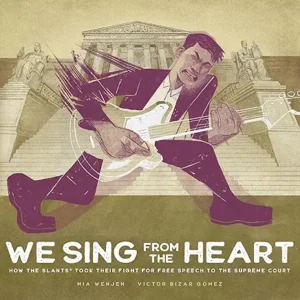
With companion works such as Barbed Wire Between Us (illustrated by Violeta Encarnación) and We Sing from the Heart: How the Slants® Took Their Fight for Free Speech to the Supreme Court, Wenjen continues to cement her legacy as a vital voice in children’s literature, dedicated to empowering youth through stories of courage, civil liberties, and intersectional unity. The future of activism rests in the hands of the next generation—and through books like this, they have been handed an extraordinary map forward.




Comments
Facebook App ID not configured. Please add it in the Customizer.