
Executive Overview
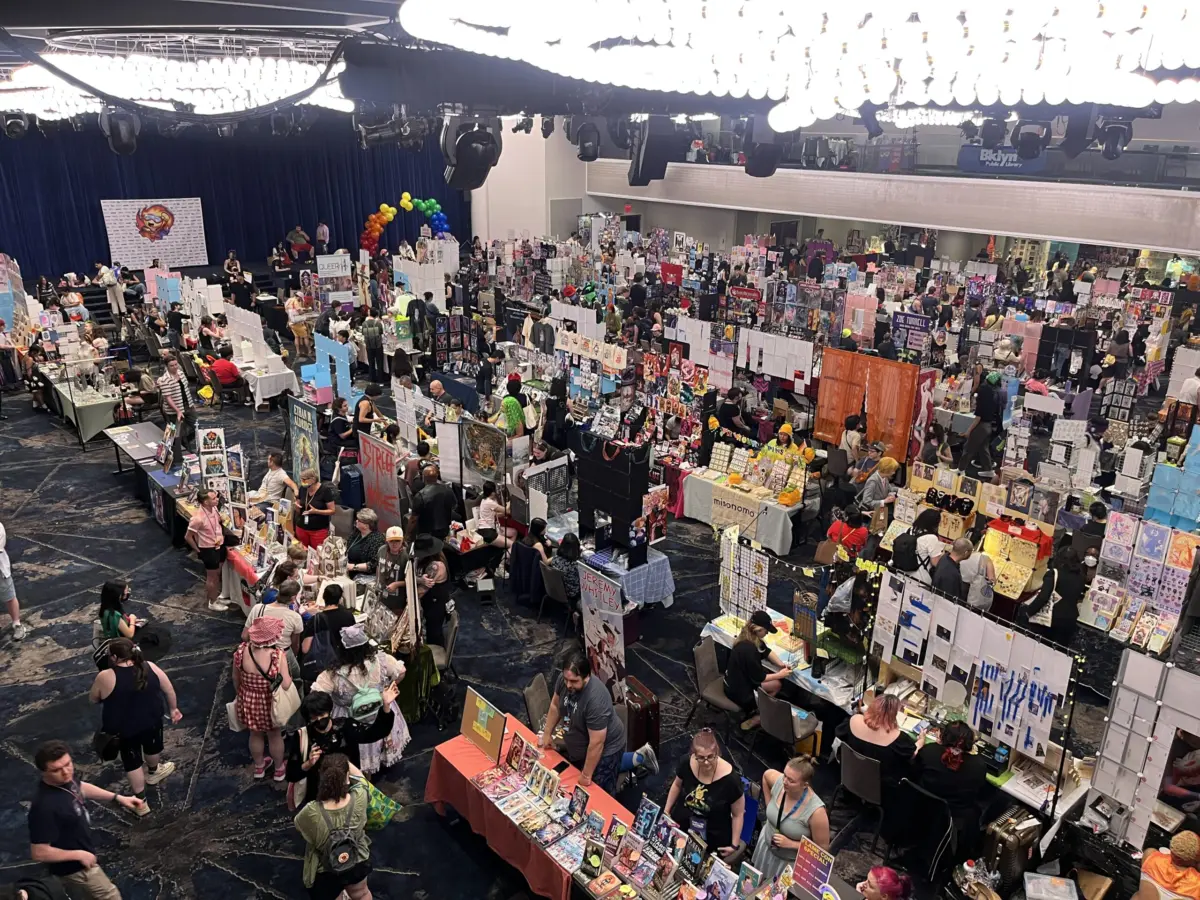
In the heart of Times Square, high above the neon-lit frenzy of Broadway, the fifth floor of the Marriott Marquis transformed over the weekend of August 15–16 into a vibrant epicenter of autonomous creative expression. The occasion was the 2026 edition of Flame Con, the world’s premier LGBTQ+ comics convention. Spanning two high-energy days of panels, live drawing sessions, portfolio reviews, and elaborate cosplay showcases, the convention proved once again why it stands as a vital pillar of the modern pop-culture landscape.
Yet, the true significance of Flame Con 2026 extended far beyond its bustling exhibition hall floor. The convention unfolded against a fascinating backdrop in the broader entertainment ecosystem. Just forty-eight hours prior to the opening bell, Marvel Studios dominated headlines during Disney’s annual D23 convention by formally revealing the stacked cast of its long-awaited X-Men cinematic reboot.
Ordinarily, a tentpole mutant franchise announcement of this magnitude would dominate watercooler conversations across every corner of geekdom. Instead, the reaction inside Flame Con was remarkably subdued. This muted response was not born of apathy toward Marvel’s merry mutants; rather, it signaled a profound cultural shift. The modern queer comics fandom no longer breathlessly hangs on the edge of corporate press releases or treats Hollywood conglomerates as the ultimate arbiters of cultural relevance.
Read Also
As Flame Con 2026 so brilliantly illustrated, fandom in the mid-2020s has decentralized. The consumers of yesterday have decisively become the creators of today. From independently produced body-horror graphic novels to grassroots sports-romance fandoms reshaping mainstream sports marketing, Flame Con demonstrated that the future of queer media is being forged from the bottom up, driven by community, authenticity, and an unapologetic DIY ethos.
Detailed Chronology: A Weekend of Community and Creativity
Saturday, August 15: Mutant Studies, Media Satire, and Hockey Hearts
The convention kicked off on Saturday morning with an electric atmosphere, drawing thousands of attendees eager to dive into a packed schedule of specialized programming.
The enduring legacy of the X-Men—a franchise that has served as a foundational allegory for marginalized identities for decades—was immediately evident, though refracted through a distinctively queer, grassroots lens. While a smattering of iconic mutant cosplays dotted the exhibition hall, they shared equal floor space with characters from indie web series like the Australian animated sensation The Amazing Digital Circus.
Morning programming leaned heavily into the joyous, campy deconstruction of comic book lore. The Comics Reading Comics panel drew a packed house, featuring a lineup of queer comedians delivering delightfully theatrical, camp-infused dramatic readings of classic issues starring the Scarlet Witch. Simultaneously, podcast hosts from Mutant Studies 101 took audiences on a deep-dive archaeological dig through a notably obscure, cult-favorite X-Men storyline dating back to 2003, proving that for this audience, no narrative scrap is too niche to celebrate.
By Saturday afternoon, the conversation shifted from deconstructing existing intellectual properties to pioneering entirely new ones. Another prominent queer X-Men podcast, Cerebro, hosted one of the weekend’s most anticipated panels. Host Connor Goldsmith took center stage to discuss his highly anticipated, in-progress Dark Horse comic, Did You Hear About Mimi Green, a grotesque and provocative body-horror media satire featuring striking interior art by frequent Cerebro guest contributor Josh Cornillon.
Moderated by cultural critic and author Anthony Oliveira, the panel offered a candid look at the creative friction required to subvert audience expectations.
"When the people in this room heard, ‘Oh, those two guys from the X-Men podcast I love so much are doing a comic book,’ I don’t think anyone in a million years would think this is what that comic would look like," Oliveira remarked to knowing laughter from the crowd.
Goldsmith admitted that this jarring juxtaposition was entirely intentional. Cornillon echoed the sentiment, emphasizing the collaborative drive to carve out unchartered aesthetic territory: "It was important for both of us that this doesn’t look like anything else on the stands right now."
As Saturday afternoon transitioned into evening, the cultural gravity of the convention drifted toward the burgeoning juggernaut of queer romance. Main-stage programming featured physical comedy and community-building disguised as fitness, hosted by prominent cosplayer Heather Boddy. Boddy led attendees through a rigorous core workout designed tongue-in-cheek to help fans build the physical resilience of beloved fictional hockey stars Shane Hollander and Ilya Rozanov—the central protagonists of Rachel Reid’s mega-hit gay sports romance novel, Heated Rivalry.
Sunday, August 16: Mentorship, Literary Frontiers, and Collaborative Art
Sunday morning offered a seamless blend of leisure and professional development. The day began with a series of fan-organized mixers, most notably a crossover meetup designed to bridge the communities surrounding Rachel Reid’s hockey romance universe and Casey McQuiston’s modern political romance classic, Red, White & Royal Blue.
As the morning crowds swelled, Flame Con’s commitment to cultivating the next generation of creative talent came into sharp focus. The convention’s dedicated mentorship room operated at full capacity, serving as a vital nexus for aspiring indie creators. Tea Fougner, executive editor at BOOM! Studios, conducted grueling yet invaluable illustration portfolio review sessions, offering direct, professional critiques to up-and-coming artists.
Concurrently, writer Klaudia Amenabar moderated a masterclass panel on navigating the modern publishing industry. Industry insiders—including literary agents Claire Draper (Au Literary Management), Shannon Lechon (Azantian Literary), and Maria Regina Napolitano (KT Literary)—demystified the path to traditional and independent publishing, offering tactical advice on how independent authors and comics creators can successfully partner with representation.
Sunday afternoon brought one of the convention’s most wildly popular spectacles: a live, high-wire edition of Drawfee, the beloved weekly YouTube series where hosts Nathan Yaffe, Jacob Andrews, and Julia Lepetit accept absurd artistic challenges from their community. More than one hundred attendees had submitted wild character concepts—ranging from classic Saturday morning cartoon staples like Scooby-Doo to high-fantasy icons like Gandalf—via a Google Form. Watching the hosts execute these drawings under increasingly ridiculous constraints in real-time encapsulated the improvisational joy of contemporary internet fandom.
The weekend drew to a close with a poignant reminder of why spaces like Flame Con remain irreplaceable. In his closing remarks during the Cerebro panel, Connor Goldsmith reflected on his transition from a public-facing commentator of other people’s stories to an independent creator publishing his own work.
"It means a lot that people who listened to us talk about other people’s stuff showed up for our own stuff," Goldsmith reflected, perfectly capturing the overarching spirit of community ownership that defined the weekend.
Supporting Context & Metrics: The Queer Sports Romance Phenomenon
While traditional visual comic books held a mandatory pride of place at Flame Con 2026, prose and graphic novel romance—specifically within the wildly expanding subgenre of LGBTQ+ sports fiction—emerged as an undeniable cultural titan of the weekend.
Few titles have captured the contemporary queer imagination quite as intensely as Rachel Reid’s Heated Rivalry. Though the text itself is literary, its footprint at Flame Con spanned multiple distinct, fan-led programs, culminating in a comprehensive cultural impact presentation delivered by self-proclaimed hockey enthusiast Ezra Crimmen.
Crimmen’s presentation provided a fascinating sociological analysis of how fictional queer sports literature is slowly, and often grudgingly, penetrating the hyper-masculine, historically conservative institutional walls of professional athletics. According to Crimmen, the response from the National Hockey League (NHL) to the unprecedented mainstream success of Heated Rivalry and its subsequent screen adaptation has been "delayed, if not nonexistent."
Yet, cracks in the corporate ice are beginning to form. Crimmen highlighted a historic exception: the Ottawa Senators. Operating within the Canadian cultural sphere where hockey is deeply embedded, the Senators made waves earlier this year by officially creating and selling custom team jerseys emblazoned with the names and numbers of fictional characters Shane Hollander and Ilya Rozanov. Crucially, all commercial proceeds from the initiative were directed straight to a local LGBTQ+ recreational hockey league, setting a gold standard for institutional allyship.
Other sectors of the professional sports and entertainment landscape are moving even faster to capitalize on the demographic shift. Crimmen noted that later this month, the Boston Red Sox are partnering directly with publisher Harlequin to host a specialized "Heated Rivalry Night" at Fenway Park, marrying traditional sports fandom with romance literature marketing. Furthermore, Crimmen speculated that the explosive cultural normalization spearheaded by Reid’s work directly paved the way for other queer sports milestones—such as the recent news that Ngozi Ukazu’s long-running, critically acclaimed collegiate hockey webcomic Check, Please! has been officially optioned for television development.
This intersection of sports, romance, and queer representation was further interrogated during the Queer Modern Romance panel. Moderated by Michele Kirichanskaya (author of Ace Notes), the panel featured an all-star roster of contemporary literary talent: Page Powars (But I Hate Him), Adeline Kon (Just Between Us), Casey McQuiston (Red, White & Royal Blue), and Ally North (Bloom Town).
The authors engaged in a rigorous debate regarding the commercial realities of writing queer fiction in the current literary climate, urging fellow creators to tune out the algorithmic noise of market trends.
Adeline Kon spoke candidly about the double standards often imposed by internet commentators regarding comp titles. Kon’s graphic novel Just Between Us, which follows two rival figure skaters, was conceived during the 2018 Winter Olympics and published earlier this year. When promoting the book, Kon designated Heated Rivalry as a comparable market title, only to face immediate pushback from online critics who insisted a sapphic author should exclusively deploy sapphic comparison titles.
"People were mad because it’s YA, but my book is about two characters who are rivals at the top of their sports, and that’s the plot of Heated Rivalry," Kon explained to the rapt panel audience. "I wanted my voice and people with my background to be represented [in that kind of story], too."
Moderator Michele Kirichanskaya steered the dialogue toward an enduring structural imbalance in the contemporary publishing industry: the disproportionate commercial and critical popularity of gay male romance novels compared to sapphic, transgender, non-binary, and asexual narratives. While all panelists championed the general necessity of expanding the sheer volume of queer stories on bookstore shelves, Casey McQuiston—who balances works like the mlm-centric Red, White & Royal Blue with the sapphic romance One Last Stop—expressed audible frustration over the relative drought of mainstream, breakout sapphic romance titles.
"That bums me out," McQuiston lamented regarding the publishing imbalance, "because isn’t the whole point of books empathy and curiosity, and learning about experiences, living vicariously, and escaping your own point of view?"
Official Statements and Industry Insights
The discourse at Flame Con 2026 repeatedly returned to a singular, unifying thesis: the wall separating "the fan" from "the creator" has irrevocably crumbled.
In institutional settings, corporate entities like Marvel Studios continue to operate via top-down announcements, dropping cinematic universe roadmaps at massive corporate spectacles like D23. However, the cultural temperature inside the Marriott Marquis demonstrated that consumers are no longer content to serve as passive receptacles for studio-driven content.
Independent creators, literary agents, and executive editors alike emphasized that the modern audience demands radical authenticity, personal accountability, and community-rooted storytelling.
When BOOM! Studios Executive Editor Tea Fougner reviewed portfolios in the mentorship room, the focus was not on corporate house styles or conforming to rigid intellectual property guidelines. Instead, the emphasis was placed on cultivating distinct, idiosyncratic artistic voices that could resonate directly with an audience hungry for reflection of their own lived experiences.
Similarly, the literary agents leading the publishing masterclasses—Claire Draper, Shannon Lechon, and Maria Regina Napolitano—underscored that independent creators possess unprecedented leverage in the modern marketplace. Armed with direct-to-consumer platforms, podcasts, digital webcomics, and grassroots community marketing strategies, contemporary queer creators are increasingly bypassing traditional gatekeeping bottlenecks to build sustainable, independent creative careers.
Future Outlook: The Autonomous Horizon of Fandom
As Flame Con 2026 closed its doors on Sunday evening, the convention left behind a clear blueprint for the future of pop culture fandom.
The traditional paradigm—wherein multi-billion-dollar conglomerates dictate the cultural conversation through timed theatrical trailers and corporate press releases—is steadily giving way to an autonomous, creator-driven ecosystem. When major studio announcements can be met with polite indifference in the same weekend that an independent, podcast-spawned body-horror graphic novel or a grassroots sports-romance panel packs an auditorium to capacity, the center of gravity has undeniably shifted.
Flame Con has evolved far beyond a regional pop-culture convention. It has become a crucial barometer for the health, vitality, and independence of queer artistic expression. As these communities continue to build their own distribution channels, mentor the next wave of creative talent, and refuse to compromise their visions for mainstream market approval, the message of Flame Con 2026 resonates clearly:
The future of storytelling does not belong to the boardrooms of Burbank. It belongs to the creators who live within the community, speak its language, and build their worlds from the ground up.


Comments
Facebook App ID not configured. Please add it in the Customizer.