
Executive Overview
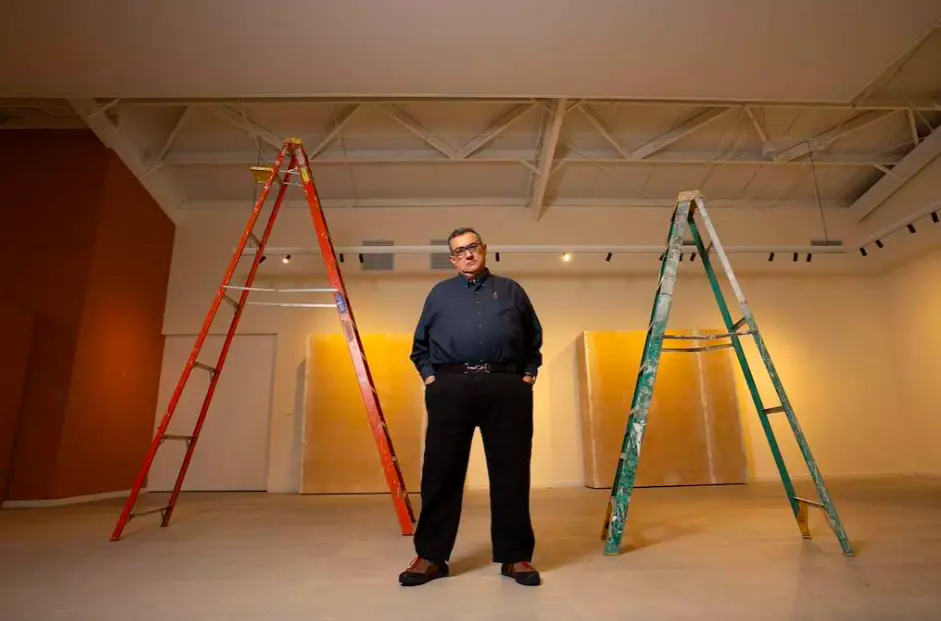
In a major development for the international contemporary art circuit, renowned Mexico City–based curator, art historian, and critic Cuauhtémoc Medina has been officially appointed to lead the upcoming edition of the Bienal de Arte Paiz. The landmark announcement marks a milestone for Central America’s longest-running contemporary art event, as Medina steps up to organize the biennial’s 25th edition. Scheduled to run from November 2027 through February 2028, the exhibition will unfold across dual urban epicenters: Guatemala City and the historic colonial hub of Antigua, located roughly 25 miles west of the capital.
Medina brings to the table an illustrious, decades-long career defined by institutional leadership, major global biennial directorships, and a relentless commitment to expanding the geopolitical boundaries of contemporary art discourse. Having previously shaped the curatorial visions of the Shanghai Biennial, Manifesta 9, and the Museo Universitario Arte Contemporáneo (MUAC) in Mexico City, Medina is uniquely positioned to steer the Paiz Biennial into a new era of global relevance.
The appointment is not merely a personnel update; it represents a strategic convergence between one of Latin America’s most intellectual curatorial voices and an institutional titan in Central American culture. Organized by the Fundación Paiz para la Educación y la Cultura—a philanthropic family foundation with roots in educational support and community welfare—the biennial has served as a primary incubator for modern and contemporary artistic expression in the region since 1978. Under the leadership of Fundación Paiz Executive Director Sonia Hutarte and the guiding hand of Medina, the 2027–2028 edition aims to interrogate the contemporary relevance of the biennial format itself, asking pressing questions about what Guatemala and the broader Central American isthmus can contribute to urgent global conversations.
Read Also
Detailed Chronology: Cuauhtémoc Medina’s Path to the 25th Paiz Biennial
To understand the weight of Cuauhtémoc Medina’s appointment to the Bienal de Arte Paiz, one must trace a career that has consistently intersected with the globalization of contemporary art institutions, the rewriting of art historical canons, and the elevation of Latin American and Global South perspectives within elite museum spaces.
Academic Foundations and Early Scholarship
Medina’s professional trajectory has long been anchored in rigorous academic research. Since 1993, he has maintained a full-time position at the Institute of Aesthetic Research (Instituto de Investigaciones Estéticas) at the National Autonomous University of Mexico (UNAM). Operating from one of Latin America’s foremost intellectual epicenters, Medina established himself as a critical voice within Mexican art history, specializing in modern and contemporary art, political aesthetics, and the institutional frameworks that govern cultural production. His dual identity as both a practical curator and a theoretical historian has allowed him to approach exhibition-making not merely as an aesthetic arrangement of objects, but as an intellectual intervention into sociopolitical realities.
Breaking Ground at Tate Modern (2002–2008)
The early 2000s marked a pivotal moment in the institutional recognition of Latin American art within major European and North American museums. In 2002, Medina was appointed as the first-ever associate curator of Latin American art at the Tate Modern in London. During his tenure, which lasted until 2008, Medina played a foundational role in shaping how one of the world’s premier modern art institutions collected, interpreted, and displayed art from Mexico, Central America, South America, and the Caribbean. His presence at the Tate helped dismantle traditional Eurocentric narratives, paving the way for a more polyphonic institutional approach to global art histories.
International Biennials and Curatorial Accolades
Following his groundbreaking years in London, Medina’s curatorial expertise was sought after by major international platforms:
- Manifesta 9 (2012): Medina was selected to curate the 9th edition of the European Biennial of Contemporary Art, held in Genk, Limburg, Belgium. His curatorial framework deeply engaged with the region’s complex industrial and mining heritage, transforming the former Waterschei coal mine into a sprawling site of contemporary artistic reflection on labor, capital, and post-industrial economics.
- The Walter Hopps Award (2012): In recognition of his uncompromising curatorial vision, intellectual rigor, and contributions to the field, Medina was awarded the prestigious $15,000 Walter Hopps Award for Curatorial Achievement.
- The 12th Shanghai Biennial (2018): Demonstrating his global reach across continents, Medina served as the chief curator of the 12th Shanghai Biennial, titled Proregress. The ambitious exhibition investigated the contradictory impulses of historical progress and regression, bringing together a vast roster of international artists to engage with the socio-spatial complexities of contemporary China and the wider world.
Directing MUAC (2013–2024)
Upon returning to Mexico City, Medina assumed the role of chief curator at the Museo Universitario Arte Contemporáneo (MUAC) in 2013, a position he held for over a decade until 2024. Under his leadership, MUAC cemented its status as Latin America’s premier university museum for contemporary art. Medina orchestrated a critically acclaimed program that bridged local contexts with international avant-gardes.
During his tenure at MUAC, he curated landmark exhibitions featuring an expansive roster of heavyweight international and regional artists, including:
- Harun Farocki: Exploring the politics of images and technological warfare.
- Carlos Amorales: Investigating language, translation, and systemic violence.
- Ai Weiwei: Showcasing the dissident Chinese artist’s monumental interventions.
- Beatriz González: Highlighting the legendary Colombian painter’s incisive commentary on politics and popular culture.
- Raqs Media Collective: Engaging with speculative futures and media archaeology.
- Kader Attia: Examining the architecture of repair, colonial trauma, and cultural restitution.
Supporting Context & Metrics: The Evolution of the Bienal de Arte Paiz
To fully appreciate the significance of Medina taking the helm of the Bienal de Arte Paiz, it is necessary to examine the unique history, evolution, and socio-cultural footprint of the event within Guatemala and the broader Central American landscape.
Origins and Evolution: From Philanthropy to Contemporary Art
The Bienal de Arte Paiz boasts a history that diverges significantly from state-funded European biennials or corporate-backed American mega-exhibitions. Launched in 1978 by the Fundación Paiz para la Educación y la Cultura, the initiative originated from a family foundation deeply embedded in Guatemalan civil society. Initially, the foundation focused on fundamental social welfare initiatives—awarding educational scholarships to underserved youth and supporting community soup kitchens during times of national hardship.
Over the decades, the foundation recognized culture as an equally vital pillar of human development and civic resilience. Transforming a localized salon into an international biennial, the event has steadily evolved over nearly five decades. It has weathered Guatemala’s turbulent political history—including the civil conflict that wracked the country through the late 20th century—to emerge as Central America’s most enduring platform for contemporary artistic experimentation.
Geographic and Cultural Footprint
Unlike biennials confined to a single white-cube museum or a designated industrial park, the Bienal de Arte Paiz occupies a uniquely dialogic geographic footprint. Spanning across Guatemala City—a dense, rapidly urbanizing metropolis dealing with complex social dynamics—and Antigua, a UNESCO World Heritage city renowned for its preserved Spanish baroque architecture and cobblestone streets, the biennial forces a dialogue between past and present, urban decay and colonial heritage, indigeneity and globalization.
The upcoming 25th edition will carry forward this spatial duality. By placing contemporary installations, video art, and performance pieces within historic and modern Guatemalan settings, the biennial creates a friction that compels viewers to reconsider the physical and historical spaces they inhabit.
The Institutional Vision of Sonia Hutarte
Executive Director Sonia Hutarte has been instrumental in steering the biennial toward a future defined by critical inquiry and intellectual rigor. Speaking on the appointment of Cuauhtémoc Medina, Hutarte outlined an ambitious mandate for the 2027–2028 edition. She emphasized that the foundation expects the upcoming biennial to do more than simply display aesthetically pleasing objects; it must act as a crucible for pressing questions.
"We want the biennial to ask what a biennial should mean today and what Guatemala can contribute to the conversations shaping contemporary art," Hutarte stated. She underscored that under Medina’s leadership, the exhibition is designed to transcend the traditional temporary art festival model, serving instead as a catalyst that "produces knowledge, generates meaningful dialogue, and creates a legacy that extends far beyond the exhibition itself."
Official Statements and Curatorial Philosophy
The appointment of Cuauhtémoc Medina has generated considerable excitement within regional and international art circles, signaling a shared commitment to elevating the intellectual rigor of the Guatemalan biennial.
Cuauhtémoc Medina on the Paiz Legacy and Challenge
In his official statement regarding his appointment, Medina did not shy away from acknowledging the historical weight of the institution he is inheriting. He explicitly called attention to the Bienal de Arte Paiz’s long-standing role in serving "Guatemalan audiences as a vehicle for contemporary thinking and sensibility."
For Medina, the exhibition is an opportunity to engage directly with a public that has historically navigated profound political complexities, social transformations, and cultural erasures. "It is a great honor, but also a challenge, to be in charge of curating the Paiz Biennial for this special occasion," Medina remarked. "I hope that, with the help of the Bienal staff and the artists, we will be able to produce something worth remembering."
This statement reflects Medina’s signature curatorial philosophy: a commitment to collaboration, institutional self-reflection, and the production of exhibitions that leave an indelible mark on the historical record rather than merely catering to ephemeral art-market trends.
The Intersecting Agendas of Medina and Fundación Paiz
The synergy between Medina’s academic background and Fundación Paiz’s community-oriented ethos points toward a deeply political and socially engaged 25th edition. Throughout his career—whether examining the carceral state at MUAC, post-industrial labor at Manifesta 9, or the contradictions of modernization in Shanghai—Medina has consistently interrogated how art registers the structural crises of our time.
In Guatemala, where issues of land rights, historical memory, migration, indigenous autonomy, and post-conflict recovery remain urgent, Medina’s curatorial lens is expected to foster deep connections between local artistic communities and international discourses. Rather than imposing an outside Euro-American framework onto the Central American context, Medina’s track record suggests a methodology of listening, translation, and horizontal exchange.
Future Outlook: What to Expect from the 25th Bienal de Arte Paiz (2027–2028)
As the international art world turns its gaze toward Central America, preparations for the milestone 25th edition of the Bienal de Arte Paiz are already setting high expectations. With a generous timeline extending from the initial announcement to the exhibition’s opening in November 2027, the curatorial team has ample runway to construct a thoroughly researched, ambitious, and impactful program.
Anticipated Themes and Structural Shifts
While specific artist lists and thematic frameworks will be rolled out closer to the 2027 opening, industry analysts and art historians anticipate several key trajectories under Medina’s direction:
- Decentering Global Geographies: Building on his foundational work at Tate Modern and MUAC, Medina is expected to forge robust dialogues between Central American artists and their peers from the Global South, resisting traditional US-European artistic corridors.
- Institutional Critique and the Biennial Format: Responding directly to Sonia Hutarte’s mandate to question "what a biennial should mean today," Medina’s exhibition will likely interrogate the sustainability, ethics, and social utility of the mega-exhibition model in an era of climate crisis and geopolitical fragmentation.
- Site-Specific Interventions: Given the split landscape of Guatemala City and Antigua, artists selected for the 25th edition will likely engage deeply with the architectural, ecological, and political specifics of both urban environments, transforming churches, plazas, universities, and modern civic spaces into sites of critical friction.
- Knowledge Production and Archival Legacy: True to Hutarte’s vision of a lasting legacy, the 2027–2028 biennial is expected to heavily emphasize public programming, publishing initiatives, symposia, and educational workshops, ensuring that the intellectual output of the biennial remains accessible to Guatemalan scholars, students, and citizens long after the galleries close in February 2028.
Conclusion: A Watershed Moment for Central American Art
The appointment of Cuauhtémoc Medina as curator of the 25th Bienal de Arte Paiz signals a maturing of the Central American contemporary art infrastructure. By pairing one of Latin America’s most intellectually rigorous and internationally respected curators with a foundational institution rooted in nearly 50 years of civic and cultural dedication, the upcoming biennial transcends the status of a regional showcase.
As it opens its doors in November 2027 across Guatemala City and Antigua, the exhibition promises to be a crucial touchstone for contemporary art, daring to ask hard questions about the state of our globalized world and the enduring power of art to generate meaningful dialogue, historical memory, and societal transformation.

Comments
Facebook App ID not configured. Please add it in the Customizer.