
Executive Overview
The contemporary art world thrives on spectacle, scale, and high-stakes commerce. Yet, for every multi-million-dollar fair booth shimmering under institutional white lights, a counter-movement simmers in the margins. Enter the Basel Social Club, an adventurous, insurgent initiative that since 2022 has served as an alternative, deeply convivial counterpoint to the corporate choreography of Art Basel in Switzerland. Now, the collective is crossing continents, setting its sights on the Japanese capital for the upcoming iteration of Art Week Tokyo this November.
Dubbed the Tokyo Jazz Club, this ambitious pop-up project will take over an unlikely urban canvas: an eight-story former capsule hotel situated deep within Jimbocho, Tokyo’s storied, bookshop-intensive district. Running from November 1 to November 8, the venture promises to shatter the conventional boundaries separating the white-cube gallery exhibition from nightlife, performance, gastronomy, and spontaneous human interaction.
According to early disclosures, the initiative is inspired by the cross-pollination of fields and attitudes that defined the original Swiss iteration. Tokyo Jazz Club seeks to forge a temporary ecosystem where visual arts, live jazz, experimental music, high-end dining, and leisure collapse into a singular, immersive experience. Rather than catering exclusively to blue-chip collectors along traditional art-market routes, the project brings international and local artists, gallerists, performers, and musicians under one roof. It champions conviviality, prioritizing shared meals, deep listening, and collective presence over transactional sales pitches.
Read Also
As the international art circuit increasingly demands agile, localized, and experiential models of engagement, the arrival of Basel Social Club in Tokyo signals a critical evolution in how nomadic art projects operate globally. This report provides an exhaustive look into the anatomy of the Tokyo Jazz Club, examining its unique architectural venue, the philosophical underpinnings articulated by its founders, its alignment with Art Week Tokyo, and what this cross-cultural fusion means for the future of global contemporary art presentation.
Detailed Chronology: From Swiss Meadows to the Streets of Jimbocho
To understand the weight of the Tokyo Jazz Club initiative, one must trace the rapid trajectory of the Basel Social Club since its inception.
Genesis in Switzerland (2022–2024)
Launched during the height of post-pandemic art fair revivals, the Basel Social Club was conceived as an antidote to fair fatigue. Rather than erecting temporary drywall booths in a convention center, the founders occupied eccentric locations—ranging from sprawling park grounds and vacant villas to abandoned industrial spaces on the outskirts of Basel. The model rejected the rigid division between day-job art viewing and evening networking. Instead, it embraced a sprawling, club-like atmosphere where visitors could stumble upon an avant-garde sculpture nestled next to a makeshift bar, or witness a performance art piece unfold organically across a communal dining table.
The success of these European pop-ups proved that a significant segment of the art world yearned for looseness, risk, and radical hospitality. The organizers deliberately blurred the lines between the commercial and the communal, creating a space where younger galleries could show alongside established names without the crushing overhead costs of traditional fair booths.
The Asian Horizon: Planning Tokyo Jazz Club
The pivot toward Asia did not happen overnight. Discussions regarding an international expansion began taking shape as the founders sought a metropolis that mirrored the nomadic, improvisational ethos of their project while offering a radically different cultural texture. Tokyo—with its dense urban fabric, deep subcultural roots, and legendary reverence for craftsmanship—emerged as the ideal staging ground.
The selection of the venue marks a masterstroke in site-specific curation. Rather than renting a pristine gallery space in Ginza or Roppongi, the team secured an eight-story former capsule hotel in Jimbocho. Known globally as Tokyo’s premier secondhand book district, Jimbocho is a labyrinth of narrow alleys, smoky kissas (traditional Japanese jazz coffee houses), and cluttered antiquarian bookshops.
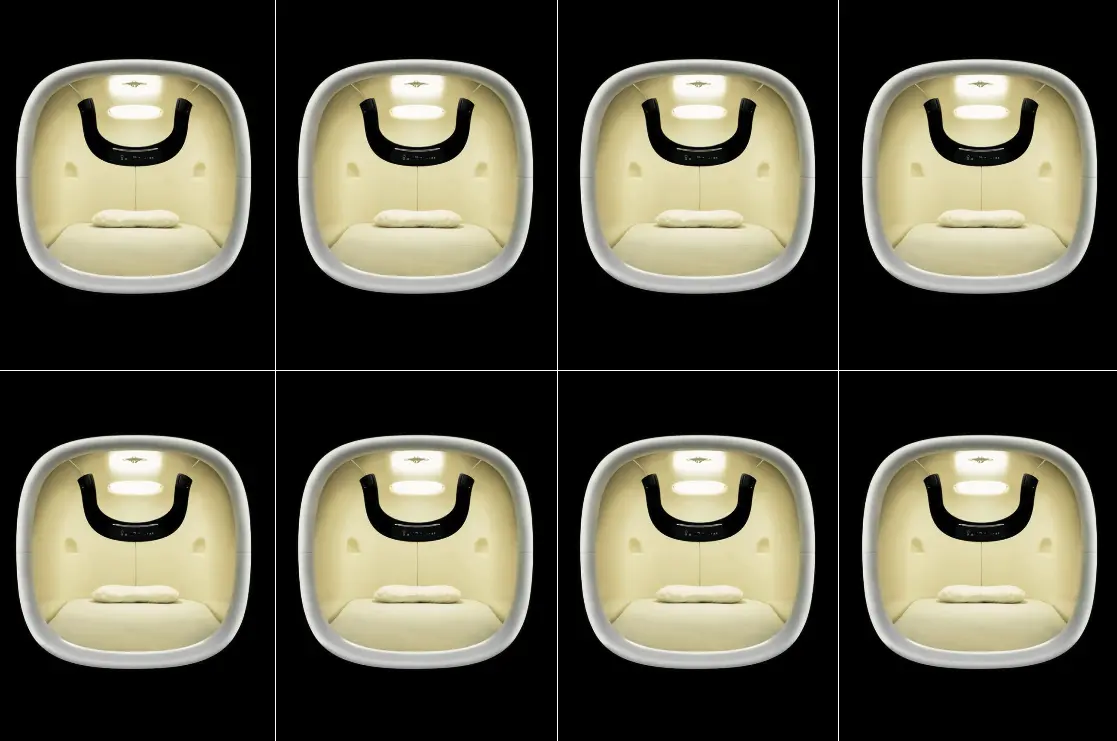
Over the eight days of operation from November 1 to November 8, the multi-story capsule hotel will undergo a radical transformation. The tiny, utilitarian sleeping pods and communal corridors of the former lodging facility will be repurposed into micro-exhibition rooms, listening dens, pop-up dining areas, and stages for improvised musical performances. This dense, vertical architecture inherently dictates a close-quarters experience, forcing visitors, artists, and musicians into intimate proximity—a physical manifestation of the collective ethos the project champions.
Supporting Context & Metrics: Anatomy of an Interdisciplinary Experiment
The structural DNA of the Tokyo Jazz Club relies heavily on a synthesis of diverse cultural phenomena. To fully grasp the scope of the project, one must examine its core pillars: architectural reclamation, culinary curation, and the metaphor of jazz improvisation.
The Venue: The Jimbocho Capsule Hotel Paradigm
Capsule hotels are iconic monuments of Japanese urban efficiency—utilitarian, compact spaces designed for rapid transit and solitary rest. By transplanting an interdisciplinary art club into an eight-story capsule hotel, the organizers are engaging in a witty subversion of spatial typology.
| Metric / Feature | Specification | Contextual Significance |
|---|---|---|
| Duration | November 1 – November 8 | Directly coincides with Art Week Tokyo, capturing international and regional foot traffic. |
| Location | Jimbocho District, Tokyo | A culturally dense neighborhood renowned for literature, publishing, and vintage jazz cafes (jazu kissa). |
| Architecture | 8-Story Former Capsule Hotel | Vertical, compartmentalized layout allows for segmented, room-by-room artistic interventions. |
| Primary Disciplines | Visual Arts, Live Jazz, Gastronomy, Performance | Rejects single-medium viewing in favor of total sensory immersion. |
Instead of isolation, the capsules and communal floors will host collective presence. The verticality of the building allows for acoustic and visual stratification: guests might encounter a quiet conceptual art installation on the third floor, a high-energy free-jazz improvisation on the fifth, and an intimate dining experience on the roof or ground level.
The Gastronomic and Social Dimension
A defining hallmark of the Basel Social Club has always been its integration of food and drink as primary mediums of social sculpture. In Tokyo, this ethos will be magnified through a curated culinary program that honors local ingredients while fostering spontaneous dialogue.
In a city celebrated for its culinary precision—from Michelin-starred establishments down to humble ramen counters and atmospheric izakayas—the Tokyo Jazz Club aims to create a bridge between high-concept dining and casual late-night congregation. Food is deployed not merely as sustenance, but as a social lubricant that dissolves hierarchies between collectors, artists, curators, and casual drop-ins.
The Jazz Metaphor: Improvisation as Methodology
Why name the Tokyo iteration after jazz? Jazz is fundamentally an art form built on listening, call-and-response, tension, and collective improvisation within a structured framework.
As the curators note, jazz serves as a guiding philosophy for the entire project. In a traditional art fair, every minute is meticulously scheduled, and every booth is aggressively demarcated. The Tokyo Jazz Club embraces the jam session mentality: spaces bleed into one another, performances are responsive to the immediate environment, and the audience shares agency in shaping the atmosphere. Jimbocho, with its rich history of underground jazz kissas where aficionados sit in reverent silence listening to rare vinyl pressings, provides a deeply resonant historical backdrop for this approach.
Official Statements & Curatorial Vision
The intellectual framework of the Tokyo Jazz Club has been articulated through recent disclosures and statements from its core leadership, shedding light on why Tokyo was chosen as the next frontier for this nomadic social experiment.
Robbie Fitzpatrick on Tradition, Experimentation, and Tokyo
In statements reported by Italian publication Artribune, Basel Social Club cofounder Robbie Fitzpatrick emphasized that Tokyo represents a logical evolution for the collective’s core ideas:
"Tokyo is the natural choice for the continued evolution of the ideas we have developed through Basel Social Club. The city maintains an extraordinary tension between tradition and experimentation, from its long musical history, its rituals, and its exceptional craftsmanship to its ability to embrace the most original and unconventional forms of expression."
Fitzpatrick’s observation touches on a vital paradox of modern Tokyo: a society anchored in rigorous historical rituals (such as tea ceremonies, traditional woodworking, and meticulous culinary arts) that simultaneously births hyper-modern subcultures, architectural experimentation, and avant-garde soundscapes. This friction between deep-rooted heritage and radical futurism provides fertile ground for an interdisciplinary art project that refuses to stay inside professional boundaries.
Yael Salomonowitz on Performance, Spectatorship, and Jazz
Co-founder Yael Salomonowitz elaborated on the psychological and spatial mechanics of the project, focusing on how the initiative disrupts traditional exhibition formats:
"Tokyo Jazz Club was conceived to explore the space between performance and spectatorship. Rather than separating exhibition and performance, we want to create an environment where they coexist as part of the same shared world. And jazz offers us a way of thinking, a language of improvisation, listening, and collective presence."
Salomonowitz’s critique strikes at the heart of contemporary art fatigue. In standard gallery or museum settings, the viewer is often cast as a passive consumer—someone who stands at a respectful distance, absorbs a visual stimulus, and moves on. By fusing performance directly into the social fabric of the venue (where visitors might be eating, drinking, or navigating narrow stairwells alongside performers), the project dismantles the fourth wall of the art world.
Furthermore, a sparse promotional teaser released on the official Basel Social Club Instagram account (@baselsocialclub) underscores this sensory overload. The post—accompanied by frenetically edited video footage blending jazz clubs, retro video games, dining scenes, and underground dancing—boasts a manifesto-like list of keywords:
"Art. Performance. Music. Gathering. Improvisation. Listening. Collective presence."
Future Outlook: Implications for Art Week Tokyo and Global Nomadic Models
As the global art market undergoes structural shifts—marked by rising booth costs at mega-fairs, environmental concerns over excessive international shipping, and a growing fatigue with sterile commercial presentations—alternative models like the Basel Social Club are no longer just fringe novelties; they are blueprints for the future.
Redefining Art Week Tokyo
Art Week Tokyo has rapidly established itself as a premier destination on the global calendar, drawing international curators, collectors, and critics to the Japanese metropolis. However, much of its programming adheres to traditional gallery exhibitions and institutional museum shows.
The introduction of the Tokyo Jazz Club injects a much-needed dose of institutional critique wrapped in hospitality. By operating outside the standard fairgrounds, it offers visiting international elites an authentic taste of Tokyo’s underground creative community while providing local artists with a high-visibility, international platform that does not require the capital investment of a commercial gallery booth.
The Rise of Nomadic Social Architecture
The success of projects like Tokyo Jazz Club points toward a broader trend in contemporary culture: the rise of nomadic, site-specific social architecture. Instead of building permanent institutions or relying on standardized convention centers, future creative communities may increasingly choose to temporarily occupy overlooked urban spaces—abandoned hotels, former factories, historical bookstores—transforming them into ephemeral cultural hubs.
For Tokyo, a city defined by rapid urban renewal and the constant demolition and rebuilding of its architectural landscape, reclaiming an empty Jimbocho capsule hotel for a week of radical art and improvised jazz carries a poignant poetic justice. It temporarily halts the relentless march of modernization, carving out a sanctuary for slow looking, deep listening, and human gathering.
When the doors of the Tokyo Jazz Club open on November 1, they will not merely welcome attendees into an exhibition. They will invite them into a living, breathing experiment in how art, music, and community can be experienced when stripped of institutional pretense—proving that sometimes, the most profound cultural statements happen not on a pristine white wall, but across a crowded, dimly lit room fueled by improvisation and shared presence.




Comments
Facebook App ID not configured. Please add it in the Customizer.