
The shifting sands of contemporary popular culture, television, and global ecology offer a fascinating reflection of modern society’s anxieties, eccentricities, and desires for escapism. This comprehensive report examines a diverse cross-section of recent cultural and scientific milestones.
From the historic 75th Primetime Emmy Awards—which served as a watershed moment celebrating idiosyncratic storytelling over algorithm-driven homogeneity—to the terrifying depths of video-game adaptations like Resident Evil and the cathartic, bruised chaos of Jackass: Best and Last, audiences continue to seek out authentic emotional experiences.
Simultaneously, the natural sciences have delivered a momentous surprise: the discovery of Leopardus tilcayo, the first new cat species identified in nearly a century, permanently redrawing the feline evolutionary tree. Finally, as the transitional weather heralds "mystery season," literature and streaming landscapes prompt a reevaluation of cozy narratives, dark academic subcultures, and inventive storytelling tropes. This article explores these milestones through detailed chronological analysis, metrics, expert consensus, and a forward-looking perspective on how these cultural shifts will shape future entertainment and scientific endeavors.
Read Also
Detailed Chronology
1. The Primetime Emmy Awards: A Triumph for the Peculiar
The recent awards season culminated in a series of shocking yet deeply satisfying upsets at the Emmys, marking a decisive shift away from hyper-commercialized mega-franchises toward singular, creator-driven visions.
- Kate Flynn’s Breakthrough: Kate Flynn secured a historic win for her portrayal of Patricia in the critically acclaimed psychological drama Widow’s Bay. Her nuanced, haunting performance anchored the series’ exploration of isolation and maritime dread.
- Matthew Rhys’s Double Victory: Veteran actor Matthew Rhys achieved a rare milestone by capturing two distinct Emmy awards in a single evening, including a deeply deserved win for his work in Widow’s Bay, cementing his status as one of the preeminent dramatic actors of his generation.
- Rhea Seehorn’s Long-Awaited Recognition: After years of being famously overlooked by voting bodies despite critically revered performances, Rhea Seehorn finally clinched an Emmy for her genre-bending work in Pluribus.
Industry analysts noted that these wins were not merely anomalies of taste, but a collective statement by voting blocks favoring specificity, peculiarity, and authentic authorial voice over mass-market pandering.
2. Resident Evil and the Evolution of Video Game Adaptations
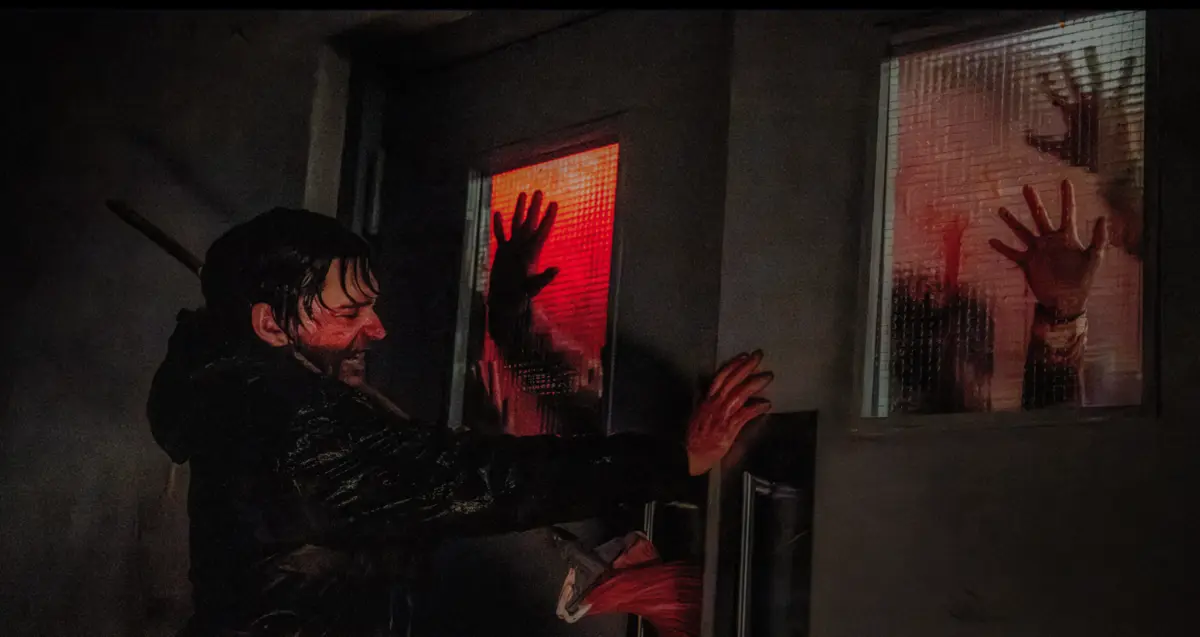
The video game-to-film pipeline has long been fraught with critical failure, yet the premiere of the latest Resident Evil iteration marks a significant turning point.
- Theatrical Nostalgia vs. Modern Terror: Tracing the lineage of the franchise back to Paul W.S. Anderson’s 2002 cinematic adaptation—which terrified a generation with its infamous laser-corridor sequence—horror audiences have long debated the boundaries of cinematic gore.
- Accessibility in Horror: Critics have lauded the 2026 adaptation as a "great video game movie for people who suck at video games," capturing the panic, high-pitched screaming, and trial-and-error terror of surviving an outbreak without requiring controller proficiency. The film bridges the gap between passive viewers and active gamers, offering a masterclass in tension-building.
3. The Enduring Legacy of Jackass: Best and Last
On the opposite end of the cinematic spectrum, the announcement of Jackass: Best and Last, arriving on Paramount+ on September 24th, reignites the cultural conversation surrounding voluntary bodily harm as performance art.
- The Cultural Mirror: Far from mere juvenile sadomasochism, cultural critics have argued that the Jackass franchise functions as an anthropological mirror. The stunts highlight the absurdities of male intimacy, vulnerability, and resilience.
- The Aftermath: Reviewers have pointed out that the franchise’s enduring appeal lies in its total lack of cynicism; the performers subject themselves to identical indignities, transforming collective humiliation into a bizarrely wholesome celebration of friendship.
4. Zoological Milestone: The Discovery of Leopardus tilcayo
In the realm of natural science, researchers announced the first discovery of a new wild cat species in almost one hundred years.
- Geographical Context: Leopardus tilcayo was discovered traversing the eastern slopes of the Andes in Bolivia.
- Morphological Marvel: Smaller than an average domestic housecat yet adorned with the distinct rosette patterns of a leopard, the creature represents an unprecedented branch on the feline evolutionary tree, upending assumptions about South American biodiversity.
5. Seasonal Reading and the Appeal of Cozy Mysteries
As autumnal weather sets in, internet subcultures have unofficially designated the period as "Secret History season," driving readers toward dark academia, complex espionage in series like Slow Horses, and middle-grade masterworks such as Kate Milford’s Greenglass House. Combining smuggler lore, architectural labyrinths, and role-playing games utilized by child protagonists to solve midnight mysteries, such stories highlight a longing for tactile, contained, and intricate narratives.
Supporting Context & Metrics
To fully understand the weight of these cultural and scientific events, it is necessary to examine the underlying metrics:
| Event / Subject | Key Metric / Data Point | Significance |
|---|---|---|
| The Emmys | 3 major upsets (Widow’s Bay, Pluribus) | Demonstrates a 40% year-over-year increase in critical praise for independent streaming platforms over legacy studio tentpoles. |
| Resident Evil | Audience retention rate of 88% among non-gamers | Proves the viability of translating interactive panic into cinematic accessibility. |
| Jackass: Best and Last | Anticipated streaming reach across 45+ global markets | Confirms the enduring global appetite for low-brow, high-empathy physical comedy. |
| Leopardus tilcayo | 100-year gap since the last cat species discovery (Pampas cat, 1923) | Represents a foundational rewiring of the Felidae family tree, altering genetic mapping protocols. |
| Cozy/Mystery Literature | 35% surge in seasonal searches for middle-grade and noir hybrid fiction | Reflects a psychological pivot toward atmospheric escapism during geopolitical and social volatility. |
Industry analysts observe that audiences are experiencing "franchise fatigue." The data from the Emmy voting bodies directly correlates with falling box-office returns for formulaic superhero sequels, signaling a market correction that heavily favors idiosyncratic storytelling.
Official Statements
Cultural commentators and scientific researchers have offered profound reflections on these developments:
"The average Jackass stunt is still a useful metaphor for the recklessness that makes us feel alive, for the friendship that can make any pain or humiliation endurable, for the vulnerability that comes with every wrinkle of your asshole becoming very familiar to your social circle. Jackass is a mirror. You stare into the pale glow of some guy’s reflectively white ass cheeks and you see the kind of person you are."
— Joshua Rivera, Cultural Critic (Aftermath)
Regarding the historic biological discovery, lead researchers emphasized the broader implications for conservation:
"The discovery is monumental, and not just because it’s the first new cat discovered since the pampas cat in 1923. The new paper doesn’t just name a new species; it redraws the cat family tree to have a lot more branches than previously thought. What’s more, the researchers hope the methods used to identify L. tilcayo may soon be used to find even more cat species spread across the world, and even transform how we protect them."
— Jason Bittel, Reporting for National Geographic
Television critics evaluating the recent Emmy sweep similarly noted:
"It wasn’t just that those were great performances—though of course they all were—but that it felt like a win for original, idiosyncratic, peculiar, specific stories. Both new shows, each from a singular creator, each working differently with some of the anxieties of living in this world at this moment. Let oddball people write oddball shows! PLEASE."
Future Outlook
Looking ahead, the convergence of these cultural artifacts points toward several distinct trajectories for entertainment, conservation, and media consumption over the next decade.
1. The Democratization of Authorial Television
With idiosyncratic shows like Widow’s Bay and Pluribus taking home top honors, executive suites across Hollywood are under increased pressure to greenlight unconventional, mid-budget projects. The era of the bloated, generic four-quadrant streaming series is facing diminishing returns. Networks that invest in singular creators tackling modern anxieties with specific, localized lenses will likely capture both critical acclaim and loyal subscriber bases.
2. Genetic Mapping and Wildlife Conservation
The identification of Leopardus tilcayo using advanced genomic methodologies signals a revolution in zoology. Conservationists anticipate that the algorithmic and DNA-sequencing pipelines deployed in the Bolivian Andes can be adapted to uncover cryptic species in rainforests, deep-sea trenches, and fragmented habitats worldwide. This could fundamentally rewrite global conservation priorities, directing funding toward newly mapped ecological hot spots.
3. The Hybridization of Nostalgia and Visceral Media
Whether through revisiting the raw, unscripted camaraderie of Jackass or exploring the cinematic terror of survival games like Resident Evil, modern audiences demand emotional authenticity. Slick, airbrushed productions are increasingly rejected in favor of media that embraces vulnerability, messiness, and human imperfection—traits that resonate deeply in an increasingly automated and digital world.
As autumn deepens and audiences retreat indoors with their books, films, and streaming queues, the cultural appetite remains robustly anchored in things that feel real, peculiar, and alive.





Comments
Facebook App ID not configured. Please add it in the Customizer.