Dr. Seuss’s The Cat in the Hat has long stood as an icon of unbridled imagination, serving as a cornerstone of children’s literature for generations. However, bringing this anarchic masterpiece to the silver screen has consistently proven to be a Sisyphean endeavor for Hollywood. The fundamental challenge lies in the source material itself: Dr. Seuss’s works are typically brief, fast-paced narratives built on whimsy, light moralizing, and surreal visual gags, rather than expansive three-act structures.
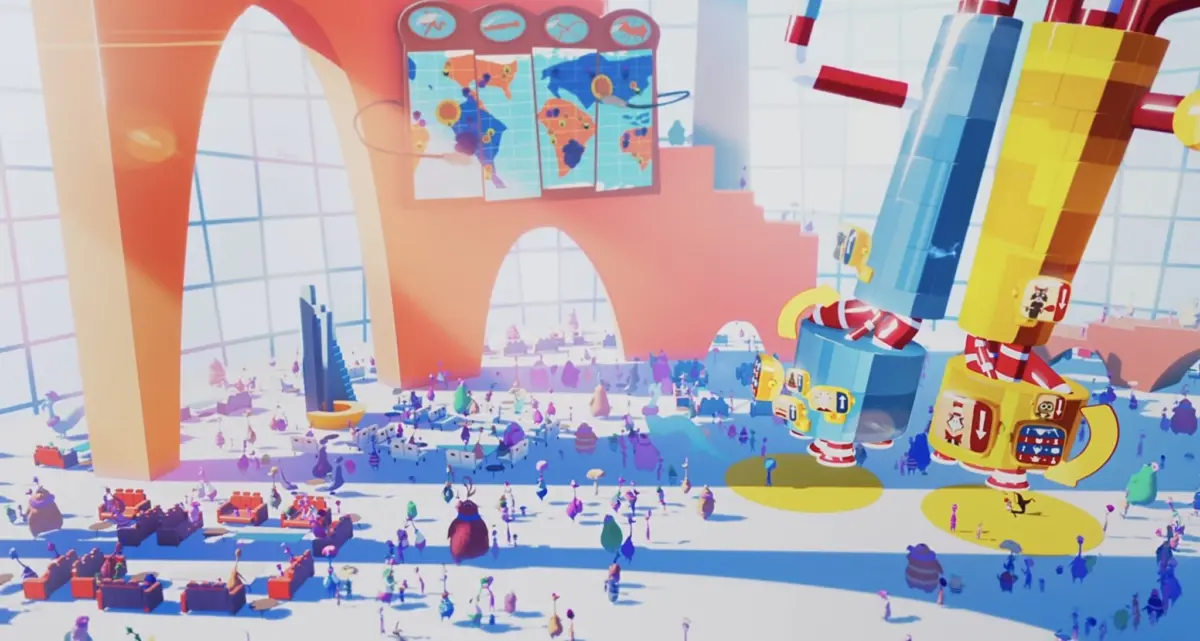
The upcoming Warner Bros. animated adaptation starring Bill Hader introduces a staggering pivot that has sparked intense debate among cultural critics and animation enthusiasts alike. In this iteration, the iconic feline is no longer a chaotic manifestation of pure fey absurdity. Instead, he is a blue-collar corporate employee working for the Institute for the Institution of Imagination and Inspiration, LLC.
Complete with middle management, a Human Resources department, performance reviews, and the constant threat of termination, this new cinematic incarnation forces a surreal question upon audiences: Why, in the name of the Lorax, does the Cat in the Hat need a job?
This analytical piece examines the structural transformation of classic characters under modern corporate animation paradigms, exploring how contemporary children’s media has systematically replaced royal fantasies with vocational realism—and what this means for the future of creative storytelling.
Detailed Chronology & Background: From Page to Corporate Screen
To understand the magnitude of Warner Bros.’ upcoming adaptation, one must first trace the legacy of adaptations attached to Theodor Seuss Geisel’s most famous creation.
1957: The original publication of The Cat in the Hat by Random House revolutionizes early childhood education and literacy, providing a vibrant alternative to formulaic primers. The story features two children, Sally and Conrad (unnamed in the book, later adapted), left alone on a rainy day. They are paid an uninvited visit by a tall, talking feline who wreaks structural havoc using inventive, physics-defying games while dropping cryptic warnings about their mother’s imminent return.
2003: Universal Pictures releases the first live-action feature film adaptation starring Mike Myers. Universally panned by critics and audiences for its gross-out humor and dark tonal shifts, the film was a critical disaster. The backlash was so severe that Dr. Seuss’s widow, Audrey Geisel, instituted a strict moratorium on any future live-action film adaptations of her late husband’s literary estate, steering subsequent projects strictly into the realm of animation.
2026: Warner Bros. Animation announces its new animated feature. The project recasts the Cat as an official employee of a bureaucratic entity—the Institute for the Institution of Imagination and Inspiration, LLC. Equipped with company-issued tools, time-travel stopwatches that double as corporate assets, and a direct reporting line to middle-management executives like Mr. Hoogeboom, the Cat’s chaos is officially reframed as a vocational key performance indicator (KPI).
The Rise of Vocational Ennui in Modern Children’s Animation
The integration of corporate structures into fantastical children’s media is not an isolated incident; rather, it reflects a sweeping, decades-long paradigm shift in Western animation. Historically, fairy tales reigned supreme, centering monarchies and royal bloodlines as the ultimate vehicles for narrative importance. Yet, as societal governance shifted away from monarchies, children’s media quietly phased out the crown and replaced it with a much more pervasive modern institution: work.
Contemporary animated features routinely socialize children into the realities of vocational existence before they have even learned long division. Consider the meta-narrative frameworks of the past twenty years:
Zootopia (2016): Tackles systemic prejudice and urban sociology through the lens of a municipal police academy and law enforcement career path.
Elemental (2023): Explores immigrant displacement and labor struggles using a family-run corner grocery and convenience store as the narrative springboard.
Monsters, Inc. (2001): Directly adapts corporate restructuring, energy sector quotas, and executive malpractice into a monster-world sitcom.
Inside Out (2015): Treats human emotional regulation like an office space plagued by management dysfunction, where Joy fears being downsized or replaced by Sadness.
Even abstract art-driven narratives are consistently tethered to labor economies. Pixar’s Ratatouille anchors Remy’s artistic aspirations to restaurant profitability and kitchen hierarchies. Soul frames artistic fulfillment as a battle between a mundane teaching job and a high-profile jazz gig. Meanwhile, Illumination Entertainment has built a multi-billion-dollar cinematic empire entirely on the backs of the Minions—a yellow biological species whose very taxonomy is synonymous with subservient employment under various despots.
+-------------------------------------------------------------------------+
|                  THE EVOLUTION OF WESTERN ANIMATION TROPES               |
+---------------------------+---------------------------------------------+
| Era                       | Primary Narrative Vehicle                   |
+---------------------------+---------------------------------------------+
| Classical Era             | Monarchies, Royal Lineages, and Castles     |
| Late 20th Century         | Coming-of-Age Quests and Hero's Journeys    |
| 21st Century (Modern)     | Corporate Structures, Vocations, and Labor  |
+---------------------------+---------------------------------------------+
The decision to codify the Cat in the Hat’s antics into corporate policy highlights a broader cultural trend: the corporate commodification of creativity.
In the 2026 Warner Bros. film, the Cat is tasked with cheering up two siblings, Gabby and Sebastian, who are dealing with the stress of relocating to a new city. However, the emotional stakes are inextricably linked to the Cat’s professional standing. His strange instruments, exotic creatures, and temporal devices are no longer manifestations of wild, untamable magic. They are company property, subject to inventory tracking and annual reviews.
The Corporate Blueprint for Creativity
Standardization: Whimsy must serve a practical, measurable function (in this case, inspiring children according to institutional guidelines).
Surveillance: The protagonist is subjected to oversight, performance monitoring, and the perpetual threat of termination.
Monetization: Emotional resonance is transformed into a scalable, repeatable product model—much like the Minions franchise, which operates as a merchandising juggernaut built on slapstick workplace humor.
This structural choice fundamentally alters the psychological impact of the story. Original Seuss characters like Thing One and Thing Two represented pure, chaotic unpredictability—the sort of wild chaos that children cannot negotiate, bargain, or manage their way out of. By reducing the Cat’s behavior to an office assignment, the narrative strips away the sublime terror of true nonsense, replacing it with the predictable anxieties of a performance improvement plan (PIP).
Official Statements & Industry Perspectives
While major studios have remained guarded regarding artistic critiques of their intellectual property monetization strategies, industry analysts point to economic realities as the primary driver behind these creative choices.
"When executives look at classic literary properties, they aren’t just looking for a story to tell; they are looking for an ecosystem to scale. Introducing structural elements like an ‘Institute’ allows for world-building that naturally supports sequels, streaming series, theme park integrations, and consumer products."
— Anonymous Animation Studio Producer
Conversely, literary purists and cultural commentators argue that this trend points to a deep-seated imaginative fatigue within Hollywood.
"Children’s stories have historically offered a sanctuary away from the mundane rules of adult society. When we teach kids that even a magical, reality-bending cat needs to punch a clock to justify his existence, we aren’t expanding their horizons—we are enclosing them within the very corporate structures they should be escaping."
— Dr. Aris Thorne, Professor of Media and Cultural Studies
Future Outlook: Whither Wonder in the Age of C-Suite Storytelling?
As studios continue to mine pre-existing intellectual properties for cross-platform expansion, the pressure to rationalize fantastical elements will likely intensify. The inclusion of a corporate infrastructure in The Cat in the Hat serves as a watershed moment for how legacy characters are adapted for modern audiences.
The central question moving forward is whether audiences—particularly younger viewers and parents—will embrace this vocational framing or push back against the relentless commercialization of whimsy. While a handful of visionary directors continue to produce original, untethered stories that buck these corporate trends, the financial gravity of standardized, workplace-centric animation remains formidable.
Ultimately, the transformation of the Cat in the Hat from an existential force of nature into an anxious employee worried about his litter-box mortgage tells us less about Dr. Seuss and far more about ourselves. Capitalism loves building monuments to its own ubiquity, and apparently, that now includes giving a top hat, a red bow tie, and a corporate badge to the most famous feline in literary history.




Comments
Facebook App ID not configured. Please add it in the Customizer.