

Executive Overview
In contemporary poetry, few voices manage to capture the dizzying juxtaposition of suffocating urban heat, profound personal loss, and the timeless, redemptive mythos of American rock music quite like Trenna Sharpe. On October 5, 2026, The Missouri Review officially selected Sharpe’s evocative and visceral piece, “Hello, Bruce Springsteen,” as its Poem of the Week.
Hailing originally from Tennessee and currently residing in London, Sharpe has built a formidable reputation as a writer of striking emotional clarity. Her previous work has graced the pages of prestigious literary journals including the New England Review, the North American Review, Sinister Wisdom, and The Tangerine. However, her latest selection has generated a unique wave of critical attention, largely due to its raw exploration of mourning, familial fracturing, and the unexpected spiritual sanctuaries found in public transit systems and classic heartland rock.
At its core, “Hello, Bruce Springsteen” reads as both an ecstatic prayer and an intimate eulogy. It bridges the physical crush of a July New York City subway ride with the dusty parking lots of Chattanooga, Tennessee. It confronts the devastating reality of opioid addiction—specifically honoring the memory of her stepbrother, the late singer-songwriter Justin Townes Earle—while anchoring itself to the unyielding, blue-collar iconography of Bruce Springsteen. This expansive review examines the cultural resonance of Sharpe’s poem, contextualizing it within her broader literary trajectory, unpacking its structural motifs, and exploring the deeply personal narrative that breathes life into its lines.
Read Also
Detailed Chronology: The Genesis of a Poem
To fully understand the weight of “Hello, Bruce Springsteen,” one must retrace the chronological touchstones that informed its creation—ranging from fleeting sensory impressions in the American Northeast to enduring familial tragedies in the American South.
The New York Subway Encounter (July)
The foundational imagery of the poem is rooted in Sharpe’s first-ever descent into the New York City subway system during the height of summer. For a writer accustomed to the sprawling green spaces of Tennessee and the distinct rhythms of the American South, the subterranean transit network presented an almost overwhelming sensory shock.
In her author’s note accompanying the publication, Sharpe recalls how the July heat felt entirely foreign—close, heavy, and inescapable. In the poem, this claustrophobic environment is paradoxically reframed as a generative space: "The subway in July is a womb, / and Bruce, I tell you what, / I feel alive." Rather than driving passengers into isolated misery, the oppressive heat acts as a dissolving agent. Sharpe captures a fleeting moment of collective vulnerability where strangers blur at the edges, bound together by the sheer, shared endurance of the environment.
The Chattanooga Reunion (Pre-2020)
Shifting backward and outward geographically, the poem introduces a crucial human pivot: the speaker’s reunion with her stepbrother, Justin. After their parents’ romantic separation years prior, Sharpe and Justin experienced a prolonged period of estrangement, spending over a decade apart.
The reconciliation occurred organically in the crumbling, asphalt-scarred parking lot of JJ’s Bohemia, an iconic indie-music venue in Chattanooga, Tennessee. Justin was passing through town to perform a pre-fame gig. Despite the volatility that often characterized his life and artistic persona, the encounter was stripped of bitterness. Welcoming her with an unreserved grin, Justin bridged the thirteen-year gap instantaneously, laying the emotional groundwork for a bond that would survive even death.
The Loss of Justin Townes Earle (August 2020)
The emotional undertow of the poem draws heavily from a devastating modern tragedy: the August 2020 passing of Justin Townes Earle due to an accidental fentanyl overdose. A celebrated Americana and roots musician in his own right, Justin’s death sent shockwaves through the broader music community and devastated his family.
For Sharpe, the loss introduced complex questions regarding the legitimacy of grief—specifically, the imposter syndrome often felt by step-siblings whose biological ties are legally dissolved by adult breakups. Yet, as the poem and her accompanying reflections demonstrate, grief recognizes no such bureaucratic boundaries; it flows wherever deep-seated love and shared memory reside.
Publication and Recognition (October 2026)
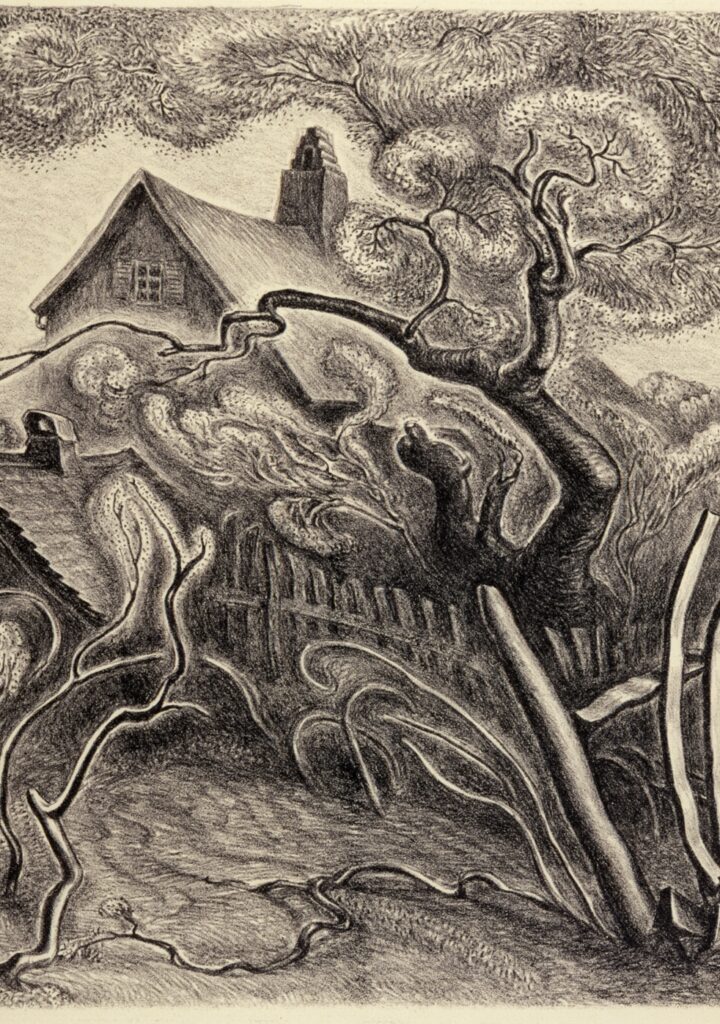
Following years of contributing to elite literary journals, Sharpe’s integration of these disparate timelines—the sultry NYC subway, the Chattanooga parking lot, and the lingering phantom of Springsteen’s discography—culminated in her selection by The Missouri Review on October 5, 2026. Accompanied by Wanda Gág’s 1927 artwork Spring (Spring in the Garden) as its title image, the publication marks a milestone in Sharpe’s burgeoning literary career, cementing her ability to translate niche personal grief into universally resonant art.
Supporting Context & Metrics: The Literary Landscape of Trenna Sharpe
Sharpe’s recognition as The Missouri Review’s Poem of the Week arrives during a vibrant period for contemporary American poetry, where readers increasingly gravitate toward hybrid forms of lyric essay, confessional verse, and cultural pastiche.

Publication History and Critical Reception
Sharpe’s footprint in the literary ecosystem spans multiple esteemed platforms:
- The New England Review: Known for publishing rigorously crafted verse that bridges narrative depth with sonic precision.
- The North American Review: America’s oldest literary magazine, traditionally valuing pieces that engage deeply with the American landscape and cultural mythos.
- Sinister Wisdom: A multicultural lesbian publication emphasizing radical feminist art and literature, which informs Sharpe’s exploration of identity and personal freedom ("even I can be as gay as I want to").
- The Tangerine: A Belfast-based journal of culture and politics, highlighting her international reach while maintaining her Southern roots.
The Americana Musical Thread
A defining metric of Sharpe’s work is its reliance on musical intertextuality. Bruce Springsteen and Justin Townes Earle function not merely as background cultural references, but as structural pillars of the poem. Springsteen’s working-class anthems—specifically “Racing in the Street,” with its famous pledge to "ride to the sea / and wash these sins off our hands"—serve as secular hymns for absolution. When Justin performed that very song on the night of their Chattanooga reunion (complete with a bandmate playing through a minor injury caused by a shattered beer bottle), music became the permanent sealant of their sibling bond.
Official Statements & Author’s Reflections
In her official author’s note provided to The Missouri Review, Sharpe offered candid commentary on the sensory triggers and emotional architecture underlying “Hello, Bruce Springsteen.”
Reflecting on the New York subway, Sharpe noted:
"It was July the very first time I stepped down into the New York City subway. I’d never felt a close heat like it. It felt like me and everyone else down there were dissolving at the edges and blending together, like the air had given up on keeping us apart."
Addressing the complicated nature of grief and her relationship with her stepbrother, she shared:
"Sometimes I feel like I don’t deserve to grieve for him like I do because I wasn’t his real sister. But whenever I listen to the Boss sing… I think of Justin. And I hope he feels free."
These statements illuminate the ideological engine of the poem: a rejection of rigid, socially prescribed categories—whether family trees, geographic boundaries, or class distinctions—in favor of a fluid, emotionally honest communion built on shared heat, sweat, and song.
Future Outlook: What’s Next for Trenna Sharpe
With the high-profile feature of “Hello, Bruce Springsteen” drawing international acclaim, literary critics and readers alike are turning their attention toward Sharpe’s upcoming projects. Based between Tennessee and London, Sharpe is uniquely positioned at the intersection of transatlantic artistic communities, synthesizing the folklore of the American South with the perspective of an expatriate observer.
As poetry continues to grapple with themes of collective isolation, opioid devastation, and the search for secular grace, voices like Sharpe’s offer a vital roadmap. Her ability to pivot from the humorous, self-deprecating imagery of a Super Bowl wardrobe malfunction ("Let your be-denimmed crotch lead the way, Bruce") to the devastating, quiet simplicity of recognizing a lost brother in a parking lot underscores a rare literary range.
Readers can explore “Hello, Bruce Springsteen” in full via The Missouri Review’s online archive, alongside an expanding catalog of contemporary poetry that continues to push the boundaries of how we mourn, remember, and rock on.





Comments
Facebook App ID not configured. Please add it in the Customizer.