
Executive Overview
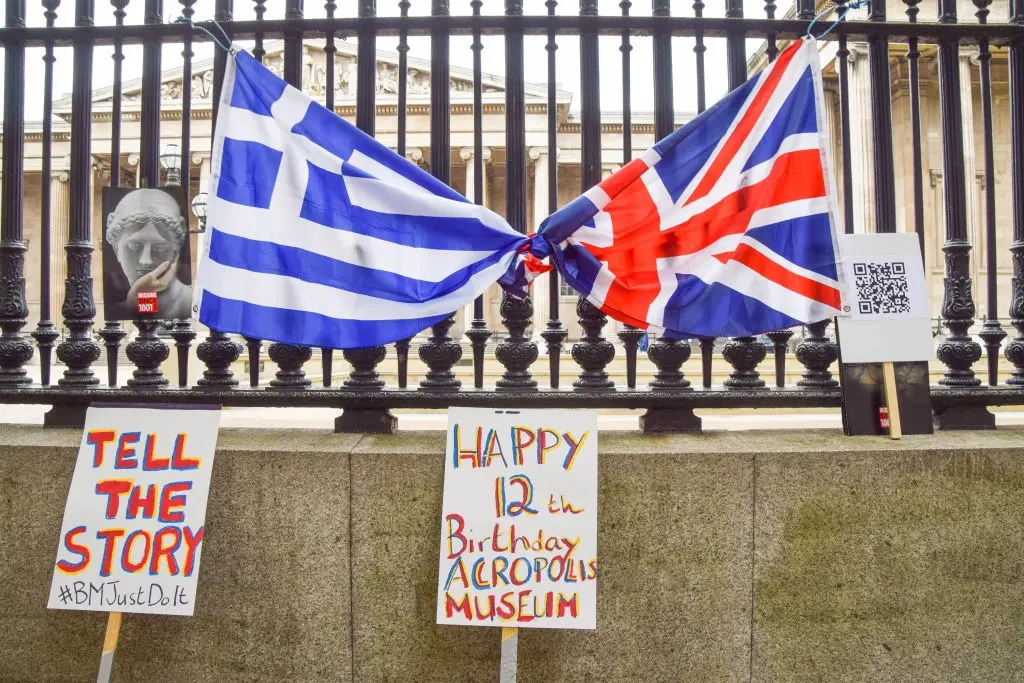
The centuries-old diplomatic deadlock surrounding the ownership and location of the Parthenon Marbles may finally see a path toward resolution, according to British Museum Chairman George Osborne. Speaking recently in Athens, Osborne expressed cautious optimism that a compromise can be brokered between the United Kingdom and Greece. His proposal centers on a cultural sharing agreement—a compromise that would allow the ancient masterpieces to be enjoyed by audiences in both London and Athens.
However, this renewed diplomatic overture faces deeply entrenched obstacles. Greece has maintained an unyielding stance since gaining independence in the early 19th century: the marbles were removed illegally during a period of foreign occupation and belong exclusively in their homeland, housed within the purpose-built Acropolis Museum. Conversely, the British Museum operates under rigid legislative constraints—specifically the British Museum Act of 1963—which legally bars the institution from deaccessioning or permanently permanently parting with artifacts in its collection.
Against a backdrop of escalating tensions, including recent preservation concerns at the British Museum and pointed rhetoric from Greek Prime Minister Kyriakos Mitsotakis, the debate has evolved from a bilateral dispute into a broader European cultural policy flashpoint. As world leaders prepare for upcoming geopolitical summits, the fate of Phidias’s masterpieces remains a litmus test for international museum ethics, colonial-era restitution claims, and modern cultural diplomacy.
Read Also
Detailed Chronology: From the Acropolis to the Modern Museum
To understand the profound sensitivity of the Parthenon Marbles dispute, one must trace a timeline spanning nearly two and a half millennia, marked by geopolitical upheaval, controversial acquisitions, and hardening legal boundaries.
447–432 BCE: Creation and Craftsmanship
Under the political leadership of Pericles and the artistic direction of the master sculptor Phidias, ancient Greek artisans created the magnificent sculptural reliefs, friezes, and metopes that adorned the Parthenon atop the Acropolis in Athens. Designed to honor the goddess Athena and celebrate Athenian civic identity, these marble works represent the zenith of Classical Greek art, capturing mythological battles, religious processions, and divine assemblies with unprecedented naturalism and anatomical precision.
1801: Removal Under Ottoman Occupation
While Greece was suffering under the yoke of the Ottoman Empire, Thomas Bruce, the 7th Earl of Elgin and British ambassador to Constantinople, secured a controversial Ottoman permit (or firman). Over the course of several years, Elgin’s agents systematically removed approximately half of the surviving sculptural decoration of the Parthenon. The operation involved sawing blocks from the monument, causing significant structural damage to the ancient temple. Elgin later claimed he acted to preserve the sculptures from further degradation, though contemporary critics view the act as an archeological pillage facilitated by imperial dominance.
1816: Acquisition by the British Government
Facing severe financial ruin resulting from his divorce and the exorbitant costs of transporting the antiquities across Europe, Lord Elgin sold the marble collection to the British Parliament for £35,000—a sum significantly lower than his personal expenditures. The British government promptly transferred the sculptures to the British Museum, where they were placed on public display in 1817, eventually finding a permanent home in the Duveen Gallery, constructed specifically for them in the mid-20th century.
1832: The Birth of the Restitution Claim
Immediately following the conclusion of the Greek War of Independence and the establishment of the modern Greek state in 1832, Athens officially requested the repatriation of the Parthenon Marbles. This marked the inception of a continuous diplomatic campaign. Greek authorities argued that Lord Elgin’s removal lacked legal legitimacy, as the occupying Ottoman authorities lacked sovereignty to permanently alienate national patrimony.
1963: The Statutory Impediment
As global conversations surrounding cultural heritage began to shift in the post-colonial era, British officials frequently deflected repatriation demands by citing domestic legislation. The British Museum Act 1963 explicitly prohibited trustees from permanently removing items from the museum’s collection, creating a virtually impenetrable legal barrier that insulated the institution from direct government intervention or court-ordered restitution.
2009–Present: The Acropolis Museum and Escalating Friction
The opening of the state-of-the-art Acropolis Museum in Athens in 2009 fundamentally altered the terms of the debate. Positioned at the foot of the sacred hill and featuring a dedicated gallery with panoramic views of the Parthenon itself, the museum dismantled the British argument that Greece lacked adequate, climate-controlled facilities to securely house and display the marbles. Tensions intensified further in recent years amid reports of roof leaks and climate-control failures in the aging galleries of the British Museum, alongside increasingly vocal demands from Greek leadership for a permanent, unconditional return.
Supporting Context & Metrics: The Scale of the Debate
The debate over the Parthenon Marbles is not merely symbolic; it involves substantial physical, financial, and cultural dimensions that illustrate the complexity of modern museum collections.
| Metric / Dimension | Detail |
|---|---|
| Creation Period | 447–432 BCE |
| Sculptor / Designer | Phidias and workshop |
| Acquisition Year | 1816 (Purchased by the British Crown from Lord Elgin) |
| Current London Location | The Duveen Gallery, British Museum |
| Alternative Location | The top-floor Parthenon Gallery, Acropolis Museum, Athens |
| Primary Legal Obstacle | British Museum Act 1963 (Prohibiting deaccessioning) |
| Proportion of Sculptures | Roughly 50% in London, 50% in Athens (with minor fragments in other European museums) |
The division of the collection has long been a primary aesthetic argument for reunification. Scholars and visitors alike note that viewing the friezes requires traveling between two distinct capitals separated by over 1,500 miles. Crucially, surviving blocks of the continuous frieze have been split down the middle, with one half residing in London and the other in Athens, rendering a holistic art-historical appreciation of Phidias’s narrative design structurally impossible in either location alone.
Official Statements: Perspectives from Athens and London
The rhetoric surrounding the Parthenon Marbles has grown increasingly sharp, reflecting fundamental disagreements over ownership, national dignity, and the nature of universal museum collections.
George Osborne’s Pragmatic Compromise
Speaking to reporters in Athens, George Osborne—who has leveraged his political background as the former Chancellor of the Exchequer to spearhead active discussions—emphasized that any viable solution must bypass absolute ideological demands.
"I’m still optimistic that we can reach an agreement," Osborne stated. "If everyone enters into it with the spirit of we’re not going to get everything we want, as is always the case with a successful agreement, then there’s a deal to be done."
Osborne’s vision relies on a reciprocal loan arrangement or cultural partnership, where portions of the marbles would rotate between London and Athens.
"I very much hope we can come to some arrangement whereby the Parthenon sculptures that are in London can be seen in Athens, but they have to be shared," he added. "I know that’s not the position of everyone in Greece, and I understand that and respect that, but that is our position, and so if we want to make progress, it has to be in that spirit."
Prime Minister Kyriakos Mitsotakis and the Rejection of False Equivalencies
Greek leadership, however, has drawn a hard red line against any agreement that implicitly legitimizes British ownership. The friction was further exacerbated when British Museum Director Nicholas Cullinan invoked France’s temporary loan of the Bayeux Tapestry as a model for "international partnership" and "reciprocal exchange."
Greek Prime Minister Kyriakos Mitsotakis vehemently rejected this comparison in a high-profile op-ed published in the Guardian:
"Nobody would seriously contemplate cutting what survives of the tapestry in two and displaying half in London and half in Bayeux, and claiming this was an adequate way to understand it," Mitsotakis wrote. "Yet that is exactly what happened to the Parthenon sculptures."
Greek Culture Minister Lina Mendoni reinforced this hardline stance during previous breakdown rounds in negotiations, asserting that Athens will not endorse any contract that signs away Greece’s legal title to the works. Instead, Greece proposes an innovative swap arrangement wherein priceless antiquities from Greek collections rotate through London on long-term loans, satisfying the British Museum’s desire for dynamic international exhibitions without compromising Greece’s foundational claim of ownership.
Future Outlook: A European Diplomatic Imperative
As subterranean negotiations continue, the horizon for a breakthrough points toward high-level international forums. World leaders are scheduled to convene at the upcoming EU-UK summit in Brussels, where post-Brexit cooperation, trade frameworks, and diplomatic alignment will top the agenda.
Addressing an academic conference at the University of Athens, Prime Minister Mitsotakis signaled that the cultural dispute will transcend bilateral talks, emerging as a matter of continental significance.
"The Parthenon sculptures will be part of this debate," Mitsotakis declared. "This is not just an issue for Greece; it’s an issue for Europe."
By framing the restitution of the marbles as an essential European cultural imperative, Athens aims to leverage wider geopolitical alignments to pressure the UK government into legislative reform or creative compromise. While the British Museum’s board of trustees remains bound by the strictures of the 1963 Act, mounting public pressure, shifting ethical frameworks regarding colonial-era acquisitions, and pragmatic leadership from figures like George Osborne suggest that the status quo is increasingly untenable.
Whether a compromise can be struck that satisfies both the British demand for shared cultural diplomacy and the Greek insistence on moral and legal ownership remains one of the most compelling cultural narratives of the twenty-first century. As Brussels talks approach, the world watches to see if diplomacy can successfully bridge a two-century chasm of stone and sovereignty.


Comments
Facebook App ID not configured. Please add it in the Customizer.