
Executive Overview
In March 1999, against the backdrop of escalating conflict in the Western Balkans and NATO’s imminent intervention in the Federal Republic of Yugoslavia, the United Kingdom experienced an unprecedented surge in asylum claims. Among those arriving at London’s Waterloo International terminal were thousands of individuals navigating complex, clandestine transit networks across Western Europe.
This report provides a detailed narrative reconstruction and structural analysis of a migrant’s passage from post-communist Albania through Paris and Calais to London during this historical juncture. Based on firsthand testimonies and contemporary policy frameworks, this case study illustrates the operational mechanics of undocumented transit via the Eurostar network, the strategic identity adaptation employed by migrants during the Kosovo crisis, and the border intake protocols executed by UK immigration authorities at the close of the 20th century.
[Mainland Europe Transit] ---> [Calais Bottleneck] ---> [Channel Tunnel Identity Erasure] ---> [Waterloo Intake & Asylum Registration]
      (Schengen Visa)           (Platform Checks)        (Document Destruction / Forged Cert)      (Standard Acknowledgement Letter)
Detailed Chronology: The Journey Across Borders
March 1999 Timeline:
• T-7 Days: Acquisition of high-value disguise items (Acqua di Giò) & forged Kosovar identity document in Fier (1,500 Lek).
• Day 1, 08:00: Departure from Paris Gare du Nord via Eurostar.
• Day 1, 10:30: Prolonged delay at Gare de Calais-Ville / Fréthun; expulsion of undocumented passengers.
• Day 1, 11:15: Transit through Channel Tunnel; destruction of official Albanian passport.
• Day 1, 12:00: Entry into Kent; interaction with British journalist onboard.
• Day 1, 13:30: Arrival at London Waterloo Station; initial request for asylum ("azil").
• Day 1, 15:00-20:00: Processing, formal interview with Kosovar interpreter, issuance of Standard Acknowledgement Letter.
Phase I: Departure from Paris and the Calais Bottleneck
In mid-March 1999, approximately one week before NATO launched Operation Allied Force in Yugoslavia, a 20-year-old Albanian national from the southern municipality of Fier boarded a Eurostar train at Paris Gare du Nord bound for London Waterloo. Having secured a valid Schengen visa to legally reach France—funded by personal savings accumulated over years of informal labor in Greece—the passenger sought to exploit the transit corridor between mainland Europe and the United Kingdom.
Read Also
To evade suspicion during ticket inspections, the traveler adopted the persona of an affluent business passenger: wearing a dark suit and doused heavily in Acqua di Giò cologne obtained in Milan. Border control strategies of the era heavily relied on visual profiling; presented with a neatly groomed individual carrying limited baggage, conductors initially passed through train cars without detailed verification beyond basic ticket validation.
Upon arrival at Calais, the last French stop before the Channel Tunnel, the train experienced an unexpected extended stoppage lasting over thirty minutes. During this period, French railway officials and border police conducted targeted sweeps of the carriages.
+-----------------------------------------------------------------------------------+
|                        CALAIS PLATFORM INSPECTIONS (1999)                          |
+-----------------------------------------------------------------------------------+
|  [ Conductor / French Police Sweeps ]                                              |
|            │                                                                      |
|            ├────────► Eviction of Non-Schengen Travelers (e.g., African Family)     |
|            │                                                                      |
|            └────────► Seat Switching Tactical Maneuver:                           |
|                       Subject migrates to forward carriage, joining British       |
|                       nationals to obscure seat vacancy anomalies.                |
+-----------------------------------------------------------------------------------+
Undocumented travelers without valid entry authorization for the UK were removed from the train on the platform, including a young African family traveling in the same car. Anticipating that conductors would return to cross-check empty seats against ticket stubs, the subject executed a pre-planned tactical movement: walking calmly to a forward carriage and occupying a seat alongside a group of British tourists, successfully evading detection during the platform inspection.
Phase II: Channel Tunnel Transit and Identity Erasure
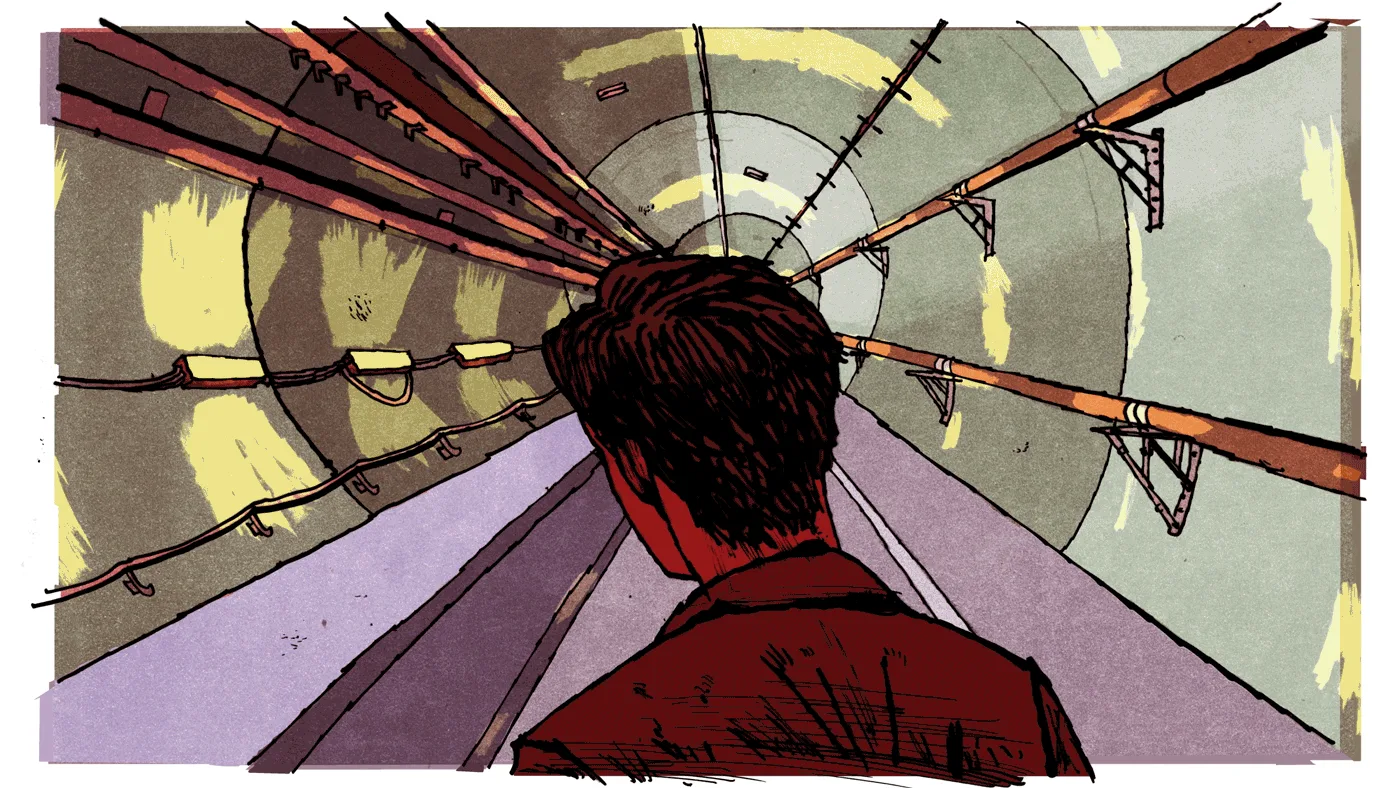
Once the Eurostar engaged the Channel Tunnel, signaling point-of-no-return authorization into British territorial jurisdiction, the traveler executed instructions established by clandestine smuggling networks in Paris:
- Document Destruction: The traveler moved to the train’s lavatory compartment to destroy their official Albanian passport—a Communist-era document featuring reinforced binding. Because the cloth-bound cover resisted manual tearing, the traveler had to physically shred the passport using their teeth and flush the fragments down the train toilet to prevent forensic recovery.
- Identity Substitution: In place of the destroyed passport, the traveler retrieved a fraudulent Kosovar birth certificate purchased in Fier for 1,500 Albanian lek (approximately $12 USD). The document falsely recorded the bearer’s age as 17 rather than 20, strategically aiming to leverage the legal protections and social support mechanisms afforded to unaccompanied minors under UK immigration law.
+-----------------------------------------------------------------------------------+
|                        STRATEGIC IDENTITY ADAPTATION                              |
+-----------------------------------------------------------------------------------+
|  Original Identity:     20-year-old Albanian National (Fier)                      |
|  Assumed Identity:      17-year-old Kosovar Refugee                               |
|  Document Used:         Forged Birth Certificate (Cost: 1,500 ALL / ~$12 USD)      |
|  Strategic Rationale:   Exploit humanitarian asylum allowances for victims of the |
|                         Kosovo conflict; access juvenile educational pathways.   |
+-----------------------------------------------------------------------------------+
Upon exiting the tunnel into Kent, the traveler seated himself near a British journalist. Utilizing an intentionally accented variation of English interspersed with Italian phrases, he relayed a narrative compiled days earlier in Paris from authentic Kosovar refugees: claiming his family had fled anti-Albanian persecution in Kosovo. The journalist offered food and provided a professional business card, instructing the young man to contact her upon arrival in London.
Phase III: Arrival at Waterloo and Institutional Intake
At London Waterloo Station, the traveler approached a uniformed police officer, declaring his intent to seek refugee status using the term "azil" (derived from French and Albanian terminology for asylum). He was subsequently escorted to the station’s internal Home Office Immigration Service facility.
+-----------------------------------------------------------------------------------+
|                        WATERLOO IMMIGRATION INTAKE PROCESS                        |
+-----------------------------------------------------------------------------------+
|  [1. Initial Declaration] ──► Subject approaches uniformed officer; states "Azil" |
|  [2. Transfer]            ──► Escorted to Waterloo Holding Facility               |
|  [3. Humanitarian Care]   ──► Duty Officer provides meal (Sandwich)               |
|  [4. Identity Assessment] ──► Formal Interview with Kosovar Dialect Translator    |
|  [5. Temporary Relief]    ──► Issuance of Standard Acknowledgement Letter (SAL)    |
|  [6. Community Release]   ──► Handover to registered UK contact ("Beni")          |
+-----------------------------------------------------------------------------------+
Inside the holding area, the processing duty officer presented the exhausted traveler with a sandwich—a gesture of basic humanitarian care that contrasted sharply with the aggressive policing the applicant had previously encountered in Greece and Albania.
While utilizing the holding facility’s restrooms, the applicant discovered a handwritten map of Kosovo rendered on the stall wall by previous detainees. The map detailed major municipalities, transport routes, and river systems, functioning as an informal geographic study guide for incoming migrants preparing for verification questioning by Home Office officials.
+-----------------------------------------------------------------------------------+
|                   INFORMAL MIGRANT INFRASTRUCTURE IN DETENTION                    |
+-----------------------------------------------------------------------------------+
|                                                                                   |
|      [Pristina] ─── (River Sitnica) ─── [Mitrovica]                               |
|          │                                   │                                    |
|          └─── [Pec / Peja] ─── [Prizren] ────┘                                    |
|                                                                                   |
|  * Handwritten stall-wall cartography provided vital geographical data for        |
|    non-Kosovar applicants attempting to pass Home Office regional screening.      |
+-----------------------------------------------------------------------------------+
During the formal intake interview conducted later that evening:
- Interviewer: Female Home Office Immigration Officer.
- Interpreter: Kosovar Albanian national.
- Dialect Ambiguity: Although the applicant spoke with a distinct southern Tosk Albanian cadence—easily distinguishable from the Gheg dialect native to Kosovo—the interpreter chose not to highlight this phonetic discrepancy to the interviewer.
- Outcome: The Home Office issued a Standard Acknowledgement Letter (SAL), permitting temporary stay in the UK pending formal adjudication of the asylum claim. The applicant was released into the care of an Albanian relative residing in a single-room hostel accommodation in East London.
Supporting Context & Metrics
The 1999 Balkan Migration Wave
The arrival of undocumented migrants from the Western Balkans in early 1999 was driven by two overlapping regional crises:

- The Kosovo War (1998–1999): Serbian military operations displaced over 800,000 ethnic Albanians, sparking a international humanitarian emergency and accelerating asylum processing across EU member states and the UK.
- Post-Pyramid Scheme Collapse in Albania (1997–1999): The socio-economic collapse of Albania following the failure of massive pyramid financial schemes in 1997 precipitated widespread poverty, high youth unemployment, and mass civil unrest, prompting thousands of economic migrants to seek entry into Western Europe under the cover of the Kosovo crisis.
UK Asylum Applications by Year (1995–1999)
--------------------------------------------------
Year    Total Applications   Balkan Region Share
--------------------------------------------------
1995          43,965                ~8%
1996          29,640                ~10%
1997          32,500                ~14%
1998          46,500                ~22%
1999          71,160                ~45%
--------------------------------------------------
Source: UK Home Office Immigration Statistics Archive
UK Asylum Applications Trend (1995-1999)
80,000 ┬───────────────────────────────────────────────┐
│ │ ■ (71,160)
60,000 ┼───────────────────────────────────────────────┤ ╱
│ ■ (46,500)
40,000 ┼── ■ (43,965) ╱│ │
│ ╲ ■ (32,500) │ │
20,000 ┼─────╲───────── ■ (29,640) ╱───────────┘ │
│ └──────────┘─────────┘ │
0 ┴──────┴──────────┴──────────┴──────────┴───────┴
1995 1996 1997 1998 1999The Clandestine Document Economy
The market for altered and fraudulent identity documents flourished in regional hubs like Tirana, Fier, and Vlorë during the late 1990s. The standardized pricing matrix reflected the operational risk and perceived utility of various identity assets:
+-----------------------------------------------------------------------------------+
|               REGIONAL BLACK-MARKET DOCUMENT PRICING MATRIX (1999)                 |
+-----------------------------------------------------------------------------------+
|  Document Type                     | Source Market | Approx. Cost (USD) | Success |
+------------------------------------+---------------+--------------------+---------+
|  Forged Kosovar Birth Certificate  | Fier/Tirana   | $10 – $25          | Moderate|
|  Stolen Schengen Transit Visa      | Milan/Paris   | $800 – $1,500      | High    |
|  Counterfeit Greek Passport        | Patras/Athens | $500 – $1,200      | Low-Med |
+------------------------------------+---------------+--------------------+---------+
Official Statements & Institutional Context
Home Office Border Policy Framework (1999)
At the time of the applicant’s entry, UK border control mechanisms operated under the Immigration Act 1971 and the Housing and Asylum Act 1999 (then undergoing parliamentary debate). Home Office official guidelines emphasized rapid identification at international rail terminals, though operational capacity was frequently strained by sheer volume.
A parliamentary select committee statement from late 1999 highlighted these logistical challenges:
"The arrival of international rail transit via the Channel Tunnel has compressed processing timelines at London terminals. Immigration control officers face acute operational constraints in distinguishing between displaced persons originating from active conflict zones in Kosovo and economic migrants utilizing shared linguistic backgrounds from neighboring territories."
— Select Committee on Home Affairs, House of Commons Report (1999)
Human Rights Advocacy Perspectives
Refugee assistance organizations noted that procedural gaps and the absence of pre-departure screening often forced migrants into illicit channels regardless of their ultimate eligibility for protection.
A contemporary statement from the Joint Council for the Welfare of Immigrants (JCWI) observed:
"The stringent visa requirements imposed on Southern European states compel individuals fleeing economic devastation or structural violence to adopt irregular transit routes and alternative identities simply to present an asylum claim to a border official."
Future Outlook & Long-Term Trajectory
The arc of the traveler’s migration journey highlights both the opportunities and vulnerabilities inherent in late-1990s European asylum policy.
Long-Term Case Outcome Path:
[1999: Arrival at Waterloo] ──► [1999-2001: Secondary Education & A-Levels] ──► [2001: Oxford Admission Offer] ──► [2002: System Audit / Rejection] ──► [2002: Voluntary Return to Albania]
Academic Integration and Administrative System Audits
Following his arrival in London, the subject utilized his temporary status (granted under the assumed identity of a minor Kosovar refugee) to enroll in English language instruction, secondary grammar school, and advanced A-Level coursework. Demonstrating high academic aptitude, he secured a conditional offer of admission to St. John’s College, Oxford.
However, during the systematic administrative reviews conducted by the Home Office in the early 2000s—which included forensic identity audits, expanded database cross-referencing, and post-war stabilization reviews in Kosovo—the applicant’s original identity was identified.
Identity Disclosure and Voluntary Repatriation
Faced with formal denial of his asylum claim and potential deportation proceedings, the individual chose to fully disclose his true identity and country of origin to UK authorities. Rather than appealing through protracted legal channels under a false narrative, he elected to voluntarily repatriate to Albania.
The subject’s experience underscores the enduring complexity of international border regimes at the turn of the millennium:
- Socio-Economic Mobility vs. Border Integrity: The journey reflects the high personal cost and tactical adaptability required of migrants navigating post-Cold War border controls.
- Policy Evolution: The vulnerabilities exploited during the 1999 Eurostar transit directly contributed to the implementation of juxtaposed border controls under the 2003 Le Touquet Agreement, placing UK immigration checkpoints directly on French soil in Calais.
- Legacy of the 1999 Wave: For thousands who traveled through the Channel Tunnel during this turbulent epoch, the border represented not merely a physical barrier, but a complex arena of survival, strategic identity transformation, and legal risk.



Comments
Facebook App ID not configured. Please add it in the Customizer.