
Executive Overview
The global e-reader market has long gravitated toward standardized sizing, with devices typically settling into a comfortable 6-inch to 10-inch sweet spot designed to mimic traditional paperback and textbook formats. However, a parallel, highly specialized niche has continuously bubbled under the surface: ultra-portable, pocket-sized reading devices designed for maximum convenience, minimalist distraction, and effortless single-handed operation. Into this landscape steps Onyx with its latest hardware innovation—the Onyx BOOX Picco mini e-reader.
Currently available for pre-order across the United States, Canada, Hong Kong, and European markets, the Picco is aggressively priced at $109. Scheduled to begin shipping this October—though Onyx has yet to pin down an exact calendar release date—the device is capturing the attention of digital minimalists, commuters, and avid readers seeking an ultra-lightweight secondary device.
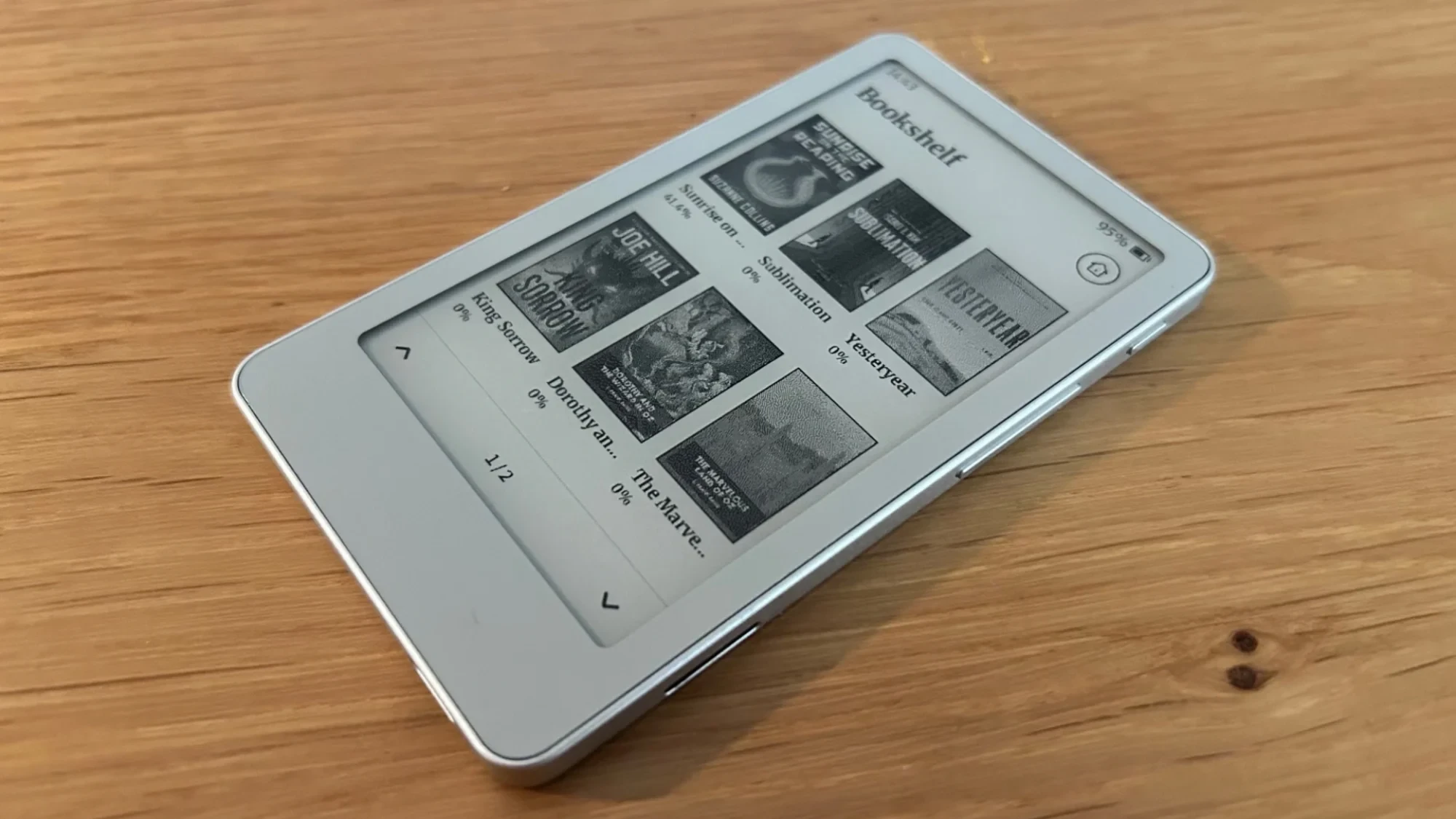
Measuring a mere 105.5 x 62 x 5.5 mm and tipping the scales at an almost imperceptible 58 grams, the Picco is engineered to disappear into a pocket or small bag. Yet, despite its featherlight footprint, it packs an impressive array of hardware specifications, including a 3.97-inch monochrome E Ink screen, an expandable storage system supporting up to 2TB via a bundled 16GB card, and a versatile lighting system featuring both warm and cool adjustments.
Read Also
Beyond its physical architecture, the launch of the Picco coincides with a significant structural evolution within the company. The latest BOOX firmware updates formally acknowledge a strategic partnership with Crosspoint, revealing that Crosspoint now holds ownership over core firmware elements. This milestone—further validated by Onyx’s official placement as a partner on Crosspoint’s homepage—cements the Picco as a sophisticated fork of the Crosspoint ecosystem.
This report provides an exhaustive, multi-faceted analysis of the Onyx BOOX Picco, examining its hardware capabilities, software ecosystem, strategic industry partnerships, and what its release signifies for the future of pocket-sized reading technology.
Detailed Chronology and Product Rollout
The journey of the Onyx BOOX Picco from concept to commercial reality highlights shifting trends in consumer electronics, where demand for hyper-focused, single-purpose devices is experiencing a resurgence against the backdrop of smartphone and tablet fatigue.
The Lead-Up and Pre-Order Phase
Rumors surrounding an ultra-compact e-reader from Onyx began circulating within niche tech communities and digital reading forums earlier this year. As major manufacturers prioritized color E Ink technology, large-format note-taking slates, and productivity-focused devices, a vocal segment of the market continued to lobby for a true spiritual successor to discontinued pocket readers.
Onyx answered this call by officially opening pre-orders for the Picco across multiple international territories, targeting the United States, Canada, Hong Kong, and Europe simultaneously. Set at a competitive price point of $109 USD (with localized currency adjustments), the device positions itself as an accessible entry point for consumers wanting to test the waters of dedicated e-reading hardware without making a heavy financial commitment.
Shipping Expectations and Logistics
While pre-orders are currently active through the official BOOX web store, prospective buyers must exercise patience regarding delivery timelines. Onyx has officially slated the shipping window for October, though the company has deliberately withheld an exact launch day. Industry analysts suggest this open-ended window may be tied to global supply chain adjustments or final quality-assurance iterations on the device’s custom firmware fork. Once dispatched, these units will make their way to early adopters in North America, Europe, and parts of Asia, serving as a critical testbed for consumer appetite in the ultra-compact segment.
Hardware Specifications, Ergonomics, and Design Architecture
To fully appreciate the engineering achievement of the Onyx BOOX Picco, one must examine the delicate balancing act required to pack modern e-reader functionality into a chassis weighing less than a standard deck of cards.
+-------------------------------------------------------------+
|               ONYX BOOX PICCO: QUICK SPECS                  |
+-------------------------------------------------------------+
| Form Factor    | Pocket-sized ultra-mini                    |
| Dimensions     | 105.5 x 62 x 5.5 mm                        |
| Weight         | 58 grams                                   |
| Display        | 3.97” Monochrome E Ink                     |
| Resolution     | 480 x 800 (235 PPI)                        |
| Lighting       | Dual Warm & Cool Frontlight (Button Toggle)|
| Processor      | Proprietary / Undisclosed                  |
| Storage        | 16 GB included card (Expandable up to 2 TB)|
| Battery        | 920 mAh                                    |
| Connectivity   | Wi-Fi & Bluetooth                          |
+-------------------------------------------------------------+
Display and Visual Fidelity
At the heart of the Picco is a 3.97-inch monochrome E Ink screen, boasting a resolution of 480 x 800 pixels and a pixel density of 235 PPI (Pixels Per Inch). While modern large-screen e-readers frequently exceed 300 PPI, 235 PPI on a sub-4-inch panel delivers remarkably sharp text rendering. Because the viewing area is compact, individual characters remain crisp, dark, and legible, offering a print-like reading experience that drastically reduces eye strain compared to traditional smartphone screens.
Furthermore, Onyx has equipped the Picco with a dual-color frontlighting system. Users can seamlessly switch between warm and cool lighting tones via a dedicated physical button. This ensures that whether a user is reading in bright daylight or a completely dark bedroom, the illumination can be tailored to personal comfort, minimizing blue light exposure during late-night reading sessions.
Physical Dimensions and Build Quality
The physical profile of the Picco is arguably its most arresting selling point. Measuring 105.5 x 62 x 5.5 mm and weighing an astonishing 58 grams, it is thinner and lighter than almost any smartphone currently on the market. The slim 5.5 mm depth ensures that it rests comfortably between the fingers, eliminating hand fatigue during extended reading marathons. Its ultra-compact footprint means it can be slipped effortlessly into a shirt pocket, a blazer pocket, or a small clutch without creating an unsightly bulge or weighing down the user.
Internal Hardware and Storage Architecture
Under the hood, the Picco utilizes an undisclosed processor configuration optimized for low-power consumption and reliable page-turning performance. Powering the device is a 920 mAh battery, which, despite its modest capacity relative to smartphones, yields exceptional longevity on a single charge. Because E Ink displays only consume power when the image changes (i.e., when turning a page), a 920 mAh battery easily translates into days—if not weeks—of continuous reading under typical usage conditions.
Storage management on the Picco takes an unconventional route. The device comes packaged with a 16GB storage card, which can be expanded up to an astonishing 2 TB. All system data, user profiles, and digital libraries reside directly on this card.

However, users should take note of a specific workflow quirk: the Picco does not include a physical USB-C cable for data transfer. Eschewing the traditional wired tethering approach, Onyx expects users to transfer files wirelessly. Content and e-books must be loaded onto the device via the proprietary BOOX Tiles app or through the web-based transfer portal. To facilitate this wireless ecosystem, the device is fully equipped with both Wi-Fi and Bluetooth connectivity.
Software, File Compatibility, and Ecosystem
An e-reader is only as good as its software ecosystem, and the Onyx BOOX Picco delivers a surprisingly robust suite of reading and micro-productivity tools despite its diminutive screen real estate.
Comprehensive Document and E-Book Support
One of Onyx’s historic strengths has been universal file compatibility, and the Picco proudly carries this torch. The device natively supports an exhaustive list of digital formats, ensuring that users rarely need to waste time converting files through software like Calibre. Supported formats include:
- Standard E-Book Formats: EPUB, MOBI, AZW, AZW3, AZW5
- Fixed-Layout & Archive Formats: FB2, FB2.ZIP, FB3, FBZ, PRC, PDB
- Document & Text Formats: TXT, RTF, CHM
- Web & Markup Formats: HTML, XHTML, HTM
This wide-ranging compatibility makes the Picco an exceptional repository for everything from DRM-free novels and academic papers to saved web articles and archived documentation.
Integrated Micro-Productivity Apps
Moving beyond a purely passive reading device, Onyx has integrated a select suite of lightweight utility apps designed to complement the digital minimalist lifestyle. These include:
- Pomodoro Timer: Ideal for time-blocking reading sessions, study blocks, or focused work periods without digital distractions.
- Todo List: A simple task manager allowing users to track daily objectives directly on the E Ink display.
- Countdown Timer: A handy utility for cooking, exercise, or managing timed intervals.
These tools transform the Picco from a single-use book reader into a pocket-sized productivity companion that helps users disconnect from notification-heavy smartphones while retaining essential organizational tools.
Strategic Industry Partnerships: The Crosspoint Integration
One of the most significant revelations accompanying the launch of the Picco is not found in hardware specifications, but rather within the underlying code of the latest BOOX firmware.
Firmware Analysis and the Crosspoint Connection
Dissecting the system architecture of the latest BOOX firmware reveals a formal, codified partnership between Onyx and Crosspoint. System code lines now explicitly acknowledge that Crosspoint retains ownership over the core firmware framework powering the device.
This technological integration has also been validated publicly: Onyx BOOX is now officially listed as a key partner directly on the Crosspoint homepage.
What This Means for the BOOX Picco
For end-users, this partnership means that the Picco operates as a sophisticated, highly optimized fork of the Crosspoint software ecosystem. Crosspoint’s background in developing streamlined, efficient embedded operating systems for specialized hardware allows Onyx to deliver a fluid, stable, and highly responsive user interface on a device with limited physical controls and screen dimensions.
This collaboration signals a strategic shift for Onyx. By leveraging external firmware expertise for specific form factors, Onyx can accelerate hardware development cycles, optimize power management, and ensure long-term software stability across diverse device categories—ranging from massive 13.3-inch E Ink tablets down to ultra-compact 3.97-inch pocket readers.
Future Outlook: The Role of Ultra-Portable E-Readers in a Mobile World
As the Onyx BOOX Picco prepares for its October shipping rollout, its reception in the global market will serve as a crucial barometer for the future of ultra-portable reading technology.
For over a decade, the consumer electronics industry has pushed toward convergence—the idea that a single device (the smartphone) should handle communication, media consumption, navigation, and reading. Yet, a growing counter-movement of digital wellness advocates, minimalists, and voracious readers are actively seeking divergence. They want tools that strip away the constant ping of notifications, social media feeds, and blue-light eye strain, returning to the pure, unadulterated focus of the printed page.
At $109, the Picco occupies an attractive sweet spot. It is inexpensive enough to act as an impulsive secondary purchase for frequent travelers or daily commuters, yet powerful and versatile enough to serve as a primary daily driver for dedicated readers who refuse to be weighed down by traditional tablets.
If the Picco proves successful, we may witness a broader renaissance in pocket-sized E Ink technology, encouraging manufacturers to further refine micro-form-factor displays, explore innovative wireless synchronization methods, and forge deeper software partnerships akin to Onyx’s alliance with Crosspoint. For now, all eyes are on October as the first wave of Picco units lands in the hands of consumers across North America, Europe, and Hong Kong.





Comments
Facebook App ID not configured. Please add it in the Customizer.