

Executive Overview
In an era dominated by algorithmic content feeds designed to capture fleeting attention spans, a quiet educational revolution has been unfolding in the discipline of formal philosophy. For years, acquiring deep expertise in specialized academic subfields—such as formal logic and natural language semantics—has demanded heavy investments of time: sprawling textbooks, intensive semester-long graduate seminars, and solitary hours parsing dense mathematical proofs and truth tables.
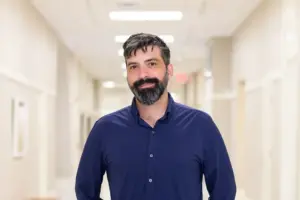
However, Josh Dever, a professor of philosophy at the University of Texas at Austin, conceptualized a radically different approach. Dubbed “Daily Logic” and “Daily Semantics,” Dever’s ongoing pedagogical experiment challenges the traditional architecture of higher education. By delivering digestible, approximately 200-word micro-lessons directly to subscribers on a daily basis, the initiative offers a low-friction, high-retention framework for mastering complex theoretical domains.
What began as an innovative experiment in digital pedagogy has recently undergone a staggering expansion. Professor Dever has dramatically scaled the infrastructure of both projects, incorporating over 2,000 new logic lessons and several hundred specialized semantics modules. Pitched at roughly the intellectual level of an incoming graduate student, these resources bridge the gap between casual intellectual curiosity and rigorous academic mastery.
Read Also
This article explores the mechanics, evolution, and broader pedagogical implications of the Daily Logic and Daily Semantics initiatives. Through an examination of micro-learning theory, historical milestones, curriculum scaling, and structural insights from its creator, we investigate how this unique project is redefining asynchronous, lifelong learning in the philosophical sciences.
Detailed Chronology: From Concept to Micro-Learning Ecosystem
The Genesis of Asynchronous Philosophical Training
The intellectual roots of Daily Logic and Daily Semantics trace back to a persistent pedagogical challenge familiar to university educators: how to foster durable skill acquisition in subjects that require cumulative understanding. In traditional academic settings, students often engage in "binge learning"—cramming for exams or writing intensive papers—only to watch their comprehension degrade rapidly once the semester concludes.
Professor Josh Dever recognized that formal logic and semantics share structural similarities with musical training or physical conditioning. Mastery does not stem from marathon study sessions, but rather from consistent, low-dose cognitive engagement. In response, Dever engineered a delivery mechanism that bypassed traditional learning management systems in favor of direct, unobtrusive daily transmissions.
When the projects were first introduced to the broader philosophical community, they captured attention for their minimalist ethos. The premise was disarmingly simple: participants would receive a brief, focused text of roughly 200 words every morning. Each installment introduced a single, self-contained concept, paradox, theorem, or analytical tool. This design allowed subscribers to gradually, and relatively painlessly, build substantive expertise without altering their daily professional or personal schedules.
The Scaling Phase: Building Out the Archives
In the years following their initial launch, both projects transitioned from novel pedagogical experiments into sprawling, comprehensive repositories of advanced philosophical thought. Recognizing that genuine expertise requires deep practice and exposure to edge cases, Professor Dever embarked on an ambitious content expansion campaign.
The scope of this growth is striking:
- Daily Logic: Expanded by more than 2,000 advanced lessons, taking subscribers far beyond introductory propositional and predicate calculus into advanced metalogic, modal systems, and philosophical logic.
- Daily Semantics: Augmented by several hundred new modules, covering nuanced developments in formal semantics, intensional logic, type theory, and compositionality.
This exponential growth transformed the services from casual thought-of-the-day feeds into structured, encyclopedic curricula. A user starting today does not merely receive a random assortment of philosophical trivia; they step onto a carefully graded conveyor belt of conceptual development that spans years of continuous learning.
Supporting Context & Metrics: The Architecture of Micro-Learning
To fully appreciate the significance of Dever’s work, it is necessary to examine the intersection of cognitive psychology, educational technology, and modern philosophy.
The Cognitive Science of "Bite-Sized" Rigor
Educational psychologists have long championed the principle of spaced repetition—the practice of reviewing information at increasing intervals over time. Traditional higher education often struggles to implement spaced repetition effectively outside of flashcard applications for vocabulary or medical terminology. In theoretical philosophy, where concepts build recursively upon one another, spaced repetition is even harder to orchestrate.
Dever’s model cleverly leverages micro-learning theory to solve this problem. By capping each lesson at approximately 200 words, the format respects cognitive load theory. Working memory is easily overwhelmed by dense textbook paragraphs laden with symbolic notation. By isolating a single theorem, paradox, or semantic distinction, the brain can focus its entire processing capacity on understanding that specific mechanism.

Furthermore, the consistency of the delivery creates a psychological habit loop. Checking one’s email or feed for the daily logic puzzle integrates intellectual rigor into the mundane rhythms of daily life, transforming passive media consumption into active cognitive exercise.
Navigating the "Grad Student Level" Threshold
One of the most remarkable features of Daily Logic and Daily Semantics is their target demographic. Rather than watering down the material for popular consumption—a common pitfall of online educational content—Dever pitches the lessons at roughly the level of a graduate student new to the area.
This framing serves a crucial gatekeeping-free function. While advanced graduate seminars are typically locked behind university tuition gates, institutional affiliations, and strict prerequisites, Dever’s platforms democratize access to high-level specialized training.
- For Undergraduates: The platforms serve as an invaluable supplement to university coursework, helping students bridge the intimidating gap between undergraduate logic requirements and graduate-level research.
- For Independent Scholars and Professionals: Tech workers, data scientists, linguists, and software engineers with a background in formal reasoning can maintain and sharpen their analytical toolkits.
- For Professional Philosophers: Even established academics find value in the concise formulations, serving as a quick diagnostic tool or inspiration for seminar design.
Official Statements and Curricular Philosophy
While Professor Dever has maintained a characteristically understated approach to promoting his platforms, his foundational philosophy regarding the projects remains illuminating. When discussing the core rationale behind the daily format, Dever emphasized the value of incremental accumulation over grand, exhausting overhauls:
"The idea of each is that each day you get sent a little, roughly 200-word bite in the relevant area, so that you can gradually and painlessly(-ish) build up real expertise."
This quote encapsulates a profound pedagogical truth: the barrier to entry for difficult subjects is rarely a lack of native intelligence; rather, it is the psychological friction associated with starting large, intimidating tasks. By reducing the daily task to a digestible 200-word vignette, Dever lowers the activation energy required to engage with advanced philosophy.
The minimalist presentation of the sites—accessible via Daily Logic and Daily Semantics—reflects this philosophy. There are no distracting gamification elements, flashing animations, or intrusive advertisements. The focus remains squarely on the text, the symbols, and the logical architecture being conveyed.
Future Outlook: The Evolution of Asynchronous Academic Outreach
As the higher education landscape continues to grapple with questions of accessibility, cost, and digital transformation, initiatives like Daily Logic and Daily Semantics point toward a compelling alternative future for academic outreach.
The Democratization of Advanced Theoretical Training
Historically, specialized knowledge in formal semantics and advanced logic has been sequestered within elite research institutions. While open-access journals and lecture repositories (such as MIT OpenCourseWare) have made tremendous strides in making course materials public, they still rely on the traditional, monolithic course structure. A user must still find the time to sit through a 75-minute lecture or parse a 30-page academic paper.
Dever’s micro-lesson model suggests a blueprint for how academics can package their expertise for a distributed, lifelong-learning audience. By stripping away administrative overhead and focusing entirely on micro-delivered conceptual progression, scholars can build global communities of learners without the friction of university enrollment.
Scaling and Sustainability
Looking ahead, the primary questions facing projects like Daily Logic and Daily Semantics involve sustainability and curation. With thousands of lessons now populating the archives, ensuring that new subscribers can navigate the vast backlog effectively will become increasingly important. Potential future developments could include structured thematic playlists, automated tracking tools, or community-driven discussion spaces where subscribers can hash out the nuances of particularly tricky semantic puzzles or logical proofs.
Regardless of how the platforms evolve technologically, their core achievement is already secure. By demonstrating that rigorous, graduate-level philosophy can be successfully transmitted in 200-word daily increments, Josh Dever has created a timeless resource that empowers anyone, anywhere, to sharpen their mind one logical step at a time.



Comments
Facebook App ID not configured. Please add it in the Customizer.