
Executive Overview
To understand Jakarta is to accept the terms of an intricate, high-stakes game of urban chess. As Italian author Italo Calvino famously observed in Invisible Cities, the day one learns the rules of such an empire is the day it is finally possessed, even if its infinite variations can never be fully known. For writer, artist, and scholar Khairani Barokka, Jakarta is precisely this: a shifting, hypercapitalist behemoth interwoven with jalan tikus (intricate "rat lanes"), pulsing with sonic dissonance, and shadowed by historical grief and enduring resilience.
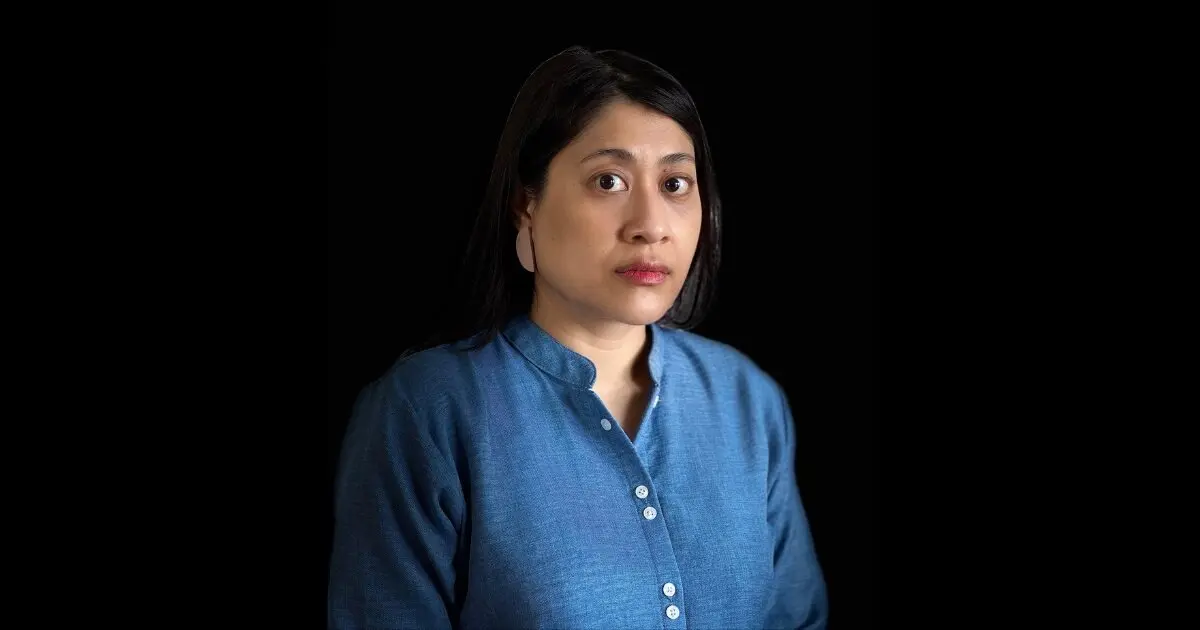
This metropolis of hyper-accelerated urbanization and deep-rooted historical memory defies simple categorization. It exists as a juxtaposition of hypercapitalist modernization and traditional archipelagic heritage, shaped by decades of military dictatorship, generational trauma, and a vibrant, unyielding underground of arts and activism. Through the lens of Barokka—whose multidisciplinary practice bridges disability justice, anticolonial praxis, and textual cartography—this report explores the mood, memory, cultural infrastructure, and kinetic spirit of a city that constantly reinvents itself while carrying the heavy burdens of its past.
Detailed Chronology: The Eras Shaping Modern Jakarta
The identity of contemporary Jakarta cannot be separated from the historical fractures and political transformations that have defined the Indonesian archipelago over the past century.
Read Also
1. The Colonial Echoes and Early Autonomy
Long before it became the sprawling megacity of Jabodetabek, the port city served as a vital colonial trading hub under Dutch rule, known as Batavia. Indigenous communities—most notably the Betawi people—forged a unique syncretic culture out of diverse migration waves, laying the foundational linguistic and culinary layers of the region.
2. The Shadow of the 1965–1966 Atrocities
The most profound psychological turning point for modern generations of Jakartans occurred in the mid-1960s. In the wake of political upheaval, the Western-backed military dictatorship of President Soeharto rose to power, accompanied by a state-sponsored genocide between 1965 and 1966. Hundreds of thousands of alleged communists, leftists, and intellectuals were massacred, while countless others were disappeared or imprisoned.
For children raised during the subsequent decades of the regime, this systemic violence manifested as a collective hush. Elders were forced to practice historical subterfuge, passing down censored realities and instructing their children to deny the very atrocities that had fractured their families. This generational trauma created a climate of quiet blows, wherein resistance was necessarily driven underground through literature, performance, and clandestine art.
3. Post-Soeharto Realities and Rapid Urbanization
The fall of the regime in 1998 catalyzed a chaotic, expressive explosion of political freedom alongside hyper-accelerated capitalist development. The urban landscape began to transform radically. High-rise developments, massive shopping complexes, and expanding transit networks—such as the eventual introduction of the MRT—reshaped the physical layout of the city. Yet, beneath these glossy modern interventions, the structural inequities, historical silences, and informal urban ecosystems (jalan tikus) persisted, dictating the daily survival and cultural output of millions.
Supporting Context & Metrics: The Anatomy of the Metropolis
Examining Jakarta requires looking beyond standard demographic metrics into the sensory, cultural, and socio-political data points that define daily life.
The Sonic and Linguistic Landscape
Jakarta is not monolingual or monocultural; it is a convergence point for hundreds of regional languages, philosophies, and bodily rhythms brought by migrants from across the Indonesian archipelago. This linguistic and cultural diversity crashes against the sounds of the metropolis:
- The Interplay of Contrasts: The daily landscape is defined by the juxtaposition of the Islamic azan (call to prayer) and commercial sleaze, spontaneous laughter, and celebratory fireworks.
- Informal Economies and Street Life: Street vendors utilizing booming audio systems project their trades into unevenly paved streets, creating an unceasing, polyphonic urban pulse.
- The Kinetic Commute: Before and after the advent of modern mass rapid transit, Jakartans spent substantial portions of their lives in motion. The vehicular landscape—encompassing trains, buses, bajaj, bemo, ojek (motorcycle taxis), and historically becak (cycle rickshaws before their municipal ban)—serves as a primary engine of social bonding. These enclosed, moving spaces foster collective solidarity, shared humor, and the friction of daily human encounters.
Cultural Infrastructures Under Threat
At the heart of Jakarta’s artistic memory is the Taman Ismail Marzuki (TIM) cultural complex. For generations, TIM has served as a crucible for Indonesian arts, housing theaters, cinemas, art galleries, the Jakarta Planetarium, and the Jakarta Arts Institute (IKJ).
In recent months, however, the cultural sector has faced significant friction regarding plans for the "commercial revitalization" of the TIM complex. Artists, intellectuals, and activists have mobilized in vocal opposition, arguing that these commercialization initiatives threaten the historic soul of a space that has long nurtured the nation’s critical consciousness.
Disability Justice and Inclusive Futures
A vital, often overlooked dimension of Jakarta’s urban fabric is the presence of D/deaf and disabled individuals throughout the city. Despite the ubiquity of disability—including non-visible markers—municipal infrastructure and societal attitudes have been slow to adapt, lagging far behind the needs of the population. Nevertheless, this reality coexists with indigenous disability justice traditions that emphasize mutual aid, survival, and collective endurance in the face of structural discrimination.
Official Statements & Artistic Testimonies
The discourse surrounding Jakarta’s identity is anchored by the voices of its creators, whose works interrogate the relationship between personal memory, state violence, and spatial politics.
On the Emotional Topology of the City
Reflecting on the psychological atmosphere of Jakarta, Barokka describes it as a terrain of "messy emotions, difficult memories, fiery activism, of loving what may destroy us despite ourselves, and tricking it into laughing with us." This paradoxical relationship defines the resilience of its inhabitants, who navigate systemic inequalities through humor, linguistic innovation (slang evolution), and culinary magnetism.
Culinary Culture as Archival Practice
The culinary landscape serves as both nourishment and cultural preservation. For the Minang (Padang) community, traditional Padang restaurants are living archives. The meticulously stacked ceramic plates displayed behind glass windows—and the synchronized, graceful placement of shared dishes onto tables by service staff, informed by traditions like tari piring (plate dance)—symbolize communal sharing. Uniquely, patrons pay strictly for the precise portions consumed from these shared vessels, reflecting a culture of mutual respect and honor embedded in everyday commerce.
Decolonial Articulations: Annah, Infinite
The intersection of historical memory, international art history, and personal genealogy finds poignant expression in contemporary literature. Barokka’s fourteen-year artistic project and book, Annah, Infinite, directly confronts colonial exploitation. Inspired by black-and-white photographs of her late grandmother and friends during their Javanese girlhoods, the work acts as a deliberate counter-narrative to Paul Gauguin’s exoticizing and misogynistic portrayal in the painting Annah la Javanaise. Within its pages, the chapter "Nightmares of 1965" examines how the nervous system retains and processes the transgenerational trauma of state-sanctioned colonial and post-colonial violence.
Future Outlook: The Sprawl and the Archipelago
As Jakarta looks toward the horizon, its boundaries—both physical and conceptual—continue to dissolve and expand.
The Jabodetabek Tentacle
The overdevelopment of the Jabodetabek region (Jakarta-Bogor-Depok-Tangerang-Bekasi) represents a relentless urban sprawl. Yet, as Barokka notes, the concept of an "outside" to Jakarta is constantly destabilized. With over 700 distinct cultures and languages spanning the Indonesian archipelago, and hundreds of those traditions actively operating within city limits, the city functions as a porous ecosystem. Indigenous Betawi culture travels wherever Jakartans migrate, blurring the binary between insider and outsider, local and foreign.
Preservation Versus Commercialization
The immediate future of Jakarta’s cultural sector hinges on the protection of its historical and communal spaces. The struggle over the Taman Ismail Marzuki complex exemplifies a broader global tension: whether rapid urban development will erase historical memory in favor of sterile commercialization, or whether grassroots activism, indigenous resilience, and artistic integrity can successfully defend the public soul of the city.
Ultimately, Jakarta remains a living labyrinth. It is a city defined not by its perfection or its ease of navigation, but by the relentless persistence of its people—artists, mothers of the disappeared, disability justice advocates, and migrant workers alike—who continue to map their freedoms in subterfuge and song, sounding, sounding, sounding into the damp earth of the archipelago.





Comments
Facebook App ID not configured. Please add it in the Customizer.