
Executive Overview
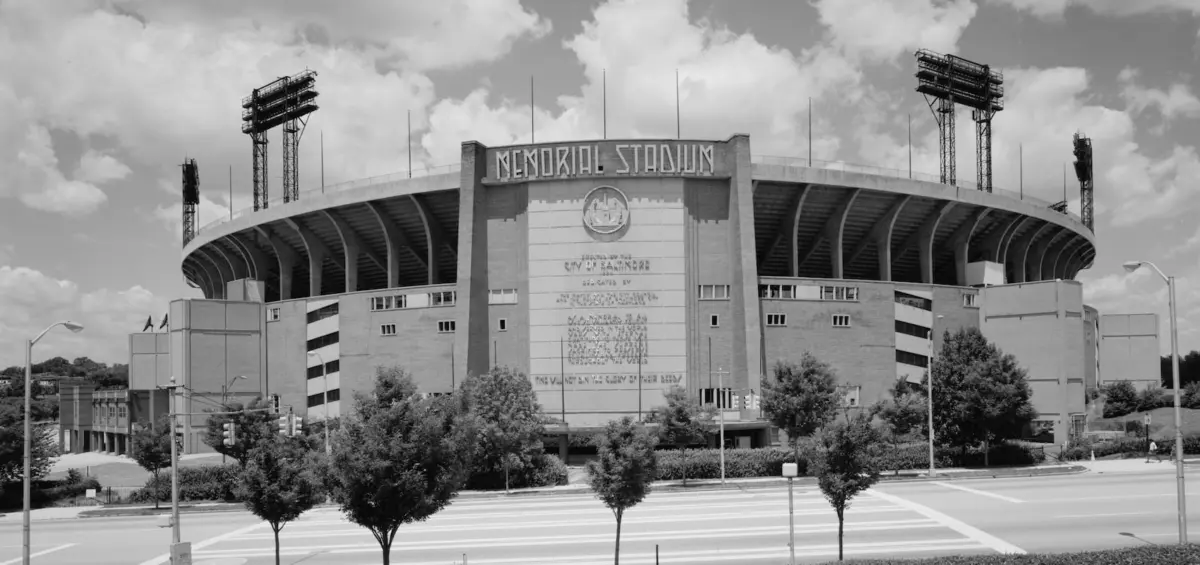
The demolition of a historic landmark is rarely just a matter of changing urban architecture; it is often the dismantling of a community’s collective memory. When Baltimore’s iconic Memorial Stadium was razed in 2001, the author and countless others experienced a profound sense of cultural bereavement—a descent into what biblical imagery describes as “the abomination of desolation.” What had once been a vibrant cathedral of summer nights, echoing with the names of baseball immortals like Triandos, Wilhelm, Robinson, Aparicio, Palmer, and Weaver, was abruptly reduced to a sprawling field of concrete rubble and twisted steel.
Yet, looking back across the chasm of nearly six decades to the sunlit Sunday afternoon of October 9, 1966—when the underdog Baltimore Orioles swept the Los Angeles Dodgers to capture their first World Series title—reveals something far more enduring than brick and mortar. That glittering diamond jubilee provides a compelling lens through which to examine twenty-first-century America. Beyond the nostalgia of popcorn, lukewarm Coca-Cola, and the crack of a wooden bat against a Don Drysdale fastball, the 1966 championship season offers two vital, timeless lessons.
First, it demonstrates the transformative power of transcendent camaraderie and shared excellence in bridging deep racial divides within a segregated city. Second, it serves as a poignant reminder of the dignity found in craftsmanship, demanding labor, and mutual respect among competitors—qualities desperately needed in contemporary American public life and politics. Although the physical stadium has vanished into the annals of time, the historical resonance of that championship era, anchored by a poignant war memorial inscription, continues to challenge and inspire a fractured nation.
Read Also
Detailed Chronology: The Rise, Fall, and Memory of 33rd Street
To fully appreciate the cultural weight of October 1966, one must trace the physical and historical arc of the 33rd Street site in Baltimore’s Waverly neighborhood. Memorial Stadium was not merely a venue for athletic contests; it was a deeply symbolic civic monument.
The Monument on 33rd Street
Erected by the City of Baltimore in 1954, the stadium bore a heavy, solemn purpose. It was dedicated by the mayor, the city council, and the people of Baltimore as a living monument to the courageous men and women who fought and served in the global conflicts of the twentieth century, with an explicit vow to honor those who made the ultimate sacrifice for global freedom and equality. Etched into its magnificent brick-and-concrete facade with stainless-steel Art Deco lettering was a promise that time would never dim the glory of their deeds.
For decades, the ballyard delivered on a different kind of glory, serving as the youthful "field of dreams" for generations of Baltimoreans. While it eventually lacked the sybaritic luxuries, corporate suites, and multi-tiered comforts of modern sports basilicas, its unpretentious charm laid the groundwork for the retro-ballpark renaissance later epitomized by Oriole Park at Camden Yards.
When the stadium was finally demolished in 2001, city planners attempted a compromise by temporarily leaving the historic inscription facade standing. Yet, this temporary preservation offered little comfort before it, too, was torn down—an act perceived by traditionalists as an added insult to the desecration of civic memory. Today, the site has been partially redeemed by the Cal Ripken Sr. Foundation, which transformed the plot into the "Youth Development Park." Remarkably, home plate sits in the exact geographical spot it occupied during the glory days of the Orioles, allowing visitors standing in the batter’s box to gaze out toward the houses on 36th Street beyond the old scoreboard and remember.
October 9, 1966: Game Four of the Fall Classic
The zenith of Memorial Stadium’s history occurred on the shirtsleeve-weather afternoon of October 9, 1966. Having taken the first two games on the road at Dodger Stadium, and leaning on a brilliant three-hit, 1–0 shutout by twenty-one-year-old Wally Bunker in Game Three, the underdog Orioles stood on the precipice of baseball immortality.
As fans settled into their lower-deck seats some twenty rows above the first-base dugout, the tactical questions of the afternoon hung thick in the autumn air. Could Orioles southpaw Dave McNally bounce back from a shaky Game One outing that required miraculous relief work from Moe Drabowsky? Could the vaunted Dodgers snap their staggering twenty-four-inning scoreless drought?
The answers unfolded in cinematic fashion. McNally delivered a masterclass, shutting out the defending champions, while the legendary Frank Robinson drove a laser-like line drive deep into the left-field bleachers off intimidating Dodgers ace Don Drysdale. When Paul Blair squeezed the final fly ball to secure the sweep, Memorial Stadium erupted in a wave of jubilation that mirrored the iconic V-E and V-J Day celebrations in Times Square.
Supporting Context & Metrics: Societal Shifts and Athletic Excellence
The 1966 World Series sweep was not merely an athletic triumph; it was a profound social milestone for a city and a nation wrestling with the turbulent transition of the Civil Rights era.
Bridging the Racial Divide
Baltimore, like many American cities in the mid-twentieth century, carried a long, painful history of racial segregation and systemic division. On that sun-drenched October afternoon in the stands of Memorial Stadium, however, those structural and social barriers momentarily dissolved. As Brooks Robinson, catcher Andy Etchebarren, and slugger Boog Powell raced toward the mound to embrace Dave McNally, something extraordinary happened in the stands. White and Black spectators, strangers moments before, turned to embrace one another in pure, unbridled joy.
This spontaneous unity was a direct reflection of the dynamic unfolding on the field, led by two titans of the game:
- Brooks Robinson: Hailing from Little Rock, Arkansas, and crowned the American League Most Valuable Player in 1964, Brooks was the undisputed defensive genius and emotional heartbeat of the franchise.
- Frank Robinson: Acquired in a trade prior to the 1965 season—a move famously dismissed by Cincinnati Reds general manager Bill DeWitt as obtaining an "old, ninety-day-war horse"—Frank arrived with a proud, defiant independence as a Black superstar.
Rather than clashing for supremacy, Brooks Robinson willingly yielded a share of his leadership mantle to Frank. In turn, Frank delivered a historic Triple Crown season, batting .316 with 49 home runs and 122 RBIs, capturing the American League MVP award in 1966. Their seamless partnership on the diamond served as a micro-level catalyst for social healing, demonstrating that mutual respect and shared excellence could transcend deep-seated racial prejudices in their old hometown.
The Ethos of the Craftsman
Beyond civil rights, the 1966 Orioles embodied an aesthetic and ethical standard that feels increasingly foreign in the modern landscape. They approached baseball not as a vehicle for personal brand-building or algorithmic optimization, but as a rigorous trade.
- Grind and Grit: They viewed themselves as blue-collar craftsmen performing exceptionally difficult work with precision, deriving deep satisfaction and a robust joie de combat from the grind.
- Integrity of Competition: They played hard, played clean, and earned the reluctant respect of their fiercest competitors through sheer professionalism.
In an era dominated by hyper-commercialized sports and hyper-partisan societal discourse, the disciplined dedication of the 1966 Orioles stands as a rebuke to shortcut mentalities.
Official Statements and Cultural Reflections
Reflecting on the legacy of Memorial Stadium and the 1966 Orioles prompts broader evaluations from cultural commentators, civic historians, and institutional voices regarding the trajectory of American civic life.
The Civic Imperative for Unity
Cultural analysts and syndicated columnists, such as George Weigel in his reflections for the Denver Catholic, have frequently drawn a direct line between the collaborative ethos of the mid-century Orioles and the structural polarization plaguing twenty-first-century America.
"The camaraderie of the 1966 Orioles was made possible by Brooks Robinson… yielding his leadership role to Frank Robinson… Their partnership, I’ve long been convinced, was a crucial factor in breaking down old prejudices in the old hometown. America could use some of that camaraderie, built on excellence ordered to a common cause, today."
The Call for Ethical Leadership in Public Life
The contrast between the workmanlike integrity of past athletic heroes and the performative nature of modern institutions has not gone unnoticed by cultural observers. The insistence on "playing clean" and respecting opponents—even when the stakes involve national championships—offers a vital blueprint for contemporary political discourse.
Historians and civic leaders argue that modern governance suffers from a deficit of the very craftsmanship displayed on the 33rd Street diamond: a willingness to embrace arduous, unglamorous labor for the sake of a common institutional good, rather than engaging in rhetorical grandstanding for immediate partisan rewards.
Future Outlook: Preserving Memory in a Rapidly Changing World
As we look toward the future, the physical erasure of Memorial Stadium underscores the delicate balance between urban progress and the preservation of sacred civic memory.
Urban Renewal vs. Historical Continuity
While modernizing cities is an inevitable economic necessity—yielding spaces like the Cal Ripken Sr. Foundation’s Youth Development Park that foster community health and youth engagement—the complete sanitization of historic landscapes risks severing younger generations from their roots. The presence of home plate at the 33rd Street site proves that tactile touchstones matter. They provide physical anchors for storytelling, allowing grandfathers to pass down the folklore of Wally Bunker, Dave McNally, and the historic 1966 sweep to their grandchildren.
A Challenge for Twenty-First-Century America
Ultimately, the diamond jubilee of the 1966 Orioles offers both a lament and a challenge. Memorial Stadium is no more, and the architectural markers of America’s industrial and civic past continue to give way to glass and steel. Yet, time has not dimmed the glory of the deeds inscribed on the old stadium’s facade, nor has it lessened the sweetness of memories forged under the Baltimore sun.
The true legacy of that autumn afternoon is not trapped in amber or buried under a youth baseball park; it is an active challenge to contemporary America. If a divided city in 1966 could find common purpose through the shared excellence and mutual respect of two extraordinary men from different backgrounds, a modern nation navigating its own deep cultural and political fissures ought to be capable of demanding the same craftsmanship, camaraderie, and grace from itself.

Comments
Facebook App ID not configured. Please add it in the Customizer.