
Executive Overview
The journey from a childhood spent consuming classic detective fiction to seeing one’s name embossed on the cover of a major-label release is a path strewn with rejection, perseverance, and relentless drafting. For author Kate Westbury, that 12-year odyssey has finally culminated in a major book deal with Minotaur Books for her upcoming historical mystery, The Oxford Guide to Scandal and Lies. Slated for publication on September 1, 2026, the novel marries Westbury’s lifelong obsessions: classic whodunnits, mid-century espionage, and the storied, ivy-draped academic setting of Oxford University.
Represented by Whitney Ross of High Line Literary, Westbury steps onto the global literary stage with a novel set against the stark, shifting backdrop of 1950s postwar Britain. The plot hinges on two university students recruited by MI5 to unmask a Soviet spy operating within the academic sanctuary of Oxford. Yet, as Westbury discovered during the book’s three-year gestation period, the true danger in a city built on secrets is not merely the enemy within, but the fatal entanglement of trust and romantic attraction.
In this exclusive interview and profile, Westbury unpacks the rigorous mechanics of her writing process, the structural evolution of her dual-POV narrative, the surprising vulnerabilities of transitioning from an unpublished dreamer to a published author, and why the gritty, rationing-era reality of 1950s Britain provides the ultimate canvas for a classic mystery.
Read Also
Detailed Chronology
The Formative Years: A Childhood of Clues
Long before she ever contemplated outlining a multi-layered espionage plot, Westbury was a voracious consumer of detective fiction. Growing up, her favorite pastime was not simply reading stories, but actively attempting to outwit the authors by unraveling plot twists ahead of the final chapter. This analytical approach to narrative structure laid the groundwork for her eventual shift from consumer to creator.
When she wasn’t dissecting whodunnits, Westbury pursued a traditional academic path. Today, she balances her literary ambitions with teaching Latin—a discipline that, much like detective work, requires meticulous attention to grammar, syntax, and hidden meanings. Outside of the classroom, she maintains her trademark wit, continuing to harbor daydreams of packing up her life and relocating to a quintessential English village replete with its own quota of solvable crimes.
The Conception of The Oxford Guide to Scandal and Lies
The genesis of Westbury’s debut publication began after she completed her first 1950s historical mystery. Eager to dive into another postwar project, she found herself inexorably drawn to the "dreaming spires" of Oxford University. Drawing direct inspiration from Dorothy L. Sayers’ masterwork Gaudy Night, Westbury resolved to set her next narrative within the hallowed halls of academia.
Interestingly, this creative endeavor required an immense amount of historical and spatial research, given a surprising geographical detail: Westbury has never actually visited Oxford. Despite never stepping foot on the campus, she spent countless hours daydreaming and researching the architecture, social strata, and academic politics of the institution, using the setting as a vibrant playground for her imagination.
The Three-Year Evolution: From Academic Puzzle to Espionage Thriller
From its initial seedling idea to its scheduled release in September 2026, The Oxford Guide to Scandal and Lies underwent a three-year transformation. Initially, the manuscript was conceived as a straightforward, localized academic mystery devoid of any international espionage elements.
However, as the project developed, literary agent Whitney Ross suggested injecting an additional narrative spark to make the manuscript stand out in a crowded historical fiction market. Westbury already had Agatha Christie’s iconic sleuthing duo, Tommy and Tuppence, pinned to her inspiration board to guide the dynamic between her main characters. The turning point arrived when Westbury encountered historical fact: John le Carré had actually spied for MI5 while he was a student at Oxford. This historical cross-section between academia and intelligence operations provided the missing puzzle piece, steering the novel toward its final, high-stakes form.
Finding the precise tonal equilibrium required significant structural surgery. Westbury spent several drafts of the first act working to balance the cerebral nature of academia with the high-stakes tension of espionage, all while weaving in elements of comedy and romance.
Supporting Context & Metrics
Book Data & Publishing Metrics
- Author: Kate Westbury
- Literary Agent: Whitney Ross, High Line Literary
- Book The Oxford Guide to Scandal and Lies
- Publisher: Minotaur Books (an imprint of St. Martin’s Publishing Group)
- Release Date: September 1, 2026
- Genre/Category: Historical Mystery / Espionage Fiction
- Timeline to Publication: 12 years of total writing and querying; 3 years from the initial idea of The Oxford Guide to Scandal and Lies to its accepted publication form.
The Elevator Pitch
Set in 1950s Oxford, the novel follows two university students who find themselves unexpectedly recruited by MI5. Their mission: track down and unmask a dangerous Soviet spy hiding in plain sight among the scholars and dons of the university. But in a city built on intellectual rigor and personal secrets, trust is a volatile currency—and the developing attraction between the two amateur sleuthing partners threatens to prove even deadlier than the enemy they are hunting.
The Postwar British Landscape vs. American Nostalgia
To truly appreciate Westbury’s setting, one must understand the stark cultural dichotomy of the 1950s. While American cultural memory of the decade frequently conjures images of sock hops, Elvis Presley, Leave It to Beaver, and a glossy, uninterrupted boom of economic prosperity and domestic stability, postwar Britain told an entirely different story.
Britain in the 1950s was, in Westbury’s words, "a deck of cards being reshuffled." The national economy remained unstable, government rationing of food and basic commodities was still very much in effect, and traditional class structures and agency were violently shifting, forcing citizens across all demographics to adapt to a steep learning curve.
For a country still reckoning with the profound physical and psychological horrors of World War II, this era of reconstruction provided a uniquely compelling backdrop. Westbury notes that the British cultural instinct—characterized by a stiff upper lip, buoyed by deep-seated honesty and wry humor—offered a resilient landscape for her characters. Furthermore, she argues that the classic, reassuring structure of a traditional mystery provides the ideal narrative vehicle to process the historical anxieties of mid-century Britain.
Official Statements & Insights from the Author
On the Vulnerability of Publication
While Westbury achieved a lifelong dream by securing a traditional book deal, she candidly admits that she was entirely unprepared for the emotional whiplash that accompanies the process. Having worked toward publication for 12 years before finally selling a manuscript, the sudden shift from private creator to public author has been jarring.
"I had dreamed of being an author from childhood and worked toward publication for 12 years before this book sold, but I wasn’t prepared for the vulnerability that comes with your work being shared with the general public. I love this book—I’m very proud of this book—but knowing the story that was so private for so long is now sitting on a shelf for anyone to peruse creates a wild sort of dissonance that I’m still trying to wrap my mind around."
On Character Autonomy and Narrative Surprises
Writing a multi-layered mystery requires rigid plotting and architectural precision, yet Westbury found that her characters possessed a stubborn habit of derailing her initial outlines.
Originally, Sidney, the male protagonist, did not have a dedicated Point-of-View (POV) in the early drafts of the novel. However, as the narrative expanded, his voice and internal conflicts became too compelling to suppress, forcing Westbury to reconfigure her plotting. This structural pivot required alternating POV chapters, successfully balancing two distinct character arcs alongside the twin engines of mystery and romance.
"It ended up a lovely tangle of narrative threads that required meticulous plotting, and the characters still derailed several scenes on my original outline and created some first-rate shenanigans."
On the Core Dynamic Between Ginevra and Sidney
Despite the structural overhauls and the introduction of alternating POVs, the relationship between the two central characters remained the beating heart of the manuscript. Modeled loosely after the sparkling repartee of Agatha Christie’s Tommy and Tuppence, Ginevra and Sidney’s dynamic provided Westbury with sustained joy throughout the three-year drafting process.
"Their relationship and character arcs were always a driving force of the story for me, and spending time with them over the past three years has been a delight."
Future Outlook
The Road to September 2026
As Minotaur Books prepares its marketing and promotional rollout for The Oxford Guide to Scandal and Lies, anticipation within the historical mystery community is steadily building. The combination of an atmospheric mid-century Oxford setting, a high-stakes MI5 mole-hunt, and a slow-burn romance between amateur sleuths positions the novel as a standout title for the autumn 2026 book season.
Westbury’s Advice for Aspiring Authors
Reflecting on her arduous 12-year climb from querying novice to published novelist, Westbury offers a pragmatic, community-focused piece of advice for fellow writers navigating the often tumultuous waters of the publishing industry:
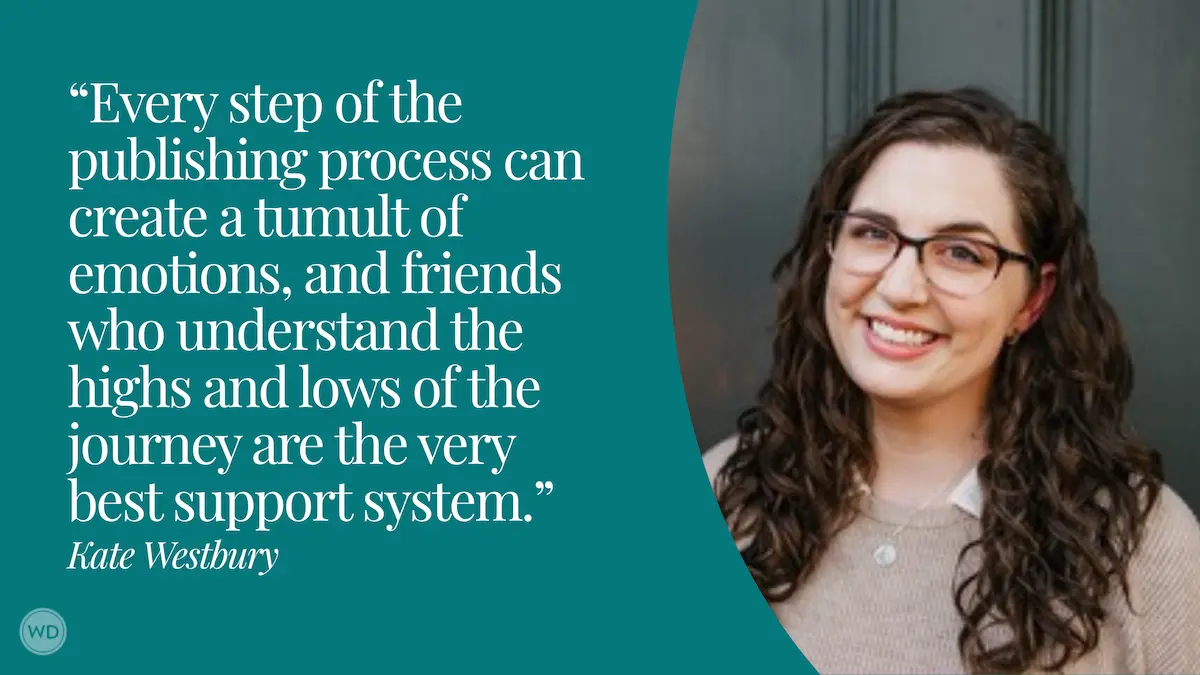
"Find your people early. Every step of the publishing process can create a tumult of emotions, and friends who understand the highs and lows of the journey are the very best support system."
Whether she is guiding her Latin students through the complexities of classical grammar, plotting her next historical caper, or dreaming of a quiet English village where the local constable could use an amateur detective, Kate Westbury has firmly established herself as a fresh, vital voice in historical mystery fiction. When The Oxford Guide to Scandal and Lies hits shelves on September 1, 2026, readers will finally have the chance to step into the dreaming spires of 1950s Oxford and match wits with a mind that has spent a lifetime mastering the art of the clue.



Comments
Facebook App ID not configured. Please add it in the Customizer.