
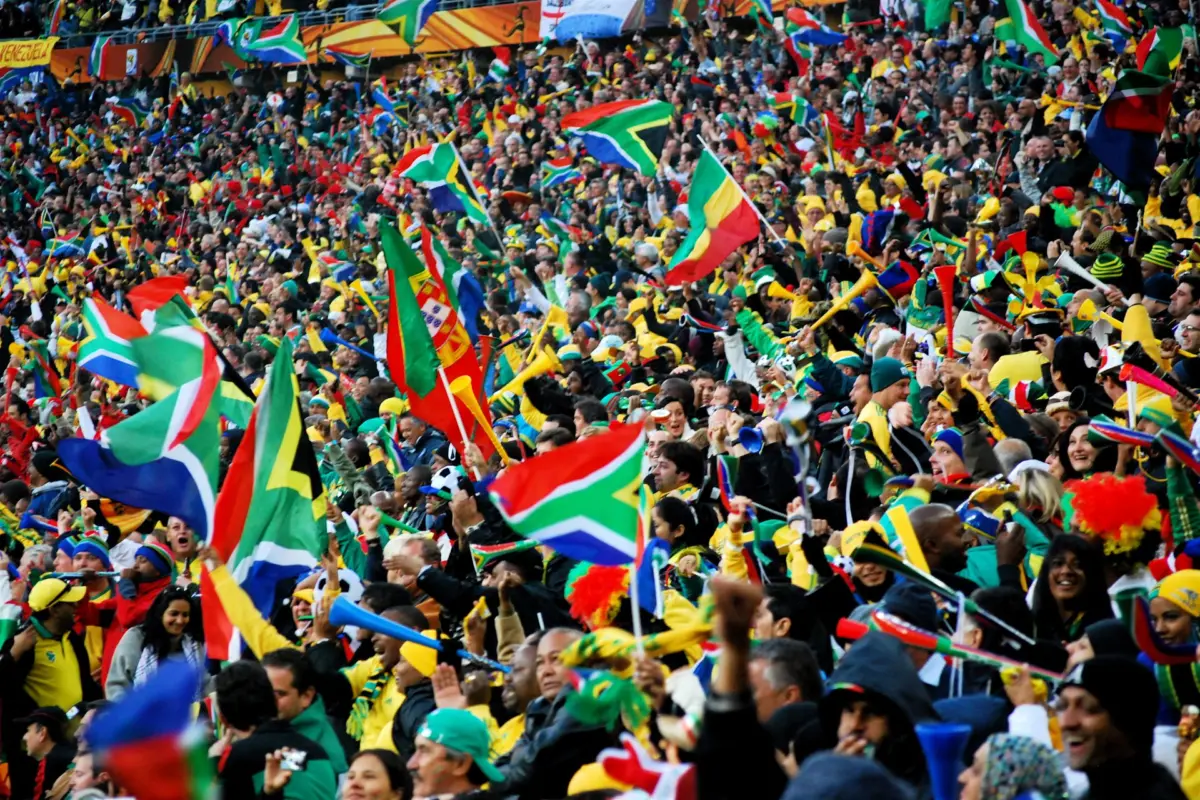
The 2026 FIFA World Cup, jointly hosted across North America, commenced with a striking geopolitical echo from the past: a repeat of the opening match of the 2010 tournament in Johannesburg, pitting co-host Mexico against a resurgent South Africa. Yet, beneath the veneer of international sporting spectacle, the mood in a crowded German restaurant in Brooklyn—where a motley crew of fans from Denmark, Singapore, Eritrea, South Africa, and the United States gathered—was markedly different from the unbridled optimism of sixteen years prior.
On the pitch, South Africa’s campaign reflected a deep tactical vulnerability, culminating in a 2–0 defeat to Mexico after a defensive collapse and two red cards. Off the pitch, the tournament exposed a far more profound fracture. For the first time in recent memory, the expected wave of Pan-African solidarity was glaringly absent. Across the globe and within stadiums, African supporters deliberately rooted against their continental neighbor. This schism was not born of mere sporting rivalry; it was a symptom of rising xenophobic nationalism, draconian anti-immigrant movements, and state-level policy failures back in South Africa.
Thirty-one years after the fall of apartheid, the "Rainbow Nation" narrative has collided with the harsh realities of economic stagnation, chronic unemployment, and systemic scapegoating. As Bafana Bafana bowed out in the Round of 32 against Canada, their exit laid bare a sobering truth: political inertia and historical trauma remain the most debilitating weaknesses facing South African football and society at large.
Read Also
Detailed Chronology
The Opening Fixture: Brooklyn and Johannesburg
The tournament opened under the glaring lights of global media scrutiny. In Brooklyn, the author donned a vintage 1998 South Africa jersey bearing the name of Benni McCarthy—the country’s all-time leading scorer with 31 goals, a UEFA Champions League winner under José Mourinho, and a product of Hanover Park, a Cape Flats township designated as a "coloured" area under the apartheid state’s Population Registration Act. McCarthy’s career had once symbolized the soaring potential of a post-apartheid generation.
On the pitch in North America, however, that legacy looked distant. South African coach Hugo Broos deployed a conservative, defensive 5-4-1 formation designed to absorb pressure and launch rapid counterattacks via wingbacks. The strategy unraveled rapidly under the watch of a strict Brazilian referee. Julián Quiñones opened the scoring for Mexico in the 8th minute. Discipline disintegrated further in the second half: Yaya Sithole received a red card in the 50th minute, followed by Themba Zwane in the 84th, the latter earning a tournament-ending ban. Raúl Jiménez sealed Mexico’s 2–0 victory in the final quarter, leaving South Africa to finish the match with nine men.
The Breakdown of Pan-African Solidarity
Historically, World Cups hosted on or featuring African teams have acted as catalysts for continental unity. In 2010, South Africa’s historic hosting of the first-ever African World Cup gave rise to Peter Drury’s immortalized commentary during Siphiwe Tshabalala’s opening goal against Mexico: "Goal Bafana Bafana! Goal for South Africa! Goal for all Africa! Jabulile! Rejoice!" This moment aligned with Archbishop Desmond Tutu’s vision of the "Rainbow Nation," a paradigm successfully trial-run during the 1995 Rugby World Cup when Nelson Mandela embraced Springbok captain François Pienaar.
In 2026, that solidarity evaporated. Disillusioned by months of escalating xenophobic rhetoric and violent anti-immigrant protests across South African cities, African diaspora communities and online commentators actively rooted for Mexico. The continent-wide fraternity that championed Ghana’s run to the 2010 quarterfinals or Morocco’s historic run to the 2022 semifinals was replaced by a palpable sense of alienation.
The Road to the June 30 Deadline
The hostility witnessed during the opening match was anchored in domestic developments that had dominated South African headlines for months. In late 2025, citizen-led movements such as "March and March"—alongside political figures like Sports and Culture Minister Gayton McKenzie, who popularized the exclusionary slogan "Abahambe" (they must go)—set a strict ultimatum: June 30, 2026, as the deadline for all undocumented foreign nationals to leave the country.
As the deadline loomed, African embassies scrambled to charter emergency buses and flights for repatriation. WhatsApp networks circulated warnings reminiscent of the apartheid-era passbooks, forcing immigrants to constantly carry their papers to avoid vigilante harassment. While the June 30 protest ultimately proved largely peaceful due to last-minute political distancing by figures like McKenzie, the buildup was marred by sporadic violence, arbitrary street checks, and at least one confirmed death.

Group Stage Progression and Knockout Exit
Following their disastrous opener, South Africa managed a hard-fought draw against Czechia and secured a dramatic victory over South Korea by abandoning their overly cautious defensive posture. These results propelled them to an unprecedented appearance in the knockout stages.
However, facing an unyielding Canadian offense in the Round of 32, the team buckled under pressure. Plagued by tactical limitations and the psychological weight of representing a deeply fractured nation, South Africa exited the tournament. Captain Ronwen Williams’s post-match comments—deflecting questions about the lack of continental support by remarking, "We’ve all got our own politics, our own problems, and our own fights that we deal with back home"—underscored a profound institutional and moral disconnect.
Supporting Context & Metrics
The sociopolitical crisis laying siege to South African football cannot be understood without examining the stark economic and historical metrics defining contemporary life in the country:
- Unemployment Rate: South Africa’s national unemployment rate stands stubbornly high at 32.7 percent, creating a fertile breeding ground for economic anxiety and populist scapegoating.
- Historical Deracination: Under the apartheid state’s Population Registration Act, communities were forcibly segregated into designated zones. Hanover Park, where Benni McCarthy grew up, served as a Cape Flats dumping ground for displaced Black and "coloured" populations.
- The Apartheid Blueprint: The rhetoric deployed by modern movements like March and March mirrors the exclusionary nationalist policies introduced by former Prime Minister Hendrik Verwoerd. By framing African migrants as the singular obstacle to the post-apartheid promise of "A Better Life for All," fringe groups have successfully channeled legitimate socio-economic grievances into xenophobic violence, echoing the deadly pogroms of 2008, 2009, and 2015.
- Global Sporting Complicity: The tournament itself highlighted the uneasy marriage of elite sport and geopolitical compromise. FIFA President Gianni Infantino’s controversial awarding of a "Peace Prize" to Donald Trump in late 2025 joined a long history of sporting whitewashing, from Argentina’s 1978 World Cup during the Guerra sucia to the human rights abuses documented in 2018 (Russia) and 2022 (Qatar).
Official Statements
"Every Thursday for the next six months, we are marching until they [undocumented immigrants] are gone."
— Jacinta Ngobese-Zuma, Founder of the March and March movement, outlining the group’s campaign strategy during anti-migrant demonstrations in Pretoria, Johannesburg, and Durban."Goal Bafana Bafana! Goal for South Africa! Goal for all Africa! Jabulile! Rejoice!"
— Peter Drury, Iconic commentary immortalizing Siphiwe Tshabalala’s opening goal during the 2010 FIFA World Cup opener in Johannesburg."We’ve all got our own politics, our own problems, and our own fights that we deal with back home. Every country has that. I don’t know where that stems from. It does hurt. I have been attacked . . . my country as well, for things that are going on back home."
— Ronwen Williams, South African National Team Captain, responding to questions regarding the widespread absence of Pan-African support ahead of the team’s second group stage match.
Future Outlook
The 2026 FIFA World Cup has served as an unflattering mirror for South Africa. While reaching the knockout stages for the first time through athletic qualification represents a minor milestone on the pitch, the broader cultural and political narrative is one of regression.
The historical legacy of South African sports activism—pioneered by Dennis Brutus and the South African Council on Sport (SACOS) under the uncompromising banner of "No normal sport in an abnormal society"—stands in stark contrast to the modern national team’s insular, depoliticized stance. When players and administrators choose to ignore the structural realities of state failure, xenophobia, and historical inequality, sport ceases to be a unifying bridge.
As South Africa looks toward the future, the ghosts of apartheid and colonization continue to haunt its democratic institutions. Unless the underlying socio-economic drivers—endemic unemployment, poor service delivery, and systemic inequality—are systematically addressed by governance rather than exploited by populism, the nation will remain trapped in a cycle of internal discord. The Rainbow Nation was built on the premise of radical inclusion; until that promise is extended equally to citizens and neighbors alike, South Africa’s victories on the global stage will remain hollow echoes of a dream deferred.



Comments
Facebook App ID not configured. Please add it in the Customizer.