
Executive Overview
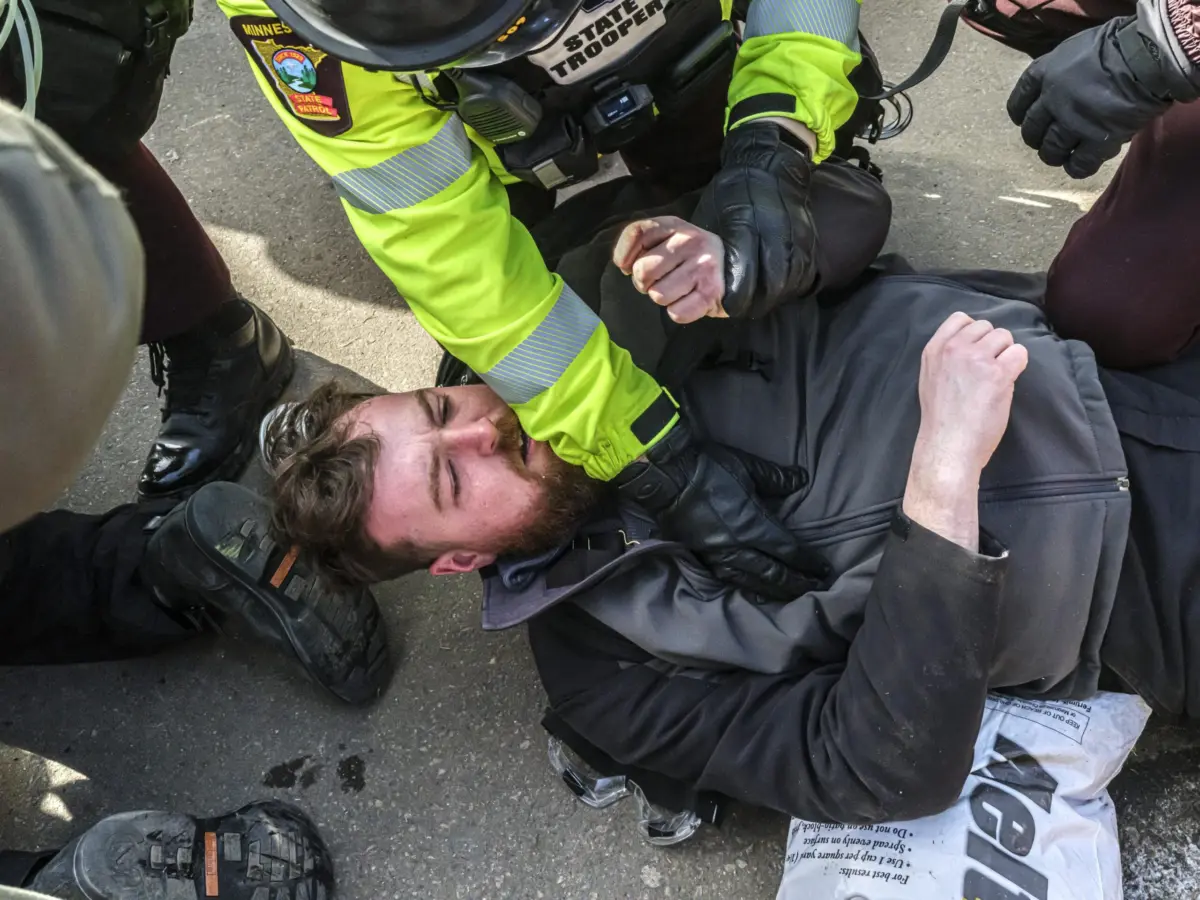
Imagine you are subjected to an unprovoked, brutal physical assault by a federal law enforcement officer despite having committed no crime. Picture your family home being violently ransacked by Federal Bureau of Investigation (FBI) agents operating completely outside the bounds of the law, possessing no judicial warrant. Envision a tragic scenario where a loved one is shot in cold blood by immigration officials deployed in a paramilitary-style operation within your own municipality.
In a functioning constitutional republic, the baseline assumption is that when government agents abuse their immense power and violate foundational civil liberties, citizens have a clear judicial mechanism to seek redress and hold wrongdoers accountable. However, for decades, the United States Supreme Court—increasingly dominated by a conservative supermajority—has systematically dismantled these pathways.
Now, the Court stands poised to finish the job. On November 9, the justices will hear oral arguments in Nielsen v. Watanabe, a high-stakes case that threatens to eliminate the last remaining flickers of hope for individuals targeted by federal misconduct. The central question before the Court is not merely whether the plaintiff in this specific case deserves damages, but whether the judiciary will formally inter Bivens v. Six Unknown Named Agents, the landmark 1971 precedent that established a citizen’s right to sue federal officers for constitutional violations.
Read Also
While legal scholars debate the nuances of statutory interpretation and historical precedent, the practical reality is stark: federal law enforcement personnel already enjoy such vast, sweeping immunity from civil litigation that an official overruling of Bivens may do little more than officially codify what has already been established in practice. For victims of federal overreach, the courthouse doors are effectively locked, bolted, and barred.
Detailed Chronology: From Bivens to the Brink of Nielsen
To understand the profound stakes of Nielsen v. Watanabe, one must trace the evolutionary arc of federal accountability jurisprudence over the past half-century. The trajectory moves from a robust defense of civil rights to a near-absolute insulation of federal actors from civil liability.
1971: The Birth of Bivens
The modern era of federal officer accountability began with Bivens v. Six Unknown Named Agents. Rooted in a philosophy akin to the famous "Spider-Man Rule"—that with great power comes great responsibility—the Supreme Court recognized that federal agents acting under the color of federal authority possess a far greater capacity for harm than ordinary private trespassers.
Writing for the Court, Justice William J. Brennan Jr. reasoned that where legal rights are invaded, federal courts must be empowered to use any available remedy to make good the wrong. The Court established that a direct cause of action exists under the Constitution itself, allowing citizens to sue individual federal agents for Fourth Amendment violations (such as unlawful searches and seizures) even in the absence of explicit congressional authorization.
1949–1980: Expansion and Precedent
Bivens was not pulled from thin air; it rested on a bedrock of centuries-old Anglo-American jurisprudence. As the Court observed in Larson v. Domestic & Foreign Commerce Corp. (1949), the principle that an agent is liable for their own torts is ancient, applying even to public officials.
The high-water mark for this jurisprudence came in Carlson v. Green (1980). In that case, the Supreme Court ruled in favor of the estate of a federal prisoner who died due to egregious medical neglect, affirming that Eighth Amendment claims could indeed be brought against federal prison officials under the Bivens framework. It would prove to be the last time the Court ruled in favor of a Bivens plaintiff.
The Rightward Shift and the Evisceration of Remedies
As the composition of the Supreme Court shifted rightward over the ensuing decades, judicial enthusiasm for Bivens plummeted. The current conservative majority has made its hostility toward implied constitutional causes of action abundantly clear, frequently describing Bivens claims as "disfavored judicial activity."
In recent opinions, justices have openly questioned the legitimacy of the 1971 ruling, writing that it is "doubtful that we would have reached the same result" if the case were "decided today." Furthermore, the Court has erected insurmountable procedural barriers, explicitly instructing lower federal courts to reject Bivens claims if there is any rational reason—even a single, highly speculative justification—to defer to Congress.
The Road to Nielsen v. Watanabe
Over the last several decades, the Supreme Court has methodically chipped away at the doctrine, rejecting thirteen consecutive petitions raising Bivens arguments. From border patrol agents shooting across the Mexican border to federal law enforcement cracking down on domestic protesters, the Court has steadily closed off judicial avenues. Now, in Nielsen v. Watanabe, the respondents are directly inviting the justices to take the final step: formally overturning Bivens v. Six Unknown Named Agents in its entirety.
Supporting Context & Metrics: The Anatomy of Nielsen
The specific factual matrix of Nielsen v. Watanabe brings the abstract legal debate into sharp, human focus, centering on the Eighth Amendment’s prohibition against "cruel and unusual punishments."
The Plight of Kekai Watanabe
The case arises from the experiences of Kekai Watanabe, a formerly incarcerated man who suffered a violent physical assault by fellow inmates inside a federal correctional facility. Following the attack, Watanabe experienced excruciating, debilitating back pain.
Despite his repeated pleas for comprehensive medical intervention, Watanabe’s requests were systematically stonewalled. For months, prison medical staff provided only intermittent, superficial treatment—primarily over-the-counter pain relievers—while refusing his requests to be evaluated by a specialized outside hospital.
It was not until seven months of agony had passed that prison officials finally administered an X-ray. The imaging revealed a shocking medical reality: Watanabe’s tailbone was severely fractured, and bone chips had broken off, migrating into the surrounding soft tissue. Despite this diagnosis, specialized medical treatment was withheld, and Watanabe contends that he remains in tremendous, chronic pain to this day.
The Lower Court Ruling and the Legal Battle
Watanabe filed a lawsuit seeking damages, arguing his case mirrored Carlson v. Green—both involved federal prisoners alleging Eighth Amendment violations stemming from grossly inadequate medical care.
A federal appeals court agreed, ruling that Watanabe’s claim was "identical to Carlson in all meaningful respects." The appellate panel acknowledged the Supreme Court’s frequent warnings against expanding Bivens, but emphasized that Carlson remained binding, valid precedent.
Distinctions and the "Rational Reason" Standard
Recognizing the peril of their position, attorneys for the federal defendants have worked diligently to manufacture distinctions between Carlson and Nielsen. They note that the prisoner in Carlson suffered a fatal asthma attack within hours of neglect, whereas Watanabe’s ordeal unfolded over many months and did not result in death. Additionally, defendants argue that subsequent statutory changes enacted by Congress regarding prisoner litigation create a meaningful legal gulf between the two eras.
Under ordinary legal scrutiny, these distinctions might be dismissed as minor variations of the same core constitutional violation. However, under the Supreme Court’s current mandate—instructing judges to invent or embrace any rational reason to deny a Bivens claim—these microscopic differences provide the conservative majority with all the analytical cover they need to rule against Watanabe.
Official Statements and Competing Legal Philosophies
The impending decision in Nielsen highlights a profound philosophical fracture within American jurisprudence regarding the separation of powers and the enforcement of constitutional limits.
The Conservative Originalist Perspective
Proponents of overturning Bivens—anchored by the conservative legal movement and championed by the Court’s six-justice Republican majority—argue that creating private causes of action for damages against federal officers is an inherently legislative power, not a judicial one.
In briefs submitted to the Court, government attorneys and their ideological allies emphasize that Article I of the Constitution vests the power to write laws exclusively in Congress. Because Congress has enacted comprehensive statutes regulating federal tort claims and prisoner lawsuits (such as the Federal Tort Claims Act and the Prison Litigation Reform Act) without explicitly authorizing Bivens-style damages, the judiciary oversteps its constitutional bounds when it invents such remedies out of whole cloth. From this viewpoint, judicial restraint requires stepping aside and letting the political branches dictate when and how federal officers can be sued.
The Civil Rights and Historical Perspective
Conversely, defenders of Bivens—including civil rights advocates, public interest law firms, and dissenting judicial voices—frame the doctrine as an indispensable backstop for the Bill of Rights.
They argue that the framers of the Constitution never intended for fundamental liberties to be treated as mere parchment promises without a remedy for their breach. Proponents point out that the 1971 decision did not invent a radical new right, but rather formalized a long-standing tradition of common-law liability stretching back to the early republic. As the Court noted in Larson, public agents have historically been held accountable for their individual torts.
Furthermore, advocates warn that leaving enforcement entirely to internal administrative mechanisms or congressional intervention creates a dangerous accountability vacuum. Without the credible threat of civil litigation, individual constitutional violations by federal agents risk becoming entirely cost-free for the perpetrators.
Future Outlook: Life After Bivens
As the legal community prepares for the fallout of Nielsen v. Watanabe, scholars are already charting the bleak landscape of post-Bivens American law.
The Illusion of Accountability
If the Supreme Court formally overrules Bivens, the practical change in day-to-day litigation may be remarkably subtle simply because the doctrine has already been hollowed out. Lower federal courts have grown so adept at dismissing Bivens claims under the "any rational reason" standard that successful lawsuits against federal officers have become statistical unicorns.
Nevertheless, formal burial of the precedent will send an unmistakable signal to federal law enforcement agencies, the judiciary, and the American public: constitutional rights enforceable against state and local police via Section 1983 do not enjoy equivalent federal protection. An individual abused by a municipal officer may find a path to justice; an individual brutalized by a federal agent will likely find the courtroom doors bolted shut.
Ramifications for Reform
With the judicial branch abdicating its role in checking federal executive overreach, the burden shifts entirely to Congress and executive agencies—institutions currently ill-equipped or politically disinclined to impose sweeping civil liability on federal personnel. Qualified immunity doctrines protecting individual officers will remain largely unassailable, insulating agents from the financial consequences of constitutional transgressions.
Ultimately, Nielsen v. Watanabe represents more than just a dispute over prison medical care or the legacy of a 1971 precedent. It is a referendum on the enforceability of the Constitution itself against the immense, unchecked machinery of the federal state. As the Supreme Court prepares to issue its ruling, the message to victims of federal misconduct is uncomfortably clear: the rights guaranteed by the Constitution may exist on paper, but the power to vindicate them has officially been revoked.





Comments
Facebook App ID not configured. Please add it in the Customizer.