
Executive Overview
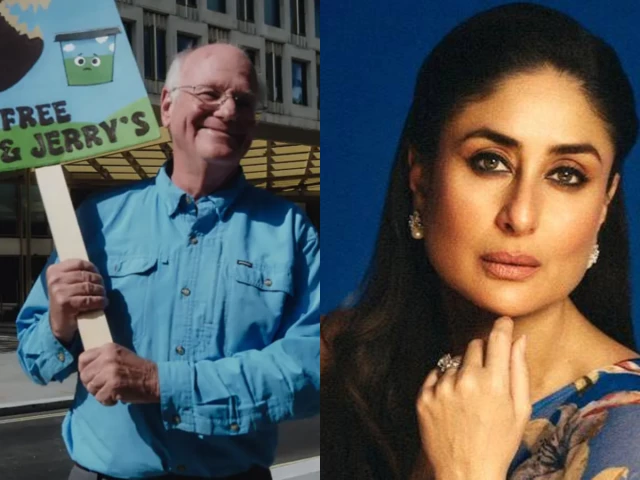
In an era where the intersection of global commerce, celebrity endorsement, and geopolitical advocacy grows increasingly volatile, a high-stakes public appeal has thrust Bollywood megastar Kareena Kapoor Khan into the epicenter of a corporate and ideological storm. Ben Cohen, the iconic co-founder of the socially conscious ice cream empire Ben & Jerry’s, publicly targeted Kapoor in a sharply worded social media address on August 21, challenging her long-standing ambassadorial relationship with multinational conglomerate Unilever and its flagship frozen dessert brand, Magnum.
Cohen’s intervention is far more than a routine celebrity critique; it serves as a critical flashpoint in an ongoing, multi-layered war over corporate accountability, freedom of expression, and the ethical responsibilities of global cultural icons. By highlighting Kapoor’s previous public condemnations of violence against Palestinian children alongside her financial and promotional ties to Unilever—the parent company accused by critics of suppressing dissent regarding the Israel-Gaza conflict—Cohen has raised fundamental questions about the moral compromises often demanded by corporate partnerships.
This unfolding controversy occurs against the volatile backdrop of a monumental corporate restructuring. Ben & Jerry’s, long celebrated for its independent board and aggressive progressive activism, was officially separated from Unilever’s broader ice cream portfolio, transitioning under the corporate umbrella of the Magnum Ice Cream Company. This corporate divorce has already sparked fierce legal battles, high-profile litigation, and intense debates over whether corporate entities can successfully muzzle brand-aligned social missions.
Read Also
As Cohen mobilizes public pressure through targeted hashtags such as #BoycottMagnum and #FreeBenAndJerrys, the episode exposes the mounting pressures placed on public figures. Celebrities are increasingly expected to align their multi-million-dollar commercial endorsements with their stated humanitarian values, transforming passive brand ambassadors into active participants—or collateral damage—in geopolitical struggles.
Detailed Chronology of Events
The collision of corporate litigation, activist pressure, and celebrity endorsement did not happen in a vacuum. It is the culmination of a meticulously documented timeline featuring corporate friction, legal maneuvers, and escalating public appeals.
The Genesis of Corporate Friction (2021–2024)
The ideological rift between Ben & Jerry’s independent board and its former corporate parent, Unilever, deepened significantly following the ice cream maker’s decision to halt product sales in the Israeli-occupied West Bank. This move sparked intense international debate, shareholder pushback, and subsequent legal skirmishes. Throughout this period, Ben Cohen remained an uncompromising voice, consistently criticizing corporate maneuvers that he and his co-founder, Jerry Greenfield, argued compromised the brand’s foundational social mission.
The Corporate Separation and Restructuring (2025)
In a strategic pivot to insulate its core consumer goods from the ideological turbulence surrounding its subsidiary, Unilever officially spun off its ice cream division in 2025. This move effectively separated Ben & Jerry’s from the parent company, placing the brand under the governance of the Magnum Ice Cream Company. However, the corporate restructuring failed to resolve underlying tensions. Legal disputes quickly materialized, with Ben & Jerry’s and its independent board members filing a federal lawsuit accusing Unilever of systemic interference in the brand’s distinct social justice mandate—allegations that Unilever has consistently denied.
The Legal Turning Point (August 21, 2026)
The legal drama reached a crucial judicial milestone when a United States federal judge dismissed several key claims within the ongoing lawsuit between Ben & Jerry’s and Unilever. Crucially, the court ruled that Magnum Ice Cream Company, rather than Unilever itself, would serve as the primary corporate defendant moving forward. This judicial restructuring refocused the activist spotlight squarely onto the Magnum brand and its extensive network of high-profile global ambassadors.
Cohen’s Public Address to Kareena Kapoor Khan (August 21, 2026)
Capitalizing on the shifting legal landscape, Ben Cohen took to the platform X (formerly Twitter) on the exact same day as the court ruling. In a post that quickly went viral, Cohen highlighted the dichotomy between Kareena Kapoor Khan’s humanitarian rhetoric and her corporate allegiance. Pointing out that Kapoor has represented Unilever and Magnum for over a decade while simultaneously using her platform to speak out against violence targeting Palestinian children, Cohen issued a direct challenge: he urged her to leverage her immense influence to sever ties with the brand and support the preservation of Ben & Jerry’s independent social mission.
Supporting Context & Metrics: The Anatomy of Celebrity Endorsement and Corporate Activism
To fully grasp the gravity of Ben Cohen’s appeal to Kareena Kapoor Khan, one must examine the staggering economic engine of celebrity endorsements in South Asia, the structural realities of multinational conglomerates, and the metrics defining contemporary consumer activism.
The Magnum-Kapoor Partnership
Kareena Kapoor Khan’s collaboration with Unilever’s Magnum brand spans well over a decade, representing one of the most lucrative and enduring celebrity endorsement deals in the Indian entertainment landscape. For luxury and fast-moving consumer goods (FMCG) brands, such partnerships are valued in the tens of millions of dollars annually, designed to drive market penetration across South Asia and global diaspora communities. Kapoor’s endorsement is not merely transactional; it lends an air of sophistication, ethical alignment, and cultural authority to the product.
Unilever’s Global Footprint and Accountability
Unilever PLC is one of the world’s largest consumer goods conglomerates, managing hundreds of brands spanning food, refreshment, cleaning, and personal care products. With a global market capitalization running into the hundreds of billions of dollars, Unilever operates in nearly 190 countries.
However, this massive scale has made the corporation a frequent target for transnational social justice campaigns. Critics, including Cohen and various human rights organizations, have historically scrutinized Unilever’s supply chains, institutional investments, and corporate governance regarding conflict zones. The accusation that the company "actively silences criticism of the Israeli government" points to a broader corporate anxiety: the fear that progressive political stances by subsidiary brands—such as Ben & Jerry’s historic advocacy—might alienate institutional investors or trigger regulatory backlashes in key international markets.
The Rise of Hashtag Activism and Consumer Metrics
Cohen’s deployment of targeted digital campaigns—namely #BoycottMagnum and #FreeBenAndJerrys—underscores the modern mechanics of corporate pressure. Empirical studies in digital sociology indicate that high-profile celebrity call-outs amplify activist messaging exponentially, often resulting in:
- Immediate Brand Sentiment Shifts: Measurable dips in positive sentiment across social listening platforms.
- Shareholder Scrutiny: Heightened awareness among institutional investors regarding environmental, social, and governance (ESG) controversies.
- Ambassadorial Re-evaluations: Increased pressure on public figures to audit their corporate portfolios, lest their personal brand equity be tarnished by association.
Official Statements and Stakeholder Perspectives
The confrontation between corporate leadership, activist founders, and cultural ambassadors has generated a mosaic of competing narratives, each reflecting distinct institutional priorities.
Ben Cohen and the Independent Board Perspective
From the viewpoint of Ben Cohen and the independent board of Ben & Jerry’s, the struggle is existential. Cohen’s public messaging operates on the premise that corporate entities cannot claim to champion human rights while simultaneously suppressing dissent or penalizing subsidiaries for operationalizing their progressive values.
Cohen’s statement on X encapsulated this philosophy:
"Kareena Kapoor Khan has represented Unilever/Magnum for more than a decade. She has also used her platform to condemn the violence committed against Palestinian children. But Unilever/Magnum—the company that hired Kareena to promote its products—actively silences criticism…"
By expressing confidence that Kapoor "will stand up for what’s right" once the contradictions of her corporate alignment are brought to her attention, Cohen frames the issue not as an attack on the actor, but as an invitation to moral consistency.
Corporate Silence and Legal Posturing
To date, neither Unilever nor Magnum Ice Cream Company has issued a formal, comprehensive public relations response directly addressing Ben Cohen’s remarks regarding Kapoor Khan. However, legal filings submitted by Unilever throughout the ongoing litigation maintain that the corporate restructuring and oversight of subsidiary brands are standard business practices designed to protect shareholder value and maintain commercial neutrality. Representatives for Unilever have consistently pushed back against allegations of bad faith interference, characterizing the disputes with Ben & Jerry’s independent board as contractual disagreements rather than ideological crackdowns.
The Celebrity Silence
As of press time, Kareena Kapoor Khan and her management team have not issued a public statement responding to Cohen’s appeal. Observers of the Indian entertainment industry note that Bollywood A-listers frequently navigate a minefield of political sensitivities, where commenting on polarizing international conflicts can result in severe domestic backlash, regulatory hurdles, or professional isolation. Consequently, maintaining strategic silence remains the preferred crisis-management protocol for major cultural figures caught in cross-border ideological disputes.
Future Outlook: Implications for Brands, Celebrities, and Activism
The public challenge issued by Ben Cohen to Kareena Kapoor Khan signals a permanent shift in how celebrity endorsements and corporate social responsibility (CSR) will be evaluated in the years to come. Several key trends are likely to emerge from this watershed moment:
1. Enhanced Scrutiny of Celebrity Endorsement Portfolios
Public figures can no longer assume that multi-year commercial partnerships exist within an ethical vacuum. Civil society organizations, activist founders, and socially conscious consumers are increasingly auditing the parent companies behind luxury and FMCG brands. Celebrities who position themselves as human rights advocates will face mounting pressure to ensure their corporate sponsors do not contradict their stated values.
2. The Maturation of Corporate Spin-offs and Activist Governance
The legal battles surrounding Ben & Jerry’s and Magnum Ice Cream Company will serve as a definitive legal and corporate precedent. How the courts ultimately rule on the boundaries of independent board governance versus corporate ownership will dictate whether future socially conscious brands can maintain their activist identities after being acquired or spun off by multinational giants.
3. The Weaponization of Digital Campaigns
Cohen’s use of targeted social media appeals demonstrates the efficacy of decentralized, personality-driven digital activism. By mobilizing grassroots supporters via hashtags like #BoycottMagnum, activist leaders can bypass traditional corporate public relations gatekeepers, forcing high-profile brand ambassadors to reckon with their commercial associations in real time.
Ultimately, the convergence of Ben Cohen’s lifelong crusade for corporate integrity, the legal restructuring of the global ice cream industry, and Kareena Kapoor Khan’s prominent brand positioning highlights a sobering reality of modern global capitalism: in an interconnected world, silence and neutrality are rapidly becoming luxuries that neither corporations nor cultural icons can afford.



Comments
Facebook App ID not configured. Please add it in the Customizer.