
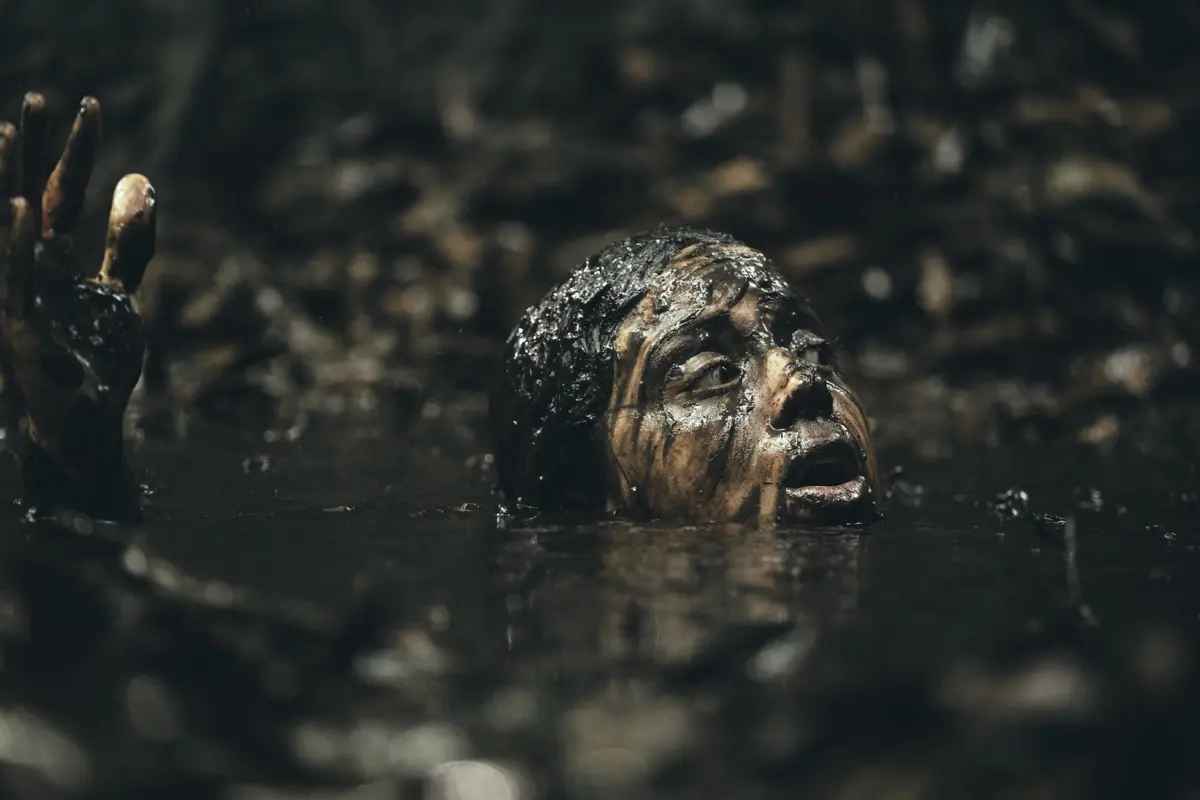
The jungle has long served as a visceral canvas for the human imagination—a lush, green labyrinth where civilization strips away, leaving only the primal laws of survival. Few environments evoke a more primal sense of dread than the Amazon rainforest, a sprawling ecosystem that hides as much as it reveals. It is this exact atmospheric terror that Lionsgate aims to tap into with its upcoming creature-feature tentpole, Beware Boiúna. Directed by Mike P. Nelson—whose sharp genre sensibilities were previously showcased in Silent Night, Deadly Night and his harrowing segment "No Wake/Ambrosia" in the horror anthology V/H/S/85—the film promises a return to high-stakes, straightforward survival horror.
Slated for a theatrical release on October 2, 2026, Beware Boiúna positions itself squarely at the vanguard of the autumn box office horror slate. The narrative premise is as classic as it is terrifying: a well-intentioned medical mission ventures deep into the uncharted Amazon basin, only to find themselves crossing paths with an apex predator of mythological proportions. The creature in question, the Boiúna, is a colossal ancient entity awakening from a long slumber to fiercely reclaim its domain.
With a screenplay penned by seasoned horror and action scribe Alan McElroy and an ensemble cast featuring rising genre staples Kiana Madeira, Jessica Rothe, and Logan Marshall-Green, the production combines indie-horror grit with studio-scale execution. As promotional materials begin to roll out, including a pulse-pounding final trailer, anticipation is reaching a fever pitch. This report offers a comprehensive analysis of the film, examining its director’s trajectory, the thematic underpinnings of the script, the broader cinematic context of creature features in modern horror, and what audiences can expect when they step into the theater this coming October.
Read Also
Detailed Chronology: The Genesis and Production of Beware Boiúna
To understand the trajectory of Beware Boiúna, one must trace the meticulous path taken by its key creative forces over the past several years. The project’s origins lie in Lionsgate’s ongoing strategy to invest in mid-budget, high-concept genre filmmaking that appeals directly to core horror demographics while maintaining crossover mainstream viability.
Development and Scriptwriting
The project officially entered development phases under the working title of an Amazon-set monster survival script crafted by Alan McElroy. Known for his work across various blockbuster and cult-classic landscapes, McElroy was tasked with developing a screenplay that balanced visceral creature-action sequences with tight, claustrophobic psychological tension. Unlike standard monster movies that rely entirely on CGI spectacles, the script for Beware Boiúna was structured to emphasize the suffocating isolation of the jungle, treating the environment itself as an antagonistic force that wears down the characters long before the titular serpent strikes.
By the time Mike P. Nelson signed on to direct, the production found a filmmaker uniquely suited to blend gritty realism with heightened genre tropes. Nelson’s work on Silent Night, Deadly Night and his contributions to the V/H/S franchise demonstrated a distinct talent for pacing, practical effects integration, and maintaining relentless momentum. In interviews and early press briefings, production insiders noted that Nelson heavily prioritized on-location shooting dynamics and practical creature elements to ground the supernatural-leaning scale of the Boiúna in tangible reality.
Casting and Ensemble Dynamics
Casting announcements rolled out progressively, signaling an exciting mix of talent known for both emotional depth and physical screen presence. Kiana Madeira, who captured global audiences with her standout performances in Netflix’s Fear Street trilogy, brings a grounded vulnerability and fierce resilience to the narrative’s core. She is joined by Jessica Rothe, whose magnetic, quick-witted lead performance in Blumhouse’s Happy Death Day films cemented her as a premier contemporary scream queen capable of carrying high-tension narratives. Rounding out the primary trio is Logan Marshall-Green, an actor renowned for his intense physicality and gritty performances in genre-bending thrillers such as Upgrade and The Invitation.
The chemistry among Madeira, Rothe, and Marshall-Green forms the emotional anchor of the film. Their characters, thrust into the heart of a medical humanitarian crisis that rapidly devolves into a desperate fight for biological preservation, must navigate internal friction, moral dilemmas, and the horrifying realization that they are trespassing in a domain governed by an absolute, primordial power.
Marketing Rollout and Trailer Debut
The promotional campaign reached a critical milestone with the release of the final trailer via Lionsgate’s distribution channels. The footage wastes no time establishing tone: wide, sweeping, menacing aerial shots of the Amazon canopy quickly give way to suffocating, ground-level sequences of muddy riverbanks, dense foliage, and creeping dread. The trailer offers tantalizing, fleeting glimpses of the Boiúna—teasing its massive scale through rustling trees, disturbed water, and the terrified, blood-streaked faces of the ensemble cast. By timing the trailer release months ahead of the October 2, 2026 premiere, Lionsgate has successfully initiated the viral word-of-mouth cycle that modern horror properties rely on to build sustainable box office momentum.
Supporting Context & Metrics: The Creature Feature Renaissance
Beware Boiúna arrives during a fascinating cultural and financial window for the horror genre, specifically within the subgenre of animal-attack and monster-survival cinema. To properly contextualize the film’s market potential, it is necessary to examine historical trends, audience metrics, and the mythological roots of the antagonist.
The Mythological Roots of the Boiúna
In Amazonian folklore, the Boiúna—often referred to as the Black Anaconda—is a legendary creature of immense power. Tales passed down through generations describe it as a monstrous, shape-shifting serpent capable of capsizing boats, hypnotizing travelers, and ruling over the darkest depths of the rivers and the most impenetrable thickets of the jungle. By anchoring their cinematic monster in real-world indigenous mythology rather than entirely fabricated sci-fi tropes, the filmmakers tap into an authentic, cultural resonance. This storytelling choice mirrors the success of folklore-driven horror projects that respect local legends while amplifying them for global cinematic terror.
Box Office Viability and the October Horror Slot
Historically, the month of October serves as prime real estate for horror releases, functioning as a cultural runway leading up to Halloween. Over the past decade, studios have increasingly utilized late September and early October to launch mid-budget genre films, capitalizing on audience appetite for spooky seasonal entertainment.
| Metric / Indicator | Historical Context (Genre Averages) | Beware Boiúna Projections |
|---|---|---|
| Target Demographic | Ages 18–34 (Core Horror Fandom) | Broadened by multi-genre cast appeal |
| Release Window | Early October (Pre-Halloween rush) | October 2, 2026 (Prime seasonal kickoff) |
| Budget Tier | Mid-Budget ($15M – $35M) | Optimized for practical/digital hybrid effects |
| Competitive Landscape | Moderate counter-programming | Positioned as the premier fall monster feature |
Industry analysts point out that creature features have experienced a steady resurgence, driven by audiences seeking high-concept thrills that offer clear narrative stakes. Unlike dense psychological dramas or sprawling cinematic universes, a well-executed monster movie provides immediate, visceral gratification. When combined with the star power of Madeira, Rothe, and Marshall-Green, Beware Boiúna possesses the commercial ingredients necessary to outperform traditional genre ceilings.
Official Statements and Creative Insights
While full press junkets are still months away from their peak, early statements from the creative team shed light on the rigorous physical and artistic demands of bringing the Amazonian nightmare to life.
Director Mike P. Nelson has repeatedly emphasized his desire to honor practical filmmaking traditions while utilizing modern technological advancements to enhance the terror of the creature. In early production notes, Nelson remarked that the jungle itself was treated as a living, breathing character: "When you go into an environment as vast and unforgiving as the Amazon, you realize very quickly that humanity is not at the top of the food chain. We wanted to make a movie that strips away our modern armor and forces characters—and by extension, the audience—to confront an absolute power that doesn’t care about human ethics, schedules, or technology."
Screenwriter Alan McElroy echoed these sentiments, noting the thematic weight behind the medical mission framing device. By placing doctors and relief workers—individuals whose entire professional ethos is rooted in healing and saving lives—into a scenario where violence is absolute and unavoidable, McElroy crafted a fascinating psychological friction. "These characters are trained to fix, to mend, and to preserve life," McElroy noted during a script development retrospective. "When they encounter the Boiúna, they are forced to realize that nature cannot be negotiated with, treated, or cured. It can only be survived—if you are lucky."
Lionsgate executives have similarly expressed immense confidence in the project, positioning it as a cornerstone of their autumn theatrical slate. The studio’s marketing strategy hinges on leaning into the tactile, visceral nature of the film, ensuring that horror enthusiasts recognize Beware Boiúna not as a generic CGI monster flick, but as a hard-hitting, atmospheric endurance test.
Future Outlook: What to Expect Leading Up to October 2026
As the release date of October 2, 2026, draws closer, the promotional machine for Beware Boiúna is expected to accelerate significantly. Fans and industry watchers should anticipate several key developments in the coming months:
- Extended Footage Debuts at Genre Conventions: Major pop culture and horror conventions throughout the spring and summer will likely play host to exclusive panel discussions featuring Mike P. Nelson, Alan McElroy, and key cast members, alongside extended monster-reveal clips.
- Interactive Marketing Campaigns: Given the mythological roots of the Boiúna, Lionsgate may roll out immersive digital experiences or faux-documentary shorts exploring the folklore of the Amazon basin, priming the audience’s appetite for lore-heavy world-building.
- Soundtrack and Score Previews: Sound design and musical score are vital components of jungle-set horror. As post-production wraps, announcements regarding composers and atmospheric soundscapes will further define expectations for the film’s auditory dread.
In conclusion, Beware Boiúna represents a compelling collision of seasoned horror craftsmanship, mythological authenticity, and star-driven survival storytelling. By marrying the claustrophobic dread of the jungle with a relentless, colossal predator, Lionsgate and Mike P. Nelson have primed a cinematic trap that genre fans will eagerly walk into. When the film finally slithers into theaters on October 2, 2026, audiences will be reminded of a fundamental, terrifying truth: deep in the Amazon, nature holds absolute power, and the Boiúna alone decides who lives and who dies.



Comments
Facebook App ID not configured. Please add it in the Customizer.