Nestled along the verdant southern coastline of Kauai, Hawaii, lie two of the Pacific’s most extraordinary horticultural treasures: the Allerton Garden and the McBryde Botanical Garden. Positioned directly adjacent to one another under the administrative umbrella of the National Tropical Botanical Garden (NTBG), these properties represent a harmonious blend of manicured ecological preservation and whimsical landscape architecture.
This investigative review examines the structural, historical, and environmental significance of these contiguous gardens. Based on firsthand travel accounts, contextual archival research, and ecological framework analysis, this report details the stark contrasts between the whimsical, architectural grandiosity of Allerton Garden and the scientifically rigorous, biodiversity-focused expanse of McBryde Garden. Furthermore, this overview highlights the broader cultural offerings of the NTBG, including educational initiatives such as specialized botanical illustration and watercolor workshops, while exploring the lesser-known historical overlaps of the region—such as accidental coastal incursions and hidden local geographies.
Detailed Chronology: The Evolution of Kauai’s Botanical Crown Jewels
The Roots of Horticultural Preservation in Hawaii
The trajectory of the National Tropical Botanical Garden began long before formal designations were established. The lands encompassing the Allerton and McBryde properties carry deep historical roots tied to the native Hawaiian landscape, royal estates, and early 20th-century agricultural ventures.
Early Hawaiian Land Use: Long before Western contact, the Lawai Valley—where both gardens reside—was utilized by native Hawaiians for agricultural terracing, cultivating taro (kalo), and traditional agroforestry. The microclimate, fed by valley streams and nourished by tropical trade winds, made it an ideal sanctuary for endemic flora.
The McBryde Sugar Era: In the late 19th and early 20th centuries, much of the surrounding acreage was consolidated into the McBryde Sugar Company, transforming parts of the valley into intensive commercial agriculture. However, visionaries soon recognized that the unique ravine topography held a higher calling: ecological conservation.
The Allerton Vision (Mid-20th Century): Robert Allerton, alongside his partner John Gregg Allerton, acquired a portion of the valley in 1938. Drawing upon his background as an architect and his self-perceived identity as a "failed artist," Robert poured his immense creative vision—and a substantial portion of his fortune—into crafting an outdoor masterpiece. Over decades, the Allertons sculpted the landscape into a series of outdoor "rooms," integrating classical European garden design, monumental art pieces, and dramatic water features with native and exotic tropical plants.
Institutional Consolidation: Recognizing the necessity of preserving these botanical assets for posterity, the properties were gradually integrated into the National Tropical Botanical Garden, a congressionally chartered institution dedicated to the conservation of tropical plant diversity. Today, McBryde and Allerton operate in tandem, serving both as elite tourist destinations and critical hubs for botanical research.
Supporting Context & Metrics: Architectural Folly Versus Botanical Science
To fully appreciate a visit to the Lawai Valley, one must understand the distinct dichotomy between its two main attractions. While they share a visitor center and ticket office, their foundational philosophies could not be more divergent.
1. Allerton Garden: The "Rich Man’s Folly"
Design Philosophy: Anthropocentric, theatrical, and artistic.
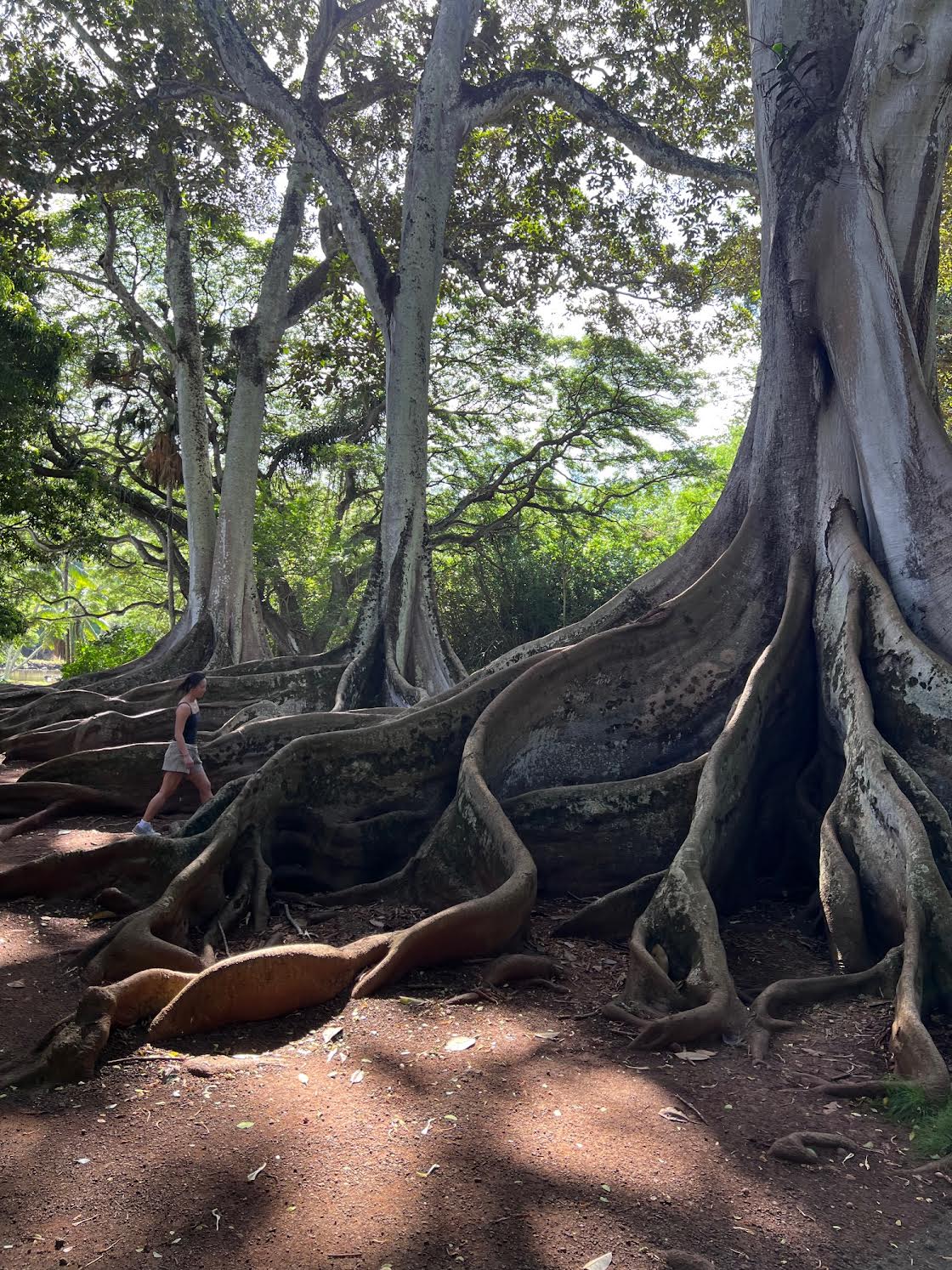
Key Features: Giant Moreton Bay fig trees (famously featured in films like Jurassic Park), neoclassical statues, cascading fountains, hidden grottos, and meticulously curated vistas.
The Narrative: Robert Allerton’s approach was deeply personal. Feeling unfulfilled by traditional artistic mediums, he treated the entire valley floor and canyon walls as his canvas. The result is an eclectic mix of structural elements—such as miniature Grecian temples, rows of striking, buttressed tree roots that tower over visitors, and carefully framed views of the Pacific Ocean.
Tour Dynamics: Visitors typically experience Allerton via guided bus tours or structured walking programs. The constrained pathways and fragile artistic installations mean that unguided wandering is generally restricted on standard tours, preserving the pristine nature of the sculptures and rare plantings.
2. McBryde Botanical Garden: The Scientific Sanctuary
Design Philosophy: Ecological, diverse, and conservation-driven.
Key Features: Extensive living collections of palms, heliconias, rubiaceae, zingibers, and critically endangered native Hawaiian species.
The Narrative: Spanning roughly 250 acres of the valley, McBryde functions as a premier research garden. It houses the largest ex-situ collection of native Hawaiian flora in the world. Many of the plants growing here are extinct or functionally extinct in the wild, making McBryde an ark for plant species facing the threats of climate change, invasive pests, and habitat destruction.
Tour Dynamics: McBryde emphasizes the sheer breadth of tropical biodiversity. Visitors walk through deeply shaded ravines and sunlit clearings, encountering flora gathered from expeditions across the globe.
Comparative Metrics of the Lawai Valley Gardens
Metric / Feature
Allerton Garden
McBryde Botanical Garden
Primary Focus
Landscape art, architecture, and design
Scientific research, conservation, and biodiversity
Firsthand accounts from travelers and logistical reports from the NTBG underscore the evolving nature of tourism within these fragile ecosystems.
The Visitor Experience: Bus Tours vs. Independent Exploration
Logistical frameworks currently require visitors to select specific tour formats. Many travelers opt for the structured bus tour due to time constraints and ease of transport across the expansive valley. However, veteran visitors frequently note that a more immersive experience—allowing for unhurried observation of the architectural details and microclimates—remains a highly desirable alternative.
"We took the bus tour version, but I would have liked to return and take the tour where you have more time to explore on your own," notes travel chronicler Mia Wenjen. Such reflections point to a growing consumer demand for slow travel and deeper, unhurried engagement with natural spaces.
Accidental Discoveries and Hidden Geographies
An intriguing element of the Lawai Valley’s geography is its intersection with the surrounding coastline. Explorers occasionally stumble upon hidden beaches and secluded coves adjacent to the estate boundaries. While formal access is strictly regulated, these anecdotal overlaps highlight how the manicured elegance of the gardens abruptly gives way to the rugged, untamed beauty of Kauai’s southern shore.
Educational Enrichment: Art Meets Horticulture
Beyond physical tours, the National Tropical Botanical Garden extends its mission into the arts through specialized educational programming. The integration of botanical illustration and watercolor classes bridges the gap between scientific observation and creative expression.
Botanical Illustration Workshops: Designed for artists and nature enthusiasts alike, these classes teach the meticulous observation required to document plant morphology accurately.
Watercolor Integration: By leveraging the stunning visual backdrops of the Allerton and McBryde landscapes, participants can capture the vivid hues of tropical foliage, aligning with Robert Allerton’s original creative spirit.
Future Outlook: Conservation, Education, and Sustainable Tourism
As global pressures on biodiversity intensify, the role of facilities like the Allerton and McBryde Botanical Gardens becomes increasingly critical. The future of these Kauai sanctuaries hinges on three primary pillars:
Advanced Conservation Science: McBryde Garden will continue to expand its seed banks, tissue culture labs, and reintroduction programs. As native Hawaiian species face unprecedented environmental stressors, the living collections housed in the Lawai Valley serve as a genetic repository of last resort.
Evolving Visitor Engagement Models: To balance high visitor demand with environmental stewardship, the NTBG is expected to refine its tour offerings. Moving toward smaller, low-impact walking groups and expanding educational workshops will likely enhance visitor satisfaction while minimizing ecological footprints.
Cultural and Artistic Integration: By continuing to offer programs such as watercolor and botanical illustration classes, the gardens honor the legacy of Robert Allerton. Fostering a deep, creative connection between the public and plant life ensures that the next generation of travelers will view botanical gardens not merely as tourist attractions, but as vital living museums.
In conclusion, a journey through the Allerton and McBryde Botanical Gardens transcends a typical vacation excursion. It offers an investigative look into how human creativity, scientific dedication, and tropical splendor can converge to create—and protect—an earthly paradise on the Garden Isle.














Comments
Facebook App ID not configured. Please add it in the Customizer.