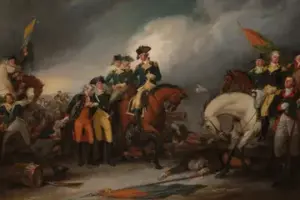
In the grand pantheon of American Revolutionary War folklore, the martyrdom of Nathan Hale remains a cornerstone of patriotic sacrifice. Captured and executed by the British in September 1776, the young Yale graduate and Connecticut native is permanently immortalized for his legendary, albeit likely apocryphal, final words: "I only regret that I have but one life to lose for my country." Yet, history often plays favorites, leaving the shadows populated by operatives whose tactical successes eclipsed Hale’s tragic failure.
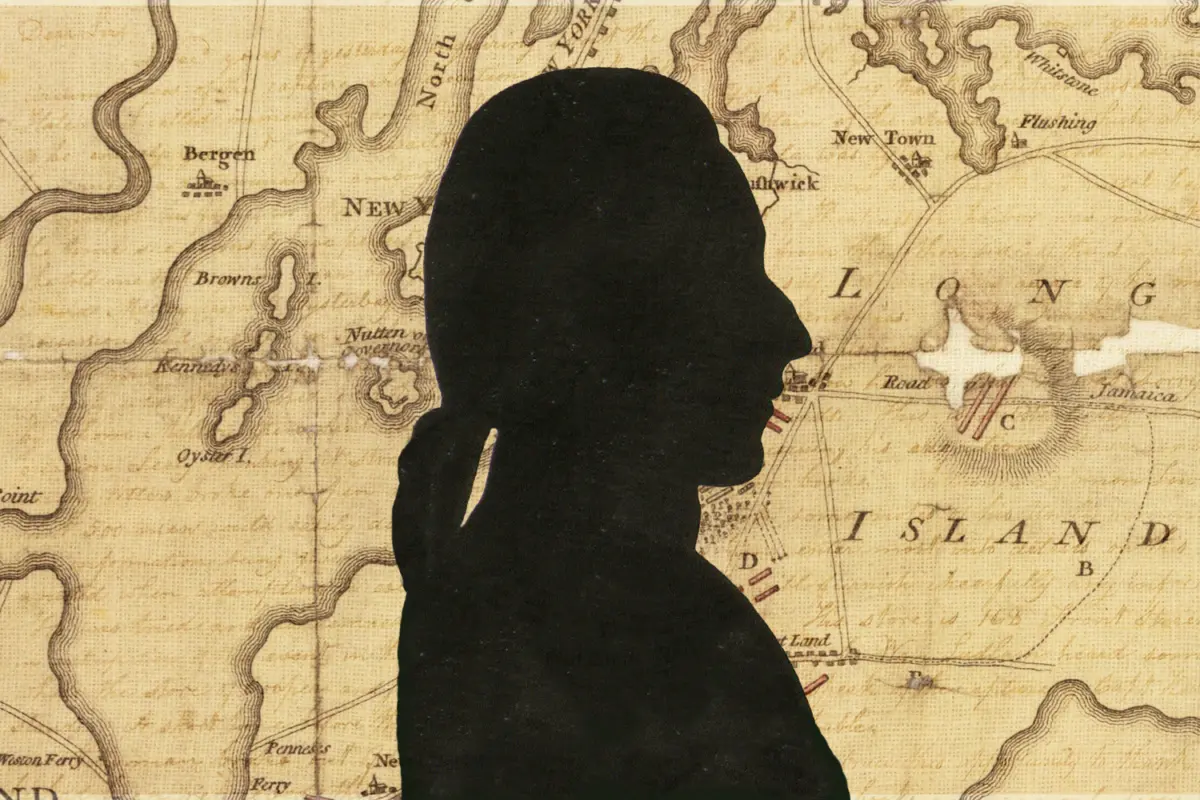
Enter David Maltbie, a teenage compatriot from Stamford, Connecticut, who infiltrated British-occupied Long Island at the exact same moment as Hale. While Hale’s mission unraveled within days, resulting in a swift and brutal hanging, Maltbie managed a far more successful espionage campaign. He blended into the civilian population, meticulously cataloging troop movements and providing George Washington’s nascent intelligence apparatus with vital operational metrics.
Maltbie’s extraordinary exploits—featuring narrow escapes from execution, daring whaleboat raids, an arrest in the infamous Provost prison, and a remarkably resilient postwar civilian career—remained entirely lost to mainstream history for over two centuries. They were unearthed only recently through groundbreaking archival research conducted by historian Claire Bellerjeau at the Center for Brooklyn History.
Examining an 1846 letter from Ebenezer Seeley to historian Henry Onderdonk Jr., researchers unlocked a narrative that fundamentally recalibrates our understanding of General George Washington’s early intelligence efforts. Maltbie’s forgotten saga not only illuminates the chaotic theater of New York during the autumn of 1776 but also underscores the indispensable role played by untrained civilian volunteers in laying the foundation for America’s independence.
Detailed Chronology: From Schoolteacher Facade to Wartime Operative
The Fall of New York and the Birth of American Espionage
The chronology of Maltbie’s wartime journey begins in the scorched wake of the Continental Army’s demoralizing defeat at the Battle of Brooklyn in late August 1776. With British forces securing both New York City and Long Island, General George Washington faced a catastrophic strategic disadvantage. The Port of New York offered unparalleled access to inland waterways and Atlantic shipping lanes, while Long Island’s rich agricultural output promised to keep the occupying British army well-fed and deeply entrenched.
Desperate for reliable intelligence from behind enemy lines, Washington commissioned a specialized unit of frontline scouts under the command of Colonel Thomas Knowlton. Known ubiquitously as "Knowlton’s Rangers," this avant-garde unit was tasked with shedding military uniforms, adopting civilian guises, and smuggling vital enemy data back across the Long Island Sound. Among the volunteers was 21-year-old Captain Nathan Hale.
Simultaneously, a 17-year-old civilian named David Maltbie crossed the sound from Connecticut, landing in Oyster Bay, Long Island—roughly seven miles west of Hale’s operational zone in Huntington.
[August 1776: Continental Defeat at Brooklyn]
       │
       ▼
[September 1776: Washington Authorizes Knowlton's Rangers]
       │
       ├─► Nathan Hale deployed to Huntington (Poses as Dutch Schoolteacher)
       │         └─► Captured & Executed within days
       │
       └─► David Maltbie deployed to Oyster Bay (Poses as Schoolteacher)
                 └─► Successfully gathers intelligence for months
Infiltration, Detection, and Imprisonment
Like Hale, Maltbie assumed the protective cover of a schoolteacher seeking employment among local residents. However, where Hale’s mission was plagued by missteps and immediate suspicion, Maltbie operated with uncanny discretion. Utilizing the pretext of writing personal correspondence to family back home in Connecticut, Maltbie encoded strategic observations regarding British troop strengths, billeting plans, and defensive fortifications directly into his letters.
Historical evidence suggests deep-rooted familial and military networks facilitated Maltbie’s recruitment. His connections to Colonel Charles Webb—who commanded the Seventh Connecticut Regiment and shared close familial ties with Maltbie’s stepfather and future wife—strongly hint at a pipeline of communication running directly from Knowlton’s Rangers back to Washington’s headquarters.
Maltbie’s confidence grew as autumn bled into winter. Convinced that the British garrison was vulnerable, he famously remarked to local contacts that an amphibious assault force of merely "500 men could easily dislodge the British here."
His intelligence was regularly transferred across the sound via an elderly courier named Seely, who rowed passengers and mail between Stamford and Oyster Bay. However, the sheer volume of one-way correspondence eventually aroused Seely’s suspicion. Believing it his duty as a loyalist to inspect the cargo, Seely opened one of Maltbie’s dispatches, immediately recognizing undeniable proof of espionage.
Seely delivered the incriminating documents straight to the British authorities. A swift arrest order was issued. Though Maltbie attempted a desperate escape by boat across the sound, he was intercepted, arrested, and subjected to a rapid military tribunal that condemned him to death by hanging.
The Escape from the Bread Oven Guardhouse
Imprisoned inside a makeshift guardhouse in Oyster Bay—housed within a local building used for baking bread—Maltbie awaited his execution. During this harrowing countdown, a 10- or 11-year-old girl named Elizabeth Wooden, whose father had been a pre-war friend of Maltbie, visited the condemned teenager regularly. Because British guards deemed her too young to pose a security threat, Wooden smuggled food past the checkpoints to sustain the young prisoner.
Decades later, Wooden recounted these surreal memories to researchers compiling histories of the revolution. According to an 1846 letter from Ebenezer Seeley to historian Henry Onderdonk Jr., Maltbie’s story took a dramatic turn just hours before his scheduled execution:
"He broke out of his prison and escaped a short time before he was due to be hanged. He had been reprieved, though he knew not of it at the time of his escape."
Whaleboat Raids and the Provost Prison
Maltbie’s escape did not mark the end of his revolutionary service. On December 18, 1776, he enlisted formally in the Continental Army’s Ninth Connecticut Regiment, though his initial stint lasted a mere month and five days. By 1781, Maltbie had transitioned into maritime warfare, serving as the captain of a whaleboat crew. These daring aquatic commandos specialized in lightning-fast raids across the sound, capturing British vessels and seizing valuable supplies from loyalist estates on Long Island.
By late 1782 and early 1783, Maltbie had resumed intelligence-gathering operations in Manhattan. On New Year’s Day in 1783, he was captured by the British "for robbery and on suspicion of being a spy." Accused alongside a female accomplice named Libbey Stigney of defrauding two Long Island men under false pretenses, Maltbie was cast into the notorious Provost Prison in lower Manhattan.
The Provost was a living hell: inmates were routinely shackled in overcrowded, unsanitary cells, subsisting on spoiled rations and contaminated water. Yet, when his court-martial convened in February 1783, Maltbie mounted a remarkably persuasive defense. Though the precise details of his arguments are lost to history, his advocacy secured a complete acquittal on the robbery charges, and the espionage specifications were quietly dropped. He was released just months before the signing of the Treaty of Paris formally concluded the war in September 1783.
Supporting Context & Metrics
The recovery of David Maltbie’s narrative sheds vital light on the structural evolution of American intelligence during the War of Independence. Alexander Rose, author of Washington’s Spies: The Story of America’s First Spy Ring, notes that early American espionage was defined by improvisation:
"Maltbie’s story is significant because it helps reveal the extent of Washington’s intelligence efforts in the early stages of the war. Lesser-known spies like Maltbie, almost without exception… were untrained volunteers lacking any support or logistics structure when they were behind enemy lines."
Metric / Attribute
Nathan Hale
David Maltbie
Age at Mission
21 years old
17 years old
Operational Theater
Huntington, Long Island
Oyster Bay, Long Island
Cover Identity
Dutch Schoolteacher
Schoolteacher / Correspondent
Duration of Mission
Days (Immediate capture)
Several months
Final Fate
Hanged by British forces (Sept 1776)
Escaped execution; survived the war
Post-War Life
None (Deceased)
Legislator, Justice of the Peace, Merchant
The collective failures and near-misses of these amateur operatives—including Hale’s execution and Maltbie’s imprisonment—vividly demonstrated to George Washington that ad-hoc scouting networks were unsustainable. This hard-learned lesson directly catalyzed the formation of professional, long-term civilian intelligence syndicates, most notably the Culper Spy Ring, which operated covertly in Manhattan and Long Island between 1778 and 1783. Remarkably, the Culper Ring’s chief Manhattan agent, Robert Townsend (code-named "Samuel Culper Jr."), operated out of Oyster Bay from a home situated just around the corner from Maltbie’s makeshift bread-oven prison.
Official Statements & Descendant Perspectives
The modern rediscovery of David Maltbie has resonated profoundly among historians and descendants alike, bridging a 250-year gap in familial and national memory.
Margo Williams, Maltbie’s fifth-great-great-niece, stumbled upon her ancestor’s wartime exploits while compiling genealogical records for her application to the Daughters of the American Revolution. Upon discovering Maltbie’s mention in Claire Bellerjeau and Tiffany Yecke Brooks’s 2021 book, Espionage and Enslavement in the Revolution, Williams reached out to the authors directly.
"The resurfacing of Maltbie’s story is nothing short of electrifying," Williams stated. "Even within our own family, knowledge of his espionage during the Revolution had been lost over time and was entirely unknown. His story can teach us all about the values this nation was founded on and self-sacrifice for a cause greater than us. It is important to celebrate stories like his and remember that this nation was founded on the backs of everyday men and women to whom we owe a great debt."
Bill Bleyer, author of George Washington’s Long Island Spy Ring, emphasized the broader historical implications of these archival discoveries:
"New information about the Revolution and the actions of Nathan Hale and the lesser-known but luckier Long Island spy David Maltbie broadens our understanding of the conflict and its implications. Just as William Dawes and Samuel Prescott aren’t household names compared to Paul Revere, Maltbie is a figure whose achievements have been overshadowed by a more famous but ironically less successful spy."
Future Outlook: Reclaiming the Unsung Architects of Independence
As the United States approaches its monumental 250th anniversary—the Semiquincentennial—historical institutions and independent researchers are accelerating efforts to unearth marginalized narratives from the Revolutionary era. The archival collections at the Center for Brooklyn History, the New York Public Library, and regional historical societies across Connecticut and Long Island are increasingly scrutinized through modern digital indexing, yielding unprecedented insights into civilian resistance networks.
David Maltbie’s journey from anonymous teenage schoolteacher to clandestine intelligence operative, whaleboat captain, Stamford town legislator, and justice of the peace offers a profound testament to the resilience of the American founding generation. His life bridges the gap between raw, amateur frontier desperation and the sophisticated intelligence apparatus that ultimately secured colonial victory.
As historians continue to parse fragile 18th-century letters, fragile court transcripts, and weathered gravestones in Stamford’s North Street Cemetery, Maltbie stands as a powerful reminder: the American experiment was built not solely by legendary icons emblazoned on monuments, but by ordinary citizens whose courage, ingenuity, and sheer luck shaped the course of a nascent republic.

/https://tf-cmsv2-smithsonianmag-media.s3.amazonaws.com/filer_public/9a/30/9a3074ea-bdcc-4d5f-ad2a-a80bc49a6f8a/david-maltbie.png)
/https://tf-cmsv2-smithsonianmag-media.s3.amazonaws.com/filer_public/9a/30/9a3074ea-bdcc-4d5f-ad2a-a80bc49a6f8a/david-maltbie.png)
/https://tf-cmsv2-smithsonianmag-media.s3.amazonaws.com/filer_public/ae/8d/ae8d136d-9c1a-46b6-99d2-08f6959e7f2e/letter-to-onderdonk.png)
/https://tf-cmsv2-smithsonianmag-media.s3.amazonaws.com/filer_public/a8/02/a8025f86-fc49-42fa-9711-1b6256dbd150/nathan_hale.png)
/https://tf-cmsv2-smithsonianmag-media.s3.amazonaws.com/filer_public/49/20/4920d563-3edf-498f-b2c8-b7fa0fd309e9/elizabeth_wooden_gravestone_ob_2.jpeg)
/https://tf-cmsv2-smithsonianmag-media.s3.amazonaws.com/filer_public/e4/8a/e48ab426-f781-4cea-b218-dd03122d93db/map-of-oyster-bay_f811336.jpg)
/https://tf-cmsv2-smithsonianmag-media.s3.amazonaws.com/filer_public/2e/07/2e07a4b9-3f68-422d-b00b-3d3cc4ec660d/default_5.jpg)



Comments
Facebook App ID not configured. Please add it in the Customizer.