
Executive Overview
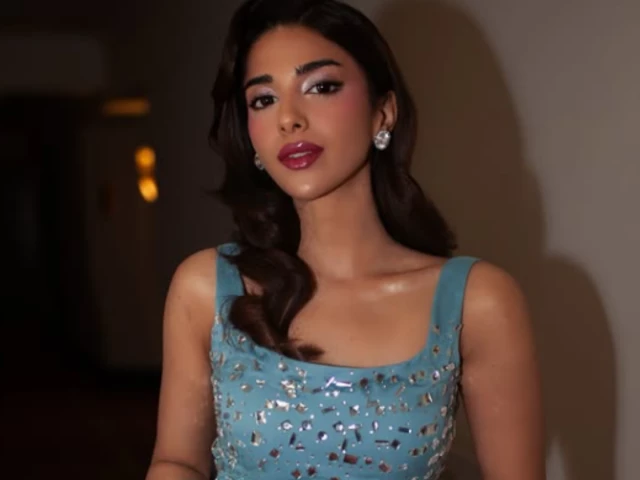
In an evening marked by glamour, celebration, and heartfelt gratitude, acclaimed Pakistani actor Sonya Hussyn added another illustrious accolade to her growing repertoire. Honoured with the International Best Actor Achievement Award for her powerhouse performance in the critically acclaimed feature film Deemak, Hussyn’s latest victory resonates deeply within the South Asian film fraternity. While the actor has steadily garnered international applause for her versatile portrayals, receiving this specific recognition on home soil during the glittering Sunday Icon Awards transformed a professional milestone into a deeply personal celebration.
The accolade serves as a testament to Hussyn’s dedication to her craft and underscores the rising global footprint of Pakistani cinema. Deemak—a cinematic venture that has already broken box office barriers and captured international imaginations—has positioned Hussyn at the forefront of contemporary storytelling. Taking to social media to share her joy through a carefully curated carousel of photographs from the ceremony, Hussyn offered fans an intimate glimpse into her gratitude, dedicating her success to the collaborative village required to bring such a complex narrative to life.
From her visionary director and esteemed co-stars to her glam squad, family, and partner, Hussyn’s victory speech—articulated through her poignant Instagram reflections—painted a vivid picture of humility, artistry, and collective triumph. This comprehensive report explores the anatomy of her latest win, contextualizes the unprecedented trajectory of Deemak, and examines the broader implications of this milestone for the future of Pakistan’s entertainment industry.
Read Also
Detailed Chronology: The Road from Moscow to Karachi
The journey of Deemak and its leading lady has been nothing short of a cinematic odyssey, characterized by international acclaim, box office dominance, and relentless artistic exploration. To fully appreciate Hussyn’s triumph at the Sunday Icon Awards, one must trace the chronological steps that have defined the film’s remarkable run over the past several months.
The International Breakthrough
Long before taking the stage at the Sunday Icon Awards in Karachi, Deemak and its cast were already making waves across international borders. In November of the previous year, the film made headlines when Sonya Hussyn was awarded Best Supporting Actress at the inaugural Diamond Butterfly Award in Moscow. Competing against a formidable pool of global talent, the film proudly represented Pakistan among 34 distinct entries hailing from 17 different countries.
This international exposure placed Pakistani cinema under a powerful microscopic lens, proving that domestic narratives possess the emotional depth, stylistic finesse, and universal resonance required to captivate global juries. The Moscow victory served as a precursor to the film’s broader critical acceptance, laying the groundwork for the avalanche of appreciation that would follow in subsequent months.
Domestic Box Office Dominance
While critical acclaim on international platforms validated the artistic integrity of Deemak, its commercial performance on the home front cemented its status as a monumental cultural touchstone. By the time international circuit accolades began pouring in, Deemak had already crossed the enviable milestone of Rs175 million at the domestic box office.
In an era where the post-pandemic cinematic landscape faces unpredictable audience turnout, Deemak drew crowds in droves, proving that audiences were hungry for substantive, character-driven storytelling. The film’s commercial success created a symbiotic relationship with its artistic accolades: financial viability empowered the production team, while award-winning performances brought persistent foot traffic to cinema halls week after week.
The Sunday Icon Awards: A Hero’s Welcome Home
The culmination of this international and domestic journey arrived at the Sunday Icon Awards. For Hussyn, who had previously accepted global accolades thousands of miles away from her core support system, walking the red carpet in her home country and standing before her peers, mentors, and fans offered a unique psychological reward.
"Winning Best Actor internationally for Deemak was an extraordinary honour, but receiving this recognition at home feels especially close to my heart," Hussyn reflected in her post-event address. The ceremony, supported by the Sunday Times, served not merely as a validation of individual excellence, but as a collective celebration of Pakistani cinematic resilience. The evening captured the zeitgeist of an industry in transition—one that honors its veterans while aggressively charting a bold, globally competitive future.
Supporting Context & Metrics: The Anatomy of Deemak
To understand the weight of Sonya Hussyn’s award, one must examine the collaborative machinery and measurable milestones that propelled Deemak into the cultural zeitgeist. A cinematic achievement of this magnitude is rarely born in isolation; rather, it is the result of meticulous direction, rigorous scriptwriting, powerhouse performances, and high-stakes production values.
A Masterclass in Collaboration
Accepting her award, Hussyn was careful to deflect the spotlight onto the intricate web of creators who brought Deemak to life. She dedicated her trophy to the film’s director, Rafay Rashdi, whose visionary command of the camera guided the film’s tonal shifts and atmospheric tension. She likewise acknowledged the financial and logistical stewardship of producer Murad, and the sharp, evocative writing of Abu Jinns, whose screenplay laid the thematic bedrock for the characters’ internal conflicts.
The film’s strength was further amplified by an enviable ensemble cast featuring some of the most revered luminaries in South Asian entertainment:
- Faysal Quraishi: Bringing gravitas and nuance to the screen.
- Samina Peerzada: Offering masterclasses in emotional vulnerability.
- Bushra Ansari: Infusing scenes with unmatched theatrical command.
- Javed Sheikh: Anchoring the narrative with decades of seasoned expertise.
- Rana Kamran: Whose cinematography painted the film’s world with breathtaking visual texture, turning every frame into a living canvas.
"This film would be nothing without you all," Hussyn emphasized, underlining the ensemble nature of cinematic triumph.
Production Scale and Box Office Triumphs
The financial metrics associated with Deemak speak volumes about its cultural footprint. Crossing the Rs175 million threshold on home turf is no small feat in Pakistan’s evolving film economy. It requires multi-city traction, sustained word-of-mouth promotion, and repeat viewings from an engaged audience demographic.
Furthermore, the film’s selection at the Moscow festival—competing fiercely against 34 entries from 17 nations—demonstrates that Deemak successfully bridged the gap between commercial viability and high-art execution. It proved that Pakistani filmmakers do not need to compromise on artistic integrity to command box office revenues.
Official Statements & Personal Reflections
Beyond the glitz of the red carpet and the prestige of the trophies, the human element of Sonya Hussyn’s victory provides a compelling look into the emotional architecture of a working artist. In her extensive social media disclosures, Hussyn broke down the myriad moving parts—both professional and deeply personal—that made her night at the Sunday Icon Awards unforgettable.
Red-Carpet Coterie and Creative Partnerships
Fashion and film are inextricably linked, and Hussyn’s appearance at the Sunday Icon Awards was a masterclass in red-carpet curation. She extended specialized gratitude to her styling team, Ozi, and celebrated designer Fahad Hussayn, noting that their collaborative efforts transformed the evening into something "extraordinary."
Additionally, Hussyn offered specific praise for designer Karishma Kewalramani for her intricate red-carpet ensemble. "It takes a lot of effort to create something with such meticulous detail," Hussyn noted, acknowledging the hidden artisans whose work elevates public appearances into high-fashion statements. She also thanked Saad Hassan for keeping logistical wheels turning smoothly behind the scenes amidst eleventh-hour pressures.
Familial Foundations and Personal Anchors
While professional accolades decorate a mantelpiece, Hussyn was emphatic that her true foundation lies within her personal relationships. Her caption paid glowing tribute to her parents and siblings—Moni, Salman, and Saima—asserting that "every achievement of mine begins with your love, prayers, and support."
In a lighter, deeply endearing moment, Hussyn shouted out her sister, fellow actor Sana Hussyn. Joking that Sana had "turned into a zombie towards the end of the night," Hussyn revealed the grueling realities of an actor’s life, noting that Sana had rushed straight to the ceremony after completing back-to-back film shoots.
Hussyn also spared emotional bandwidth for those absent from the room. She expressed deep appreciation for Rasikh Ismail Khan, whom she characterized as her "forever friend" and a "father figure," admitting that she had missed his presence acutely throughout the evening.
Finally, she turned her attention to her partner, Mansoor—affectionately known by his nickname, "Dazara Qarara"—thanking him for his unwavering, steady presence by her side through the turbulence of her career.
A Manifesto for Purposeful Storytelling
Rather than viewing the International Best Actor Achievement Award as a professional summit, Hussyn framed it as a baseline catalyst for future endeavors. Her concluding remarks served as a creative manifesto:
"This award is not the end of the journey; it is a reminder to keep telling stories that matter."
She capped her reflections with a heartfelt prayer for the nation’s cultural ecosystem: "May Allah protect our artists, our children, our talent, and this beautiful country." This statement encapsulates Hussyn’s broader philosophy—that art is not merely entertainment, but a vital societal mirror that demands protection, cultivation, and fearless exploration.
Future Outlook: The Ascendance of Pakistani Cinema
Sonya Hussyn’s triumph with Deemak—bookended by international recognition in Moscow and a rapturous homecoming at the Sunday Icon Awards—illuminates a broader, highly encouraging trajectory for the Pakistani entertainment industry.
Breaking Global Ceilings
For decades, Pakistani drama serials have commanded international viewership, particularly across South Asia and the diaspora. However, feature filmmaking has historically fought an uphill battle for sustained global infrastructure and recognition. The international festival success of Deemak signals a structural shift. By competing successfully on global stages, Pakistani cinema is shedding its regional-only categorization and stepping into the arena of world cinema.
Performances like Hussyn’s in Deemak prove that Pakistani actors possess the emotional range, psychological depth, and technical discipline required to captivate international juries. As global streaming platforms and international film festivals increasingly scout for authentic, non-Western narratives, projects like Deemak serve as trailblazers, opening doors for subsequent generations of filmmakers and performers.
The Evolution of Domestic Audiences
Domestically, the Rs175 million box office benchmark achieved by Deemak points toward a maturing consumer base. Audiences are no longer satisfied with formulaic escapism; they are demanding complex characters, morally ambiguous narratives, and high production values. When actors like Hussyn are rewarded for taking on challenging, emotionally heavy roles, it incentivizes producers and studios to greenlight bolder, riskier scripts.
What Lies Ahead for Sonya Hussyn
As Hussyn savors the glow of her dual international and domestic victories, the industry eagerly anticipates her next moves. Having proven her mettle across diverse mediums—from high-rating television serials to critically acclaimed, box-office-shattering feature films—Hussyn stands at the peak of her creative powers.
Her commitment to "telling stories that matter" suggests that she will continue to align herself with socially resonant, character-driven projects rather than resting on her laurels. If Deemak is any indication, Sonya Hussyn’s future projects will not only continue to enrich Pakistan’s cinematic heritage but will actively push the boundaries of what South Asian cinema can achieve on the global stage.
Ultimately, the Sunday Icon Awards were not just a celebration of an individual trophy, but a glowing validation of an artist who refuses to compromise on depth, authenticity, or artistic integrity. As Hussyn continues to chart her ascent, her journey remains an inspiring blueprint for the boundless potential of Pakistani storytelling.



Comments
Facebook App ID not configured. Please add it in the Customizer.