
Executive Overview
In the hyper-competitive landscape of traditional publishing, the query letter remains the ultimate gatekeeper. For debut authors, crafting a 300-to-400-word pitch that bridges the gap between an unpublished manuscript and representation by a top-tier literary agency can feel like an insurmountable challenge. Yet, every so often, a query lands in an agent’s inbox that executes this delicate dance with absolute precision.
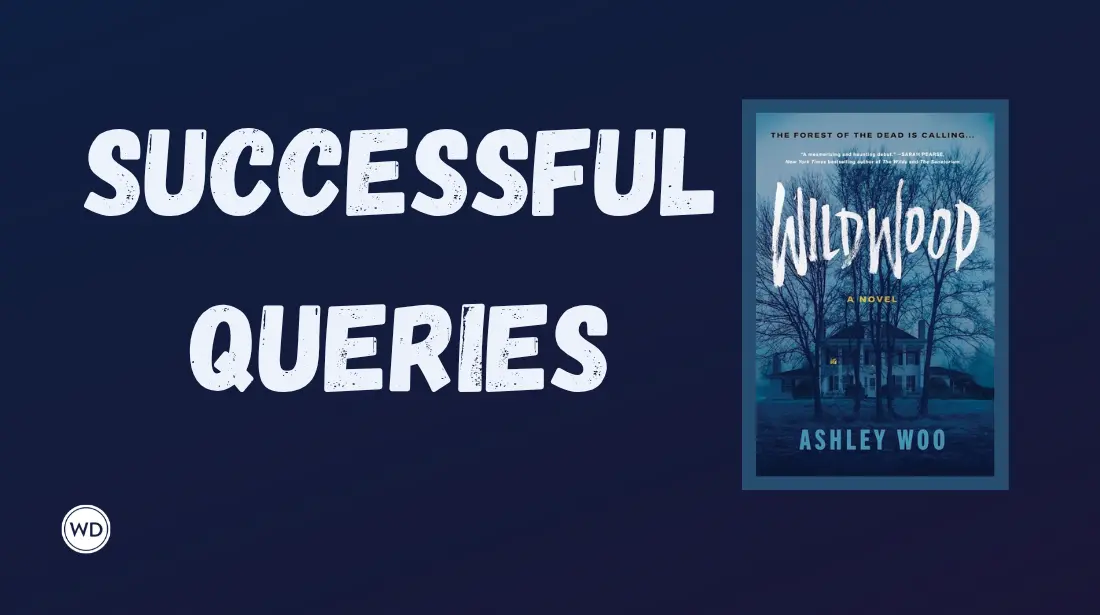
This installment of Writer’s Digest’s acclaimed Successful Queries series examines the exact mechanics behind how author Ashley Woo secured representation with London-based literary agent Jade Kavanagh of Darley Anderson & Associates. Woo’s debut novel—published as Wildwood (originally queried under the title Among the Painted Trees)—stands as a masterclass in modern query engineering.
A gothic thriller set against the moody, atmospheric backdrop of rural Vermont, Woo’s novel blends classic haunted house tropes with contemporary explorations of identity, class, and generational trauma. But before the manuscript ever hit bookstore shelves, it had to survive the slush pile. Through a combination of meticulous structural polish, targeted comp titles, an irresistible narrative hook, and an authentic authorial voice, Woo’s pitch didn’t just meet industry standards—it redefined them.
Read Also
This in-depth analysis breaks down the anatomy of Woo’s successful query letter, explores Kavanagh’s editorial rationale for requesting the manuscript, and shares invaluable lessons from the trenches of the querying process straight from the author herself.
Detailed Chronology: From Manuscript to Representation
The journey from a blank page to a published novel is rarely a straight line, but for Ashley Woo, a philosophy of patience and rigorous preparation ultimately accelerated her breakthrough.
Phase One: The Crucible of Development
Before ever drafting a single sentence of a query letter, Woo spent years honing her craft. Holding an undergraduate degree in English Literature from Emory University, alongside master’s degrees from Harvard University and Babson College, Woo possessed a strong foundational understanding of narrative structure. However, recognizing the chasm between academic writing and commercial fiction, she dedicated herself to extensive structural revisions.
To ensure the manuscript was battle-tested before facing industry professionals, Woo utilized peer beta readers and invested in professional developmental editing. She enlisted the aid of award-winning author Dr. Laura Joyce—a creative writing PhD whose client roster includes multiple bestselling authors—who pronounced Among the Painted Trees as “one of my favorite ever client novels.”
Phase Two: The Query Launch and Instant Traction
Once the 88,000-word contemporary gothic thriller was polished to a mirror shine, Woo targeted agents whose wishlists aligned precisely with her thematic and stylistic sensibilities. Among them was Jade Kavanagh at Darley Anderson & Associates, an agency known for representing high-impact commercial fiction, thrillers, and horror.
When Woo’s query reached Kavanagh’s desk in London, the response was immediate. Drawn in by the professional formatting and razor-sharp genre positioning, Kavanagh requested the full manuscript within a remarkably short window.
Phase Three: The Fast-Track to Publication
The momentum generated by the query letter translated directly into editorial success. Reflecting on the timeline, Woo notes the stark contrast between her years of silent development and the rapid-fire pace of the industry once the right agent was secured:
- Signing with Representation: Woo signed with Jade Kavanagh just two months after beginning her active query campaign.
- Going on Submission: Two weeks after signing, Kavanagh took the manuscript out to major publishing houses.
- The Acquisition Offer: Within another two weeks, a formal publishing offer was secured, proving that meticulous upfront preparation drastically compresses the timeline once a project enters the market.
Supporting Context & Metrics: The Anatomy of the Query
To understand why Woo’s query succeeded where thousands of others fail, it is necessary to examine the structural metrics and psychological triggers embedded within the text. A successful query must function on multiple levels simultaneously: it must prove professional competence, establish commercial viability, deliver an intoxicating story hook, and introduce a compelling human element.
Deconstructing Woo’s Pitch
Woo’s original query letter serves as a case study in effective query architecture, breaking down into five distinct, purposeful sections:
- The Professional Hook & Genre Positioning: Woo immediately establishes her genre (contemporary Gothic thriller), word count (88,000 words), and precise comp titles. Crucially, she uses her comps (such as Ruth Ware, Tana French, Silvia Moreno-Garcia, and Shirley Jackson) not just to name-drop bestsellers, but to differentiate her work: "fans of The Turn of the Key and The Sanatorium who were left wishing for an actual ghost, and fans of Mexican Gothic who also love twisty thrillers."
- The Narrative Blurb: Setting her story in an atmospheric Vermont estate left to her protagonist, Elinor, by a mysterious uncle, Woo introduces the central tension: an eerie 19th-century mural in the master bedroom dubbed “the Forest of the Dead.” Without giving away the ending, she traces Elinor’s psychological unraveling, her integration with the neighborhood’s wealthy elite, and her descent into ancestral and historical nightmares.
- The Thematic Depth: Rather than relying solely on cheap jump scares, Woo explicitly highlights the deeper thematic undercurrents of the novel. She touches upon her protagonist’s bi-racial identity, the psychological weight of "otherness," and the friction between privilege and first-generation immigration.
- Authorial Credentials & Validation: Woo balances her impressive academic pedigree (Harvard, Babson, Emory) with practical writing experience (freelance work for Insight and City Weekend) and the heavy-hitting endorsement from her developmental editor, Dr. Laura Joyce.
- Personal Authenticity: She rounds out the letter by noting her recent relocation to a small village in Vermont, grounding her fiction in lived experience and providing a charming personal sign-off.
The Agent’s Perspective: What Kavanagh Looked For
From an agenting standpoint, Jade Kavanagh emphasizes that the magic of a great query lies in its ability to generate an immediate, visceral "buzz." Kavanagh highlights several key elements that made Woo’s submission impossible to ignore:
- Impeccable Presentation: Professionalism matters. Clean formatting, polite phrasing, and a logical layout signal to an agent that the author understands the business side of publishing.
- Clarity of Vision: By defining the genre and comps in the opening paragraph, Woo removed all guesswork, allowing Kavanagh to instantly visualize the ideal readership and narrative tone.
- Atmospheric Immersion: By placing the setting—fall in rural Vermont—at the forefront, the query successfully transported the agent out of her London office and directly into the chilling mood of the novel.
- The "Why This Story?" Factor: Kavanagh notes that understanding an author’s personal connection to their material adds an invaluable layer of emotional depth, transforming a flat business pitch into a passionate introduction to a creator’s worldview.
Official Statements & Industry Insights
The intersection of authorial strategy and agency evaluation reveals critical lessons for aspiring writers navigating the current literary market. Both Woo and Kavanagh have offered definitive advice drawn from their experiences with Wildwood.
Jade Kavanagh on the Chemistry of Acquisition
"I remember coming across Ashley’s and wanting to stay with it and find out more about this submission immediately… Yes, it was a classic ghost story (yay), but it had depth and layers I was excited to discover. The storyline is summed up and introduced thoroughly without being spoiled. That’s a fine line to walk which Ashley’s blurb achieves."
Kavanagh underscores that agents are constantly hunting for voice. When a query demonstrates technical mastery, narrative restraint (summarizing plot without spoiling twists), and emotional resonance, it shifts the reading experience from a chore to a delight.
Ashley Woo on Slowing Down to Speed Up
Reflecting on her journey, Woo offers a cautionary counter-narrative to the prevailing industry anxiety of rushing to query:
"While nothing in publishing is actually ‘fast’ I think the adage of ‘go slow to go fast’ is still apt. I spent years working on my debut to get it into the best possible shape before even considering sending it out to agents… I hear that a common mistake writers make is rushing to query and sending the manuscript out too soon."
Woo also emphasizes the necessity of differentiation in saturated markets. Because haunted house thrillers are perennial favorites, she deliberately anchored her pitch around unique, high-concept visual elements:
"At the end of the day, no story is truly the first of its kind. Your job in your query letter is to highlight what specifically makes your story unique. There have been countless haunted house stories, so to make my query stand out, I highlighted ‘The Forest of the Dead,’ a creepy 19th-century mural on the wall of the primary bedroom… I think this helped set my query apart, and intrigued Jade to want to read more."
Future Outlook: The Rise of Contemporary Gothic
The success of Ashley Woo’s Wildwood signals a broader, ongoing evolution within the thriller and horror genres. Modern readers increasingly demand fiction that marries the atmospheric dread of classic gothic literature—haunted estates, unreliable memories, creeping isolation—with contemporary explorations of identity, generational trauma, and intersectional perspectives.
As Jade Kavanagh continues to build her roster at Darley Anderson & Associates, representing innovative voices in thriller, horror, and book club fiction, works like Woo’s set a new benchmark for what publishers and readers expect. For aspiring novelists, Woo’s trajectory offers a clear roadmap: combine uncompromising artistic discipline with meticulous market positioning, and let the work speak for itself with absolute, undeniable clarity.

Comments
Facebook App ID not configured. Please add it in the Customizer.