
Executive Overview
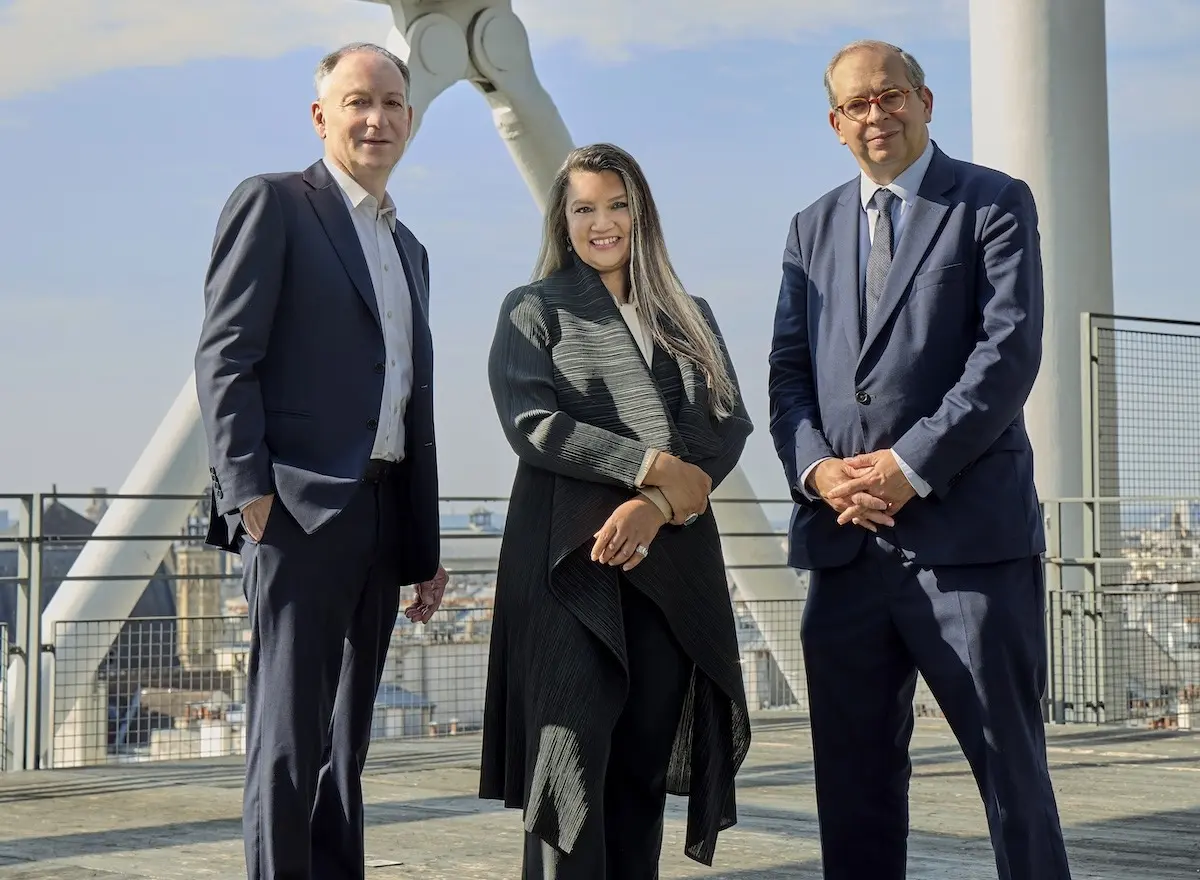
In a landmark development that redefines the architecture of international cultural institutions, three of the world’s most influential modern and contemporary art museums have announced a sweeping, unprecedented alliance. New York’s Museum of Modern Art (MoMA), Paris’s Centre Pompidou, and Hong Kong’s M+ museum have officially forged a multi-continental partnership that treats their respective institutional holdings as a single, shared global collection. Curated by professionals distributed across three continents, this tri-lateral agreement transcends the traditional framework of temporary exhibition loans or episodic institutional partnerships. Instead, it represents a profound, structural integration designed to meet the economic, environmental, and intellectual demands of the twenty-first century.
The sheer scale of this cooperative venture is staggering. Together, the alliance commands a combined audience of 10 million in-person annual visitors and an astounding 125 million digital and online patrons. By pooling resources, coordinating curatorial visions, and cross-pollinating archives, these cultural powerhouses are signaling a definitive shift away from isolated, hyper-competitive accumulation. As institutional leaders noted during joint announcements in Paris and Hong Kong, the alliance sets a new benchmark for acquisitions—mandating that future additions to the shared pool must possess a unique, unassailable value proposition—while simultaneously forging a more sustainable model for global art circulation.
Detailed Chronology of an Historic Partnership
The formation of this trans-oceanic alliance did not materialize overnight; rather, it is the culmination of years of calculated bilateral trust-building, shared intellectual lineages, and shifting global perspectives on contemporary art history.
Read Also
Precursors and Bilateral Milestones
The foundation for the current arrangement was systematically laid over the past several years through a series of bilateral agreements and shared governance models:
- February 2025: M+ and MoMA formalized their burgeoning relationship by signing a comprehensive memorandum of understanding. This foundational document established early protocols for collection sharing, joint research initiatives, and intensive curatorial exchanges.
- Early 2025: Shortly thereafter, M+ and the Centre Pompidou announced their own multiyear strategic partnership. This included an agreement for the Pompidou to inaugurate its newly renovated Paris home with an exhibition integrating works from both collections, followed by a reciprocal presentation at M+.
- October 2025: The realization of a long-standing prophecy uttered six years prior by M+ director Suhanya Raffel—who told cultural strategist Andrés Szántó that museums would inevitably need to "stand together and work to help one another to deliver a more sustainable baseline"—culminated in Friday morning’s joint announcement in Hong Kong.
Implementation Timeline
The operational rollout of this alliance is structured to unfold in measured, high-impact phases over the coming years:
- Late 2027: The initiative’s public-facing collection sharing kicks off as a curated selection of major works from M+’s contemporary collection is installed on long-term loan within MoMA’s core collection galleries in New York.
- 2028: A dedicated, long-term Centre Pompidou gallery space is scheduled to open inside MoMA, running parallel to equivalent collaborative presentation spaces being developed across the other institutions. (This coincides strategically with the anticipated post-restoration reopening window of the Centre Pompidou in Paris, which is undergoing a massive five-year building overhaul slated to wrap up by 2030.)
- The Five-Year Horizon: Over the next half-decade, the three partners will co-organize a major, multi-venue exhibition exploring the complex, evolving concept of "the contemporary," drawing directly from all three collections to tour globally across the participating sites.
Supporting Context & Metrics: Scale, Scope, and Structural Integration
To understand the weight of this alliance, one must examine the staggering institutional assets being brought to the table. Each museum occupies a distinct, foundational space in the lineage of modern and contemporary art, creating an almost seamless century-long continuum of cultural stewardship.
Institutional Profiles and Combined Assets
- The Museum of Modern Art (MoMA): Founded in 1929, MoMA established the blueprint for modern art collecting in the Western world. Its vast holdings form the bedrock of twentieth-century art history.
- Centre Pompidou: Opened in 1977, the Pompidou houses Europe’s largest collection of modern and contemporary art. Owned by the French state, its national collection is a pillar of international cultural heritage.
- M+: Established just six years ago in Hong Kong’s West Kowloon Cultural District, M+ holds a rapidly expanding collection of approximately 8,000 objects. It boasts an authoritative baseline of contemporary Chinese art, bolstered significantly by landmark donations from Swiss businessman and former diplomat Uli Sigg.
| Metric / Asset | MoMA (New York) | Centre Pompidou (Paris) | M+ (Hong Kong) | Combined Impact |
|---|---|---|---|---|
| Founding Era | 1929 | 1977 | 2021 | Nearly a century of continuum |
| Core Strengths | Western Modernism, Global Contemporary | European Modern Masterworks, National Collection | Contemporary Asian Art, Visual Culture, Design | Hundreds of thousands of objects & archives |
| Annual In-Person Audience | Millions | Millions | Millions | ~10 Million Visitors |
| Digital Audience | Global | Global | Global | ~125 Million Online Users |
Governance and Operational Mechanics
The alliance will be steered by a dedicated joint committee comprising the three museum directors, key department heads, and senior curators. This body will meet monthly, supplemented by an annual in-person summit—the inaugural meeting of which is set to take place next month at MoMA, with subsequent gatherings rotating annually among New York, Paris, and Hong Kong.
Furthermore, curators from the Centre Pompidou and M+ will be fully integrated into MoMA’s renowned C-MAP (Contemporary and Modern Art Perspectives) program. Founded in 2009, C-MAP is a cross-departmental research initiative specifically engineered to dismantle Eurocentric narratives and explore art histories outside North America and Western Europe.
Official Statements and Strategic Vision
Speaking in joint interviews across Paris and Hong Kong, the leadership of the three institutions emphasized that this partnership moves far beyond the superficiality of blockbusters or itinerant loans. It represents a philosophical realignment of how encyclopedic and contemporary institutions must operate in an interconnected world.
Laurent Le Bon, president of the Centre Pompidou, captured the ambition of the initiative during discussions in Paris alongside Raffel and MoMA director Christophe Cherix:
"If we succeed, we will be more than the sum of our parts, and I think that is something quite new."
Christophe Cherix underscored the logistical and preservation imperatives driving the collaboration, noting that institutions must ask themselves how to maximize the impact of their holdings beyond physical boundaries:
"We each have things that are absolutely unique in the world. Our first role is of course preservation. But how can we make those collections work harder for us and touch people well beyond the walls of our institutions?"
Cherix explicitly contrasted this alliance with historical models of cooperation, explaining that it is a permanent commitment to co-authoring programs from the ground up:
"This is a long-term commitment to building programs together from the ground up, one that will involve bringing our teams much closer together."
Addressing the financial and environmental realities of international museum operations, Suhanya Raffel pointed out that sharing collections dramatically reduces the carbon footprint and financial burden of shipping fragile works across the globe. For instance, cycling M+’s contemporary Chinese art collection through MoMA galleries not only exposes those works to North American audiences but makes them locally accessible for broader regional study without requiring constant, resource-intensive transit.
Most importantly, the directors argued that endless accumulation is no longer a viable or ethical strategy for twenty-first-century museums. Raffel stated bluntly:
"We can’t just keep collecting, so we are sharing instead."
This philosophy radically alters acquisition standards. According to Cherix, for a work to be integrated into the shared cross-continental ecosystem, it must meet an exceptionally stringent threshold: it will "need to have no equal" within any of the three parent collections.
Future Outlook: A New Era of Global Art Ecosystems
The MoMA–Pompidou–M+ alliance is not an isolated experiment; it sits within a broader evolutionary trend across the international museum sector. Over the past two decades, institutions have steadily shifted away from competitive hoarding toward collaborative resource-pooling, regional networking, and shared institutional stewardship.
Landmark precedents have paved the way for this moment:
- The Bill Viola Acquisition (2003): The Whitney Museum, Tate, and the Centre Pompidou broke ground by jointly purchasing the monumental video installation Five Angels for the Millennium.
- The Yuz Museum / LACMA Model (2018): Indonesian collector Budi Tek partnered with the Los Angeles County Museum of Art and Shanghai’s Yuz Museum to establish a transnational collection-sharing framework.
- The Daskalopoulos Gift (2022): Approximately 100 works from Greek industrialist Dimitri Daskalopoulos were designated as a shared gift to the Solomon R. Guggenheim Museum and the Museum of Contemporary Art Chicago.
- The Mohn Art Collective (MAC3) (2024): Three Los Angeles institutions—the Hammer Museum, LACMA, and MOCA—collectively received 350 works, continuing a shared stewardship model known as the Mohn Art Collective.
However, while previous arrangements focused primarily on shared acquisitions or bilateral exhibition loops, the MoMA–Pompidou–M+ alliance represents the first time major tier-one global institutions have effectively merged their operational identities, research frameworks, and curatorial pipelines across three distinct continents.
As museums grapple with the dual pressures of economic sustainability and the urgent demand to reflect genuinely global, multi-centered perspectives, this tri-lateral pact offers a compelling blueprint for the future. By replacing the impulse to accumulate with the wisdom to share, MoMA, the Centre Pompidou, and M+ are not merely redefining their own institutional capabilities—they are charting a sustainable course for the preservation and presentation of global culture for the next century.



Comments
Facebook App ID not configured. Please add it in the Customizer.