
Executive Overview
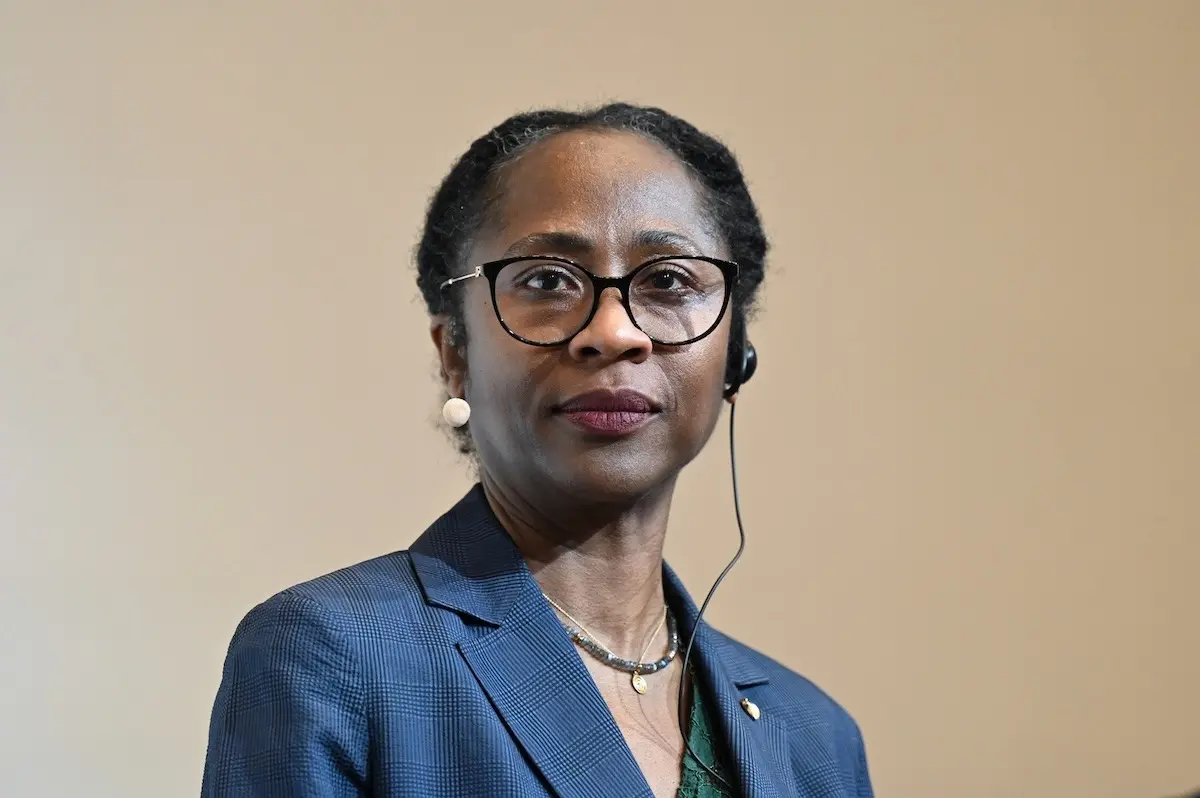
Preparations for Documenta 16, one of the most prestigious and internationally revered recurring exhibitions in the global contemporary art calendar, are being severely tested by geopolitical fault lines. Naomi Beckwith—the Guggenheim Museum’s deputy director and chief curator, who was tapped in 2024 to helm the upcoming Kassel exhibition—revealed in a recent, sprawling interview with the German publication Die Zeit that several prominent artists have already declined invitations to participate.
The underlying reasons for these refusals point directly to a profound crisis of confidence within the international arts community regarding Germany’s political climate. Invited creators have cited concerns over a perceived lack of artistic freedom within the country, alongside vehement opposition to official German foreign policy and its staunch diplomatic and military stance regarding the ongoing war in Gaza.
This unfolding boycott underscores the deep-seated trauma and residual fallout from the disastrous preceding edition, Documenta 15 in 2022. That iteration was catastrophically overshadowed by an antisemitism scandal involving an overtly offensive caricature in a mural by the Indonesian art collective Taring Padi. The resulting firestorm led to massive public outcry, political interference, sweeping institutional resignations—including the en masse departure of Documenta 16’s original curatorial selection committee in 2023—and the implementation of controversial new codes of conduct.
Read Also
As Beckwith steps into this high-stakes arena, she faces the monumental task of steering the quinquennial exhibition through a deeply polarized cultural landscape. She must balance the demands of German political authorities for stringent safeguards against antisemitism with the international art world’s fierce defense of free expression, Palestinian solidarity, and institutional autonomy.
Detailed Chronology: From Kassel’s 2022 Crisis to Beckwith’s 2024 Appointment
To understand the current headwinds facing Documenta 16, one must trace the rapid unraveling of institutional trust that began during the summer of 2022 and continues to reverberate through the global cultural sector.
1. Summer 2022: The Documenta 15 Catastrophe
Staged every five years in the industrial city of Kassel, Germany, Documenta has historically functioned as a global barometer for avant-garde thought, political art, and curatorial experimentation. However, the 2022 edition—curated by the Indonesian collective ruangrupa under a banner of collective resource-sharing (lumbung)—derailed dramatically when critics identified overt antisemitic tropes within a massive, highly visible mural titled People’s Justice (2002) by the Indonesian art collective Taring Padi. The mural featured a figure bearing the hallmarks of classic Nazi-era antisemitic caricature: a soldier with sidelocks, sharp fangs, and bloodshot eyes wearing an SS-runes helmet, alongside a pig-like figure wearing a helmet marked "Mossad."
The inclusion of the work unleashed a torrent of national and international condemnation. Politicians across the German political spectrum accused the organizers of harboring and platforming antisemitism, leading to the immediate covering, and eventual dismantling, of the artwork. The fallout triggered intense soul-searching, emergency parliamentary debates, and a profound crisis regarding how German cultural institutions address racism, antisemitism, and post-colonial artistic frameworks.
2. 2023: The Mass Resignation of the Selection Committee
The reputational damage sustained in 2022 proved nearly insurmountable for the institutional scaffolding of Documenta. In 2023, the entire curatorial selection committee for Documenta 16 resigned en masse. In their joint statement, the international panel cited a lack of institutional willingness to protect the curatorial process from political interference, warning that German cultural oversight was drifting into an environment of generalized suspicion and administrative overreach. The collective walkout left the organization rudderless, casting grave doubts on whether Documenta 16 could even take place.
3. 2024: Naomi Beckwith Steps Into the Breach
Following months of intense behind-the-scenes negotiations and a restructuring of Documenta’s supervisory mechanisms, the organization announced the appointment of Naomi Beckwith as the artistic leader for Documenta 16 in 2024. As a respected Black curator and the deputy director and chief curator of the Solomon R. Guggenheim Museum in New York, Beckwith’s appointment was widely viewed as an ambitious attempt to restore international credibility, bridge transatlantic curatorial divides, and bring a sophisticated, global perspective to Kassel.
However, her honeymoon period was short-lived. Even as she began conceptualizing the framework for the exhibition—the thematic core of which remains tightly under wraps—she encountered immediate resistance from prospective participants who viewed participation in a German-funded state exhibition as politically compromising.
Supporting Context & Metrics: The Friction of Codes of Conduct and Geopolitics
The challenges facing Beckwith are deeply structural, rooted in divergent definitions of free speech, historical responsibility, and geopolitical solidarity between Germany and the international contemporary art community.
The IHRA Definition and the Code of Conduct
In the wake of the 2022 scandal, Documenta’s governing bodies instituted sweeping administrative reforms, introducing a strict code of conduct designed to prevent future controversies. Central to this new framework was the adoption of the International Holocaust Remembrance Alliance’s (IHRA) working definition of antisemitism.
While the IHRA definition has been widely adopted by governments and institutions globally, it remains deeply contentious within academic and artistic circles. Critics—particularly within the international post-colonial, queer, and Global South art communities—argue that the IHRA definition is excessively broad, weaponized to conflate legitimate, robust criticism of the Israeli government’s military policies and Zionism with systemic prejudice against Jewish people. For many international artists, operating under a framework explicitly tied to the IHRA definition represents an unacceptable constraint on political speech, particularly regarding Palestinian rights.
Die Zeit noted during its interview with Beckwith that the incoming artistic director herself had notably never signed Documenta’s new code of conduct. When pressed on this omission during the interview, Beckwith offered a succinct and telling clarification:
"I wasn’t asked to do it."
This revelation highlights a complex administrative fault line: while institutional overseers and political stakeholders in Kassel and Berlin demand absolute ideological alignment and legalistic safeguards, the international curator navigating the ground realities often occupies a more nuanced, precarious space.
The Geopolitical Boycott and the Gaza War
The backdrop of Documenta 16 is inextricably linked to the ongoing war in Gaza following the events of October 7, 2023. Germany’s official Staatsräson (reason of state)—which places the security and protection of the state of Israel and the Jewish people at the core of German political identity—has translated into a domestic climate where pro-Palestinian activism, cultural boycotts of Israeli institutions, and certain forms of anti-Zionist rhetoric face intense administrative scrutiny, cancellation of funding, and public censure.
This domestic German consensus stands in stark contrast to the mood of large swaths of the international art world, where solidarity with Palestine has become a central touchstone of contemporary progressive politics. Consequently, artists approached by Beckwith have found themselves caught in an ethical dilemma: participate in Documenta and risk being seen as complicit in or silent about German state policy, or decline the invitation in protest.
Official Statements and Curatorial Vision
In her extensive interview with Die Zeit, Naomi Beckwith addressed the mounting boycott head-on, offering a measured defense of dialogue while acknowledging the deep-seated anger dividing the cultural sphere.
On Artist Refusals and Censorship Fears
Confirming that her initial rounds of invitations had met with resistance, Beckwith stated:
"There have been a few artists who rejected my invitation to participate."
Asked to elaborate on the motives behind these rejections, she pointed to a dual crisis of institutional freedom and foreign policy:
"Some have the impression that they are not free in Germany to show what what they want to show. Others criticize the stance that Germany has taken on the Gaza war."
Navigating Personal Stance Versus Institutional Mediation
When pressed by the interviewer to clarify her personal geopolitical stance on the Israeli-Palestinian conflict and the war in Gaza, Beckwith deliberately stepped back from taking a partisan public position, choosing instead to emphasize the unique, mediating role of the curator:
"Far more important than my personal stance is the question of how we can overcome this divisive way of thinking. How can we get the conversation going again?"
She added:
"I understand the need for solidarity and support, but we won’t get anywhere with entrenched positions."
Reflecting on Taring Padi and Institutional Learning
Beckwith also confronted the ghosts of Documenta 15, specifically addressing the Taring Padi mural controversy that catalyzed the entire institutional crisis. She expressed confidence that such an oversight would not be repeated under her watch:
"I’m sure something like that won’t happen again. We’ve learned a lot since then."
However, she offered a nuanced historical assessment of the failures of the 2022 edition, placing the blame not merely on malice, but on a profound cultural and contextual translation failure:
"Taring Padi didn’t understand the importance of protecting the Jewish community in this country. And the curators of ruangrupa, whose openness I greatly admire, may not have been prepared for that either."
Future Outlook: Can Documenta 16 Reclaim Its Global Standing?
As the countdown to Documenta 16 continues, the exhibition faces a perilous road. The core challenge for Naomi Beckwith is not merely curatorial—selecting works of high artistic merit—but diplomatic and structural. She must convince an increasingly skeptical international avant-garde that Kassel can once again serve as a safe, intellectually rigorous zone for radical, uncomfortable, and politically engaged art without running afoul of German political orthodoxy.
Key Factors Shaping Documenta 16’s Trajectory:
- The Battle for Autonomy: The degree to which Beckwith and her future curatorial team will be granted genuine independence from political interference by German municipal and federal funding bodies remains an open question. If artists continue to feel that their speech is pre-monitored or vulnerable to state censure, the boycott could widen, reducing Documenta 16 to a provincial exhibition rather than a global town square.
- The Global South Perspective: Documenta’s traditional strength lies in its ability to de-center Eurocentric narratives. Beckwith’s own background as a curator focused on African American and diasporic modern and contemporary art positions her well to engage transnational dialogues. However, reconciling the political demands of the Global South—where solidarity with the Palestinian cause is largely ubiquitous—with German domestic politics will require extraordinary diplomatic skill.
- The Unveiling of the Thematic Framework: As Beckwith eventually reveals the conceptual and thematic architecture of Documenta 16, the art world will scrutinize every artist on the roster for signs of ideological compromise or radical defiance. The success of the exhibition will ultimately depend on whether she can assemble a coalition of thinkers brave enough to endure the crossfire of Germany’s culture wars in exchange for a global platform.
For now, Documenta stands at a historic crossroads. Whether Naomi Beckwith can bridge the unbridgeable chasm between German historical memory, state security policy, and international artistic freedom will define not only the legacy of Documenta 16, but the future viability of mega-exhibitions in an increasingly fractured geopolitical world.


Comments
Facebook App ID not configured. Please add it in the Customizer.