
Executive Overview
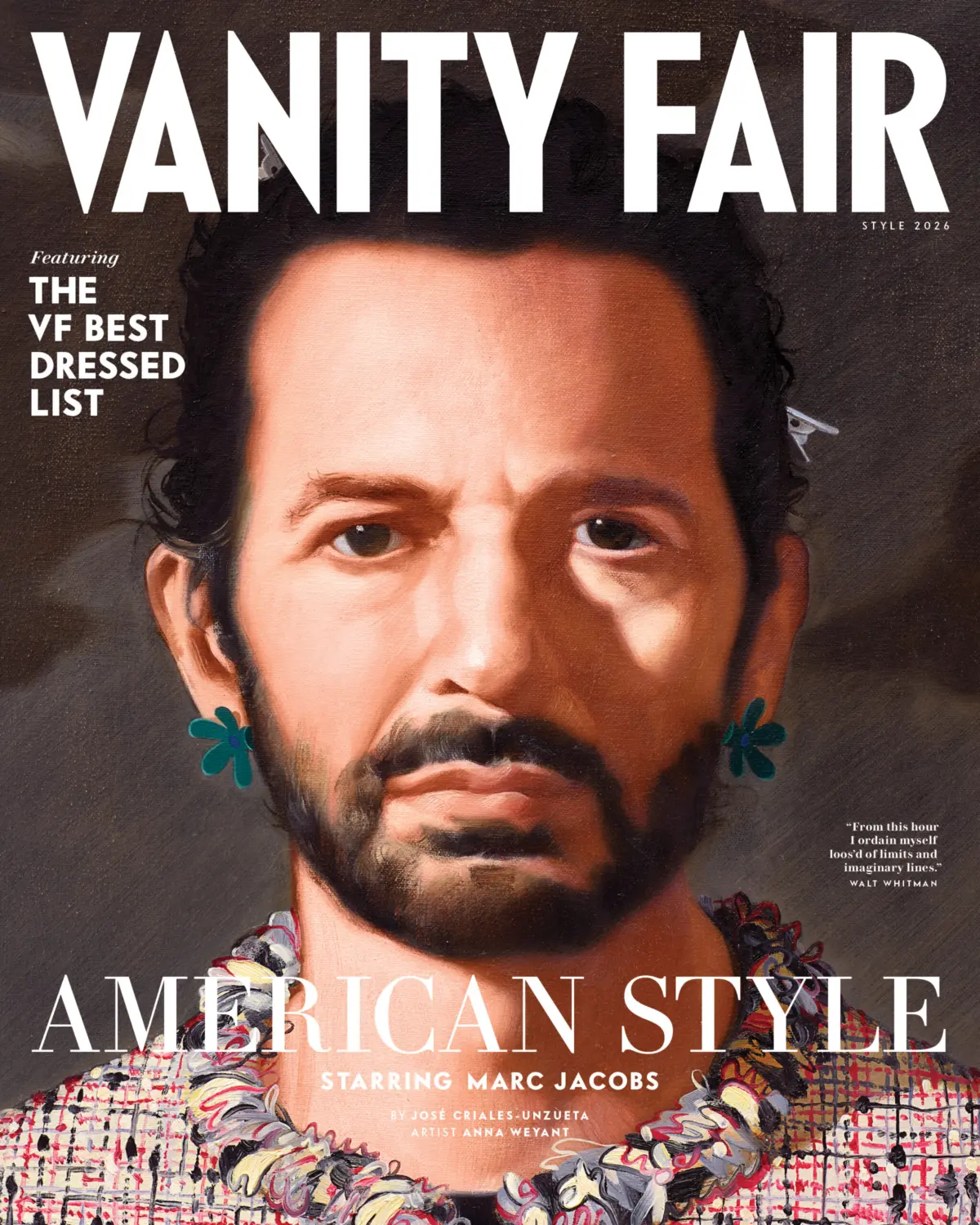
In a striking convergence of contemporary high fashion and classical fine art, acclaimed painter Anna Weyant has immortalized legendary American designer Marc Jacobs for the cover of Vanity Fair’s highly anticipated 2026 Style issue. Titled "Marc Jacobs Cannot Tell a Lie," the accompanying cover story serves as a sweeping, unvarnished retrospective of Jacobs’s four-decade career. The feature spans his profound influence on global style, his status as an unapologetic pop-culture icon, and the intricate corporate maneuvers surrounding the high-stakes sale of his namesake $850 million luxury label, Marc Jacobs International.
Weyant’s arresting portrait frames Jacobs with a sobering, confrontational directness. Set against a moody, obscure background, the composition evokes the austere gravity of a formal photo identification card—a visual declaration that reads, “This is me, take me as I am.” Yet, beneath this clinical framing lies Weyant’s signature Dutch Old Master sensibility, punctuated by subtle markers of Jacobs’s trademark eccentricities: teal flower earrings, the delicate ruffled collar of a Chanel tweed top, and salon hair clips.
The portrait is more than a simple magazine cover; it is the latest chapter in a burgeoning creative symbiosis between two of contemporary culture’s most distinct visionaries. From high-profile editorial collaborations and runway set designs to candid industry critiques regarding conglomerates like LVMH and G-III Apparel Group, this collaboration bridges the worlds of fine art and fashion commerce. This comprehensive report explores the genesis of the Vanity Fair cover, the deep artistic rapport between Weyant and Jacobs, the commercial and critical realities shaping the fashion industry today, and the unyielding authenticity that continues to define Marc Jacobs’s enduring legacy.
Read Also
Detailed Chronology of a Creative Alliance
From Mutual Admiration to Artistic Symbiosis
The creative partnership between Anna Weyant and Marc Jacobs did not materialize overnight; rather, it has developed through a series of high-profile collaborations that showcase a mutual reverence for each other’s distinct mediums. Weyant, a Gagosian-represented artist whose auction market skyrocketed following her record-breaking $1.6 million sale of Falling Woman (2020) at Sotheby’s, has long explored themes of youthful vulnerability, surreal psychological spaces, and the quiet tensions of domestic existence. Jacobs, meanwhile, has consistently looked to the avant-garde fine art world for inspiration, bridging the gap between commercial ready-to-wear and high-concept artistic expression.
The foundation for the Vanity Fair cover was laid in late 2024, when Jacobs commissioned Weyant to paint supermodel Kaia Gerber wearing one of his visionary Fall 2024 designs for a Vogue cover. Reflecting on that project at the time, Jacobs remarked, "I love Anna’s women, and I love the idea of Kaia seen by Anna."
This synergy deepened profoundly ahead of Jacobs’s September 2025 runway presentation at New York’s historic Academy Mansion. For the show, Jacobs invited Weyant to conceptualize and execute the runway’s immersive set design. Weyant transformed the palatial space into The Dollhouse, a psychological installation that leaned heavily into her signature eerie, uncanny motifs. Models navigated the meticulously crafted environment clad in dollhouse-themed garments designed by Jacobs, seamlessly merging Weyant’s pictorial world with Jacobs’s sartorial vision.
Capturing the Icon: The Making of the Vanity Fair Cover
The culmination of this artistic dialogue is the 2026 Vanity Fair Style issue cover. Weyant’s up-close portrait of Jacobs strips away the usual theatricality associated with fashion iconography, replacing runway drama with psychological intimacy.
- The Composition: Jacobs faces the viewer with unblinking, stone-faced composure. The lighting and dark backdrop evoke the brooding chiaroscuro of 17th-century Dutch masters, transforming a contemporary designer into a timeless subject of classical portraiture.
- The Subversive Details: Counterbalancing the sobering austerity of the framing are subtle, brilliantly curated flourishes of personal style. The teal flower earrings, the structured ruffles of a Chanel tweed collar, and utilitarian salon hair clips introduce an undercurrent of flamboyance.
- The Psychological Weight: True to Weyant’s body of work—where figures are often portrayed navigating what the artist terms "low-stakes trauma" with porcelain-like resilience—the portrait captures Jacobs not as a untouchable titan of industry, but as a human being laid bare.
As model Kaia Gerber observes within the pages of the magazine, encapsulating the sentiment of numerous industry insiders interviewed for the feature, "Marc has never really tried to be anyone other than himself."
Supporting Context & Metrics
The Financial and Corporate Realities of Marc Jacobs International
While the visual framing of the Vanity Fair cover is deeply artistic, the accompanying article dives headfirst into the hardnosed business realities of the global luxury market. Over a career spanning four decades, Jacobs has navigated the dizzying heights of creative directorship at powerhouse houses like Louis Vuitton, the rapid scaling of his own brand, and the subsequent corporate restructuring that characterizes modern luxury fashion.
At the center of the Vanity Fair feature is the valuation and sale of Marc Jacobs International, a brand valued at an estimated $850 million. However, Jacobs pulls no punches when discussing the structural limitations imposed by his former corporate custodians. Addressing the luxury conglomerate LVMH, which held a controlling stake in his brand, Jacobs offered a candid assessment:
"LVMH has kept us and done the least possible they can in terms of growing our business," Jacobs admitted, though he quickly clarified that this stagnation was systemic rather than born of malice.
Furthermore, the designer voiced his apprehensions regarding the commercial shifts necessitated by the brand’s new ownership structure. Following LVMH’s divestment, the brand’s operations shifted under the purview of the G-III Apparel Group, operating in a strategic partnership with WHP Global. Jacobs did not shy away from addressing the brand perception shift, noting that G-III carries "a less elegant connotation in the industry" due to its primary operational focus on manufacturing and licensing agreements rather than purely aspirational haute couture.
Weyant’s Market Footprint and Artistic Evolution
To understand the cultural weight of Weyant painting Jacobs, one must examine the meteoric rise of the young painter within the contemporary art market. Born in Canada and trained at the Rhode Island School of Design, Weyant burst into international prominence during the digital and physical art market shifts of the early 2020s.
- Market Validation: Her 2020 painting Falling Woman shattered expectations when it achieved $1.6 million at Sotheby’s, setting a high-water mark for the young artist and signaling intense institutional and collector demand.
- The Gagosian Roster: Represented by the mega-gallery Gagosian, Weyant’s work is coveted by blue-chip collectors worldwide.
- The "Dollhouse" Motif: Critics often compare her figures to porcelain dolls or characters trapped in a surrealist domestic theater. This aesthetic creates a fascinating parallel to Marc Jacobs’s own design philosophy, which frequently plays on notions of childhood nostalgia, oversized proportions, dramatic costume, and the subversion of bourgeois norms.
Official Statements and Industry Insights
The Vanity Fair profile serves as an extended meditation on honesty, vulnerability, and the cost of maintaining artistic integrity in a commercialized world. Throughout the interviews, Jacobs emphasizes that his willingness to court controversy stems from a deeply ingrained need for transparency.
"I get a good feeling about being honest," Jacobs told Vanity Fair, discussing both his personal life—which frequently intersects with the fine art gallery circuit as an avid collector—and his professional transparency. "It excites me to be open, and it excites me to reveal things that somebody else would keep secret."
This ethos mirrors the aesthetic choices made by Anna Weyant in her portraiture. By refusing to flatter her subjects with artificial embellishments or conventional glamour shots, Weyant strips away artifice, matching Jacobs’s verbal radical honesty with visual directness.
Fashion industry commentators have praised the profile for its rare, unedited glimpse into the psychology of a living legend. While many legacy designers maintain a carefully managed, sanitized public persona, Jacobs embraces the label of the "fashion victim"—redefining the phrase entirely on his own terms.
"All I’ve ever been is a fashion victim… I don’t think of that as a bad thing," Jacobs remarked to the publication, celebrating a lifetime spent in total, uninhibited service to the altar of style.
Future Outlook
The collaboration between Anna Weyant and Marc Jacobs for Vanity Fair’s 2026 Style issue marks a watershed moment for both figures. For Jacobs, the feature arrives at a pivotal juncture: as his eponymous brand navigates a new era under G-III Apparel Group and WHP Global, the designer is cementing his legacy not merely as a commercial force, but as an enduring cultural touchstone who refuses to compromise his voice.
For Weyant, the project cements her transition from a rising star of the contemporary painting market to a multidisciplinary cultural force capable of shaping the visual narrative of global fashion. By stepping outside the traditional confines of the gallery space and into the realm of editorial art direction and runway set design, Weyant is redefining what it means to be a fine artist in the 21st century.
As the lines between fine art, high fashion, and pop-culture journalism continue to blur, the image of Marc Jacobs captured through Anna Weyant’s discerning lens will undoubtedly stand as one of the defining visual artifacts of the mid-2020s. It is a testament to the power of uncompromising authenticity—a reminder that whether on canvas, on the runway, or within the glossy pages of a magazine, true icons cannot, and will not, tell a lie.


Comments
Facebook App ID not configured. Please add it in the Customizer.