
Executive Overview
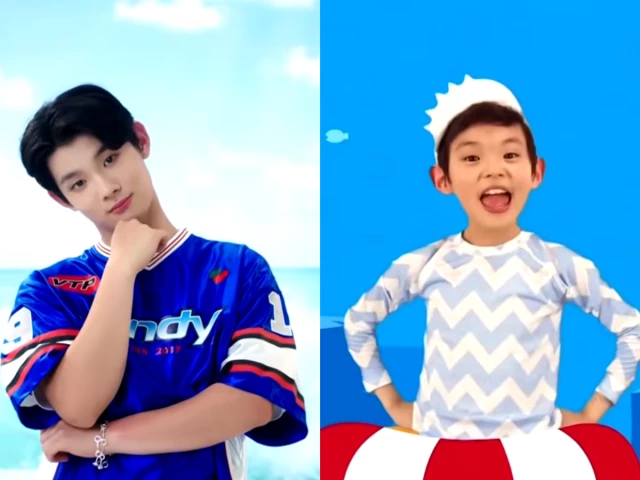
A decade after capturing the global imagination as the cheerful child star of the most-watched video in YouTube history, Park Geonroung has officially stepped back into the spotlight. Now a young artist embarking on a professional music career, Park has released his debut K-pop digital single, aptly titled "WAVE," under the stage name "Baby Shark Boy."
Backed by The Pinkfong Company—the South Korean entertainment powerhouse that owns the intellectual property for the cultural phenomenon known as "Baby Shark"—Park’s transition from a viral internet toddler to a trained pop idol represents a unique milestone in digital media history. It marks one of the first instances where a natively digital child star of the 2010s YouTube boom has successfully pivoted into the fiercely competitive world of traditional Korean pop music.
The original "Baby Shark Dance" video, released in 2016, became an unprecedented cross-cultural juggernaut. It fundamentally altered the landscape of children’s entertainment and internet metrics, shattering viewing records and cementing itself in the modern lexicon. For Park, who was just seven years old when he recorded the choreography that would be viewed billions of times across the globe, the journey has been an extraordinary exercise in growing up under a digital microscope.
Read Also
His new single, "WAVE," serves as both a nostalgic nod to his roots—opening with the instantly recognizable, earworm melody that defined a generation—and a deliberate artistic departure into an energetic electropop soundscape. With lyrics co-crafted by Park himself, the release is designed to announce his arrival as a serious, multifaceted performer ready to forge a lasting career in the global entertainment industry.
Detailed Chronology: From a 2016 Viral Sensation to a 2026 K-Pop Debut
To understand the magnitude of Park Geonroung’s musical debut, one must trace the extraordinary trajectory of the phenomenon that birthed his early fame.
2016: The Birth of a Global Phenomenon
In June 2016, The Pinkfong Company (then operating under SmartStudy) uploaded the "Baby Shark Dance" video to YouTube. Featuring a simple, hypnotic tune about a family of ocean predators, coupled with bright animations and the infectious, easy-to-learn hand-and-arm dance movements performed by a young Park Geonroung and his co-star, the video was initially targeted at preschool audiences.
However, within months, the video escaped its demographic niche. Propelled by the mechanics of YouTube’s recommendation algorithm, the rise of the smartphone generation of toddlers, and an inescapable chorus ("Baby shark, doo-doo, doo-doo, doo-doo…"), the video began accumulating millions, and eventually billions, of views.
2017–2020: Cultural Infiltration and Record-Breaking Metrics
As the years progressed, "Baby Shark" transitioned from a children’s song into a global pop-culture meme. It sparked the "Baby Shark Challenge," where families, athletes, and celebrities posted their own renditions of the dance across social media platforms like Instagram and TikTok.
During this growth period, Park continued his association with The Pinkfong Company, appearing in various educational videos, live-action content, and promotional materials. Behind the scenes, however, he was living the life of a normal student while quietly nurturing a passion for performance and music composition.
2021–2025: The Ascent to Unprecedented Viewing Records
In November 2020, "Baby Shark Dance" officially surpassed Luis Fonsi and Daddy Yankee’s mega-hit "Despacito" to become the most-watched YouTube video of all time. Over the next few years, it continued to widen its lead, eventually crossing the staggering threshold of 17.2 billion views by mid-2026.
Throughout his adolescence, Park trained quietly in vocal performance, dance, and songwriting. Recognizing his lifelong association with the brand and his natural affinity for the stage, executives at The Pinkfong Company began discussing a formal pathway for Park to transition from a corporate child actor into an independent pop artist under their umbrella.
August 2026: The Debut of "Baby Shark Boy"
On a Thursday morning in August 2026, Park officially shed his anonymity as "the kid from the video" and made his solo K-pop debut under the moniker "Baby Shark Boy." Releasing "WAVE" across major streaming platforms worldwide, the launch signaled a rare bridge between the early era of viral web content and the highly polished machinery of modern K-pop.
Supporting Context & Metrics: The Scale of "Baby Shark"
The economic and cultural footprint of the "Baby Shark" franchise cannot be overstated. It stands as a masterclass in modern digital asset monetization, IP management, and algorithmic reach.
| Metric / Milestone | Detail |
|---|---|
| Total YouTube Views | Surpassed 17.2 billion views (the most-watched video in YouTube history). |
| Release Year | 2016 (Produced by The Pinkfong Company). |
| High-Profile Endorsements | Played at the White House; publicly acknowledged by US President Donald Trump, Tesla CEO Elon Musk, and numerous global celebrities. |
| Mainstream Crossovers | Spawned official television shows, consumer merchandise lines, global concert tours, cereal brands, and interactive toys. |
| Debut Single Details | Released August 2026; titled "WAVE"; hybrid of the original "Baby Shark" melody and contemporary electropop. |
The song’s widespread appeal even extended into high-stakes political and corporate arenas. It has been used to calm restless crowds at international sports events, played during official state functions, and referenced by tech billionaires on social media. This universal, cross-demographic penetration provided Park with a platform matched by virtually no other debuting artist in history. Yet, it also presented a formidable challenge: how to step out from the shadow of a giant neon shark and establish a distinct, mature artistic identity.
Official Statements and Artistic Vision
Speaking to reporters following the release of his debut single, Park reflected on the surreal journey of the past decade and the deep sense of gratitude he holds for the global audience that watched him grow up.
"Baby Shark Dance brought joy to people around the world, and I’m very grateful that so many people still remember me from 10 years ago," Park shared during a press briefing. "That made me want to come back and connect with people through music again."
Addressing the stylistic direction of his new project, Park explained how he wanted to honor his past while firmly establishing his future as a pop musician. "WAVE" intentionally opens with the iconic, comforting notes of the 2016 hit before rapidly transitioning into a dynamic electropop beat—a sonic metaphor for his maturation from a child entertainer to a young adult artist.
Crucially, Park took an active role in the creative process, contributing directly to the lyricism of the track. He views the single not as a novelty comeback, but as the foundational stone of a long-term career.
"‘WAVE’ feels more like a new beginning than a one-off project," Park emphasized. "I hope to keep showing different sides of myself through music as well as other kinds of content."
Industry analysts point out that this strategic positioning allows Park to leverage built-in brand recognition while simultaneously appealing to the mature demographic that grew up watching him on screens big and small over the last ten years.
Future Outlook: Navigating the K-Pop Landscape
As "Baby Shark Boy," Park Geonroung enters a saturated and fiercely competitive global music market. The K-pop industry is renowned for its rigorous training regimens, high performance standards, and the relentless demand for innovative concepts. However, Park possesses an asset that money cannot buy: organic, pre-existing global awareness.
Opportunities for Growth
- Global Built-In Audience: With billions of people familiar with his face from their childhoods or through their own children, Park commands an instant international curiosity gap that most rookie idols spend years trying to build.
- Multimedia Synergy: Backed by The Pinkfong Company, Park has access to a vast network of animation studios, live-action production teams, and merchandising pipelines that can support cross-media storytelling.
- Artistic Evolution: By participating in songwriting and exploring contemporary electropop genres, Park has signaled an openness to artistic growth, positioning himself as a versatile singer-songwriter rather than a manufactured novelty act.
Potential Challenges
- The Novelty Trap: The primary hurdle for Park will be convincing media outlets and skeptical music consumers that he is a legitimate K-pop artist rather than a corporate marketing experiment capitalizing on nostalgia.
- Genre Transitions: Moving away from the ultra-accessible, bubblegum pop of early childhood entertainment into mature pop and electronic dance music requires careful sonic curation to avoid alienating either his younger fans or older music critics.
The Road Ahead
Park Geonroung’s journey from a seven-year-old dancing in front of a green screen to a solo K-pop artist releasing his own singles is a testament to the shifting realities of digital celebrity in the twenty-first century. As "WAVE" climbs digital charts and generates international discourse, the world is watching to see how the "Baby Shark Boy" navigates his teenage and young adult years in the limelight.
If his early poise, active involvement in his creative output, and clear strategic vision are any indication, Park is well-equipped to ride this new wave all the way to lasting stardom.

Comments
Facebook App ID not configured. Please add it in the Customizer.