In a sweeping announcement that underscores its ongoing institutional evolution, the Baltimore Museum of Art (BMA) has revealed the acquisition of approximately 118 artworks over a six-month period. Spanning centuries, continents, and a vast array of mediums, these new additions—secured through a combination of strategic purchases, generous gifts, and promised bequests—fundamentally reshape the museum’s permanent holdings.
This latest wave of acquisitions is not merely a quantitative expansion; it is a deliberate, highly calculated maneuver designed to bridge historical gaps in the museum’s collection, elevate underrepresented global narratives, and honor the vibrant artistic ecosystem of Baltimore itself. At the heart of this acquisition drive is a massive, transformative gift of 64 works from longtime Baltimore resident and former BMA board chair Constance R. Caplan. Her donation introduces a stellar roster of late-20th and 21st-century masters to the museum’s galleries, anchoring a broader institutional strategy focused on equity, inclusion, and deep community engagement.
Complementing Caplan’s contribution are works by a stellar international array of creators, ranging from modern pioneers to contemporary visionaries. By weaving together pieces by globally recognized figures—such as Amy Sherald, Tarsila do Amaral, and Jack Whitten—with the voices of emerging and historically marginalized artists, the BMA continues to redefine what a 21st-century art museum can and should be. Under the leadership of Asma Naeem, the Dorothy Wagner Wallis Director, the institution is systematically dismantling traditional, Eurocentric canons in favor of a polyphonic, deeply resonant cultural footprint.
Detailed Chronology: A Six-Month Triumph of Acquisition
The recent intake of 118 artworks is the culmination of months of meticulous curatorial labor, private negotiations, and philanthropic cultivation. While museum acquisitions are often viewed as isolated events, this milestone represents a structured phase in a multi-year institutional roadmap.
Phase One: Laying the Groundwork (Months One to Three)
The groundwork for this acquisition surge began quietly behind the scenes, as BMA curators collaborated closely with private collectors, estate executors, and contemporary artists. During this initial quarter, discussions solidified around key philanthropic commitments, most notably the finalization of Constance R. Caplan’s landmark gift. Caplan, whose relationship with the BMA spans more than half a century, worked hand-in-hand with curatorial staff to select 64 pieces from her personal collection that would not only complement the museum’s existing strengths but actively push its narrative boundaries into new territory.
Concurrently, the museum’s acquisition committees authorized strategic purchases aimed at securing historically significant works on paper, ceramics, and photography. This period saw the acquisition of foundational works by modern masters such as Brazilian modernist Tarsila do Amaral and American social realist Ben Shahn, establishing a historical baseline that balances the influx of contemporary installations.
Phase Two: Expanding the Contemporary and Global Footprint (Months Four to Five)
As the year progressed, the focus shifted toward diversifying the museum’s holdings across international and intersectional axes. The BMA successfully secured works that dialogue directly with pressing contemporary discourses around identity, ecology, and diaspora.
During this window, the museum acquired striking sculptures, mixed-media pieces, and installations by artists whose practices engage with global sociopolitical realities. Notable additions included works by Iraqi artist Ali Eyal, Ugandan fiber artist Sanaa Gateja, and self-taught visionary Reverend Joyce McDonald. These acquisitions reflect a deliberate effort by the BMA to move beyond traditional Western art centers, bringing voices from the Global South and diaspora communities into direct conversation with Baltimore audiences.
Phase Three: Public Unveiling and Institutional Synthesis (Month Six)
The culmination of these efforts arrived in the final phase, marked by the formal cataloging, conservation assessment, and public announcement of the 118 works. By synthesizing purchases, gifts, and promised bequests into a cohesive narrative, the BMA framed the announcement not as a miscellaneous collection of objects, but as a unified testament to its core values.
The integration of these pieces into the museum’s operational pipeline immediately triggered a series of curatorial planning sessions, with museum leadership mapping out how the new works will be rotated into upcoming thematic exhibitions, permanent collection reinstallations, and educational programming across Baltimore’s neighborhoods.
Supporting Context & Metrics: Analyzing the Scope of the Collection
To truly understand the weight of the BMA’s recent acquisitions, one must examine the metrics and the rich tapestry of artists who now call the museum home. The 118 works represent an extraordinary cross-section of human creativity, crossing boundaries of medium, geography, and chronology.
The Constance R. Caplan Contribution
Accounting for more than half of the total intake, the 64-work gift from Constance R. Caplan is a masterclass in discerning contemporary art collecting. Caplan’s decades-long dedication to the BMA is etched into the very fabric of the institution, but this gift marks a monumental capstone to her philanthropic legacy.
The donation features museum-quality pieces by a formidable group of artists who helped define contemporary abstraction, minimalism, and conceptual art:
Janine Antoni: Known for her process-oriented, body-centric sculptures.
Bernd and Hilla Becher: The legendary German conceptual photographers renowned for their meticulous documentation of industrial architecture.
Fernanda Gomes: The Brazilian artist celebrated for delicate, site-specific assemblages using everyday materials.
Robert Morris: A foundational figure in minimalist sculpture and theoretical discourse.
Stephen Parrino: Known for his subversive, shaped monochrome canvases that stretch the limits of painting.
Richard Tuttle: A master of lyrical, intimate, and formally inventive post-minimalist art.
Lee Ufan: A key proponent of the Korean Dansaekhwa movement and the Japanese Mono-ha school.
Jack Whitten: The visionary abstract painter celebrated for his complex, mosaic-like surfaces that merge process with profound historical memory.
Lisa Yuskavage: Known for her psychologically charged, hyper-stylized figurative paintings.
Global Perspectives and Medium Diversity
Beyond the Caplan gift, the BMA’s curators cast a wide net to capture the dynamism of global art production. The newly acquired paintings introduce staggering emotional depth and technical brilliance through works by Ecuadorian master Oswaldo Guayasamín, celebrated portraitist Amy Sherald, figurative innovator Louis Fratino, and modernist pioneer Stanton MacDonald-Wright.
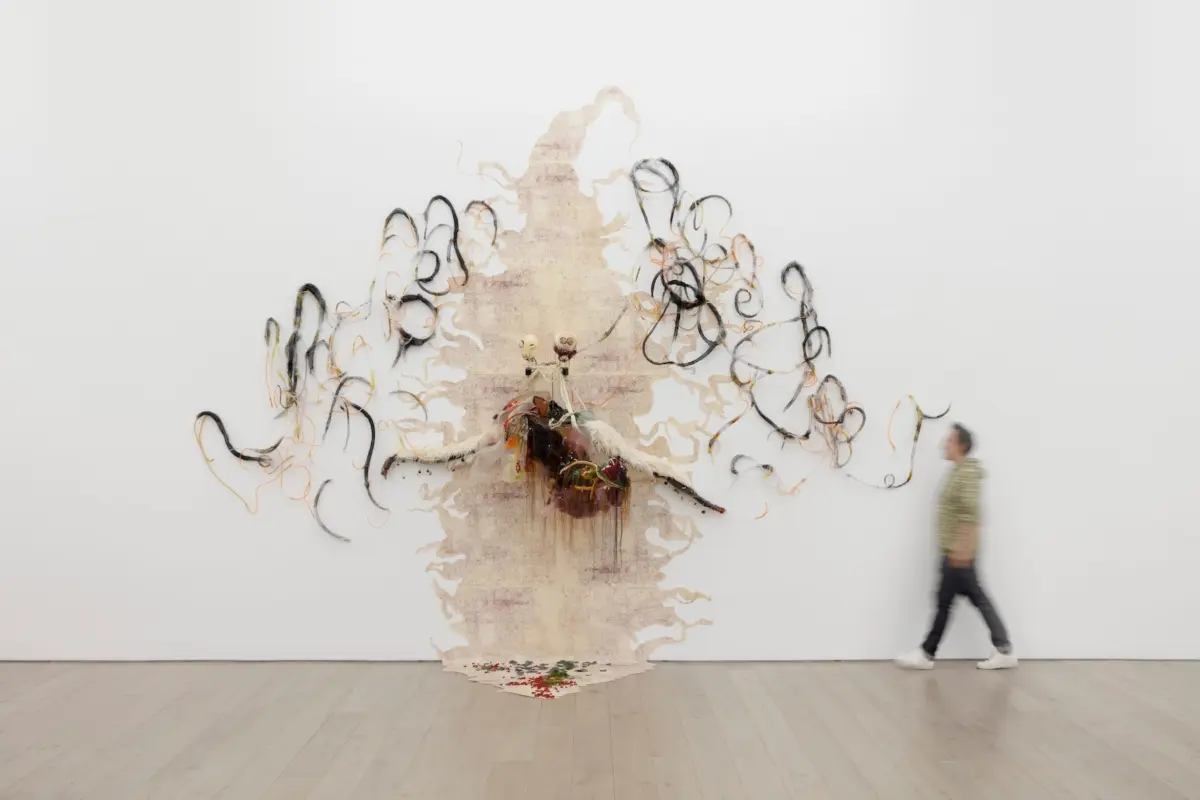
Sculptural and installation practices are equally well-represented. Rina Banerjee brings her signature kaleidoscopic, culturally hybridized sculptures that explore diaspora and globalization. Ali Eyal contributes deeply personal, haunting reflections on displacement and memory. Sanaa Gateja stuns with intricate works crafted from recycled paper beads, merging sustainable practices with high artistic expression. Meanwhile, Reverend Joyce McDonald infuses the collection with powerful sculptural works addressing grief, spirituality, and survival.
The ceramic arts receive a vital boost through the acquisition of pieces by South African ceramicist Siphiwe Nala—keeping ancestral Zulu traditions alive through contemporary forms—and Heidi Lau, whose ghostly, biomorphic ceramic sculptures evoke ancient ruins and mythological realms.
In the realm of photography and works on paper, the BMA has deepened its commitment to documentary integrity and graphic mastery. Curran Hatleberg and Oumar Ka offer piercing photographic insights into contemporary human landscapes. On paper, the inclusion of works by Tarsila do Amaral (a titan of Latin American modernism), Margaret Burroughs (a co-founder of the DuSable Black History Museum and a pillar of African American printmaking), and Ben Shahn (whose socially conscious graphics defined mid-century American art) provides a robust historical foundation that grounds the contemporary pieces.
Official Statements: A Vision for the Future
The strategic philosophy guiding these acquisitions was articulated clearly by museum leadership, emphasizing a departure from passive preservation toward active, community-centered cultural stewardship.
Asma Naeem, the Dorothy Wagner Wallis Director of the BMA, offered profound insight into the institutional mindset driving these developments:
"Over the several past years, the BMA has invested strongly in several important strategies: enhancing the scope and meaning of collection diversification; developing deep relationships with private and public collaborators who share our institutional ideals; and uplifting Baltimore’s vibrant and growing artistic community. The acquisitions announced today are a beautiful and exciting encapsulation of those priorities."
Naeem’s statement highlights a critical shift in modern museum management. Under her leadership, the BMA has consistently sought to align its curatorial output with the demographic realities and ethical imperatives of the 21st century. Diversification is no longer viewed as a supplementary checkbox, but as the fundamental lens through which art history must be re-examined. By forging unbreakable bonds with private patrons like Constance R. Caplan and actively honoring local talent, the BMA is positioning itself as a democratic civic forum rather than an ivory tower.
Art historians and regional cultural critics have similarly praised the acquisitions for their balance. By welcoming heavy-hitting international names while simultaneously celebrating regional practitioners, the BMA demonstrates that global excellence and local relevance are not mutually exclusive, but mutually reinforcing.
Future Outlook: What Lies Ahead for the BMA
The arrival of 118 new artworks is not the finish line; rather, it marks the beginning of an intensive period of curation, exhibition design, and community outreach. As these works transition from transit crates and registrar offices into conservation labs and gallery spaces, the museum faces an exciting set of operational and intellectual challenges.
Curatorial Integration and Exhibition Planning
The primary task ahead for the BMA’s curatorial team is the seamless integration of these acquisitions into the museum’s permanent galleries and upcoming special exhibitions. Visitors can anticipate upcoming rotations that place Constance R. Caplan’s minimalist and conceptual acquisitions into dialogue with the museum’s existing modern holdings. Furthermore, the inclusion of works by contemporary visionaries like Amy Sherald and Louis Fratino will undoubtedly inform upcoming explorations of portraiture, identity, and queer narratives in American art.
Educational departments are already hard at work developing curricula, public lectures, and guided tours centered around the new acquisitions. By designing programming that unpacks the sociopolitical contexts of artists like Ali Eyal, Sanaa Gateja, and Reverend Joyce McDonald, the BMA aims to foster deeper empathy and critical thinking among school groups, university students, and the general public.
Deepening Roots in Baltimore
Crucially, the BMA’s focus on uplifting Baltimore’s artistic community remains paramount. As the museum absorbs these 118 works into its permanent care, institutional leaders have reiterated their commitment to ensuring that local artists not only find representation within the museum’s walls but also benefit from the institutional prestige and economic vitality that the BMA generates.
Looking forward, the museum’s trajectory serves as a model for regional institutions nationwide. By pairing visionary philanthropy with rigorous, equity-driven curatorial strategies, the Baltimore Museum of Art proves that encyclopedic museums can evolve. They can honor the past while bravely opening their doors to the diverse, complex, and beautiful multiplicity of the contemporary world.




Comments
Facebook App ID not configured. Please add it in the Customizer.