
Executive Overview
For years, the intersection of E-Ink technology and smartphone engineering has been a niche frontier. While monochrome electronic paper displays offer unparalleled reading comfort, stellar battery efficiency, and zero eye strain under harsh sunlight, they have historically fallen short when tasked with multimedia consumption, vibrant web browsing, and high-speed UI interactions. Consumers who prioritize digital wellness and long battery life have frequently found themselves forced to carry a secondary device—such as a dedicated e-reader—alongside a traditional, power-hungry smartphone.
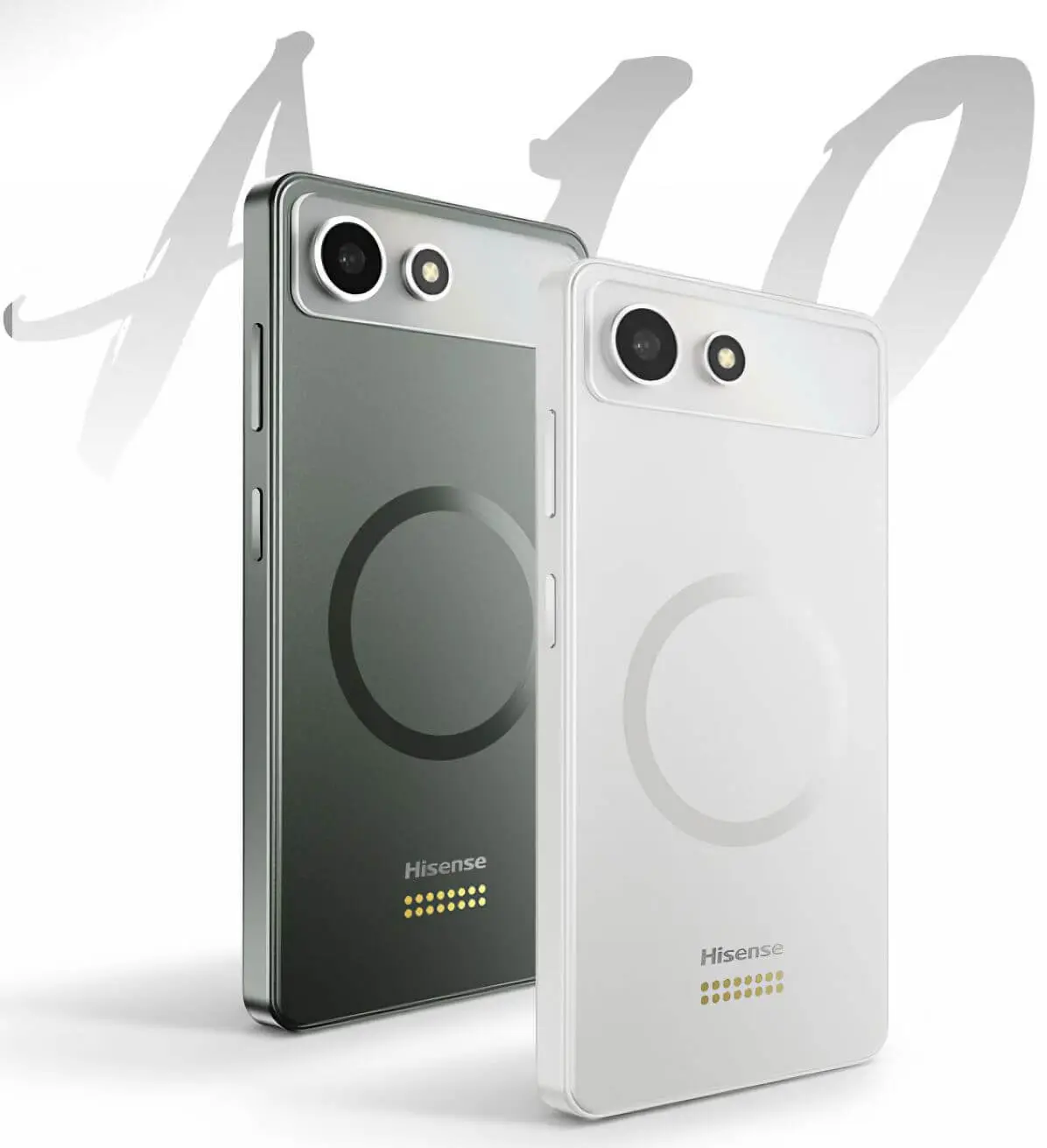
Enter Hisense. Following months of industry whispers, concept teases, and speculative leaks, the electronics manufacturer has officially launched its groundbreaking A10 E-Ink smartphone series in the Chinese market. Comprising two distinct models—the standard Hisense A10 and the feature-rich Hisense A10 Ultra—this launch represents a bold reimagining of what a hybrid mobile device can achieve.
Priced competitively between $476 USD (for the base 8GB RAM / 128GB storage variant) and $576 USD (for the 8GB RAM / 256GB storage configuration), the A10 lineup introduces a unique modular solution to the eternal e-paper dilemma: an optional, detachable magnetic color screen. By marrying a crisp 6.13-inch Carta 1300 monochrome display with a snap-on 4.96-inch LCD color panel, Hisense aims to deliver the ultimate dual-purpose device. Powered by Qualcomm’s specialized QCM6690 processor and running Android 16, the A10 series bridges the gap between distraction-free e-reading and modern smartphone versatility.
Read Also
Detailed Chronology: From Teaser Campaigns to Store Shelves
The journey of the Hisense A10 series to commercial release is a testament to the brand’s persistent dedication to the E-Ink smartphone segment—a market that major global players largely abandoned.
Early Leaks and Initial Teasers (Late Spring to Summer 2026)
Rumors regarding a next-generation Hisense e-paper phone began circulating in technical forums and supply chain circles months before the official announcement. Enthusiasts noted that Hisense was developing a device that moved away from traditional dual-screen designs (such as those seen on the historical A-series models, which featured a color AMOLED screen on the front and an E-Ink panel on the back). Instead, engineers were prototyping a single, primary E-Ink device equipped with an innovative modular accessory system.
By mid-summer 2026, official teasers from Hisense confirmed the codename "A10" and showcased partial glimpses of the device’s rear chassis, highlighting a circular wireless charging zone, a dual-camera array, and a mysterious magnetic contact grid. Industry analysts quickly deduced that Hisense was preparing a modular approach to color display integration, sparking intense debate across tech communities regarding durability, weight distribution, and software optimization.
Official Launch and Market Release (Late August 2026)
In late August 2026, Hisense officially pulled back the curtain, releasing the A10 and A10 Ultra for purchase in China. The rollout immediately clarified the product tiering: while both models share the exact same core internal hardware, chassis design, and primary monochrome display, the Ultra model distinguishes itself by bundling the detachable color screen directly inside the retail box. For buyers of the standard A10, the color module is offered as an optional accessory. This tiered strategy allows entry-level consumers who want a pure, distraction-free monochrome experience to enter the ecosystem at a lower price point ($476), while power users can opt for the Ultra package or purchase the modular attachment separately.
Hardware Architecture & Technical Specifications
Beneath its avant-garde exterior, the Hisense A10 series is built on modern, highly capable mobile architecture. Hisense has tailored both hardware and software to maximize the unique properties of electronic paper without sacrificing everyday utility.
The Primary Display: Carta 1300 E-Paper
At the heart of the A10 is a state-of-the-art 6.13-inch Carta 1300 e-ink display. Delivering a crisp resolution of 1648 x 824 pixels and a pixel density of 300 PPI, text rendering is razor-sharp, mimicking the look of physical ink pressed onto high-grade paper.
- Grayscale Capabilities: The panel supports 256 levels of grayscale, allowing for smooth gradients in images, manga, and PDF documents.
- Front-Lighting System: To ensure readability in low-light environments or complete darkness, Hisense has integrated a comprehensive front-lit display featuring 36 distinct levels of adjustment, allowing users to fine-tune between warm and cool lighting tones to match their circadian rhythms.
The Modular Innovation: Detachable Color Screen
The most striking engineering feat of the A10 is its optional magnetic color screen. Designed to address the inherent monochrome limitations of E-Ink panels, this accessory features a 4.96-inch LCD panel that magnetically attaches to the rear chassis of the phone, aligning via a secure magnetic ring and physical metal contact pins.
- Seamless Transition: When attached, the secondary screen transforms the device into a conventional smartphone interface, enabling vibrant color viewing for applications that demand it.
- Use Cases: Users can effortlessly scroll through color web graphics, read full-color comic books and graphic novels, examine complex charts, view photos, stream short-form videos, and navigate social media feeds in full color.
- Modular Freedom: When the user wishes to return to deep focus, distraction-free reading, or maximum battery preservation, the LCD panel can be detached instantly and slipped into a pocket or bag.
Processing Power & Energy Optimization
The A10 series is driven by Qualcomm’s QCM6690 octa-core processor, built on an advanced 4nm manufacturing process. While originally designed for high-performance IoT and industrial applications, this chipset has been explicitly optimized for E-Ink mobile devices.

- Dynamic Frequency Scaling: Hisense has implemented proprietary power-management algorithms. During static reading sessions (when pages remain unchanged for moments at a time), the processor automatically throttles its clock frequency and dramatically reduces power consumption.
- Burst Performance: When demanding tasks—such as app launching, multitasking, or running auxiliary software—are initiated, the processor scales up performance instantly to maintain a fluid, responsive user experience.
- Connectivity & Optics: The device supports robust 5G connectivity, Bluetooth 5.1, dual-band Wi-Fi, and USB Type-C data transfer/charging. For photography, the phone features a capable 48-megapixel main rear camera complemented by an 8-megapixel front-facing shooter. A sturdy 4,000mAh battery keeps the system running, drawing remarkably little power when utilizing the primary monochrome display.
Software Ecosystem: Android 16 and Sideloading Flexibility
The Hisense A10 series ships out of the box with Google Android 16, providing a modern, secure, and feature-rich underlying operating system.
- App Ecosystem: While the device does not come pre-installed with the Google Play Store—largely due to regional software distribution dynamics in China—it includes a curated suite of pre-installed regional reading applications, such as WeChat Reading.
- Sideloading Freedom: Recognizing the international appeal of its devices among e-reader enthusiasts worldwide, Hisense ensures that the system is fully open to manual APK sideloading. Users can easily install their preferred third-party e-reading and library applications, including Amazon Kindle, Kobo, and OverDrive Libby, tailoring the software environment entirely to their personal preferences.
Supporting Context & Market Metrics
To fully appreciate the significance of the Hisense A10 release, one must examine the broader macro trends within the consumer electronics and digital wellness markets.
The Rise of Digital Minimalism and Anti-Smartphone Movements
Over the past several years, cultural fatigue surrounding hyper-connected, high-stimulation OLED screens has reached a boiling point. Sociological studies consistently link excessive smartphone screen time—driven by infinite scrolls, high-refresh-rate color animations, and constant push notifications—to heightened anxiety, sleep disruption, and fractured attention spans.
As a result, "digital minimalism" has evolved from a niche philosophy into a booming commercial demographic. Consumers are actively seeking "dumbphones" or specialized hybrid devices that reduce visual stimulation. E-Ink screens, by virtue of their physical inability to flash, strobe, or display hyper-saturated social media feeds with standard smartphone intensity, serve as an ideal anchor for mindful technology use. By offering an E-Ink device that can become a smartphone via its modular screen, Hisense bridges the gap between the digital minimalist and the modern professional.
Pricing Structure and Configurations
The financial barrier to entry for specialty devices is often a point of friction for consumers. Hisense has structured the A10 lineup to balance accessibility with high-end performance:
- Hisense A10 (Base Model): Equipped with 8GB of RAM and 128GB of internal storage, priced at approximately $476 USD. Ideal for users who intend to use the device strictly as a monochrome e-reader and communication tool.
- Hisense A10 Ultra: Equipped with 8GB of RAM and 256GB of internal storage, bundled with the detachable color screen in the box, priced at approximately $576 USD. Tailored for power users who demand expanded storage for massive media libraries and immediate access to the modular color display.
Future Outlook: What the A10 Means for the Future of Mobile Tech
The launch of the Hisense A10 series serves as a bellwether for the mobile industry, signaling potential shifts in how manufacturers approach modularity and display technology.
Will the A10 See a Global Release?
Historically, Hisense has primarily targeted its E-Ink smartphone lines toward the domestic Chinese market, though a passionate global community of tech enthusiasts has routinely imported these devices to North America and Europe. While official distribution channels outside of China have not been confirmed at launch, the robust inclusion of Android 16 and the ease of APK sideloading ensure that international tech hobbyists will undoubtedly seek out the A10 and A10 Ultra through cross-border e-commerce platforms. If demand proves robust, it may encourage broader international availability or inspire competing manufacturers to explore similar modular E-Ink concepts.
The Evolution of Modular Accessories
The magnetic snap-on color screen of the A10 opens up fascinating design paradigms for future mobile hardware. For years, modular phones (such as the Motorola Moto Mods or the defunct Project Ara) struggled with commercial viability because they attempted to modularize internal core components like processors, cameras, and batteries—elements that consumers prefer to be unified and sealed.
By contrast, modularizing display output—keeping the core computing and battery systems intact while offering a swappable visual interface—represents a far more pragmatic engineering philosophy. If durability tests prove that the magnetic locking mechanism and metal contact points can withstand years of daily attachment and removal, we may see other brands adopt modular visual peripherals for rugged phones, gaming handhelds, and productivity tablets.
Conclusion
The Hisense A10 and A10 Ultra successfully transcend the gimmickry that often plagues novel mobile concepts. By combining a stellar 300 PPI Carta 1300 E-Ink panel with an efficient 4nm Qualcomm processor, modern Android 16 software, and a genuinely functional magnetic color display module, Hisense has delivered one of the most compelling hybrid reading devices of the decade. Whether used as a serene, eye-friendly sanctuary for digital books or converted into a versatile color multimedia companion on the fly, the A10 series proves that the future of mobile design doesn’t have to choose between eye health and versatility—it can embrace both.




Comments
Facebook App ID not configured. Please add it in the Customizer.