
Executive Overview
In the contemporary literary landscape, the intersection of creative writing and structured discipline rarely receives the rigorous examination it demands. However, a recent initiative spearheaded by Writer’s Digest poetry expert Robert Lee Brewer reframes the act of writing not merely as a solitary, contemplative exercise, but as a dynamic arena of competition, endurance, and strategic form. This week’s poetic prompt—centered broadly on the concept of competition—challenges writers to look beyond traditional athletic or board-game rivalries and explore the subtle, often fierce contests of daily life, self-improvement, and structural poetic rivalry.
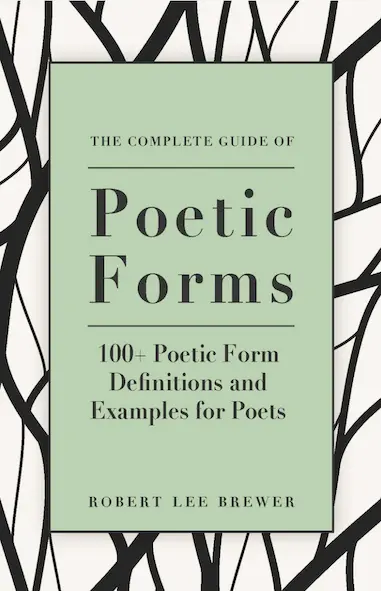
At the same time, this pedagogical exercise arrives alongside a renewed industry focus on traditional poetic architecture, anchored by comprehensive resource guides such as The Complete Guide to Poetic Forms. These developments signal a broader institutional movement within digital literary communities: a deliberate push to marry the unbridled impulse of creative expression with the demanding mechanics of classical and contemporary poetic structures.
This comprehensive report provides an in-depth investigation into this week’s literary prompt, analyzing the psychological and structural dimensions of competitive verse. Furthermore, it details the mechanics of digital community engagement, evaluates the definitive role of poetic forms as structural scaffolds, and presents a forward-looking analysis of how micro-habits—as illustrated by Brewer’s featured poem, "Just One More Minute"—are redefining productivity metrics for modern writers.
Read Also
Detailed Chronology
To fully understand the current landscape of digital poetry prompts and community-driven literary exercises, one must examine the systematic progression of how online writing workshops have evolved over the past two decades. The timeline below outlines the key milestones leading to the current emphasis on competitive verse and structural mastery within digital publishing ecosystems.
Phase I: The Shift to Digital Accessibility (Early 2000s)
- Rise of the Literary Blog: As traditional print journals faced shrinking circulations, poetry communities migrated rapidly to blog-based platforms. Editors and resident experts began utilizing weekly prompts to maintain audience retention and foster interactive online workshops.
- Adoption of Comment Infrastructure: Platforms integrated third-party commenting systems—such as Disqus—to streamline peer review. This technological shift transformed passive readers into active, contributing participants who could share their work instantaneously across a global network.
Phase II: The Institutionalization of Prompts (2010–2018)
- Codification of Weekly Challenges: Prompts evolved from simple thematic suggestions into complex, multi-layered constraints. Writing experts began introducing restrictive forms, temporal challenges, and conceptual shifts (e.g., writing persona poems, persona-driven narratives, or mathematically constrained verse).
- Integration of Educational Products: Publishing houses recognized the commercial and educational synergy between weekly prompts and comprehensive instructional compendiums, leading to the curation of definitive guides on poetic forms, meter, and rhyme schemes.
Phase III: The Contemporary Landscape of Micro-Habits and Meta-Competition (2020–Present)
- The Psychology of Self-Competition: Prompts expanded to include internal rivalries—competing against one’s previous output, racing the clock, or exploring the meta-narrative of a poem competing against neighboring verses in an anthology.
- Streamlined Verification Protocols: To combat digital spam while encouraging open dialogue, platforms refined their authentication procedures, requiring a one-time account linkage that preserves editorial integrity while minimizing administrative bottlenecks.
Supporting Context & Metrics
The premise of this week’s prompt rests on a fundamental paradox: competition can simultaneously elicit a creator’s finest work and introduce counterproductive pressures that stifle organic voice. By inviting writers to explore competition in its myriad forms—ranging from high-stakes athletic showdowns to mundane, self-imposed races to finish household chores or take the longest nap—the exercise challenges the traditional boundaries of verse.
The Spectrum of Competitive Verse
[Mundane Contests] --------> [Self-Improvement] --------> [Inter-Textual Rivalry]
(Washing dishes, naps) (Word counts, velocity) (Poems fighting poems)- The Domestic and Mundane: Examining low-stakes environments through a poetic lens allows writers to deploy elevated diction for trivial subjects, creating a comedic or sharply ironic tension.
- The Intrapersonal Contest: Racing against oneself—such as attempting to increase daily output or reduce drafting time—transforms writing into an endurance sport.
- The Meta-Poetic Rivalry: A self-aware poem that acknowledges its existence alongside other pieces in a digital thread creates an interactive layer of irony, directly addressing the reader and its literary peers.
Metrics of Engagement and Structural Scaffolding
Poetic forms serve as the structural backbone of literary expression, dictating constraints that paradoxically liberate the writer. According to pedagogical data compiled from instructional writing guides, adherence to established forms—such as the sonnet, villanelle, pantoum, or sestina—improves lexical diversity and structural discipline among emerging poets.
| Poetic Metric / Parameter | Traditional Free Verse | Form-Constrained Verse (e.g., Villanelle, Sonnet) | Micro-Habit Daily Writing (Brewer Method) |
|---|---|---|---|
| Average Draft Time | Variable (Hours to Months) | Moderate to High (Strict Rule-Following) | Incremental (1–5 minutes added daily) |
| Lexical Density | Varies widely by author | Typically higher due to rhyme/meter constraints | Accumulative, driven by volume |
| Community Interaction | High peer-review interest | High technical analysis | High consistency in workshop threads |
| Skill Acquisition Focus | Emotional resonance | Technical precision & rhythm | Output velocity & habit formation |
As detailed in The Complete Guide of Poetic Forms, mastering more than 100 distinct poetic structures provides creators with an extensive toolkit. Rather than restricting creativity, these rules act as a springboard, preventing the writer’s block often associated with absolute freedom.
Official Statements & Expert Analysis
In his latest pedagogical release, Robert Lee Brewer explores the compound interest of creative output through the framework of incremental discipline. His featured poem, "Just One More Minute," serves as both a manifesto for daily writing habits and a cautionary tale regarding the obsessive nature of literary production.
"Just One More Minute" by Robert Lee Brewer
If you write just a minute longer every day,
you’ll probably write more words, it’s true,
as those longer minutes add up day by day
with all those extra words spilling out of you.If you write just a minute longer every day,
in two months you’ll find you’re writing an hour,
and after just a few more a minute each day,
imagine building all your wordy-word powers.Just a minute longer and you will likely see
the evolution of your literary might,
but eventually you’ll have no time to sleep
as you write through the day and the night.So, of course, write a little bit every day;
keep that rambling fire burning in you;
when it comes to the length of your stay,
remember to relax yourself too.
Critical Breakdown of the Verse
Literary analysts note that Brewer’s poem operates on a deceptively simple anapestic and iambic cadence, mirroring the ticking of a clock or the steady march of accumulating minutes.
- The Principle of Compound Output: Stanzas one and two establish an arithmetic progression. By adding a single minute of writing each day, the author illustrates how marginal gains accumulate into substantial literary volume over a sixty-day period.
- The Satire of Over-Production: Stanza three introduces a humorous hyperbole, warning of the inevitable extreme where the writer’s literary ambition eclipses their biological need for sleep. This acknowledges the dark side of competitive productivity—burnout.
- The Pedagogical Resolution: The final stanza provides editorial balance, advising creators to maintain their internal fire while recognizing the necessity of rest and self-care. It underscores the overarching philosophy of the workshop: prompts and habits should expand creative possibilities, not convert the writing life into an unyielding sweatshop.
Future Outlook
As digital publishing platforms continue to evolve, the methodologies governing creative writing workshops are undergoing a profound transformation. The integration of structured poetic forms with daily micro-habits points toward several key trends for the future of literary instruction:
1. Gamification of the Creative Process
We anticipate a continued rise in the "gamification" of writing prompts. By framing creative exercises around concepts of competition, personal bests, and time-trial drafting, platforms will likely see higher retention and participation rates among emerging writers. This approach demystifies poetry, making it accessible to demographics that might otherwise feel intimidated by traditional academic formalism.
2. Streamlined Community Infrastructures
The friction historically associated with online publishing—such as cumbersome moderation queues and complex registration walls—is being systematically dismantled. As platforms optimize integrations with modern identity verification tools (e.g., Disqus, OAuth protocols), community participation will become frictionless, allowing real-time peer critique to flourish across international borders.
3. The Balance Between Velocity and Craft
While micro-habit methodologies emphasize volume and continuous output (as championed in "Just One More Minute"), the enduring relevance of comprehensive form guides ensures that quality remains paramount. The future writer must navigate a dual mandate: cultivating the rapid, uninhibited generation of raw text while applying rigorous structural discipline through classical and experimental poetic forms.
Ultimately, whether a writer chooses to chronicle a high-stakes athletic tournament, race against the kitchen timer, or explore the meta-fictional rivalry of a poem conscious of its peers, the underlying mission remains unchanged. Prompts are springboards, not cages; they invite the writer into the arena, where the ultimate competitor is always the blank page waiting to be conquered.



Comments
Facebook App ID not configured. Please add it in the Customizer.