
Executive Overview
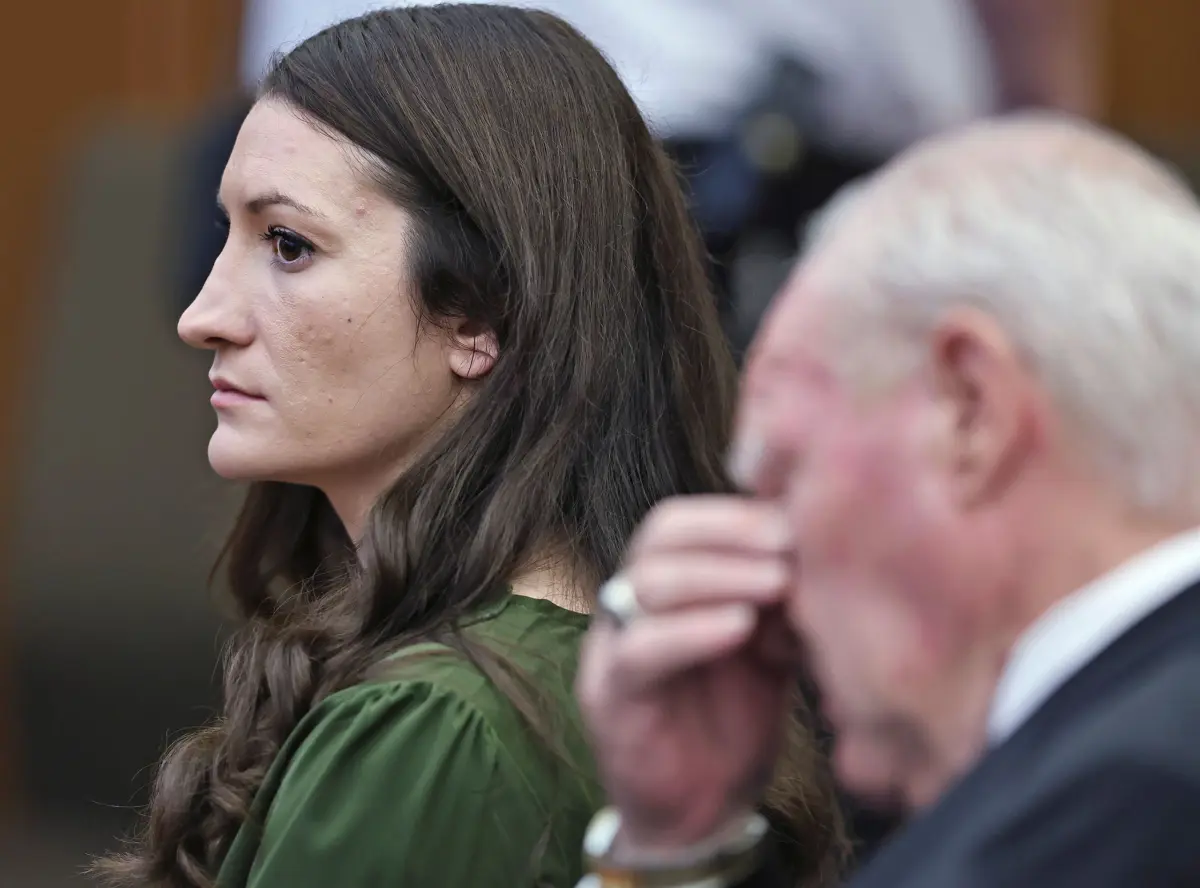
After five weeks of intense testimony, thirty-eight hours of deliberation spread over six fraught days, and multiple reports of an irreconcilable deadlock, the high-profile murder trial of Lindsay Clancy ended in a mistrial. Clancy, a former labor-and-delivery nurse from Duxbury, Massachusetts, stood accused of murdering her three young children—Cora (5), Dawson (3), and Callan (8 months)—in January 2023 before jumping from a second-story window in an attempted suicide that left her permanently paralyzed.
The trial, which captured national attention and ignited fierce debates surrounding postpartum mental health, hinged on a single fundamental question: Did Clancy possess the substantial capacity to appreciate the wrongfulness of her actions or conform her conduct to the requirements of the law at the moment of the killings? Facing charges of murder, Clancy entered a plea of not guilty by reason of insanity.
The proceedings concluded without a verdict following an 11–1 jury split, in which a single holdout juror reportedly refused to apply the judge’s instructions on the standard of proving guilt beyond a reasonable doubt. Defense attempts to disqualify the dissenting juror or investigate potential misconduct were denied by Plymouth County Superior Court Judge William Sullivan, who officially declared a mistrial over defense objections.
Read Also
The outcome underscores the deep legal, psychiatric, and societal fractures exposed when cases of maternal infanticide intersect with rigid statutory definitions of criminal responsibility. As prosecutors weigh a potential retrial, the proceedings leave behind an unresolved evidentiary record and amplify an urgent national conversation regarding severe postpartum psychiatric disorders and the mechanics of the American justice system.
Detailed Chronology: From Tragedy to Trial
+-----------------------------------------------------------------------------------+
| CHRONOLOGY OF EVENTS: THE LINDSAY CLANCY CASE                                     |
+-----------------------------------------------------------------------------------+
| • Jan 2023      : Tragedy in Duxbury; three children killed; Clancy attempts    |
|                   suicide, leaving her paralyzed.                                 |
| • Pre-Trial     : Indictment and mounting national media coverage; defense enters |
|                   plea of Not Guilty by Reason of Insanity (NGRI).                |
| • Weeks 1–5     : Trial held under Judge William Sullivan; 80+ witnesses testify  |
|                   including family, medical staff, and forensic psychiatrists.    |
| • Deliberations : Jury deliberates for 38 hours across six days; foreperson notes |
|                   an 11–1 split and a holdout juror refusing instructions.        |
| • Trial End     : Judge Sullivan denies defense motion to remove holdout;         |
|                   mistrial officially declared.                                   |
+-----------------------------------------------------------------------------------+
The January 2023 Tragedy in Duxbury
On an evening in late January 2023, the quiet suburban routines of Duxbury, Massachusetts, were shattered. Lindsay Clancy, then thirty-two, requested that her husband, Patrick Clancy, leave their home to pick up dinner from a restaurant several miles away and make a supplementary stop at a local pharmacy.
During the window of her husband’s absence, Clancy fatally strangled her three children in the basement using exercise bands. Immediately following the killings, she slashed her neck and wrists and leapt from a second-story window of the family home. While her children perished—Cora and Dawson died that evening, while eight-month-old Callan succumbed to his injuries days later in a hospital—Clancy survived the fall, sustaining spinal trauma that left her paralyzed from the waist down.
Five Weeks of Explosive Courtroom Testimony
The trial commenced in Plymouth County Superior Court, drawing intense national broadcast coverage. Over five weeks, the court heard from more than eighty witnesses, including first responders, treating physicians, psychiatric nurse practitioners, family members, and world-renowned forensic experts.
The factual basis of the act was never contested by the defense. Instead, the trial focused almost entirely on Clancy’s state of mind.
- The Prosecution Strategy: Led by Assistant District Attorneys Jennifer Sprague and Shanan Buckingham, the prosecution attempted to frame Clancy as a meticulous, controlling, and manipulative individual who calculated the killings to escape the burdens of motherhood and facilitate her own suicide.
- The Defense Strategy: Defense attorney Kevin Reddington presented Clancy as a victim of a crushing, mismanaged psychiatric crisis, overwhelmed by postpartum depression, anxiety, and a cascade of prescribed psychiatric medications that culminated in acute psychosis and command hallucinations.
The trial featured emotional testimony from Patrick Clancy, who maintained extraordinary grace and sympathy toward his former wife, describing her as a doting, deeply affectionate mother. Prosecution attempts to paint Clancy as an overbearing or resentful parent repeatedly foundered against testimony from family members, friends, and the family’s nanny, all of whom testified to her dedication to her children.
Six Days of Deliberation and an 11–1 Deadlock
Jury deliberations began under heavy public scrutiny and amidst protests outside the courthouse. Over six days, the panel sent multiple notes indicating difficulty in reaching a unanimous consensus.
The crisis reached its peak on Thursday afternoon of the final week. The jury foreperson submitted a note indicating that a single juror was explicitly refusing to adhere to Judge Sullivan’s instructions regarding the legal standard for proving guilt beyond a reasonable doubt.
According to defense attorney Kevin Reddington, the note reflected an 11–1 split favoring acquittal by reason of insanity. Reddington immediately petitioned the court to remove the lone holdout juror, prompting a heated bench conference.
Prosecutors argued that the impasse was the result of a legitimate disagreement over the evidence rather than juror misconduct. Judge Sullivan conducted individual voir dire questioning of the jurors, declined to remove the holdout, and denied defense motions to investigate further. On Friday morning, after thirty-eight total hours of deliberation, the jury issued a final message stating that "with a heavy heart," they remained permanently deadlocked. Judge Sullivan declared a mistrial.
                  +-----------------------------------+
                  |      38 Hours / 6 Days of         |
                  |        Jury Deliberation          |
                  +-----------------+-----------------+
                                    |
                                    v
                  +-----------------------------------+
                  |     Foreperson Reports 11-1       |
                  |     Split & Holdout Juror         |
                  +-----------------+-----------------+
                                    |
            +-----------------------+-----------------------+
            |                                               |
            v                                               v
+-----------------------+                       +-----------------------+
|   Defense Motion      |                       |  Prosecution Argues   |
|   to Remove Juror     |                       |  Valid Disagreement   |
|   (Kevin Reddington)  |                       |  Over State of Mind   |
+-----------+-----------+                       +-----------+-----------+
            |                                               |
            +-----------------------+-----------------------+
                                    |
                                    v
                  +-----------------------------------+
                  |   Judge Sullivan Denies Removal   |
                  |   & Declares Official Mistrial    |
                  +-----------------------------------+
Supporting Context & Legal Metrics
The Massachusetts Burden of Proof
Unlike the vast majority of U.S. jurisdictions—where the defense carries the burden of proving legal insanity by clear and convincing evidence or a preponderance of the evidence—Massachusetts law places the burden squarely on the prosecution. Once a defendant presents credible evidence raising the issue of insanity, the Commonwealth must prove beyond a reasonable doubt that the defendant was criminally responsible at the time of the offense.
To establish sanity under Massachusetts law, prosecutors must prove one of two conditions beyond a reasonable doubt:
- The defendant possessed substantial capacity to appreciate the wrongfulness of her conduct; OR
- The defendant possessed substantial capacity to conform her conduct to the requirements of the law.
If the prosecution fails to prove either prong, the jury is legally required to return a verdict of Not Guilty by Reason of Insanity (NGRI).
| Jurisdictional Element | Standard Rule (Majority of U.S. States) | Massachusetts Statutory Rule |
|---|---|---|
| Burden of Proof | On the Defendant | On the Prosecution |
| Standard of Proof | Preponderance of Evidence / Clear & Convincing | Beyond a Reasonable Doubt |
| Core Legal Focus | Proof of mental defect by defense | Proof of criminal capacity by prosecution |
Postpartum Mental Health in the Medical and Legal Spheres
The trial brought systemic issues surrounding perinatal and postpartum psychiatric illness into sharp focus:
- Prevalence: Perinatal mood and anxiety disorders affect a significant portion of new mothers, with approximately 1 in 8 women reporting symptoms of postpartum depression nationwide.
- Postpartum Psychosis: A far rarer and more severe condition, postpartum psychosis occurs in roughly 1 to 2 per 1,000 deliveries. It is characterized by sudden onset, severe paranoia, delusions, affective instability, and visual or auditory hallucinations.
- Treatment Trajectory: Testimony revealed that in the months leading up to the tragedy, Clancy sought extensive outpatient care, voluntarily admitted herself to McLean Hospital for five days, and was prescribed a rotating sequence of up to thirteen different psychiatric medications, though she was never on more than two or three simultaneously.
Comparative Global Infanticide Statutes
The Clancy case highlights a structural divergence between American criminal law and international legal standards:
+-----------------------------------------------------------------------------------+
| GLOBAL COMPARISON OF MATERNAL INFANTICIDE LEGAL FRAMEWORKS                        |
+-----------------------------------------------------------------------------------+
| UNITED STATES                                                                     |
| • Treats maternal infanticide under standard homicide statutes.                   |
| • Requires binary choice: Murder conviction vs. High-threshold Insanity Defense.  |
| • No specialized statutory mitigation for postpartum hormonal/psychiatric conditions.|
+-----------------------------------------------------------------------------------+
| INTERNATIONAL (e.g., UK, Canada, Australia, ~24 Nations)                          |
| • Enacts dedicated "Infanticide Acts."                                            |
| • Recognizes mental disturbance caused by lactation or post-birth recovery.        |
| • Mandates reduced charges (manslaughter equivalent) focused on medical care.     |
+-----------------------------------------------------------------------------------+
Official Statements & Key Expert Opinions
Defense Counsel and the Prosecution’s Shifting Narrative
Defense Attorney Kevin Reddington
Throughout the proceedings, defense attorney Kevin Reddington aggressively targeted the psychiatric treatment Clancy received prior to the tragedy, framing her as a victim of a fragmented healthcare system that failed to diagnose acute psychosis.
"This was an 11–1 split, clear and unequivocal, with a single holdout blocking an acquittal by reason of insanity. Lindsay Clancy was in the grip of a catastrophic psychiatric illness, overmedicated, misdiagnosed, and systematically failed by the medical establishment. To force a mistrial under these circumstances is a failure to recognize the uncontradicted evidence of her profound mental crisis."
— Kevin Reddington, Lead Defense Counsel
Assistant District Attorney Jennifer Sprague
In her closing arguments, Assistant District Attorney Jennifer Sprague pivoted from earlier claims that Clancy harbored latent hostility toward her children, focusing instead on a theory of deliberate suicide combined with filicide.
"There is no dispute that Lindsay Clancy was suffering from mental illness and that she tried to kill herself. But she made a choice. She chose to kill her children first to clear the path for her own suicide, so they would not be left behind. I am not saying she was happy about it; I am saying it was what she believed she had to do to end her misery. But legally, it was a conscious, deliberate choice."
— Jennifer Sprague, Assistant District Attorney
Expert Psychiatric Evaluations: Resnick vs. State Experts
The trial featured competing evaluations from prominent forensic experts, illustrating the scientific ambiguity often present in legal sanity evaluations.
                   +------------------------------------+
                   |     EXPERT WITNESS TENSION         |
                   +-----------------+------------------+
                                     |
             +-----------------------+-----------------------+
             |                                               |
             v                                               v
+--------------------------+                   +--------------------------+
|    DR. PHILLIP RESNICK   |                   |    DR. KIRK HEILBRUN     |
|    (Defense Expert)      |                   |    (State Expert)         |
+--------------------------+                   +--------------------------+
| • Postpartum Psychosis   |                   | • Symptoms emerged post- |
| • "Delusion of influence"|                   |   offense (after-fact)   |
| • "Puppet on a string"   |                   | • Potential fabrication  |
| • Altruistic filicide    |                   |   of command voices      |
+--------------------------+                   +--------------------------+
Dr. Phillip Resnick (Defense Expert)
Dr. Phillip Resnick, a renowned forensic psychiatrist who previously evaluated Andrea Yates, testified that Clancy was actively psychotic at the moment of the killings, suffering from a severe "delusion of influence."
"At the time of the offense, Mrs. Clancy was frankly psychotic. She experienced what we term a delusion of influence—it was almost as if she were a puppet, and someone else was pulling the strings. She believed she was obeying an irresistible command that was necessary to protect her family from a greater, perceived catastrophe."
— Dr. Phillip Resnick, Defense Forensic Psychiatrist
Dr. Kirk Heilbrun (Prosecution Expert)
Dr. Kirk Heilbrun, testifying for the Commonwealth, urged caution regarding psychiatric symptoms that are reported only after an offense has taken place.
"As evaluators, we must be extraordinarily careful with command hallucinations or psychotic symptoms that are reported for the first time after an offense occurs. Such post-hoc descriptions can provide a convenient, if unconscious, framework for mitigating culpability. The auditory command described here lacked the structured delusional context typically seen in genuine, long-standing psychotic disorders."
— Dr. Kirk Heilbrun, Prosecution Forensic Psychologist
Future Outlook: Retrial Challenges and Systemic Questions
The declaration of a mistrial leaves the Plymouth County District Attorney’s Office with a critical decision: whether to retry Lindsay Clancy or negotiate a non-trial disposition. Retrying the case presents immense procedural and societal challenges that will influence both legal precedent and public discourse.
Key Future Challenges & Considerations
-
Impartial Jury Selection in the Digital Era:
Securing an unbiased jury for a second trial will be exceptionally difficult. The original proceedings spawned intense social media commentary, conspiracy theories, and public demonstrations outside the courthouse. The arrest of a spectator for allegedly photographing jurors leaving the courthouse highlights the high-pressure environment surrounding the trial. -
The Strategic Role of Involuntary Manslaughter:
Prior to jury deliberations, Judge Sullivan granted a defense motion allowing the jury to consider involuntary manslaughter as a lesser included offense. If the case is retried, both sides will likely re-evaluate how this middle-ground option is presented to avert another deadlock between first-degree murder and an insanity acquittal. -
Impact on Postpartum Healthcare and Legal Reform:
The Clancy trial has amplified calls from healthcare advocates for legislative reforms, including the potential adoption of specialized infanticide laws similar to those in foreign jurisdictions. Medical experts express concern that high-profile prosecutions without nuanced legal frameworks may deter struggling new mothers from seeking help for postpartum mental health symptoms due to fear of criminalization or loss of custody.
As Lindsay Clancy remains under medical care and judicial supervision, her case stands as a stark testament to the ongoing friction between modern psychiatric understanding and an unyielding legal system tasked with assessing accountability in the wake of unfathomable tragedy.





Comments
Facebook App ID not configured. Please add it in the Customizer.