
Executive Overview
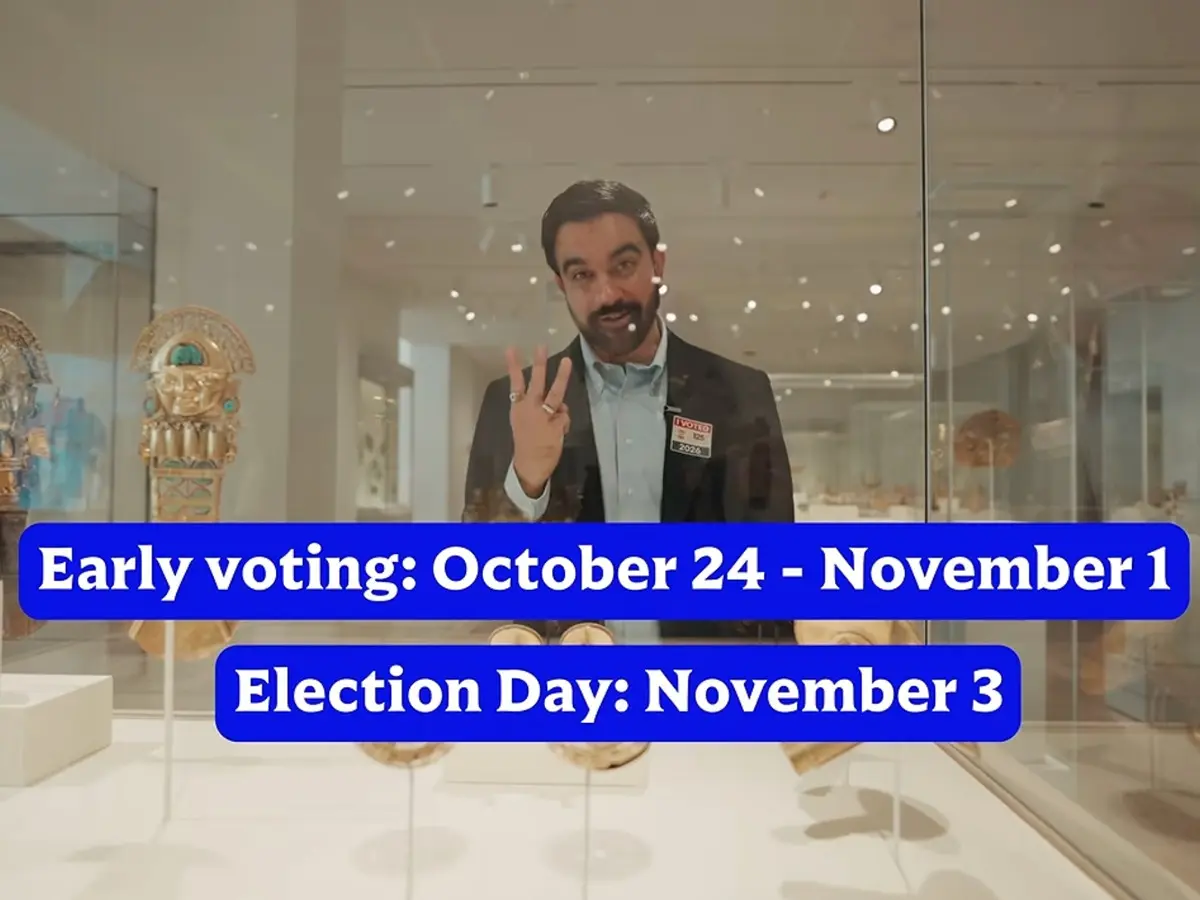
As New York State braces for a fiercely contested midterm election cycle—highlighted by a high-stakes, politically volatile gubernatorial race—New York City Mayor Zohran Kwame Mamdani has launched an unconventional yet remarkably effective digital campaign to drive voter turnout. In a new viral social media video, the progressive mayor is seen casually strolling through the hallowed halls of Manhattan’s Metropolitan Museum of Art, discussing civic duty against a backdrop of world-class antiquities. The core message of the campaign is as simple as it is visually striking: early voting in New York City is fast, accessible, and uniquely integrated into the city’s cultural fabric.
Rather than standing behind a traditional, sterile podium, Mayor Mamdani broadcasted his message from the recently refurbished Rockefeller Wing of the Met, home to the museum’s renowned collections of art from Africa, Oceania, and the Americas. Sporting an official "I Voted 2026" lapel sticker, the mayor shared that his own early voting experience took a mere five minutes. By anchoring his civic pitch within a globally celebrated temple of art and history, Mamdani underscored a broader municipal philosophy: that access to culture and access to democracy are inextricably linked.
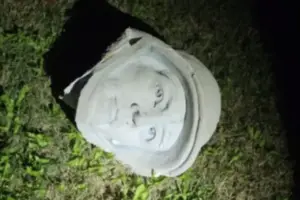
Beyond the novelty of casting a ballot next to pre-Columbian ceramics—such as the fragmented ceramic figure Seated Elder (200 BCE–300 CE) by the Tolita-Tumaco people—the video serves a deeply practical, urgent purpose. In an era marked by widespread election disinformation, voter suppression fears, and shifting legal landscapes surrounding immigration enforcement, Mamdani used his platform to deliver clear, unvarnished facts. He reminded constituents of their fundamental rights, debunked common myths regarding identification requirements, and explicitly addressed federal immigration enforcement protocols at polling stations.
Read Also
This campaign is not an isolated PR stunt; it is the latest manifestation of the Mamdani administration’s robust, historic commitment to New York City’s arts and cultural sector. Since taking office, Mamdani has prioritized cultural funding as a pillar of urban recovery and community resilience. By pairing progressive institutional funding—such as a record-breaking $323.8 million budget for the Department of Cultural Affairs and the creation of the $10 million Cultural Stability Fund—with populist digital outreach, the administration is reshaping how local government interacts with both its creative communities and its electorate.
Detailed Chronology
The intersection of Mamdani’s arts advocacy and his recent early voting push unfolds against a broader timeline of targeted municipal policy and digital community engagement.
Early October 2026: Birthday at the Studio Museum in Harlem
The cultural overtures of the fall season began earlier in the month when Mayor Mamdani marked his birthday with a visit to the newly reinvigorated Studio Museum in Harlem. During his tour, he engaged deeply with contemporary works, notably pausing to admire Taylor Simmons’s striking 2026 painting, The Hypnotist. The visit was widely interpreted by local political analysts as a deliberate signal of support for Black cultural institutions and a reaffirmation of the administration’s pledge to decentralize municipal arts investment beyond traditional Manhattan epicenters.
Mid-October 2026: Doubling Individual Artist Grants
Shortly after his museum birthday outing, Mamdani appeared in an idiosyncratic video alongside Cultural Affairs Commissioner Diya Vij to announce a massive policy win for independent creators: the doubling of individual artist grants to $10,000. In the widely shared social media clip, the mayor and Commissioner Vij painted side-by-side canvases. While Vij produced a competent, realistic still-life, Mamdani playfully leaned into his amateur status, painting two stark green dollar signs on an unprimed canvas. The playful framing successfully drove massive web traffic to the Department of Cultural Affairs’ grant portal, proving the efficacy of gamified, arts-based political communication.
Late October 2026: The Met Polling Station Video Debut
With early voting windows opening across New York State, the Mamdani administration deployed its most ambitious cultural crossover yet. Stepping into the Metropolitan Museum of Art’s newly renovated Rockefeller Wing, the mayor filmed a walkthrough highlighting the Met’s status as an official New York City early voting site. Pausing beside the ancient Seated Elder sculpture, Mamdani addressed the camera directly, breaking down the mechanics of early voting and providing crucial, reassurance-heavy administrative facts designed to combat voter apathy and intimidation.
November 1–3, 2026: The Final Stretch of the Midterms
The digital campaign acts as a critical bridge to the final days of the election cycle. Early voting runs continuously through Sunday, November 1, culminating in official Election Day on Tuesday, November 3. The administration’s digital blitz directs millions of New Yorkers to vote.nyc to map out their closest cultural polling locations, review sample ballots, and prepare for a slate of municipal and state-level decisions that will shape the trajectory of New York for years to come.
Supporting Context & Metrics
To fully understand the weight of Mayor Mamdani’s museum-based voting campaign, one must examine the financial, architectural, and demographic realities underpinning New York City’s cultural and electoral infrastructure.
Financial Commitments to the Arts
The Mamdani administration’s dedication to the arts is not merely rhetorical; it is heavily backed by municipal appropriations. In the 2027 fiscal budget, the Department of Cultural Affairs secured a historic allocation of $323.8 million, representing the largest single-year investment in the agency’s history.
Recognizing that inflation, rising commercial rents, and post-pandemic economic shifts continue to threaten smaller community-based organizations, the mayor also spearheaded the creation of the Cultural Stability Fund. This targeted initiative has earmarked $10 million over a three-year period specifically designed to stabilize arts and culture nonprofits across all five boroughs, ensuring that historically underfunded neighborhoods do not lose their creative infrastructure. Furthermore, the doubling of individual artist grants to $10,000 directly supports the precarious livelihoods of New York’s vast freelance creative class.
Cultural Institutions as Civic Anchors
The Met is far from an isolated anomaly in New York City’s democratic architecture. The city’s unique partnership with major cultural non-profits transforms world-class museums and galleries into civic town squares during election cycles. Alongside the Metropolitan Museum of Art, early voting and Election Day polling sites for the 2026 midterms include:
- The American Museum of Natural History (Upper West Side, Manhattan)
- The Museum of the Moving Image (Astoria, Queens)
- The Brooklyn Museum (Prospect Heights, Brooklyn)
By utilizing these spaces, the New York City Board of Elections taps into geographic nodes that are already trusted, highly accessible, and deeply familiar to local residents, thereby removing logistical barriers to ballot access.
Combating Misinformation and Ensuring Ballot Security
A vital component of Mamdani’s viral video was its frank, direct-to-camera debunking of common voter suppression myths. In a political climate fraught with anxiety regarding federal overreach and aggressive poll-watching, the mayor explicitly outlined several legal realities of New York voting:
- Ease of Process: Voting is framed as entirely safe and straightforward, with average wait times kept to a minimum during the early voting window.
- Identification Rules: New Yorkers are reminded that they generally do not need to bring photo identification or complicated paperwork to cast a standard ballot if they are already registered.
- Protection from Federal Enforcement: Addressing immigrant communities and marginalized groups directly, Mamdani asserted that U.S. Immigration and Customs Enforcement (ICE) and any other armed federal agents are legally barred from entering polling sites without a properly executed, signed judicial warrant.
Official Statements
The unconventional fusion of high art, urban governance, and grassroots democracy has generated significant commentary across political and cultural spheres.
In his social media broadcast from the Met, Mayor Mamdani emphasized the sacred nature of the democratic franchise, framing it as an inalienable right that must be fiercely protected against bureaucratic or political interference:
"Only in New York City can you vote in places like the Metropolitan Museum of Art. I just voted here on the first day of early voting. It only took five minutes… Voting is your fundamental right. No one, especially the government, can stand in the way of New Yorkers exercising it. See you at the polls."
Cultural Affairs Commissioner Diya Vij, who collaborated with the mayor on the viral artist-grant announcement earlier in the season, has repeatedly championed the administration’s philosophy that public funding for the arts is fundamentally tied to civic health. Speaking on the administration’s creative outreach strategies, Vij noted:
"When we invest in artists, we are investing in the storytellers of our democracy. Providing spaces like the Studio Museum, the Brooklyn Museum, and the Met as sites of civic participation reminds our citizens that public life and cultural life are one and the same."
While traditional political strategists have occasionally expressed surprise at the mayor’s casual, art-centric communication style—such as painting dollar signs on raw canvas or discussing policy next to pre-Columbian pottery—good-government advocates have largely praised the transparency and accessibility of the outreach. By meeting younger, culturally engaged demographics on platforms like Instagram and TikTok, the administration has successfully bridged the gap between institutional governance and everyday civic participation.
Future Outlook
As the sun sets on the 2026 midterm election cycle, the long-term implications of Mayor Mamdani’s cultural-civic strategy point toward a new paradigm in municipal governance. The success of transforming world-class museums into accessible voting precincts proves that civic engagement does not need to feel bureaucratic, cold, or intimidating. By embedding democracy within the physical spaces where New Yorkers experience beauty, history, and community, the city has established a replicable blueprint for boosting voter turnout in urban centers nationwide.
Looking ahead, the Mamdani administration faces the challenge of sustaining its historic financial commitments to the Department of Cultural Affairs as the city navigates future budgetary pressures. However, the immense public goodwill generated by initiatives like the Cultural Stability Fund and the expanded $10,000 artist grants suggests that arts advocacy remains a potent political asset.
For the immediate future, all eyes remain fixed on the final tallies of the New York gubernatorial and midterm races. Regardless of the electoral outcomes for individual candidates, the enduring legacy of this election cycle may well be the normalization of the ballot box inside the museum gallery—a potent reminder that in New York City, culture and democracy are permanent partners in the civic experiment.

Comments
Facebook App ID not configured. Please add it in the Customizer.