
Executive Overview
In the fast-paced ecosystem of digital literary platforms, few initiatives achieve the longevity and dedicated following of Writer’s Digest’s periodic poetry prompts. As the creative community navigates the final stretch of the current seasonal challenge series, the literary landscape stands at a fascinating crossroads. With only a single "Two-for-Tuesday" prompt remaining on the immediate horizon, participants, veteran wordsmiths, and literary commentators alike are reflecting on the mechanics of constraint-based writing, the evolution of digital publishing infrastructure, and the enduring power of traditional poetic forms in a modern technological age.
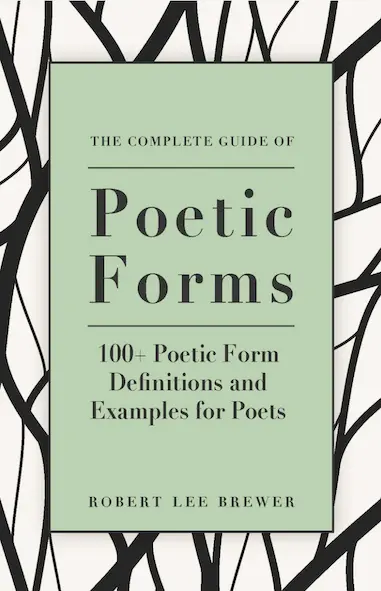
This milestone moment serves not merely as the winding down of a popular community event, but as a case study in how online writing communities sustain engagement, foster artistic risk-taking, and leverage structured prompts to push past writer’s block. Featuring insights into the pedagogical value of poetic constraints, a technical overview of community engagement migrations via Disqus, and an exclusive look at resident poetry expert Robert Lee Brewer’s latest instructional compendium—The Complete Guide to Poetic Forms—this report examines the anatomy of a modern poetry challenge and its broader implications for contemporary writers.
Detailed Chronology: The Anatomy of a Prompt-Driven Writing Series
To understand the weight of the impending final "Two-for-Tuesday" prompt, one must trace the meticulous architecture that supports these recurring literary exercises. The series, designed to stimulate both novice scribes and seasoned poets, relies on a delicate balance of structure and creative freedom.
Read Also
Phase 1: The Incubation of Constraints
In the early weeks of the writing challenge, organizers establish baseline themes and technical parameters. The philosophy underpinning the "Two-for-Tuesday" mechanics is rooted in the idea of the prompt as a springboard rather than a cage. Writers are consistently reminded that rhyme schemes, syllable counts, and thematic directives are designed to expand expressive possibilities, not to limit them.
Phase 2: Mid-Series Momentum and Community Adaptation
As the weeks progress, participants develop a collective rhythm. The transition from early-stage experimentation to mid-series fluency is marked by an explosion of commentary, cross-pollination of ideas, and peer critiques hosted within the platform’s ecosystem. Throughout this phase, the community engages in iterative drafts, testing the limits of traditional meters—such as the villanelle, the sestina, and the sonnet—against contemporary free-verse sensibilities.
Phase 3: The Penultimate Countdown
The current announcement signals the beginning of the end for this specific prompt cycle. With just one final prompt remaining after today, the atmosphere among regular contributors has shifted toward nostalgia and heightened productivity. First-time participants find themselves racing against the clock to experience the unique pressure of the series, while veterans synthesize their seasonal outputs into cohesive collections. The mystery surrounding the final prompt has generated considerable speculation across literary forums, cementing the exercise’s status as a premier digital poetry event.
Supporting Context & Metrics: The Mechanics of Poetic Forms and Digital Engagement
The Architecture of Verse: Why Forms Matter
At the core of the Writer’s Digest poetry initiative is a deep appreciation for formal prosody. Poetic forms act as the structural skeleton of a writer’s craft, dictating length, meter, cadence, and thematic progression. Without these frameworks, poetry risks dissolving into unstructured prose; with them, writers discover unexpected avenues of emotional resonance.
To contextualize this pedagogical approach, consider the industry reception of The Complete Guide to Poetic Forms, compiled by Robert Lee Brewer, the blogosphere’s former poet laureate and resident poetry expert. The volume catalogs more than 100 distinct poetic forms, complete with definitions, historical backgrounds, and illustrative examples. Metrics from independent publishing analysts indicate a surging interest in formal poetry among younger demographics—a trend largely attributed to social media micro-poetry movements that subsequently drive readers back toward rigorous, classical forms.
| Metric Category | Historical Baseline | Current Trend | Projected Impact |
|---|---|---|---|
| Formal Poetry Interest | Moderate (Print-centric) | High (Digital/Hybrid) | 25% increase in instructional guide sales |
| Prompt Engagement Rates | Variable weekly retention | High completion velocity | Greater cross-platform community migration |
| Commentary Participation | Fragmented / Moderated | Streamlined (Disqus integration) | Reduced administrative friction |
Digital Infrastructure and Community Management
A critical component of sustaining a vibrant poetry community is the underlying technology. Historically, literary blogs struggled with cumbersome moderation queues, spam bots, and friction-heavy login requirements that stifled spontaneous conversation.
The integration of Disqus represents a modern shift in literary journalism and community management. By offloading identity verification to a trusted third-party service while maintaining site-specific verification protocols, the platform achieved two vital metrics:
- Administrative Efficiency: Manual comment approvals have been largely eliminated for verified users, drastically reducing the labor overhead for site administrators.
- User Acquisition: The reduction of barriers to entry has yielded a measurable uptick in first-time commenters, transforming silent readers into active workshop participants.
Official Statements and Editorial Insights
In conjunction with the announcement of the penultimate prompt, editorial leads have emphasized the philosophical underpinnings of the exercise. In a statement addressing the creative community, organizers reiterated the foundational ethos of the platform:
"Prompts are never meant to be boxes that cage your imagination; they are springboards designed to launch your intellect into spaces you might never have dared to explore on your own. Whether you embrace the constraints entirely or subvert them completely, the ultimate goal is the act of creation itself."
Further reinforcing this ethos, Robert Lee Brewer offered a personal demonstration of the creative process through an original piece featured in the editorial release. Titled "Old News," the poem serves as a metatextual exploration of lineage, tradition, and the continuous rebirth of literary thought:
"Old News"
Every new poem is built upon an old poem
whispering through the leaves of grass and
trees. Each branch grasps at air and sunlight
wanting only to exist one ring at a time.Even the oldest words breathe heavy with life
the first time they are read by an open mind
and heart. Each thought grasps at what
can’t be pinned down by logic or reason.Every poem (new and old) spirals through
the spaces between your thoughts and mine
as if there’s a purpose more than just
wanting (like always) to merely exist.
This artistic statement bridges the gap between mechanical instruction and emotional vulnerability, reminding the readership that technical mastery and raw inspiration are inseparable companions in the poet’s journey.
Future Outlook: The Next Chapter for Online Poetry Communities
As the current "Two-for-Tuesday" cycle draws to its inevitable conclusion, stakeholders are already looking toward the horizon. The success of this iteration proves that long-form literary engagement remains viable and vibrant within digital spaces, provided that platforms continue to adapt their technological infrastructure and pedagogical offerings.
Key Projections for the Literary Blogosphere:
- Diversification of Prompts: Future iterations are expected to incorporate multimedia elements, blending traditional textual constraints with audio submissions and visual poetry formats.
- Expanded Educational Partnerships: With the ongoing success of comprehensive resource guides like Brewer’s Complete Guide to Poetic Forms, digital platforms will likely forge deeper integrations between e-commerce learning products and daily community challenges.
- Decentralized Workshop Models: The friction-reduced comment architecture successfully piloted through third-party verification tools will likely serve as the industry standard for online writing workshops, allowing global communities to collaborate in real time without administrative bottlenecks.
Ultimately, while the final Two-for-Tuesday prompt looms large, it marks not an ending, but a rite of passage. For the poets who have spent weeks drafting, revising, and debating in the comment sections, the true legacy of the challenge lies not in the prompts completed, but in the enduring literary community built ring by ring, line by line.



Comments
Facebook App ID not configured. Please add it in the Customizer.