
Executive Overview
The intersection of smart home technology, artificial intelligence, and electronic paper display architecture reached a significant milestone with the unveiling of the Ugreen Gallery at IFA 2026. As the consumer technology landscape increasingly grapples with issues surrounding data privacy, cloud subscription fatigue, and the perpetual intrusion of bright, blue-light-emitting screens in living spaces, hardware manufacturers are seeking alternative ways to integrate digital life into domestic environments. Ugreen—a brand traditionally recognized for high-performance charging accessories, storage solutions, and connectivity peripherals—has made a bold strategic pivot into the smart home ecosystem.
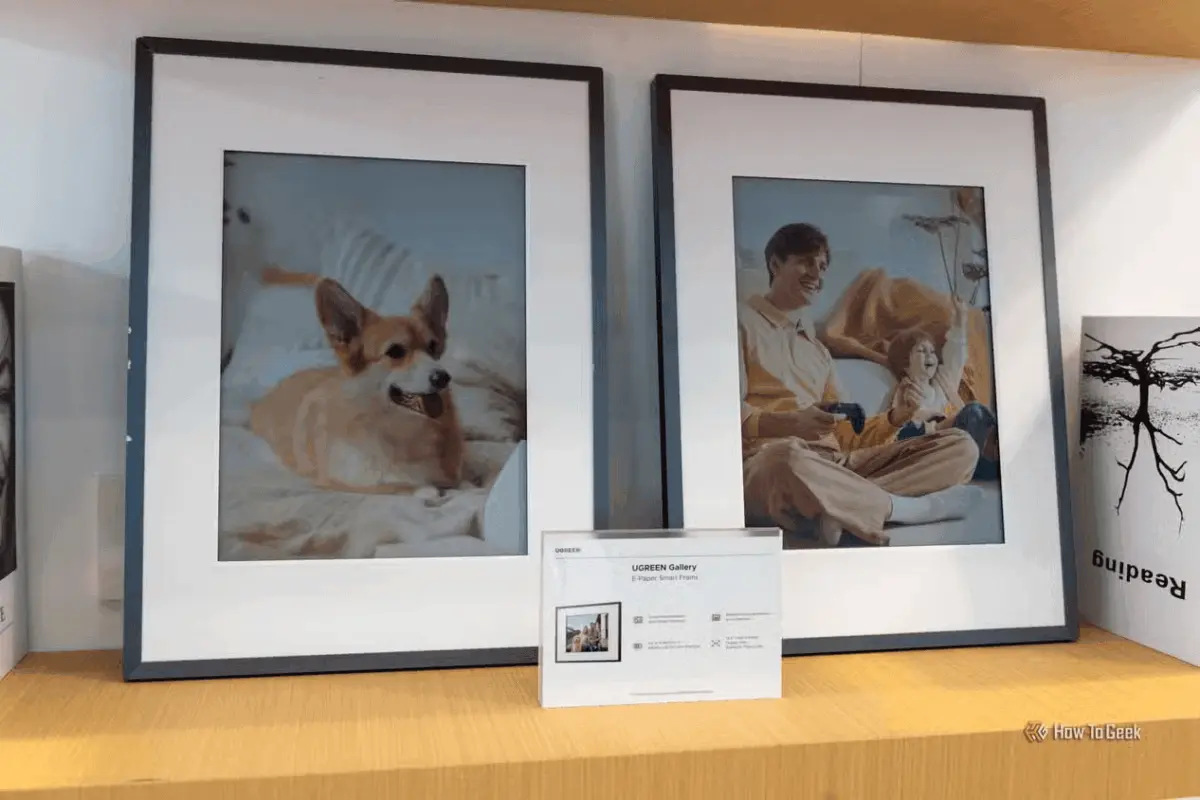
At the center of this expansion is the Ugreen Gallery, a 13.3-inch full-color e-paper digital picture frame. Unlike conventional LCD or OLED digital frames that require constant power and emit artificial light, the Gallery leverages advanced E Ink Spectra 6 technology. This approach offers a paper-like visual fidelity that mimics physical photographs, completely eliminating glare under ambient light conditions while running on minimal electrical power.
More importantly, the Ugreen Gallery is not a standalone novelty. It serves as a visual terminal for the company’s newly announced local AI smart home ecosystem, Ugreen HomeAgent. By processing personal data entirely on-device via a local hub—eschewing public cloud servers—the system aims to alleviate mounting consumer anxieties regarding data privacy. With a promotional pre-order price point of $299 USD and a projected standard retail price of $439 USD, the Ugreen Gallery represents a calculated bet that consumers are ready to pay a premium for privacy-first, aesthetically integrated ambient computing. This report provides an in-depth look at the device’s technical specifications, its foundational role within the HomeAgent ecosystem, and what its debut signals for the future of domestic technology.
Read Also
Detailed Chronology: From Concept to IFA 2026 Debut
The journey of the Ugreen Gallery from an internal research and development concept to a major product launch at Europe’s largest consumer electronics trade show reflects a broader industry shift. For years, Ugreen dominated the peripheral market through reliable power banks, multi-port USB chargers, high-speed data cables, and network-attached storage (NAS) enclosures. However, market saturation in traditional accessory sectors forced the company’s leadership to look toward higher-margin, ecosystem-driven product categories.
Phase 1: The Pivot Toward Edge Computing and Smart Infrastructure
As early as late 2024 and throughout 2025, internal murmurs within Ugreen’s product divisions pointed toward a deeper investment in local data management. Given their existing footprint in consumer data storage, developing a secure home server hub was a natural progression. However, the executive team recognized that a simple NAS device lacked mass-market emotional appeal. The missing link was a consumer-facing interface—a device that could bring private, locally stored data out of utility closets and into the living spaces of everyday homes.
Concurrently, E Ink Holdings had been pushing the boundaries of its color filter array technology. The introduction of E Ink Spectra 6 marked a watershed moment for the electronic paper industry, providing a saturated, high-contrast color gamut capable of rendering full-color photographs without the washed-out pastel tones that plagued earlier generations of color e-paper. Ugreen’s hardware engineers identified Spectra 6 as the ideal medium to bridge the gap between digital convenience and physical photography aesthetics.
Phase 2: Integration with Ugreen HomeAgent
Throughout 2025, development coalesced around the concept of a privacy-centric smart home framework named Ugreen HomeAgent. Unlike dominant smart home ecosystems tethered to tech conglomerates (such as Amazon Alexa, Google Home, or Apple HomeKit), which often route telemetry and media metadata through cloud infrastructure, HomeAgent was architected from the ground up to operate on local edge-computing principles.
The Ugreen Gallery was designed specifically to anchor this ecosystem on the visual front. Instead of relying on cloud-based photo frames that require users to upload cherished family memories to third-party servers, the Gallery communicates directly with a local Ugreen HomeAgent hub. This hub houses advanced machine learning models capable of facial recognition, scenic categorization, and temporal curation—all running locally without an active internet connection.
Phase 3: The IFA 2026 Global Unveiling
The culmination of these multi-year development efforts occurred at IFA 2026 in Berlin. Positioned prominently within Ugreen’s exhibition space, the Gallery captured the attention of industry analysts and trade journalists alike. The device was showcased not merely as a standalone gadget, but as an integral node within a comprehensive smart home display. Attendees were walked through live demonstrations of local photo curation, highlighting the speed and security of edge-processed AI sorting through terabytes of family archives. Following the exhibition, Ugreen opened pre-orders at a promotional price of $299 USD, with retail shipments scheduled ahead of its standard $439 USD market rollout.
Supporting Context & Technical Metrics
To fully appreciate the engineering achievement behind the Ugreen Gallery, one must examine its hardware specifications and the underlying display technology that makes its unique form factor possible.
E Ink Spectra 6: Pushing Color Boundaries
At the heart of the Ugreen Gallery is a 13.3-inch E Ink Spectra 6 panel boasting a native resolution of 1600 x 1200 pixels configured in a classic 4:3 aspect ratio. This resolution yields a sharp, highly detailed image capable of rendering fine photographic textures.
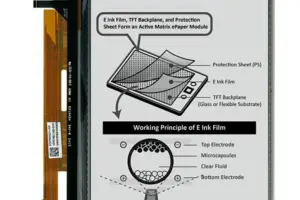
E Ink Spectra 6 technology represents a massive leap forward in electrophoretic display (EPD) engineering. Traditional color e-paper relied on a color filter array (CFA) layered over black-and-white microcapsules, which invariably limited color vibrancy and perceived brightness. Spectra 6, however, utilizes advanced particle architectures that allow multiple colored pigments to move freely within micro-cups. This enables a rich, full-color spectrum directly at the pigment level, resulting in deeper blacks, more vibrant primaries, and an expanded color gamut that closely rivals printed photographic paper.
| Feature / Specification | Ugreen Gallery Details |
|---|---|
| Display Technology | E Ink Spectra 6 Full-Color E-Paper |
| Screen Size | 13.3 Inches |
| Native Resolution | 1600 x 1200 Pixels |
| Aspect Ratio | 4:3 (Ideal for standard photography) |
| Local Storage | MicroSD Card Slot (Supports up to 512GB) |
| Connectivity | Built-in Wi-Fi for local network data transfers |
| Ecosystem Integration | Ugreen HomeAgent Local AI Hub |
| Power Consumption | Zero power draw during static image display |
| Pricing | $299 USD (Pre-order promotional) / $439 USD (Standard Retail) |
Energy Efficiency and Cordless Operation
One of the most compelling advantages of electronic paper is its bistable nature. Unlike emissive displays (LCD, OLED, AMOLED) that require a constant electrical current to maintain an image on screen, E Ink panels consume electrical power only when the visual state is actively changing. Once the electronic charge has positioned the pigment particles to form an image, the display can maintain that image indefinitely with zero power consumption.

This fundamental physical characteristic unlocks massive practical benefits for the Ugreen Gallery:
- Cordless Placement: Because the frame does not need to remain tethered to a wall outlet for continuous operation, it can be hung on walls or placed on bookshelves where power cords would be aesthetically unappealing or practically impossible to manage.
- Thermal and Electrical Safety: The elimination of continuous current draw means the frame generates zero heat during operation, reducing long-term component degradation.
- True Paper Aesthetic: Because the frame reflects ambient room light rather than shining light directly into the viewer’s eyes, it looks indistinguishable from a printed photograph encased in glass, regardless of viewing angle or room brightness.
Storage and Local Connectivity
While cloud-connected frames rely on remote servers to store and stream images, the Ugreen Gallery is built for localized autonomy. It features an onboard microSD card slot capable of accepting cards up to 512GB in capacity. This allows users to load massive, uncompressed photo libraries directly onto the device. Furthermore, built-in Wi-Fi connectivity ensures that the frame can communicate seamlessly with local network storage (NAS) units and the Ugreen HomeAgent hub without routing personal imagery through external web servers.
Official Statements and Industry Perspective
The launch of the Ugreen Gallery has sparked significant dialogue regarding the future of privacy in consumer electronics. During the product briefing at IFA 2026, Ugreen’s product development leadership emphasized that the primary motivation behind the Gallery and the HomeAgent ecosystem was consumer restitution of data ownership.
"For over a decade, consumers have been forced into an implicit bargain: to enjoy smart home conveniences, automated curation, and AI-driven features, we must surrender our most intimate moments—our family photos, our children’s milestones, our private memories—to remote, opaque cloud servers," noted a senior Ugreen product strategist during the keynote presentation. "With the Ugreen Gallery and the HomeAgent ecosystem, we are proving that advanced artificial intelligence and absolute personal privacy are not mutually exclusive. Your home is not a data harvesting ground."
Industry analysts have responded favorably to this posture, noting a rising tide of consumer skepticism toward cloud-dependent appliances. Cybersecurity experts have frequently highlighted cloud-connected digital photo frames as potential vectors for unauthorized data access or privacy leaks. By processing imagery entirely on local hardware—utilizing on-device neural processing units (NPUs) housed within the HomeAgent hub—Ugreen effectively closes the external attack surface, ensuring that private photo libraries never traverse the public internet.
Furthermore, display technology analysts have praised the implementation of E Ink Spectra 6. While previous digital photo frames were often criticized for looking like glowing tablet screens awkwardly stuck on walls, the Ugreen Gallery has been lauded for successfully masquerading as traditional art. "Ugreen has understood that the primary barrier to digital frames isn’t software—it’s aesthetics," remarked an independent consumer technology reviewer following the IFA unveiling. "When a digital frame looks like a computer monitor, people turn it off. When it looks like a physical photograph that updates itself daily, it becomes a welcome fixture in the home."
Future Outlook: The Evolution of Ambient Computing
The introduction of the Ugreen Gallery and the HomeAgent ecosystem marks a crucial turning point for both Ugreen as a corporation and the broader smart home market. As we look toward the remainder of the decade, several key trajectories emerge regarding how products like the Gallery will shape domestic technology.
1. The Normalization of Local AI Infrastructure
The reliance on centralized cloud computing for artificial intelligence tasks is increasingly coming under regulatory and consumer scrutiny due to environmental concerns, latency issues, and privacy vulnerabilities. Ugreen’s strategy with HomeAgent points toward a future defined by edge AI. As local processing chips become more powerful and energy-efficient, consumers will increasingly demand smart home hubs that process data locally. The success of the Ugreen Gallery will serve as a bellwether for whether mainstream consumers are willing to invest in local hardware ecosystems rather than subscription-based cloud services.
2. Market Expansion and Pricing Trajectories
At its introductory pre-order price of $299 USD, the Ugreen Gallery positions itself firmly in the premium segment of digital display hardware. When it transitions to its standard retail price of $439 USD, it will compete directly with high-end smart displays and specialized digital art canvases (such as the Meural Canvas or Netgear products).
However, Ugreen’s distinct competitive advantage lies in its hardware ecosystem synergy. Consumers who already utilize Ugreen storage solutions or networking hardware will find the HomeAgent ecosystem a natural extension of their existing infrastructure. Future iterations of the Gallery will likely feature expanded screen sizes, even faster refresh rates, and deeper integration with smart home automation triggers (such as displaying specific photo albums based on time of day, weather conditions, or family member presence detected locally).
3. Redefining the Digital Home Interface
Ultimately, the Ugreen Gallery challenges the paradigm of the glowing screen. For decades, the evolution of display technology has chased higher refresh rates, blinding peak brightness levels, and denser pixel arrays designed to captivate human attention. E-paper technology, championed by devices like the Gallery, offers a counter-narrative: ambient computing that respects human attention, blends seamlessly into interior design, and operates quietly in the background without demanding constant cognitive engagement.
As consumers grow increasingly fatigued by notification-heavy, screen-saturated environments, devices that offer digital utility wrapped in analog tranquility will likely dictate the next era of smart home innovation. With the Ugreen Gallery, Ugreen has not merely entered the digital frame market—they have staked a claim on the future of quiet, private, and beautifully integrated domestic technology.


Comments
Facebook App ID not configured. Please add it in the Customizer.