
Executive Overview
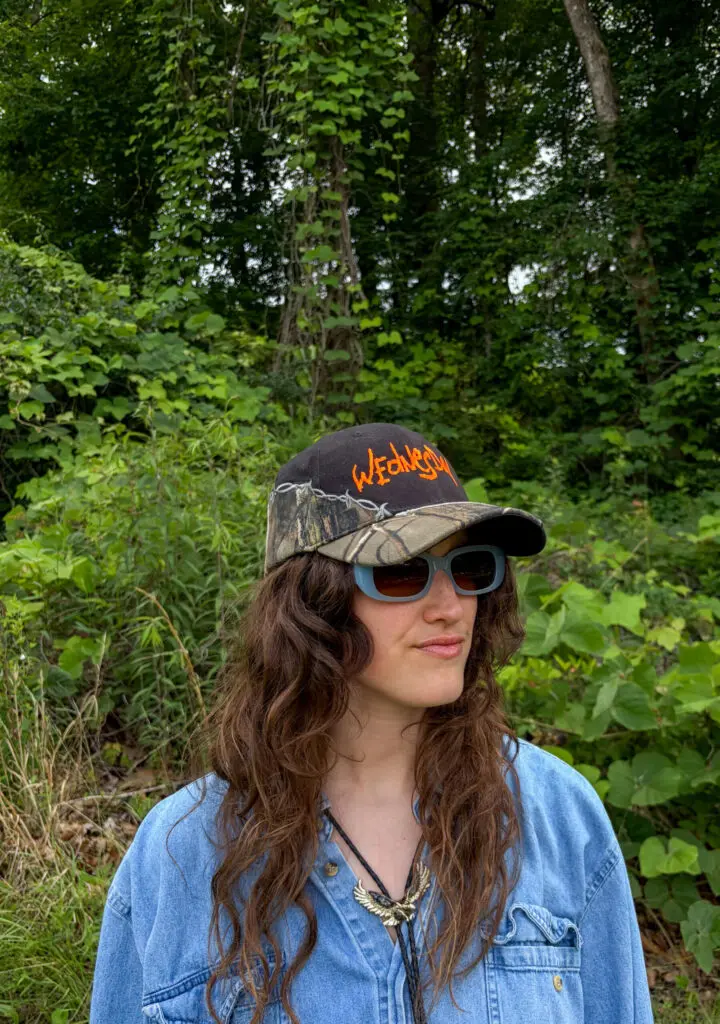
In contemporary American letters, few poetic breakthroughs capture the friction between societal expectations and internal metamorphosis quite as acutely as Anna Drasko’s latest work. Selected recently as the Missouri Review Poem of the Week, Drasko’s piece, "Maker," serves as a visceral exploration of domesticity, ecological persistence in the American South, and the arduous, unyielding architecture of gender transition.
Drasko, an East Tennessee-based writer holding degrees from the University of Pennsylvania and Penn State, has steadily built a reputation for lyric vulnerability. Their work has previously found homes in prominent literary journals including Chestnut Review, phoebe, and Good River Review. Yet, "Maker" marks a distinct high-water mark in Drasko’s oeuvre, operating simultaneously as a searing critique of gendered labor and an ars poetica—a poem about the very act of poetic creation, linguistic failure, and bodily self-actualization.
Set against the overgrown backdrop of an East Tennessee backyard choked by invasive kudzu and bordered by a rushing highway, "Maker" traces a speaker navigating the ruins of abandoned domestic roles. The poem pivots on a profound realization: the transition away from womanhood is mirrored by the quiet, morbid neglect of a rotting sourdough starter in the back of a refrigerator. Through sharp imagery—stale peanuts, wandering neighborhood dogs, arboreal turkeys, and linguistic self-correction—Drasko constructs a space where identity is not neatly solved, but magnified, complicated, and brought into sharp, unsparing relief.
Read Also
This article explores the anatomy of "Maker," examining its textual layers, the lived ecological and personal realities that birthed it, and its broader implications for contemporary literature grappling with trans embodiment and rural southern landscapes.
Detailed Chronology: From Backyard Observations to Poetic Genesis
The origin story of "Maker" is rooted in the specific, chaotic ecology of rural East Tennessee. Situated near a highway guardrail where traffic blurs past an unceasing hum, Drasko’s domestic space is one where human infrastructure and untamed wilderness collide. By June of each year, the landscape is utterly overtaken by kudzu, an invasive vine that blankets and suffocates native flora, creating an undulating green sea that hides both beauty and decay.
Despite the environmental pressures and vehicular pollution, the backyard serves as a nightly theater of wild and domestic life. Drasko spent hours observing the local fauna—red-tailed hawks, groundhogs, stray deer, roaming cats, and the neighborhood dogs that frequently break free from their yards. Among these nocturnal and crepuscular visitors was Dolly, a neighbor’s dog whose wandering habits coincided with the seasonal bloom of wild garlic.
It was during one of these observations that a crucial epiphany occurred. Drasko witnessed a sight that defied conventional expectations: a wild turkey, chased by the energetic Dolly, taking flight and ascending high into the branches of a backyard tree. The spectacle of a heavy, ground-dwelling bird navigating the vertical airspaces of the canopy became a central metaphor for unexpected elevation and survival under duress.
On that exact same day, Drasko opened the refrigerator to inspect a long-neglected sourdough starter. Months prior, the ritual of baking bread—an activity heavily coded with gendered expectations of nurturing domestic labor—had been abandoned. In its place, a microbial ecosystem had taken root, featuring layers of pink, black, and green mold that continued to multiply week after week in chromatic defiance.
The convergence of the flying turkey, the rotting sourdough, the wandering dog, and the internal shift away from "womanhood" catalyzed the drafting of "Maker." As Drasko noted in their accompanying author’s reflection, this abandonment of traditional baking coincided precisely with the shedding of a gendered identity that no longer fit. The poem naturally evolved into an ars poetica, pressing against the inherent limitations of language when tasked with articulating the nuances of trans experience and bodily transformation.
The Text: "Maker" by Anna Drasko
My mouth is a basket of tricks, I’ll chew
& spit before thinking better of it. Memory
announced itself mid gnash as the flesh
of a stale peanut thinned between
two or three teeth, visiting the years
I let dough knead deep
in nails & pry the goo from half moons
just to hear the clustered bubbles of crust
tell me what they know. Maybe it made sense
once, but the starter is now rotting
in my fridge. There was never a time
I found it easy to make
something. The two turkeys
in the tree, I never knew they could make it
that high. My neighbor’s dog
chased one through the kudzu & it flew
to a branch in the sky—Dolly
wanders when the wild garlic blooms.
I texted, Dolly’s loose again. She’ll make
her way home, but on nice days
she takes her time about it. I like to sit in glass
tipped leaves & watch the turkeys
hiding from Dolly & remember how I made
everyone believe making bread suited me,
they like it when a woman
makes something they can eat. She : )
is such : ) a great : ) baker : ). I have yet to solve
my body. No, it’s not solved,
*they’re not solved,
but magnified. Language is still
in the making, usually saying
more & less than its meaning.
Supporting Context & Metrics: Literary Landscapes and Trans Poetics
To fully appreciate the impact of "Maker," one must examine the literary ecosystem from which it emerges. Drasko’s dual academic background at the University of Pennsylvania and Penn State grounds their work in a rigorous intellectual tradition, yet their poetic voice remains deeply vernacular, tethered to the physical textures of Southern terrain and the tactile grit of daily life.
The publication of "Maker" as the Missouri Review Poem of the Week highlights a growing appetite in American literary culture for poetry that interrogates the intersections of rural identity, gender transition, and domestic labor. In recent years, literary journals have increasingly prioritized voices from Appalachia and the broader South that complicate monolithic portrayals of the region. Drasko’s work joins a vital chorus of contemporary trans poets—such as Joy Ladin, Ching-In Chen, and TC Tolbert—who are actively expanding the boundaries of lyric verse to accommodate non-binary and trans embodiments.
The Materiality of Labor
At the heart of "Maker" lies a critique of prescribed gender roles through the lens of culinary labor. Baking sourdough—a practice that surged culturally during the early 2020s—is often romanticized as a grounding, meditative art form. For Drasko, however, it is initially experienced as an enforced performance:
"…how I made / everyone believe making bread suited me, / they like it when a woman / makes something they can eat. She : ) / is such : ) a great : ) baker : )."
The inclusion of emoticons (: )) within the poem is a brilliant stylistic stroke, capturing the hollow, performative cheerfulness demanded of domestic caretakers in the digital and social age. The smiling faces function like gloss on a toxic surface, masking the profound alienation of a speaker performing a gender they do not inhabit.
When the speaker abandons the sourdough starter, letting it rot into a psychedelic palette of pink, black, and green mold in the back of the fridge, it represents a conscious rejection of digestible, palatable womanhood. The mold becomes an unauthorized creation—a life form thriving in neglect, mirroring the speaker’s own unauthorized self-creation.
Ecological Metaphors: Kudzu and Flight
The East Tennessee setting is not merely decorative; it provides an active vocabulary for survival and displacement. The kudzu vine, an invasive species introduced to control soil erosion that ultimately overwhelmed native ecosystems, serves as a metaphor for societal structures that threaten to choke out individual identity. Yet, life persists within and above the overgrowth.
The image of the wild turkey taking flight—defying biological expectations of its heavy frame—acts as a powerful totem for the trans experience. To "make it that high" is to transcend the gravity of social expectations, to find oneself suspended in an unexpected branch of the sky. Meanwhile, the neighbor’s dog, Dolly, who "wanders when the wild garlic blooms," embodies a kindred spirit of untamed movement, taking her time to find her way home on nice days.
Official Statements and Authorial Insights
In reflections on the genesis of the poem, Drasko emphasized the friction between internal reality and external articulation, particularly regarding gender.
"I didn’t know turkeys could fly until I saw Dolly chase one up into that tree," Drasko noted, drawing a direct parallel between the unexpected capabilities of the natural world and their own life trajectory. "That same day, I checked on my sourdough starter with its layers of pink and black and green that had been rotting in my fridge for months. I enjoyed watching the mold multiply week after week in new colors as I stopped making bread around the same time I left being a ‘woman’ behind. It was an abandonment that felt right."
This notion of rightful abandonment is crucial. Society often frames abandonment—of roles, traditions, or expectations—as a failure. Drasko reclaims it as an act of ecological clearing, making space for new growth.
Discussing the technical execution of the poem, Drasko explained how the piece evolved into an ars poetica:
"This poem turned toward Ars Poetica as I pressed up against the limits of language, which happens often when I try to put words to my experiences of gender, or to anything."
This limitation of language is dramatized in the poem’s startling pivot near its conclusion:
"I have yet to solve / my body. No, it’s not solved, / *they’re not solved, / but magnified."
The self-correction—moving from the singular "it" to the plural/non-binary "they"—enacts the very labor of linguistic adjustment that trans existence demands. Language, as Drasko observes in the final lines, is "still in the making, usually saying more & less than its meaning."
Future Outlook: The Expanding Horizon of Anna Drasko’s Work
As "Maker" gains national attention through its feature as the Missouri Review Poem of the Week, it signals a significant moment in Anna Drasko’s literary career. With a growing body of work spanning respected journals like Chestnut Review, phoebe, and Good River Review, Drasko is positioning themselves as a vital voice in contemporary American poetry.
The reception of "Maker" underscores a broader shift in the literary landscape, where readers and editors are hungry for work that refuses easy resolutions. Drasko’s refusal to "solve" the body—opting instead for magnification, complexity, and ongoing linguistic evolution—offers a refreshing antidote to rigid identity narratives.
Looking ahead, readers can anticipate further explorations of rural Southern ecology, trans embodiment, and the domestic uncanny in Drasko’s forthcoming projects. As the kudzu returns each summer to blanket the East Tennessee hills, and as language continues its halting, beautiful process of self-creation, writers like Drasko will remain essential guides—showing us how to abandon what no longer serves us, how to watch the wild things take flight, and how to find new colors in the dark corners of the fridge.

Comments
Facebook App ID not configured. Please add it in the Customizer.