
Executive Overview
As the crisp winds of autumn sweep across the northern hemisphere, the cultural landscape is experiencing a rich convergence of blockbuster fandom, long-awaited literary retrospectives, and prestige television revivals. From the bustling halls of the Jacob K. Javits Convention Center during New York Comic Con to the quiet, ink-stained pages of decades-old Finnish illustrations finally making their American debut, the entertainment and publishing sectors are charting a course through familiar waters with remarkably fresh perspectives.
This dispatch offers an exhaustive examination of the current pop-culture ecosystem. We analyze the logistical realities of massive fan conventions, trace the arduous multi-decade journey of Tove Jansson’s visionary Hobbit illustrations to U.S. shelves, deconstruct the curious marketing paradox surrounding MGM+’s upcoming Treasure Island, evaluate Franny Choi’s incisive new essay collection We Radiant Things, and dive headfirst into the high-stakes, monster-infested coastal waters of Netflix’s newly minted Newfoundland-set thriller, Below.
Detailed Chronology & Industry Timeline
To understand how this week’s cultural milestones align, one must look at the intersecting timelines of publishing, broadcasting, and live events.
Read Also
- October (Mid-Month): The annual pilgrimage to New York City for New York Comic Con takes over the West Side, bringing tens of thousands of pop-culture enthusiasts, cosplayers, and industry insiders into close quarters. Concurrently, regional theaters roll out niche repertory screenings, including 20th-anniversary prints of cinematic milestones like Guillermo del Toro’s Pan’s Labyrinth.
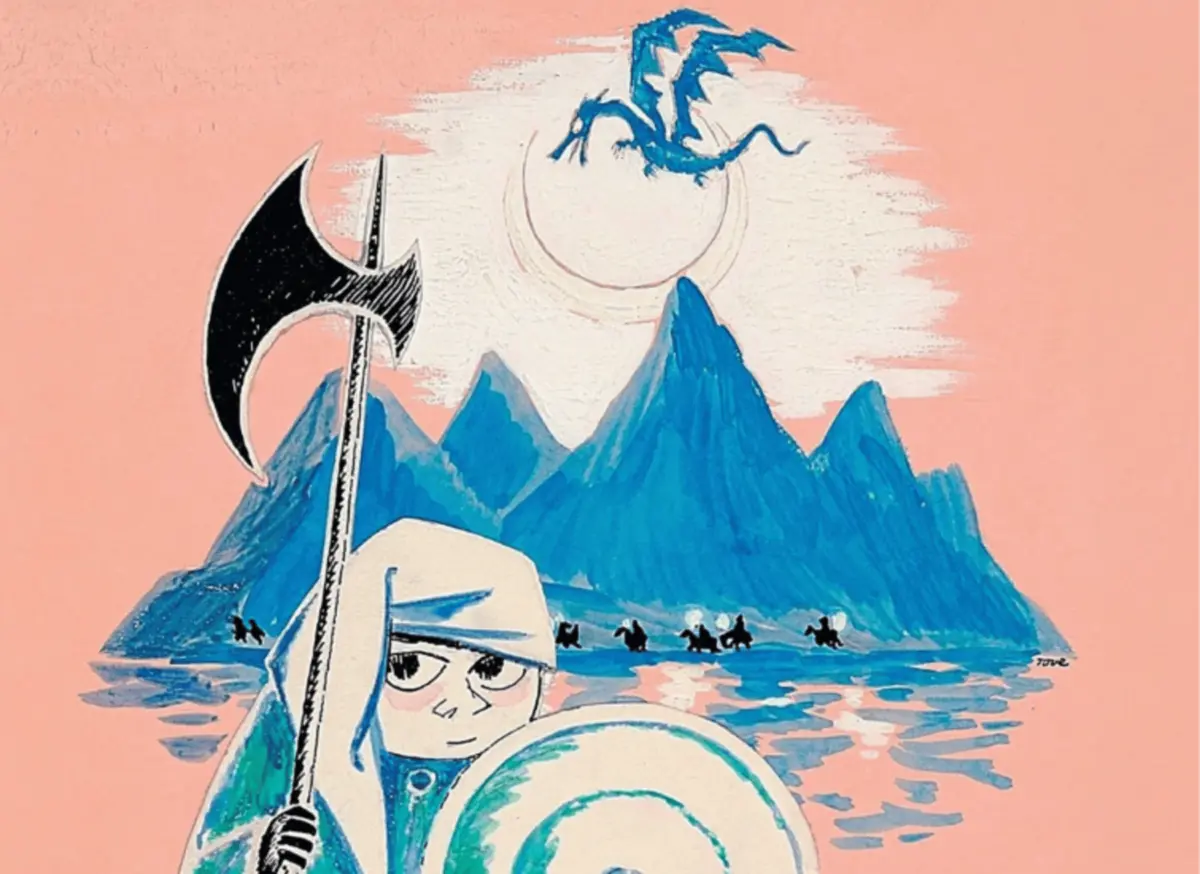
- Early October: William Morrow achieves a historic publishing milestone by officially releasing The Hobbit: Illustrated by Tove Jansson to the American market. This follows a decades-long exclusivity in Nordic regions that began through a visionary commission by Pippi Longstocking author Astrid Lindgren.
- Sunday, October 11th: MGM+ officially launches its high-profile television adaptation of Treasure Island, starring heavyweight performers David Oyelowo and Hayley Atwell. This arrival injects fresh life into the pirate-adventure genre, which has laid largely dormant since the conclusion of Starz’s cult-favorite Black Sails.
- Current Streaming Window: Netflix debuts Below, the Josh Hartnett- and Mackenzie Davis-led psychological monster thriller set against the desolate, fog-shrouded backdrop of Newfoundland. Critical reception has quickly solidified the series as a sleeper hit of the autumn television slate.
- Ongoing Literary Release: Poet and essayist Franny Choi launches We Radiant Things: Notes on Being Alien and Becoming Cyborg, initiating a ripple effect of high-brow critical discourse regarding artificial intelligence, diaspora, and speculative fiction.
Supporting Context & Metrics
The contemporary entertainment economy operates at a dizzying scale, balancing live-event attendance figures with the fragmented metrics of the streaming era.
The Convention Economy and Public Health Dynamics
New York Comic Con routinely draws upward of 200,000 attendees across its multi-day span, generating tens of millions of dollars in local economic impact for the hospitality and tourism sectors of New York City. However, large-scale indoor fan gatherings also bring predictable spikes in what veterans of the subculture colloquially refer to as "con crud"—a generalized upper-respiratory affliction driven by exhaustion, closed-quarter exposure, and lapses in personal hygiene. Public health advocates and seasoned convention-goers alike stress the fundamental rule of convention survival: the absolute separation of tactile exploration (handling vintage comic book bins, promotional plastic swag, and shared touchpoints) from consumption habits.
Publishing Latency in the Global Market
The arrival of The Hobbit: Illustrated by Tove Jansson highlights a fascinating historical anomaly in international publishing rights and translation distribution. While Finnish and Swedish readers have enjoyed Jansson’s idiosyncratic, Moomin-adjacent interpretation of Middle-earth since its original Nordic publication run, American audiences have faced a nearly generational wait. In the publishing metric of trans-Atlantic licensing, a gap of this magnitude is increasingly rare in the digital age, underscoring the enduring appetite for collector-grade, legacy fantasy editions.
Streaming Fragmentation: The Treasure Island Paradox
The television industry continues to grapple with audience discovery in the era of platform proliferation. MGM+’s adaptation of Treasure Island enters a crowded prestige television market where even star-studded casts—such as Laurence Olivier Award winner Hayley Atwell and Emmy-nominated actor David Oyelowo—can struggle to capture immediate mainstream mindshare. Industry analysts note that contemporary audiences often default to comfort-viewing or legacy franchises, creating a challenging environment for fresh adaptations of classic adventure literature, even as upcoming cinematic competitors like Ridley Scott’s planned 2027 Treasure Island film loom on the horizon.
Official Statements & Critical Reception
The critical consensus surrounding this week’s cultural offerings spans enthusiastic praise, bewildered amusement, and sharp intellectual inquiry.
On Literary Artistry: Tove Jansson’s Middle-Earth
The publication of Jansson’s illustrations has drawn immediate acclaim from art historians and fantasy purists alike. The historical genesis of the project, preserved in archives via correspondence from Pippi Longstocking creator Astrid Lindgren, captures the prophetic vision of mid-century publishing giants. Lindgren wrote to Jansson during the initial conception phase, predicting with striking accuracy:
“… this will be the children’s book of the century, and will live long after we are dead and buried.”
Jansson’s subsequent visual style—defiantly weird, starkly expressive, and entirely divorced from the pastoral romanticism traditionally associated with J.R.R. Tolkien’s work—has been praised for its psychological depth. Her rendering of the dragon Smaug and the company of dwarves rejects conventional high-fantasy tropes in favor of an uncanny, folkloric resonance.
On Critical Intimacy: Franny Choi’s We Radiant Things
Poet and essayist Franny Choi has established a new benchmark for contemporary pop-culture criticism with We Radiant Things: Notes on Being Alien and Becoming Cyborg. Moving fluidly from the cinematic philosophy of Ex Machina to the cybernetic meditations of Ghost in the Shell, Choi’s essays redefine the relationship between critic and subject. Describing their methodology, Choi writes:
“This is the only way I want to do what someone might call criticism: tenderly, from stabbing range.”
Literary critics have lauded the collection for its seamless synthesis of anti-colonial politics, speculative theory, and emotional vulnerability.
On Coastal Terror: Netflix’s Below
Critical reception for Netflix’s Newfoundland-set monster thriller Below has been remarkably varied yet predominantly favorable.
- Variety hailed the series as "exhilarating," pointing to its breathless pacing and atmospheric tension.
- RogerEbert.com designated the project as "one of the year’s best," praising its character-driven grounding amidst supernatural dread.
- The Sydney Morning Herald offered a more measured appraisal, describing the creature feature as simply "enjoyable enough."
Despite minor points of confusion among reviewers—such as the peculiar casting dynamics between veteran lead Josh Hartnett and younger co-star Charlie Heaton—the series has successfully captured the public imagination, trading heavily on nostalgic X-Files-style procedural dread blended with maritime isolationism.
Future Outlook
As the entertainment industry looks toward the horizon of the late 2020s, several key trajectories are beginning to emerge from this week’s cultural data points.
- The Renaissance of Maritime Adventure: With MGM+ launching its Treasure Island adaptation and Ridley Scott’s 2027 cinematic take waiting in the wings, adventure fiction is poised for a major resurgence. Platforms will likely look closely at deep-catalog adventure libraries—such as re-evaluating the cultural footprint of Starz’s Black Sails—to capitalize on audience hunger for gritty, serialized historical and nautical epics.
- Archival Recovery in Publishing: The commercial and critical success of The Illustrated Hobbit by Tove Jansson serves as a proof-of-concept for North American publishers. Expect a broader push to license and repatriate foreign-language illustrated editions of classic English-language literature, bridging the historical gaps that kept international interpretations locked behind regional borders for decades.
- The Evolution of Hybrid Criticism: Works like Franny Choi’s We Radiant Things signal a permanent shift in how literary and cinematic analysis is consumed. Readers increasingly demand criticism that is simultaneously rigorously academic, deeply personal, and formally inventive, moving away from detached institutional gatekeeping toward deeply engaged, identity-conscious fan scholarship.
Ultimately, whether navigating the germ-conscious aisles of a comic convention, diving into the icy, monster-laden waters of the North Atlantic via streaming, or opening a freshly imported copy of mid-century Scandinavian fantasy art, audiences continue to seek out art that challenges, comforts, and occasionally terrifies them.

Comments
Facebook App ID not configured. Please add it in the Customizer.