As the autumn season descends upon the Pacific Northwest—bringing with it an atmospheric shift that feels increasingly detached from historical climatic norms in an era of accelerating global warming—the human impulse to seek out narrative frights remains entirely unmoored from weather patterns. October’s arrival signals an annual cultural migration toward the macabre, the uncanny, and the deeply unsettling. Yet, for many modern readers, navigating the physical or digital pages of a traditional novel can present a formidable cognitive hurdle. Modern life, defined by constant connectivity, fragmented attention spans, and chronic cognitive fatigue, frequently induces debilitating literary reading slumps.
Enter the acoustic medium. In recent years, horror audiobooks and immersive audio dramas have experienced a staggering renaissance, proving that narrative engagement can bypass the visual fatigue of the printed page. When a masterfully modulated voice articulates a tale of terror in the dark—whether through the isolated hiss of headphones or the rumbling speakers of a late-night commute—the medium bypasses intellectual defenses, locking the listener into a state of captive suspense.
This review and cultural analysis examines a meticulously curated selection of recent horror audiobooks and serialized audio dramas. By analyzing the structural mechanics, thematic resonance, and vocal performances of works by Victor LaValle, Carissa Orlando, Paul Tremblay, Julia Armfield, William Peter Blatty, and the creative team behind The Silt Verses, this feature explores how modern sound design and voice acting are revolutionizing the horror genre. Far from a mere alternative to reading, the contemporary horror audio production stands as an elevated art form, marrying prose with atmospheric soundscapes to resurrect the ancient, communal tradition of oral storytelling.
Detailed Chronology: The Evolution of Audio Horror and Recent Releases
The resurgence of horror audiobooks is not an overnight phenomenon; it is the culmination of a decade-long shift in consumer habits, technological accessibility, and high-production-value sound engineering. Over the past five years, publishing houses have heavily invested in full-cast recordings, specialized voice casting, and immersive sonic backdrops, moving far beyond the single-reader monotone of twentieth-century cassettes.
The timeline of recent standout releases reveals a diverse, rapidly expanding landscape that explores historical trauma, domestic dread, cinematic meta-fiction, cosmic biology, theological terror, and folk horror.
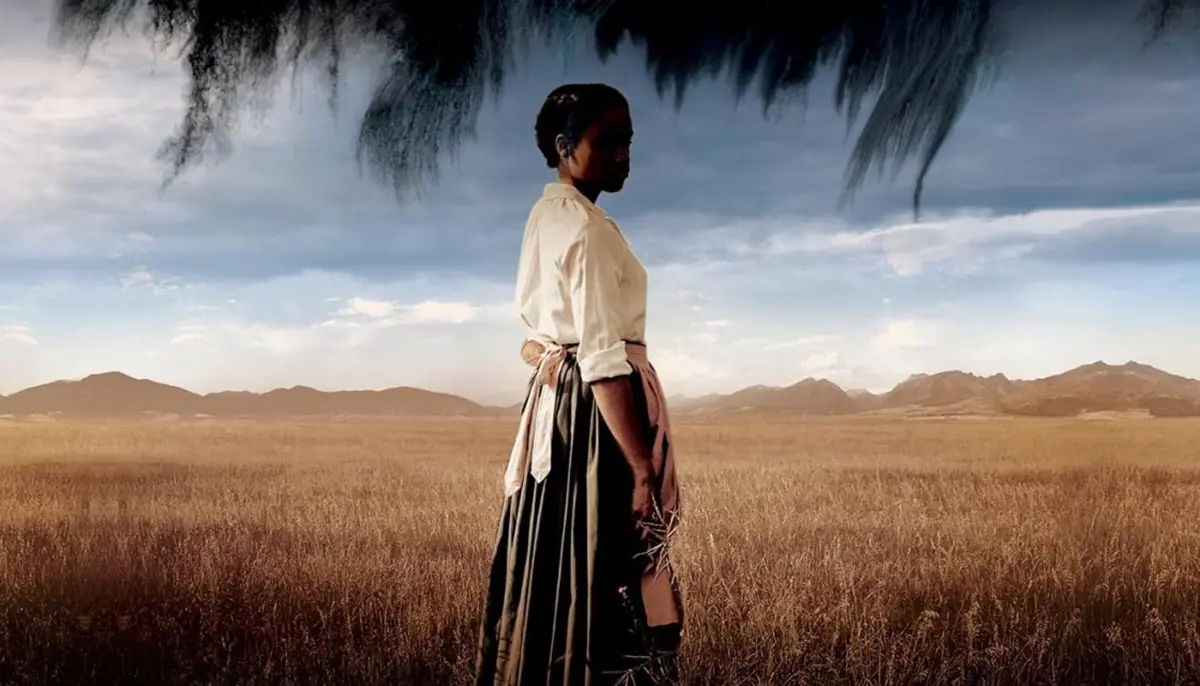
1. Lone Women by Victor LaValle (Read by Joniece Abbott-Pratt)
The Premise: Set against the unforgiving backdrop of remote rural Montana in 1915, the narrative follows Adelaide, a young Black woman who flees her family’s Southern California farm in the wake of a mysterious tragedy. She seeks a fresh start as a homesteader, hauling a locked, impenetrable steamer trunk and a lifetime of generational secrets.
The Acoustic Experience: Joniece Abbott-Pratt’s vocal performance anchors the project, capturing the shifting linguistic textures of a fragile, multi-ethnic frontier community. LaValle leverages the brutal isolation of "Big Sky" country—its relentless, howling winds and vast, empty horizons—to amplify the growing psychological strain. As greed, racism, and violence puncture the thin veneer of civic order, Abbott-Pratt’s delivery scales the tension expertly.
2. The September House by Carissa Orlando (Read by Kimberly Farr)
The Premise: Margaret and her husband, Hal, have spent years curating their dream Victorian home in the countryside. The sole drawback? The residence is aggressively, violently haunted. Disembodied screams echo through the halls, blood slicks the wallpaper, furniture rearranges itself autonomously, and spectral children roam the corridors. Furthermore, Hal has mysteriously vanished, though Margaret actively chooses avoidance.
The Acoustic Experience: Conventionally, haunted house narratives rely on a slow, agonizing burn—a gradual peeling back of safety until the supernatural reveals itself. Orlando shatter this paradigm in Chapter One, sentence one, introducing bleeding walls immediately. Kimberly Farr delivers Margaret’s first-person narration with a sharp, macabre wit. The production turns what could be standard gore into a complex, pitch-black dark comedy wrapped around an unflinching exploration of domestic abuse.
3. Horror Movie by Paul Tremblay (Read by a Full Cast)
The Premise: Decades ago, a group of pretentious art-school friends collaborated on an experimental, profoundly unsettling horror film. While the picture was never granted a commercial release, it metastasized into an elusive, highly coveted cult classic within underground circles. Now, decades later, Hollywood is mounting a remake, dragging one of the original surviving actors back into the fray.
The Acoustic Experience: Tremblay’s novel utilizes a fractured, multi-format structure, blending traditional prose, authentic-feeling screenplays, and oral history transcripts. Given that audio culture is saturated with real-world filmmaking retrospectives, a fictional take risked feeling derivative. Instead, the multi-narrator audiobook production leans into the meta-fictional elements, honoring the esoteric, obsessive subcultures of indie film fandom while maintaining an undercurrent of genuine dread.
4. Our Wives Under the Sea by Julia Armfield (Read by Annabel Baldwin and Robyn Holdaway)
The Premise: This lyrical novel unfolds through alternating perspectives: marine biologist Leah reflecting on a deep-sea research expedition that careened disastrously off course, and her wife Miri documenting the months following Leah’s eventual return—marked by the terrifying realization that the woman who came back is fundamentally altered.
The Acoustic Experience: Categorization fails this piece; it hovers fluidly between psychological horror, literary fiction, and elegiac poetry. Annabel Baldwin and Robyn Holdaway navigate the dual points of view with heartbreaking restraint. The sound of crushing ocean depths and domestic estrangement merge to create a haunting portrait of a relationship disintegrating under the weight of the inexplicable.
5. The Exorcist by William Peter Blatty (Read by the Author)
The Premise: The seminal tale of demonic possession, desperate theological intervention, and maternal terror that birthed modern horror cinema.
The Acoustic Experience: Listening to William Peter Blatty read his own masterwork reveals the foundational DNA of contemporary demonic fiction. While undeniably a product of its era, the text retains its teeth. Blatty’s narration injects unexpected levity and warmth, particularly in his affectionate, Columbo-esque vocalization of Detective Kindemann, grounding the supernatural horror in rich, human character work.
6. The Silt Verses created by John Ware (Produced by Muna Hussen, Starring Méabh de Brún, B. Narr, Jimmie Yamaguchi, and Lucille Valentine)
The Premise: Two fugitive zealots, Carpenter and Faulker, journey across a modern landscape populated by cars and telephones, yet rigidly governed by the brutal, blood-soaked laws of folk horror. They hunt for fellow worshippers of their outlawed, malevolent river god, while a law enforcement officer tracks them, and a corporate worker grows disillusioned with rebranding minor deities into profitable assets.
The Acoustic Experience: Spanning three meticulously crafted seasons, this audio drama thrives on a tangible, manifest theological economy. Anything—from war and natural phenomena to local dumps, roadside diners, and electric companies—can become a god if enough humans offer it sacrifice. The pristine sound design, complex world-building, and stellar cast cement it as a peer to modern audio landmarks like The Magnus Archives.
Supporting Context & Metrics: The Audio Horror Boom
To understand why horror is thriving specifically in the auditory realm, one must examine shifting consumption metrics across the digital publishing ecosystem.
Market Expansion: According to Audio Publishers Association (APA) data, audiobook sales have experienced uninterrupted double-digit revenue growth over the past decade. Within this expansion, genre fiction—specifically sci-fi, fantasy, and horror—represents one of the fastest-growing sectors.
Cognitive Immersion: Neurological studies on auditory processing indicate that listening to narrative fiction activates the brain’s default mode network in ways analogous to interpersonal conversation. Voice actors act as emotional proxies, allowing listeners to experience high-anxiety scenarios (such as those depicted in Lone Women or The September House) with heightened visceral feedback while maintaining a safe psychological distance.
The Podcast/Audio Drama Renaissance: Serialized audio fiction has democratized horror production. Independent creators can leverage binaural recording techniques, multi-track spatial audio, and bespoke sound effects to construct immersive soundscapes that rival cinematic sound design, capturing listeners who prioritize sensory richness over traditional text.
Official Statements and Industry Insights
Publishing executives and voice directors have increasingly recognized the unique demands of recording horror literature. Unlike romance or historical fiction, horror relies heavily on pacing, sonic suddenness, and the manipulation of silence.
"When you record a horror audiobook, you are weaponizing empty space," notes an anonymous veteran audiobook director specializing in dark fiction. "In print, a reader’s eye skips across a terrifying sentence at their own pace. In audio, the narrator controls the breath. You can force the listener to sit in the quiet for an extra two seconds after a sound effect, and in that vacuum, their own imagination does the heavy lifting."
Authors of the genre have similarly embraced the audio format as an expansion of their creative vision. Victor LaValle has frequently highlighted how voice actors like Joniece Abbott-Pratt imbue written characters with cultural rhythms and historical gravitas that transcend the physical page. Similarly, audio drama producers emphasize that sound-first storytelling creates an intimate bond between listener and creator, transforming passive consumption into an active, imaginative collaboration.
Future Outlook: Where Acoustic Horror is Headed
As artificial intelligence voice synthesis enters the broader media landscape, the human-centric art of audiobook narration and audio drama performance faces a profound philosophical crossroads. However, the unique emotional resonance, nuanced timing, and artistic interpretation demonstrated by performers like Kimberly Farr, Annabel Baldwin, and the ensemble casts of The Silt Verses and Horror Movie underscore the irreplaceable value of human artistry in horror.
Looking ahead, the future of acoustic horror points toward:
Spatial Audio Integration: The adoption of Dolby Atmos and binaural mixing will make horror audio dramas increasingly spatial, allowing listeners to track approaching threats through dynamic 360-degree soundstages.
Hybrid Mediums: More authors will likely commission original ambient scores to accompany audiobook releases, blurring the line between traditional literature and immersive radio drama.
Cross-Media Universes: As demonstrated by intellectual properties originating in podcasts, successful audio horror concepts will continue to bridge the gap into television, gaming, and print publishing.
Ultimately, whether through the desolate windstorms of 1915 Montana, the blood-slicked corridors of a cheerful Victorian manor, or the murky depths of an outlawed river god’s domain, horror audio guarantees that our collective hunger for chilling, expertly told stories will remain safely, deliciously unsatisfied.




Comments
Facebook App ID not configured. Please add it in the Customizer.