
Executive Overview
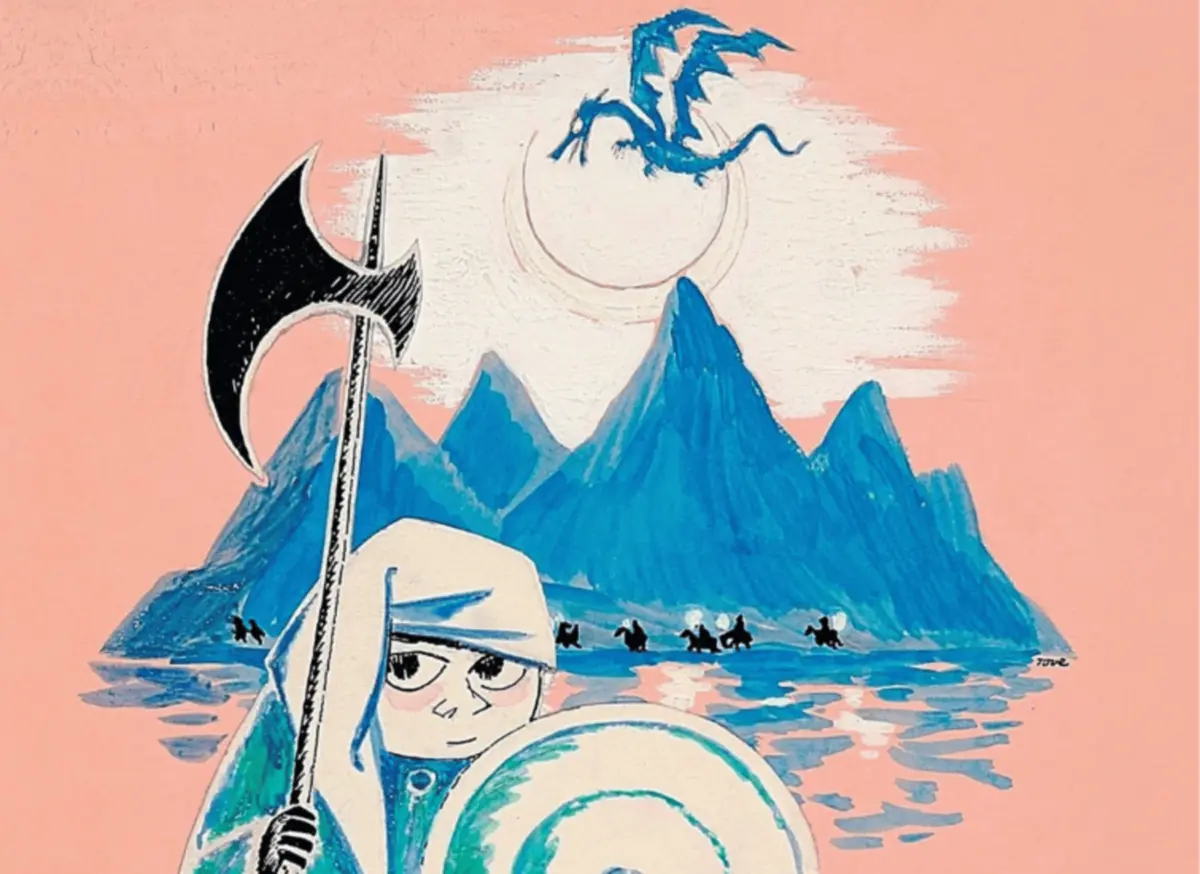
The autumn cultural calendar is entering its most intense phase, highlighted by the annual pilgrimage of fandom to the Javits Center for New York Comic Con (NYCC). Beyond the bustling exhibition halls of Manhattan, the broader entertainment ecosystem is experiencing a rare convergence of literary milestones, high-stakes television premieres, and critical discourse. Most notably, American readers can finally experience J.R.R. Tolkien’s The Hobbit through the distinct artistic lens of legendary Finnish creator Tove Jansson, ending a decades-long publishing discrepancy.
Simultaneously, prestige and genre television are colliding in unexpected ways. MGM+ is mounting a new adaptation of Treasure Island featuring heavyweights David Oyelowo and Hayley Atwell—reigniting discussions surrounding the enduring legacy of pirate narratives on the small screen—while Netflix unleashes Below, a Newfoundland-set psychological thriller starring Josh Hartnett and Mackenzie Davis that is already generating fervent, polarizing critical chatter. Combined with incisive literary criticism from Franny Choi’s We Radiant Things, the current pop culture landscape offers a rich tapestry for enthusiasts navigating both physical convention floors and digital streaming queues.
Detailed Chronology & Industry Developments
The Convention Floor and Public Health Realities
As tens of thousands of enthusiasts descend upon New York City for the 2024 edition of NYCC, veteran convention-goers are once again trading tips on how to survive what has colloquially come to be known as "con crud." Beyond the standard advice regarding supportive footwear—an absolute necessity given the cavernous, concrete expanse of the Javits Center—epidemiological and logistical realities dictate strict personal hygiene protocols for multi-day events.
Read Also
Industry veterans emphasize a foundational rule of convention survival: absolute separation between tactile exploration and nutritional intake. With hundreds of thousands of attendees handling vintage comic books, promotional swag, and shared interactive displays, the vector for viral transmission is exceptionally high. Public health advocates and seasoned attendees alike recommend completely eliminating finger-to-mouth contact, opting instead for pre-packaged, touchless dispensing mechanisms for snacks and gum. These pragmatic strategies remain essential as the entertainment industry continues to balance the high-touch, communal nature of fan conventions with ongoing public health mindfulness.
Tove Jansson’s The Hobbit: A Transatlantic Literary Milestone
The most significant literary acquisition of the season arrived this week courtesy of publisher William Morrow, which officially released The Hobbit: Illustrated by Tove Jansson to the United States market. While readers in Finland and Sweden have cherished Jansson’s striking, idiosyncratic interpretations of Middle-earth for decades, American audiences have historically been excluded from experiencing this specific edition due to licensing and international distribution barriers.
The genesis of this landmark publication traces back to a legendary correspondence between Jansson and fellow children’s literature pioneer Astrid Lindgren. Operating in her capacity as a publisher, Lindgren recognized the transcendent cultural weight of Tolkien’s burgeoning masterpiece. In a prophetic letter to Jansson urging her to take on the project, Lindgren wrote:
“…this will be the children’s book of the century, and will live long after we are dead and buried.”
Jansson’s subsequent artistic output for the novel broke sharply from the pastoral, romanticized illustrations traditionally associated with Tolkien’s legendarium. Infused with the same gothic whimsy, psychological depth, and stark linework that defined her iconic Moomin series, Jansson’s depiction of characters like Smaug the dragon and the company of dwarves offers a radically unique visual counterpoint to Tolkien’s own sketches and Pauline Baynes’ later maps. The long-overdue U.S. release finally allows domestic fans to evaluate this fascinating cross-pollination of two towering literary titans.
The Swashbuckling Renaissance: Treasure Island and Black Sails
Television executives continue to mine maritime history and adventure classics, though audience reception remains profoundly uneven. On October 11th, MGM+ is scheduled to premiere its new limited adaptation of Robert Louis Stevenson’s Treasure Island, boasting a stellar cast that includes acclaimed actors David Oyelowo and Hayley Atwell. Despite the pedigree of its leads, the series has thus far flown remarkably under the radar within the broader pop culture discourse.
This quiet rollout highlights a persistent industry paradox regarding pirate-themed television. Starz’s critically acclaimed Black Sails—which served as a brilliant, philosophically rich prequel to Stevenson’s novel—remains widely underseen relative to its exceptional production values, intricate plotting, and powerhouse performances. The impending arrival of MGM+’s Treasure Island, alongside an announced feature-film adaptation helmed by Ridley Scott slated for 2027, suggests that Hollywood views the intellectual property as ripe for reinvention.
However, critics and fans frequently argue that modern adaptations must measure up against the high-water mark set by Black Sails, whose ensemble cast included generational talents such as Hannah New (Eleanor Guthrie) and Jessica Parker Kennedy (Max). The failure of the broader industry to fully capitalize on the breakout star power generated by that series remains a persistent talking point among television analysts, even as networks continue to greenlight new voyages to Treasure Island.
Supporting Context & Metrics
To fully understand the current pop culture landscape, one must examine the intersection of critical theory, streaming metrics, and demographic shifts in consumption:
- Literary Nonfiction Resurgence: Essay collections focusing on technology, alienation, and pop culture criticism—such as Franny Choi’s We Radiant Things: Notes on Being Alien and Becoming Cyborg—are seeing a surge in independent bookstore sales. Choi’s opening essays dissecting cinematic touchstones like Ex Machina through an intersectional lens exemplify a growing demand for criticism that is both emotionally resonant and rigorously intellectual.
- Streaming Fragmentation: The debut of high-profile genre experiments like Netflix’s Below highlights the modern viewer’s paradox of choice. Blending procedural mystery with creature-feature tropes in a moody Newfoundland setting, the series has generated sharply divergent critical reviews—ranging from Variety’s classification of "exhilarating" to more measured assessments—illustrating the polarized nature of algorithm-driven content consumption.
- Convention Economics: Major pop culture conventions like NYCC continue to inject hundreds of millions of dollars into local municipal economies. According to preliminary tourism board estimates, the influx of over 200,000 attendees generates significant revenue for New York City hospitality, dining, and retail sectors, solidifying the economic viability of live fan events despite logistical and health-related friction.
Official Statements & Critical Reception
Industry figures and cultural critics have offered notable perspectives on this week’s major releases:
Regarding the artistic philosophy underpinning modern cultural criticism, Franny Choi writes in We Radiant Things:
"This is the only way I want to do what someone might call criticism: tenderly, from stabbing range."
In evaluating Netflix’s new supernatural thriller Below, major trade publications have offered starkly contrasting verdicts. Variety lauded the series as an "exhilarating" dive into atmospheric horror, while RogerEbert.com elevated it to "one of the year’s best," praising its creature design and psychological tension—colloquially dubbed by some reviewers as a "killer snot-berg"—though mainstream audiences continue to debate the eccentric casting choices, including Charlie Heaton portraying the onscreen son of veteran lead Josh Hartnett.
Furthermore, archival correspondence published by the Tove Jansson Literary Estate highlights Astrid Lindgren’s acute foresight regarding the enduring cultural dominance of The Hobbit, cementing the collaborative historical importance of bringing Jansson’s Nordic artistic vision to American bookshelves.
Future Outlook
Looking toward the remainder of the fourth quarter and into 2027, the entertainment and publishing industries face critical inflection points. The successful U.S. launch of The Hobbit: Illustrated by Tove Jansson opens commercial pathways for publishers to reexamine international illustrated editions of classic speculative fiction, proving that domestic audiences possess a voracious appetite for foreign artistic interpretations of domestic literary staples.
In the television sector, the performance of MGM+’s Treasure Island will likely dictate the commercial viability of traditional adventure adaptations in an era dominated by sci-fi and fantasy franchise universes. If the series successfully captures audience share alongside Ridley Scott’s upcoming 2027 cinematic venture, Hollywood may witness a sustained revival of maritime historical fiction. Meanwhile, convention organizers will continue to refine crowd management and sanitary protocols, ensuring that massive gatherings like New York Comic Con can persist safely as the cornerstone of modern fan culture.




Comments
Facebook App ID not configured. Please add it in the Customizer.