
For decades, the global academic discipline of analytic philosophy has operated under a quiet, unwritten consensus: mastery of the English language is an absolute prerequisite for a viable career. While systemic barriers rooted in gender and race have justifiably commanded the attention of academic institutions, departmental hiring committees, and professional associations, the profound structural disadvantages faced by non-native English speakers have largely languished in the shadows.
That paradigm-shifting reality has now been shattered.
The publication of what is widely considered the largest and most systematic study of linguistic inequity in academic philosophy to date has illuminated the stark disparities confronting non-native scholars. Conducted by Neri Marsili of the University of Turin and Paul Rehren of the Max Planck Institute, the study evaluates over 100,000 English-language articles published across more than 200 philosophy journals spanning a nearly fifty-year period from 1975 to 2021.
Read Also
The findings confirm what many international scholars have long experienced firsthand: while non-native English speakers have achieved near-parity in lower-tier and general publications, they remain severely underrepresented in the discipline’s elite journals—the gatekeeping publications that dictate hiring decisions, tenure-track appointments, institutional funding, and professional recognition. Furthermore, Marsili and Rehren’s empirical investigation tests three leading hypotheses regarding this persistent gap, isolating the impacts of linguistic distance, active and implicit reviewer bias through a natural experiment on editorial anonymization, and systemic divergence in philosophical subfields.
This comprehensive report explores the methodology, historical evolution, and socio-editorial mechanisms driving linguistic inequity in analytic philosophy, while outlining actionable reforms to foster a genuinely global discipline.
Detailed Chronology and Methodological Evolution
To understand how linguistic inequity has developed within analytic philosophy, one must trace both the historical trajectory of the discipline’s publishing ecosystem and the chronological evolution of the empirical data surrounding it.

The Pre-Empirical Era (Pre-2010s)
Historically, complaints regarding language barriers in academic publishing were dismissed as anecdotal. Non-native scholars who struggled to navigate the labyrinthine prose styles demanded by Anglophone gatekeepers were largely left to individually absorb the professional costs. Editorial offices rarely tracked the primary languages of submitting authors, and conversations surrounding internationalization were typically restricted to geographic diversity rather than linguistic accessibility.
Early Warning Signs (2014–2021)
The first wave of rigorous demographic introspection began to surface in the mid-2010s. A 2014 analysis of the 500 most-cited works across four leading generalist philosophy journals revealed that a staggering 9.4% of works were authored by non-native speakers, which later dwindled upon closer methodological scrutiny to just 5.8%.
Subsequent studies began to quantify the immense labor tax imposed on multilingual academics. A landmark 2018 study analyzing 18 prominent philosophy journals between 2013 and 2017 found that non-native authors accounted for a mere 31% of total publications—an exceptionally low figure for a discipline practiced vigorously across every continent.
By late 2024, a major survey of over 1,600 philosophers brought the human cost of these disparities into sharp focus. The survey revealed that non-native scholars require, on average, twice as long to read an academic paper in English and nearly twice as long to prepare a conference presentation, even when controlling for self-reported English proficiency.
The Marsili-Rehren Breakthrough (2021–2026)
Recognizing the narrow scope, limited timeframes, and subjective nature of prior research, Neri Marsili and Paul Rehren initiated a macro-level investigation in 2021. Leveraging corpus methods and extensive bibliographic data provided by Rehren, the researchers set out to track linguistic representation across five decades of academic publishing.
The resulting study, published in Research Integrity and Peer Review, analyzed a dataset comprising over 100,000 articles published between 1975 and 2021. Because direct linguistic data for historical authors was unavailable at scale, the researchers utilized two robust proxies:

- The country in which the author was currently employed.
- The institution from which the author received their PhD.
Through manual spot-checks of random sample subsets, Marsili and Rehren verified that these proxies boasted an accuracy rate of approximately 90%. To establish a baseline of representation, they turned to PhilPeople—the premier global directory of philosophers. Using institutional location as a metric, they estimated that non-native English speakers comprise approximately 53% of the active professional population. Because PhilPeople maintains a known self-selection bias favoring Anglophone institutions, the authors emphasized that their baseline is conservative, meaning the true baseline proportion of non-native philosophers is likely significantly higher. Consequently, the calculated underrepresentation metrics in top-tier journals represent a best-case scenario.
Supporting Context and Empirical Metrics
The core contribution of Marsili and Rehren’s study lies in its granular differentiation between publication tiers. Their data illustrates that linguistic inequity is not evenly distributed across the publishing landscape; rather, it grows exponentially more severe as the prestige and professional impact of the journal increase.
The Tiered Reality of Publication
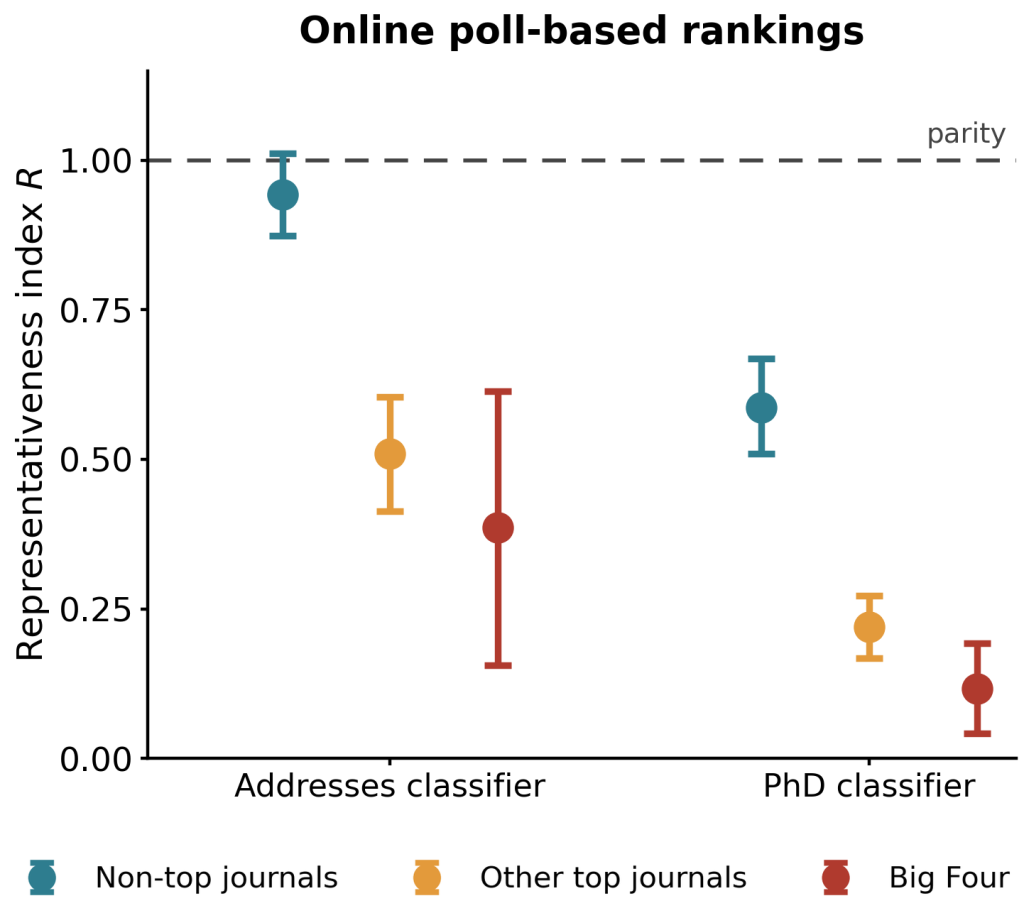
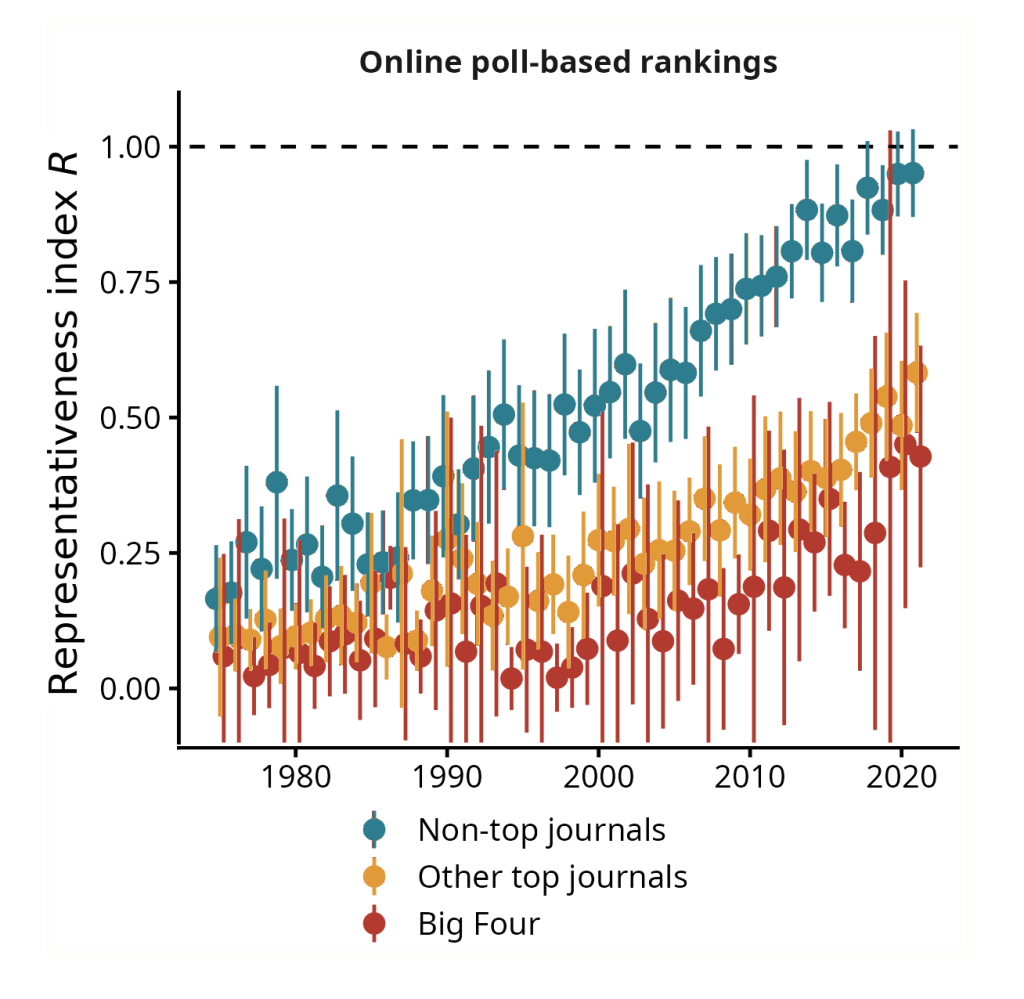
When evaluating overall output, non-native authors appear to be reasonably well-represented. Across lower-tier journals, publication rates approach parity—particularly when measured by the author’s current workplace (reaching roughly 90% of expected representation).
However, when the focus shifts to elite venues, the picture transforms dramatically. The authors defined top-tier journals via two primary metrics:
- The Broad Definition: Approximately 30 journals consistently ranked in the Leiter Reports polls.
- The Narrow Definition ("The Big Four"): The Philosophical Review, Mind, Noûs, and the Journal of Philosophy.
In the broader group of top journals, non-native authors publish at rates ranging from one-half to one-quarter of what statistical parity demands based on their representation in the profession. When narrowing the scope to the Big Four, non-native scholars secure a mere 12% to 38% of the publications predicted by population baselines. A tertiary analysis utilizing citation impact scores corroborated these findings, proving that the penalty is tied directly to journal prestige rather than subject matter or citation velocity alone.
The Widening Historical Gap
By tracking data from 1975 onward, the authors were able to map longitudinal trends. While representation in lower-ranked journals has steadily climbed toward near-parity over the last fifty years, progress in top-tier journals has moved at a glacial pace. Consequently, the structural gap between elite and non-elite publishing venues has widened significantly over the decades, signaling that the internationalization of philosophy has largely bypassed the discipline’s most prestigious gatekeepers.
Investigating the Causes: Testing the Three Hypotheses
To move beyond mere quantification, Marsili and Rehren subjected three common explanations for the publication gap to rigorous empirical testing.
1. The Linguistic Distance Hypothesis
The most frequent apologist argument posits that the publication gap is an innocent artifact of prose quality: non-native authors write less polished English, and top-tier journals maintain exceptionally high stylistic standards regarding the "flair, elegance, or vivacity" of prose.
If this hypothesis were true, the publishing penalty should correlate heavily with linguistic distance—meaning authors whose native tongues are structurally distant from Germanic/Romance roots (such as Japanese or Korean) should face vastly superior hurdles compared to those whose native languages share closer linguistic roots with English (such as Dutch, Norwegian, or Swedish).
Upon testing this, Marsili and Rehren found only a weak, statistically negligible trend. The minor variation observed was driven almost entirely by a tiny cluster of Scandinavian outliers. Prose polish and linguistic distance do not adequately explain the profound underrepresentation documented in the data.
2. The Active Discrimination & Anonymization Hypothesis
The second hypothesis suggests that non-native authors face active, often subconscious, prejudice from reviewers and editors who penalize manuscripts containing non-standard idioms, foreign institutional affiliations, or culturally distinct writing conventions.
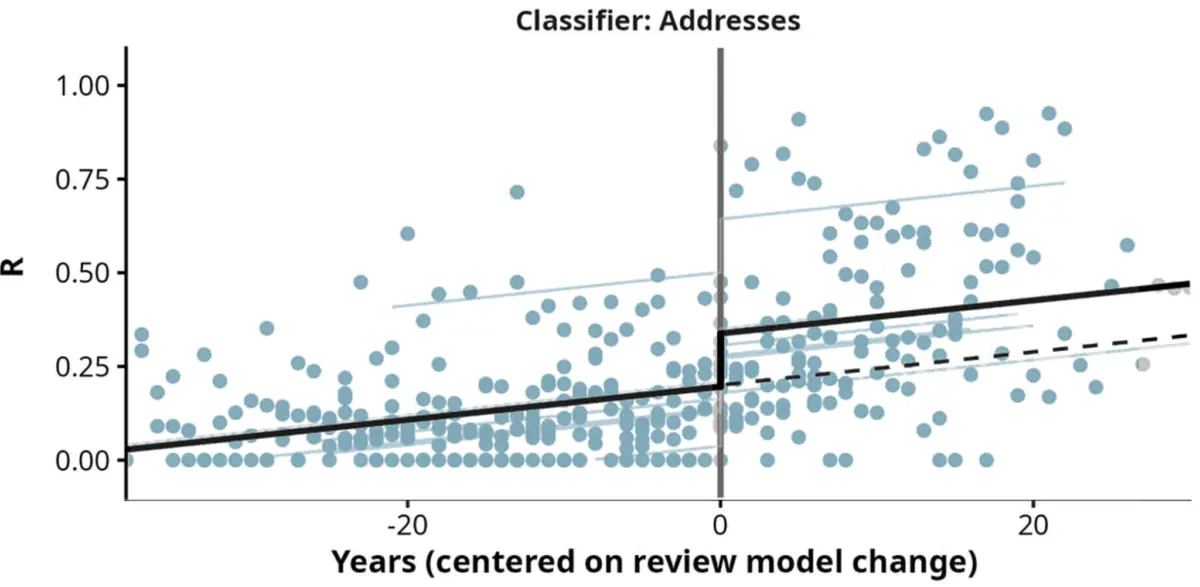
To test this, the researchers leveraged a natural experiment within the publishing industry: the historical transition of several elite journals from open or single-anonymous review to double- or triple-anonymous review systems.
The findings were striking. Following the implementation of anonymous review processes, representation of non-native authors classified by their workplace jumped significantly—rising from roughly one-fifth to approximately one-third of parity requirements. While institutional blinding masks multiple variables simultaneously (author name, geographic location, and institutional prestige), the data provides clear empirical evidence that removing visible markers of foreign identity partially mitigates the structural disadvantage faced by non-native scholars.
3. The Subfield Divergence Hypothesis
The third hypothesis explores whether non-native philosophers gravitate toward different subfields of philosophy than those favored by Anglophone elite journals. Prior research indicates that top-tier journals heavily prioritize metaphysics, epistemology, and philosophy of language, while allocating minimal space to "philosophical traditions"—including continental philosophy, historical traditions, and non-Western philosophical frameworks.
Marsili and Rehren’s data confirmed that non-native scholars are indeed disproportionately concentrated in subfields marginalized by elite Anglophone journals. However, the authors caution against blaming non-native scholars for their research interests. The thematic focus of a premier journal is fundamentally an editorial choice; what appears to be an organic divergence in research interests may instead reflect self-serving topic selection by editorial boards whose structural composition mirrors Western, Anglophone institutions.
Future Outlook and Recommendations for Systemic Reform
Marsili and Rehren’s study marks a watershed moment for academic philosophy. By moving past anecdotal complaints and grounding the discourse in a robust empirical dataset of over 100,000 papers, the authors have established that linguistic inequity is an entrenched structural failure of the profession.
Addressing this systemic imbalance will require coordinated, institutional interventions across the global philosophical community. The authors and affiliated disciplinary reformers propose several concrete remedial actions:
- Universal Adoption of Anonymized Review: Elite journals that have resisted transitioning to robust double- or triple-blind peer review must adopt strict blinding protocols. Anonymization serves as an essential shield against both overt linguistic discrimination and insidious prestige bias.
- Diversification of Editorial Boards: Currently, only an estimated 4% of editors across fifteen prominent philosophy journals are based at institutions outside Anglophone countries. Expanding international representation on editorial boards will introduce broader methodological perspectives, reshape stylistic norms regarding acceptable English prose, and realign journal scopes with the global reality of the discipline.
- Institutional Adoption of the Barcelona Principles: Philosophy departments, research centers, and academic journals are urged to sign onto the Barcelona Principles for a Globally Inclusive Philosophy. Crucially, these principles mandate the systematic collection of submission data categorized by author linguistic background—providing the precise empirical feedback loop required to monitor future progress.
- Transparent Data Collection: Publishing houses must follow the lead of multidisciplinary open-science initiatives by tracking and publishing demographic and linguistic statistics regarding manuscript submissions, desk rejections, and acceptance rates.
Ultimately, analytic philosophy aspires to be a universal pursuit of truth, logic, and human understanding. If the discipline’s premier platforms remain structurally inaccessible to the majority of the world’s philosophers simply because English was not their first language, philosophy risks shrinking into an insular, provincial echo chamber. Implementing structural reforms is not merely an act of charity toward international scholars; it is an absolute necessity for the intellectual vitality and global credibility of the field.





Comments
Facebook App ID not configured. Please add it in the Customizer.