
Executive Overview
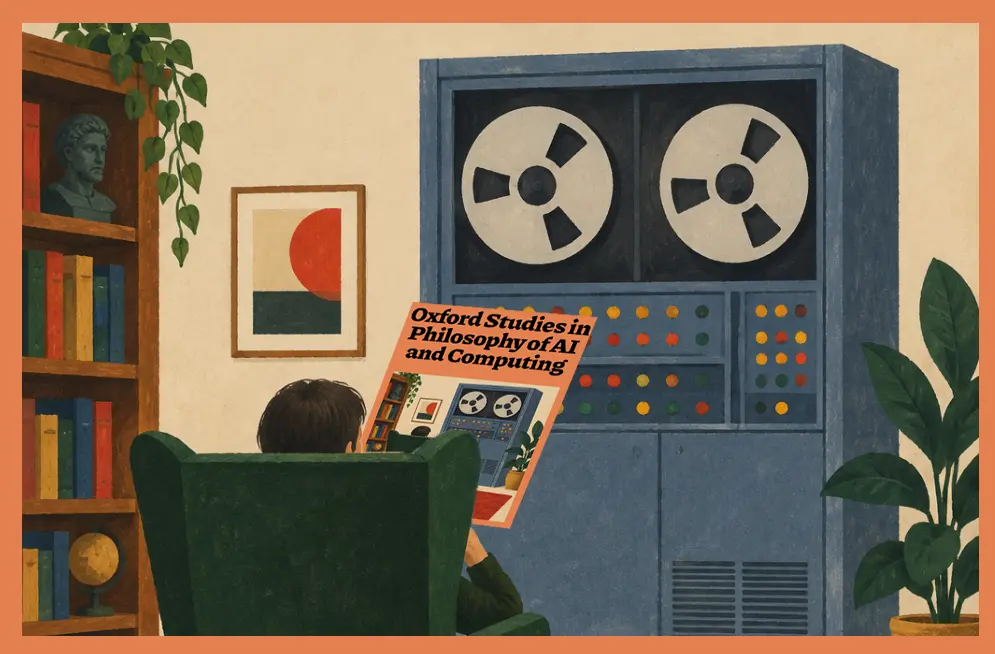
As artificial intelligence systems leap from theoretical models to pervasive global infrastructure, the foundational assumptions underpinning human knowledge, ethics, society, and consciousness are being violently upended. Yet, despite the torrential pace of technological innovation, academic philosophy has frequently lagged behind the curve, operating on the periphery of critical public and technical discourses. To bridge this profound chasm, an elite coalition of international scholars has officially launched a new academic cornerstone: Oxford Studies in Philosophy of AI and Computing (OSPAIC).
Conceived as both a prestigious annual book series and a companion high-level conference, OSPAIC is engineered to be a gravitational center for rigorous, interdisciplinary philosophical inquiry into computing and artificial intelligence. The initiative is spearheaded by an editorial team of distinguished academics. Seth Lazar of Johns Hopkins University serves as the executive editor, supported by associate editors Jeffrey Howard of University College London (UCL) and Rachael Sterken of the University of Hong Kong, alongside assistant editor Ned Howells-Whitaker of Johns Hopkins University and the University of Pittsburgh.
The launch of OSPAIC arrives at a pivotal geopolitical and epistemological inflection point. With artificial intelligence models now capable of autonomously drafting superficially plausible academic papers in seconds, the nature of intellectual production itself is mutating. OSPAIC is built on the premise that genuine philosophical progress is not merely the mechanical accumulation of true claims, but rather a deeply collaborative, dialectical, and communal endeavor. By establishing an annual peer-reviewed volume, an intentional in-person conference located strategically in Washington, D.C., and lucrative manuscript prizes backed by the Cosmos Institute, OSPAIC aims to drag the philosophy of AI and computing from academic isolation into the engine room of contemporary public policy and technological development.
Read Also
Detailed Chronology: The Genesis of a Scholarly Movement
The intellectual lineage that culminated in the establishment of OSPAIC reflects a growing, grassroots realization within the global philosophical community that digital technology was radically outpacing traditional academic frameworks. For decades, the philosophy of computing and AI was relegated to the margins of the broader discipline. While subfields such as logic and the philosophy of mind maintained a secure foothold within traditional departments, philosophical investigations into machine learning, algorithmic bias, autonomous agency, digital epistemology, and the ethics of synthetic intelligence were largely treated as niche curiosities.
The Isolation Era of AI Philosophy
Historically, philosophers wishing to grapple with computational systems faced a lonely landscape. Unlike researchers in computer science, who enjoyed massive institutional backing, venture capital, and dense collaborative networks, philosophical pioneers in AI operated largely in silos. They were forced to invent methodologies, acquire technical literacy, and navigate complex socio-technical phenomena entirely on their own. This lack of a coherent institutional community created a bottleneck, preventing philosophical insights from maturing at the speed required to keep pace with algorithmic deployments in the real world.
The Turning Point
By the mid-2020s, the emergence of generative models and foundational AI systems created an existential urgency. Society was no longer debating hypothetical scenarios about artificial general intelligence; it was grappling with algorithmic content moderation at a global scale, autonomous weapons systems, synthetic media, automated labor displacement, and the commercialization of cognitive labor.
Recognizing that the philosophical foundations of these technologies were being built on the fly—often by engineers and policy wonks devoid of rigorous normative frameworks—Lazar and his colleagues began mobilizing. The conceptual framework for OSPAIC was forged out of these urgent conversations. The leadership recognized that fixing the discipline’s marginalization required more than just another journal; it demanded a flagship annual series on par with established heavyweights like Oxford Studies in Epistemology or Oxford Studies in Metaethics, paired with a high-impact physical convening space.
The Inaugural Launch and Call for Papers
The formal unveiling of OSPAIC in late 2026 marked a watershed moment. Alongside its official website launch, the editorial board opened its inaugural call for submissions. Designed to attract the absolute highest caliber of philosophical scholarship, the call invites researchers worldwide to submit cutting-edge papers addressing the myriad conceptual, ethical, and epistemological puzzles generated by modern computing and AI.
Supporting Context & Metrics: The Architectural Pillars of OSPAIC
To truly understand the disruptive potential of Oxford Studies in Philosophy of AI and Computing, one must examine the institutional scaffolding supporting it. OSPAIC is not merely an editorial venture; it is an ecosystem designed to incentivize, accelerate, and disseminate elite philosophical research.
The Editorial Leadership Team
The credibility of any academic series rests upon the scholarly pedigree of its stewards. OSPAIC boasts a world-class editorial board:
- Executive Editor – Seth Lazar (Johns Hopkins University): A leading voice in the moral and political philosophy of technology, Lazar’s work has consistently pushed the boundaries of how normative theory intersects with digital power, algorithmic governance, and automated systems.
- Associate Editor – Jeffrey Howard (University College London): An authority in political philosophy and free speech, Howard brings deep expertise regarding the socio-political impacts of digital platforms and information ecosystems.
- Associate Editor – Rachael Sterken (University of Hong Kong): Specializing in philosophy of language, epistemology, and the philosophy of technology, Sterken contributes crucial analytical rigor concerning how artificial systems process, generate, and manipulate meaning.
- Assistant Editor – Ned Howells-Whitaker (Johns Hopkins University & University of Pittsburgh): Bridging multiple prestigious institutions, Howells-Whitaker provides essential operational and analytical support for the rapidly expanding scope of the project.
The Washington, D.C. Conference Strategy
A critical differentiator for OSPAIC is its commitment to an annual conference—specifically anchored in Washington, D.C. This geographic choice is far from accidental. As Lazar notes, Washington is the crucible where much of the future of artificial intelligence governance, regulation, and geopolitical strategy will be decided.
By placing philosophers directly in the corridors of power and policy-making, OSPAIC aims to dismantle the ivory tower dynamic. The conference serves as a vital bridge connecting abstract normative analysis with tangible legislative and regulatory realities. In an era where AI safety summits and congressional hearings often struggle to integrate deep ethical frameworks, the OSPAIC conference provides a direct conduit for rigorous philosophical thinking to inform policymakers, civil society leaders, and technologists.
The Cosmos Institute Partnership and the $10,000 Prize
To attract top-tier scholarship and financially empower researchers dedicating their careers to these complex questions, OSPAIC has forged a strategic partnership with the Cosmos Institute. Following the tradition of other elite Oxford Studies volumes—which frequently feature prestigious accompanying awards, such as the Marc Sanders Foundation prizes—the Cosmos Institute is running an exclusive AI and philosophy manuscript competition.
The competition features a $10,000 cash prize for the winning manuscript, providing a substantial material incentive for researchers to tackle the most demanding conceptual challenges at the intersection of philosophy and computer science. This financial backing helps legitimize the subfield, signaling to academic institutions and funding bodies that philosophy of AI is a primary site of intellectual innovation.
Open Access and arXiv Integration
In a bold move to democratize research and accelerate the velocity of academic discourse, OSPAIC is actively encouraging all authors who submit papers to the series to concurrently upload their working drafts to arXiv (utilizing the specific keyword designation PFAI). This open-science approach bypasses the traditional, notoriously sluggish publication pipelines of academic publishing, ensuring that vital philosophical insights enter the public domain and pre-print communities immediately. It reflects a modern ethos: in a world moving at machine speed, academic gatekeeping cannot be allowed to impede intellectual progress.
Official Statements: The Vision Behind the Project
The philosophical philosophy guiding OSPAIC was articulated with striking clarity by Executive Editor Seth Lazar in his foundational announcement regarding the series. His remarks diagnose the historical failures of the discipline and lay out a bold, restorative vision for the future:
"Rapid AI progress is raising so many philosophical questions; but philosophers aren’t as involved in the conversation as they should be, for many different reasons."
Lazar does not shy away from critiquing the structural deficiencies that have kept philosophers on the sidelines of the technological revolution:
"One is that, aside from some work in logic and philosophy of mind, philosophy of AI and computing has often sat on the margins of the discipline. One reason for that is that so many philosophers working on AI have had to do so basically on their own, figuring things out for themselves as they go along, without a real community around them."
Crucially, Lazar emphasizes that OSPAIC is designed to provide the institutional scaffolding and communal home that these isolated scholars have long lacked:
"OSPAIC is going to help fix this! We’re going to have an annual conference and volume. The conference (in DC! where much of the future of AI will be decided) is especially important as we think about the nature of intellectual life in a world where AI systems can one-shot a superficially-plausible philosophy paper."
This final observation touches upon an existential anxiety currently sweeping the humanities: the mass production of synthetic text. Lazar argues that the proliferation of AI-generated prose changes the very definition of intellectual progress:
"OSPAIC sees philosophical progress as being about more than just the accumulation of true claims. The conference is a big part of our vision for how we contribute to philosophical progress."
By prioritizing human-centric, rigorous, peer-reviewed dialog, live debate, and communal inquiry at the D.C. conference, OSPAIC champions the irreducible value of embodied philosophical community over automated textual generation. Furthermore, Lazar underscores the imperative for public engagement:
"[One aim is] to help philosophers be part of the broader public conversation… and to that end we’re… encouraging everyone who submits to OSPAIC to also upload their draft to arXiv (at present, use keyword PFAI)."
Future Outlook: What OSPAIC Means for the Future of Philosophy and AI
The launch of Oxford Studies in Philosophy of AI and Computing represents a monumental maturation point for the philosophy of technology. As we look toward the horizon, the implications of this initiative are profound and far-reaching.
1. Reclaiming Epistemic Authority in the Age of Generative AI
As large language models and autonomous agents grow more sophisticated, society faces an epistemic crisis. We are flooded with synthetic media, automated reasoning, and algorithmic decision-making systems whose internal logic is often opaque even to their creators. OSPAIC provides a rigorous institutional platform to interrogate foundational questions of truth, knowledge, agency, and meaning in a computational age. By fostering high-level philosophical analysis, the series will help humanity retain intellectual sovereignty over the tools it builds.
2. Deepening the Policy-Philosophy Nexus
By anchoring its annual conference in Washington, D.C., OSPAIC is intentionally positioning philosophy as an indispensable pillar of public policy. Future regulatory frameworks governing algorithmic bias, intellectual property, cognitive liberty, and AI safety cannot succeed on technical audits alone; they require robust normative grounding. OSPAIC promises to serve as a direct pipeline connecting academic philosophers with legislators, regulatory agencies, and industry leaders.
3. Cultivating a Generational Community
Perhaps OSPAIC’s most enduring legacy will be its success in breaking down academic isolation. By providing an annual volume, a premier conference, lucrative prizes via the Cosmos Institute, and an open-access preprint culture, OSPAIC is actively cultivating a vibrant, interconnected global community of scholars. Graduate students, early-career researchers, and seasoned professors working on the philosophy of computing will no longer have to navigate the wilderness alone. They now have a flag around which to rally.
4. Redefining Academic Publishing and Collaboration
In an era where AI can effortlessly generate formulaic academic papers, the traditional metrics of scholarly output are breaking down. OSPAIC’s explicit recognition that philosophical progress transcends the mere accumulation of true claims—emphasizing instead live dialectic, rigorous peer community, and public engagement—points the way forward for the humanities as a whole.
As the inaugural call for submissions officially opens via ospaic.org, the international philosophical community watches with high anticipation. Oxford Studies in Philosophy of AI and Computing is not merely a new book series; it is a declaration that as machines begin to compute, human philosophy must rise to meet them—with greater rigor, deeper community, and a resolute commitment to the public good.




Comments
Facebook App ID not configured. Please add it in the Customizer.