

Executive Overview
In the landscape of contemporary academic philosophy, traditional conventions dictate a specific mode of discourse: cool, analytical, highly structured, and resolutely tethered to the life of the mind. Yet, what happens when human suffering arrives with a physical force so overwhelming that abstract reasoning shatters against it?
This is the central question driving Kill All the Chickens: Grief and Memory on an Ozark Farm, a remarkable new book by Amy Olberding, Professor of Philosophy at the University of Oklahoma. Published last month by Polity Books, Olberding’s work represents a profound departure from standard academic publishing. Eschewing the detached protocols of professional philosophy, she offers an unvarnished, deeply personal exploration of loss, family memory, and the physical reality of bereavement.
In an exclusive excerpt featured below—entitled "Death Just Got Out of This Truck"—Olberding confronts the limits of philosophy head-on. Through the lens of an Ozark farm grieving its dead, she examines how loss registers first in the body—the roiling gut, the sleepless nights, the nausea, and the trembling limbs—long before the intellect can construct meaning or order. Ultimately, Kill All the Chickens challenges us to reconsider what philosophy can actually achieve when faced with the brute, unyielding materiality of human existence.
Read Also
Detailed Chronology and Literary Genesis
The journey toward Kill All the Chickens spans decades of personal history, academic career evolution, and a growing recognition of the chasms separating traditional philosophy from lived human experience.
From the Dairy Farm to the Academy
Amy Olberding’s academic career has long been distinguished by her work in comparative philosophy, ethics, and the philosophy of emotion. Adept at navigating the rigorous publishing conventions of her profession, she established herself as a respected voice in academic circles. However, her roots trace back to an Ozark dairy farm—a landscape characterized by hard manual labor, family eccentricities, and a distinct pragmatic ethos far removed from the ivory tower.
The Limits of the Scholarly Apparatus
As Olberding encountered profound personal loss within her family, she began drafting a philosophical treatment of death. Initially, this projected work was slated to feature a dedicated chapter on the body—an attempt to address what she perceived as a glaring omission in Western philosophical traditions regarding grief. For centuries, philosophical discourse has prioritized the mind, meaning-making, and existential significance while largely ignoring the crude, visceral materiality that grounds human thought.
Realizing that standard philosophical categories were inadequate to capture the nausea, disorientation, and physical shock of bereavement, Olberding abandoned the conventional scholarly format. Instead, she chose to write Kill All the Chickens, a genre-defying work that fuses memoir, philosophical reflection, and regional storytelling. Released in October, the book bridges the gap between the rigorous intellect and the raw, unreasoning animal body.
Supporting Context and Metrics: The Philosophy of the Body
To understand the significance of Olberding’s intervention, it is necessary to examine how philosophy has historically treated—and often neglected—the physical manifestations of grief.
The Somatic Reality of Loss
In her writing, Olberding emphasizes that grief is not merely a cognitive puzzle to be solved; it is an acute physical affliction. Statistical and psychological studies on bereavement consistently validate this perspective, noting that severe loss triggers physiological responses akin to physical trauma:
- Cardiovascular Stress: The phenomenon known as "broken heart syndrome" (stress-induced cardiomyopathy) demonstrates that emotional trauma directly impairs physical heart function.
- Immune Suppression: Prolonged grief measurably lowers immune response, correlating with elevated systemic inflammation markers.
- Neurological Disruption: Brain imaging studies show that acute grief activates neural pathways associated with physical pain, rendering the metaphor of a "heartache" biologically literal.
Philosophy’s Blind Spot
Olberding argues that philosophical treatments of death typically bypass this somatic reality. Philosophers analyze the fear of death, the injustice of mortality, or the ontological status of non-existence. Yet, they rarely address the "stalling, empty mind or trembling heart" of the grieving person. By attempting to force philosophy to answer to "the brute stuff upon which all the rest is set," Olberding exposes the profound limitations of intellectualized comfort. Rational thought, however carefully honed, cannot outmaneuver the physical weight of loss.
Official Statements and Literary Excerpt
The following excerpt from Kill All the Chickens, published here with permission, captures Olberding’s distinct voice and her brilliant synthesis of philosophy, humor, and visceral reality.
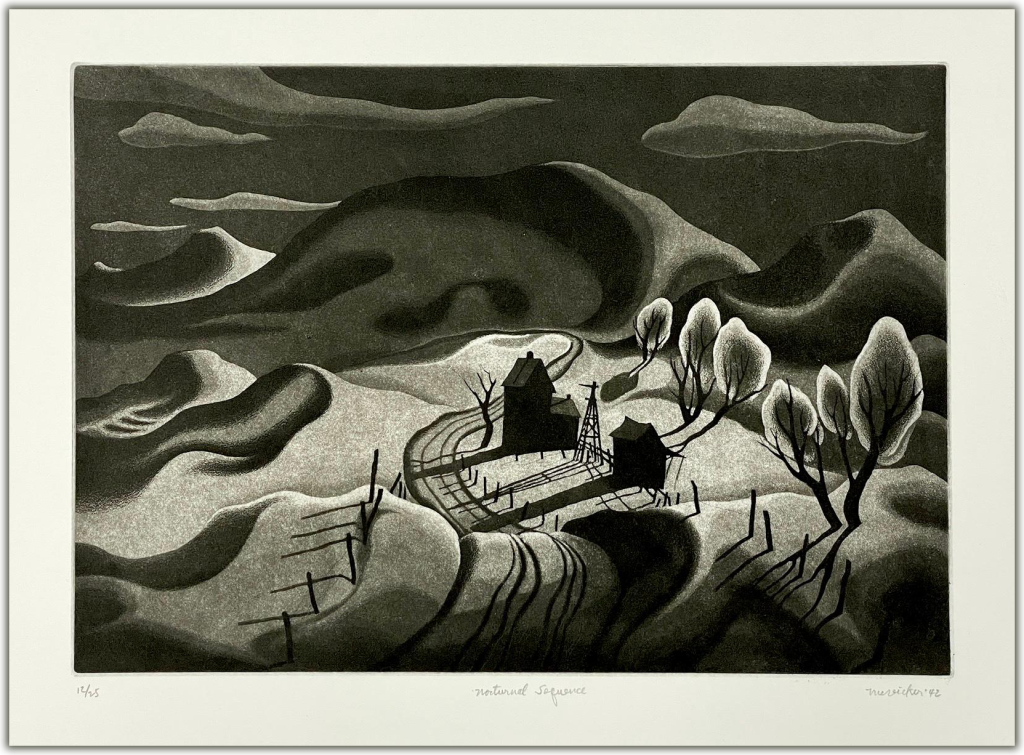
Death Just Out of This Truck
by Amy Olberding
Maybe we should just skip the middle step and throw it all straight in the toilet? This is what I ask my mother as we together stand and consider the overburdened farm table. We are bereaved and so a steady stream of neighbors has come by to deliver casseroles and pies, lunch meats and cookies, chicken and potato salad. If death were an appetite, we’d have the means to satisfy and send him off by now. But he is not an appetite, nor have we any of our own.
Mine are a people of uneasy stomachs. I remember one night spent in the ER alongside some uncles and cousins, waiting to hear what the doctors would make of my grandfather’s alarming stroke-like swoon. That night we shared the TUMS bottle the way others might pass a flask. Bringing food to us bereaved is like giving a dog a pencil. There’s just not much that we can do with it, at least not much that anyone could count useful.
Grief is an affliction physical and material. It roils the gut and stops the sleep. It can put a tremble in the limbs, a quiver in the voice, a restless agitation run all through. It makes the knees want to let go, the body just to sink. It is tired but cannot ever really rest, a breath you cannot really catch. It can make the gaze go vacant, blank. Grief is eyes that see too much, make sense of little. How long have I now stared out the window into nothing, seeing nothing? Grief sets the body all awry. The body wants, but what? Something it can now no longer have, a voice in the ear gone mute, a touch tactile, now but memory. We stare at food; we do not eat it.
My book on death, the one I will not write, was originally going to have a chapter on the body. It seemed to me that one of the troubles with philosophy on grief is that it misses out on bodies. The philosopher’s talk is all of what loss means, what grief can make you think. It speaks to what the mind and heart may feel, but not the stalling, empty mind or trembling heart. It speaks to one who speaks and thinks, not the instinctive, aching animal, not the raw creature all sensation without sense. This is not a novelty where philosophy is concerned—philosophers have long neglected the cruder materiality from which thought transpires. But still, I wanted some way to make philosophy answer not to thought or feeling or meaning, but to the brute stuff upon which all the rest is set. I wanted some way to make loss less like an experience of the mind and thought, to make loss on the page more like itself in life, an experience altogether nauseating. Before the reasoning or meaning, first the gut.
There are, I find, things I want philosophy to do that it cannot. Or that I cannot do with it. There is nothing wrong with thought, with seeking out some sense. But what can be made sense is rarely all there is; it leaves in remainder much, too much. Worse still, even good sense can be misleading. You can get your thoughts in careful order, root out all mistake, prepare to read the vexations of experience with well-honed training pitched to make vexations yield. But all that practiced thought and careful habits of the mind can leave you unready for what comes. Don’t trust them more than they can bear. The body is not a prison, but neither can thought escape its meaty and substantial bonds. I cannot make philosophy bend to this, I think, not in a way that is not all false and false confidence.
Many years ago now, when the farm was still a working dairy and the place was hectic with cows and work, my grandfather hired a milker to come in and help. The milker had a love of the drink and would sometimes cry off work for a hangover, but he was, I suppose, reliable enough that they kept him on. One day, he’d taken the farm’s yellow truck into town to retrieve some feed. At a four-way stop sign, he was briefly bested by a fancy man in a fancy car, the kind of man who didn’t want to wait on a beater truck that got there first and instead just blew the stop sign so he’d get ahead. The milker would have none of this, so he drove that yellow truck right up to and behind the man’s bumper for blocks that soon turned into miles. Finally, the fancy man pulled over in a parking lot, the milker close behind. Both men got out of their vehicles. The fancy man planted his feet wide and bellowed out a caution meant to be severe: I have to warn you that I just got out of karate! The milker didn’t even pause before he answered quietly, Well, I just got out of this yellow truck. Before aught else could happen, the milker’s fist had found that fancy man and laid him flat.
Karate class is fine and so, too, is philosophy. But make no mistake, you can’t really get ahead of it. Loss comes at you like a fist.
Future Outlook and Critical Reception
As Kill All the Chickens circulates among scholars, critics, and general readers, its publication signals a potential shift in how academic writers approach deeply human themes.
Re-evaluating Academic Monoliths
Olberding’s willingness to step outside traditional publishing frameworks points toward an evolving appetite within the humanities. Readers and thinkers increasingly demand scholarship that does not sacrifice emotional authenticity at the altar of academic detachment. By demonstrating that profound philosophical insight can emerge from regional storytelling, personal memoir, and visceral description, Olberding opens doors for a more expansive, inclusive style of philosophical writing.
Purchasing Information
For readers seeking a work that combines razor-sharp intellect with unmatched emotional resonance, Kill All the Chickens: Grief and Memory on an Ozark Farm is available now through major booksellers, including Amazon and Bookshop.org. It is a book that refuses to offer easy consolations, reminding us instead of what happens when theory meets the unyielding reality of life—and loss.





Comments
Facebook App ID not configured. Please add it in the Customizer.