
Executive Overview
What began in October 2024 as a standard campus crime alert at Cornell University has since metastasized into a watershed national scandal. The incident—involving a student known in legal filings only as "Jane Doe"—alleged a horrific gang assault by seven men at the now-banned Chi Phi fraternity house. Nearly two years later, the silence that initially shroud the criminal docket was shattered by a sweeping civil lawsuit filed on September 16, exposing a cascade of institutional, legal, and investigative failures.
The case has captured the public consciousness, forcing a reckoning regarding how higher education institutions, local law enforcement agencies, and state legal frameworks handle allegations of sexual violence. Central to the public outcry is a troubling question: How could an allegation of such magnitude languish without criminal charges for nearly two years, prompting defensive public relations tours from local prosecutors rather than active investigations?
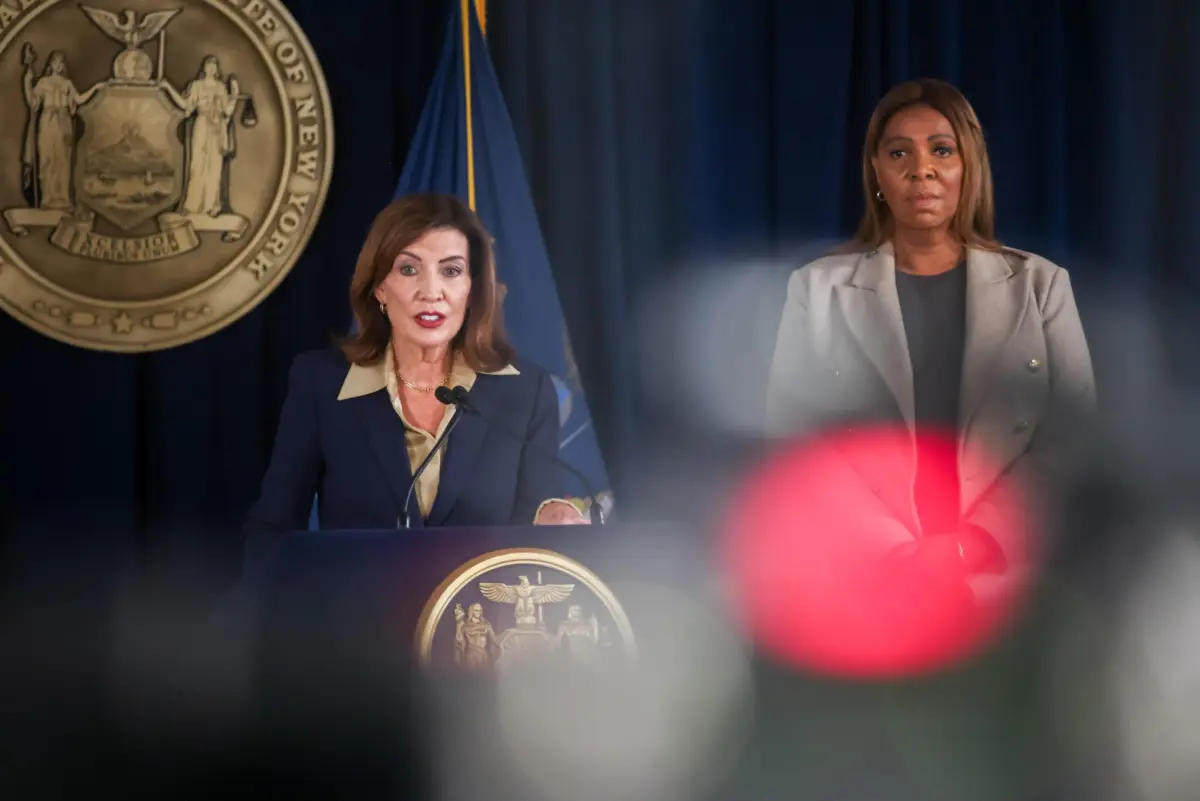
The political and legal landscape shifted dramatically in late September and early October. Following widespread public criticism and an extraordinary expression of no-confidence from state leadership, New York Governor Kathy Hochul stripped Tompkins County District Attorney Matthew Van Houten of jurisdiction, appointing New York Attorney General Letitia James as a special prosecutor.
Read Also
This article explores the anatomy of the Cornell case, analyzing the chronology of the investigation and its failures, evaluating the systemic limitations of New York’s consent laws, and dissecting expert legal perspectives on what went wrong and how justice might yet be pursued.
Detailed Chronology of Events
Understanding the trajectory of the Jane Doe case requires examining a timeline defined by institutional inaction, delayed disclosures, and sudden political intervention.
October 2024: The Initial Campus Alert
Cornell University issues a campus crime alert notifying students of a reported sexual assault. At the time, the incident is treated by the public as an isolated campus event. Behind closed doors, however, the gears of university discipline begin to turn, even as criminal law enforcement stalls.
November 2024: The Police Report
Jane Doe formally approaches the Cornell campus police, detailing an evening where she went to a fraternity house under the influence of alcohol, was allegedly administered additional alcohol and the dissociative anesthetic ketamine, and was subsequently sexually assaulted by multiple men while incapacitated. Her account is handed over to the Tompkins County District Attorney’s office for review.
Late 2024 – August 2026: The Investigative Vacuum
Despite receiving a detailed six-page summary of the allegations, Tompkins County District Attorney Matthew Van Houten declines to bring criminal charges. DA Van Houten asserts that the initial statement fails to meet New York State’s strict legal thresholds for criminal sexual assault. Crucially, the DA’s office fails to conduct key investigative steps: witnesses are not interviewed, electronic communications are not subpoenaed, and the victim herself is not formally interviewed by prosecutors. The case goes cold on the criminal docket.
Meanwhile, Cornell University conducts its own internal disciplinary proceedings. The university later confirms that these investigations result in the suspension and expulsion of several young men involved, and the Chi Phi fraternity is permanently barred from campus.
September 16, 2026: The Civil Lawsuit
Jane Doe files a landmark civil lawsuit in the New York Supreme Court, thrusting the case into the national spotlight. The complaint names seven individual defendants, Cornell University, national fraternity and sorority organizations, and a local bar, accusing them of negligence, failure to protect, and orchestrating or enabling a sexual assault. The civil filing introduces explosive evidence, including contemporaneous text messages among the accused—such as a message reading "Free pussy"—that point heavily toward a non-consensual mindset.
Late September 2026: The Public Relations Backlash and Reopening
As media scrutiny intensifies, DA Van Houten embarks on a series of public statements defending his office’s 2024 decision. He argues that the allegations in the civil complaint differ from Jane Doe’s initial 2024 police statement, citing inconsistent statements as a barrier to prosecution and claiming he was unaware of the text message evidence at the time. Legal experts swiftly condemn these public appearances, criticizing the prosecutor for publicly blaming a survivor and attempting to justify an obvious investigative void.
Under mounting pressure, Van Houten abruptly announces he is reopening the criminal investigation. However, public trust in his office is already entirely eroded.
October 2026: State Intervention
Recognizing that local leadership has compromised the integrity of the probe, New York Governor Kathy Hochul takes decisive action. Declaring that she has "lost faith" in District Attorney Van Houten, Governor Hochul formally appoints New York Attorney General Letitia James as a special prosecutor to assume control of the criminal investigation.
Supporting Context & Metrics: The Anatomy of a Broken System
To fully grasp the gravity of the Cornell case, one must examine the systemic realities governing campus sexual assault across the United States. The Jane Doe case is not an anomaly; rather, it is emblematic of structural deficiencies embedded within higher education and the American criminal justice apparatus.
The College Campus Crisis
According to data compiled by organizations such as the Rape, Abuse & Incest National Network (RAINN) and federal campus safety reports:
- The Vulnerability Window: Full-time undergraduate students aged 18 to 24 experience sexual violence at rates significantly higher than their non-student peers.
- The Reporting Gap: More than 70% of sexual assaults on college campuses go unreported to law enforcement, driven by fear of retaliation, secondary trauma within the legal system, and institutional gaslighting.
- Fraternity Culture Risk: Numerous sociological studies indicate that students living in fraternity houses experience higher rates of sexual assault compared to other student demographics, often fueled by entrenched peer pressure, ready access to alcohol, and insular subcultures.
New York’s Legal Loophole: Voluntary Intoxication
A pivotal defense offered by local prosecutors—and a major hurdle in New York jurisprudence—centers on the state’s handling of intoxication. Under current New York penal law, prosecuting a sexual assault case where the victim was voluntarily intoxicated, but not completely unconscious or physically helpless, presents an extraordinarily steep evidentiary challenge.
Legal experts have long criticized this "voluntary intoxication loophole." While a victim may be so severely impaired by alcohol or drugs (such as ketamine) that meaningful consent is impossible, the current legal standard often requires proof that the victim was entirely incapacitated to the point of physical helplessness. If a victim can stagger, speak, or perform basic motor functions while deeply incapacitated, defense attorneys can easily exploit the gray areas of the law to argue that consent was ostensibly granted or misunderstood.
Advocates across New York State have spent years lobbying the legislature to update these consent statutes. A modernized law would empower prosecutors to bring charges when a victim is so severely incapacitated that a reasonable person should have known their condition rendered them incapable of giving meaningful consent—regardless of whether they ingested the substances voluntarily.
Official Statements and Legal Analysis
The handling of the Cornell case has ignited a fierce debate among legal scholars, victim advocates, and former prosecutors. In an interview with legal analyst Lauren Hersh—former Brooklyn prosecutor and CEO of World Without Exploitation—the systemic breakdowns in the Jane Doe case are laid bare.
The Failure to Investigate
Hersh sharply criticizes the initial response of the Tompkins County District Attorney’s office, emphasizing that receiving a six-page survivor statement detailing violent allegations should have served as an immediate launchpad for an aggressive investigation.
"What I can say with 100 percent certainty is if you get a document like that, as a prosecutor, that is a significant investigative lead," Hersh noted. "A good investigator would have gone to that fraternity house and tried to interview some of those boys, tried to understand what were the contemporaneous statements made at that time. Were there any text messages? Was there any social media activity?"
Had law enforcement acted immediately in November 2024, digital evidence—such as the incriminating text messages that surfaced in the 2026 civil suit—could have been preserved in real-time, preventing the dissipation of critical proof.
Prosecutorial Defensiveness vs. Survivor Blaming
DA Van Houten’s defense relied heavily on highlighting alleged inconsistencies between Jane Doe’s initial police summary and her subsequent civil complaint. Hersh dismisses this tactic as a textbook example of victim-blaming:
"You’re asking about the inconsistent statements, and I find it troubling that the DA is leading with this notion that the victim has inconsistent statements because that feels to me like here we are making excuses and blaming the victim… It is very common for there to be some inconsistencies. That is not a dealbreaker, despite the fact that this prosecutor wants the public to believe that it is."
Furthermore, Hersh expressed profound concern over Van Houten’s media tour, describing it as antithetical to the responsibilities of a prosecutor: "It seems to me that the DA has gotten to a conclusion before he’s done the work in actually investigating the case, and it is deeply troubling."
Systemic and Cultural Failures
Reflecting on the broader implications of the case, Hersh categorized the Cornell incident not as an isolated tragedy, but as part of a systemic and cultural failure plaguing universities nationwide. Drawing parallels from her work with survivors of high-profile abuse networks, she emphasized that institutional protectionism and law enforcement apathy routinely converge to fail victims of sexual violence.
Future Outlook: The Special Prosecutor and the Path Forward
With Attorney General Letitia James now installed as special prosecutor, the Cornell sexual assault case enters a critical new phase. The appointment shifts the locus of power away from local officials whose credibility has been compromised, placing the investigation into the hands of an experienced statewide office equipped with expansive investigative resources.
What the Special Prosecutor Must Do
Legal experts outline several imperative steps for Attorney General James’s team:
- Comprehensive Witness Interviews: Investigators must systematically interview every individual present at the Chi Phi fraternity house on the night in question, including members, guests, and potential bystanders who may have witnessed Jane Doe’s condition before or after the assault.
- Digital Forensics and Subpoenas: Subpoenas must be issued immediately for cell phone records, group chat histories, social media DMs, and snapchat logs from all implicated parties to uncover contemporaneous discussions, admissions, or cover-up attempts.
- Direct Engagement with the Survivor: Unlike the previous district attorney, prosecutors must work closely and respectfully with Jane Doe, validating her account and incorporating her civil legal team’s findings into the criminal framework.
- Scrutiny of Institutional Enablers: Beyond the individual perpetrators, investigators must examine whether university officials or local establishments contributed to an environment that facilitated the drugging and assault.
Legislative Horizons
Beyond the courtroom, the Cornell case serves as a powerful catalyst for legislative reform in New York State. Lawmakers are facing mounting pressure to finally close the voluntary intoxication loophole, redefining legal consent to reflect modern understandings of drug-facilitated sexual assault and incapacitation.
Conclusion
The journey toward justice for Jane Doe has been marred by unforgivable delays, institutional defensiveness, and profound investigative negligence. However, the intervention of the New York Attorney General offers a renewed pathway toward accountability. Whether this high-profile case ultimately results in criminal indictments remains to be seen; regardless, it has already permanently altered the national conversation regarding how society protects—or fails to protect—students on American college campuses.





Comments
Facebook App ID not configured. Please add it in the Customizer.