
Executive Overview
In the rapidly shifting landscape of comic book adaptations, few television projects have generated as much immediate conversation—and internal division—as HBO’s Lanterns. By most conventional television metrics, the series has arrived as a resounding smash hit. Blurring the lines between traditional superhero spectacle and prestige detective television, the show has drawn widespread critical acclaim for its grounded tone, deeply character-driven narrative, and standout lead performances. Opting for a slow-burn approach to mythology, Lanterns has successfully kept viewers guessing, prompting many critics to observe that if not for the iconic title emblazoned across the marketing, one could easily forget they are watching a Green Lantern property at all.
Yet, this calculated departure from space-faring heroics has not won over all sectors of the fanbase or the comic book industry. Legendary comic book writer Grant Morrison—whose own defining, critically acclaimed run on the Green Lantern comics remains a high-water mark for the character—has emerged as one of the adaptation’s most vocal skeptics. Following a heavily publicized creative back-and-forth with Lanterns co-showrunner Damon Lindelof, Morrison has finally broken down his thoughts on the series’ premiere episode via his personal blog.
While Morrison’s review is far from a wholesale condemnation, offering distinct praise for the cast’s acting chops, his core artistic grievances remain entirely intact. Morrison argues that the series’ insistence on a "low-fi" aesthetic fundamentally misunderstands the scale and potential of the source material. This critique opens a much larger, industry-wide debate: As studios increasingly pivot toward "grounded," street-level heroics to manage budgets and appeal to prestige audiences, are they inadvertently stripping beloved franchises of the cosmic wonder that made them iconic in the first place? As Lanterns continues to unfold its ambitious narrative under the new James Gunn-led DC Universe (DCU), the collision between gritty television formulas and cosmic comic book mythology serves as a fascinating case study in modern adaptation strategy.
Read Also
Detailed Chronology: From Page-Turner Tensions to Screen Debates
To fully understand the weight of Grant Morrison’s recent critique, one must trace the timeline of creative friction that has preceded Lanterns since its inception. The journey from comic book page to prestige television screen has been fraught with ideological differences over how DC’s premier space police force should be translated into live-action.
The Lindelof-Morrison Clashes
Long before a single frame of Lanterns aired on HBO, tensions simmered behind the scenes regarding the creative direction of the project. Damon Lindelof, renowned for prestige television masterpieces like The Leftovers and Watchmen, was brought aboard to helm the series alongside other top-tier creators. Lindelof’s vision leaned heavily into the detective genre—specifically channeling the moody, atmospheric storytelling of True Detective Season 1.
This approach immediately put him at odds with purists who felt that reducing the Green Lantern Corps to terrestrial gumshoes was a disservice to the cosmic scope of the mythos. Grant Morrison, whose psychedelic, deeply cosmic, and intellectually sprawling run on The Green Lantern redefined the character for a modern audience, did not mince words in previous interviews regarding this pivot. This initial ideological friction sparked a widely discussed public back-and-forth between Lindelof and Morrison, with fans eagerly taking sides over whether a Green Lantern project needed to venture into the cosmos immediately or if a grounded, character-first mystery was the smarter play.
The Verdict: Morrison Watches the Premiere
The debate reached a new milestone when Morrison finally sat down to watch the series premiere of Lanterns, subsequently sharing his unfiltered thoughts on his official Substack blog. While his critique was nuanced—acknowledging the strengths of the production—he doubled down on his initial fears about the show’s tonal identity.
Morrison criticized the episode for relying too heavily on exposition rather than visceral storytelling, writing: "Otherwise on this outing, way too much tell, not enough show, and those comparisons to True Detective, invoking season 1 of that show, only worked against Lanterns."
He pointed directly to the glaring absence of classic elements—specifically noting the lack of iconic costumes and dynamic ring-construct visual effects. While Morrison readily acknowledged that these choices were likely born from budgetary constraints and a deliberate desire to distance the new project from the critically panned, CGI-heavy 2011 Green Lantern film starring Ryan Reynolds, his diagnosis was sharp: "Which only begs the question of why try to make a Green Lantern show on a budget at all?"
Supporting Context & Metrics: The "Ground-Level" Trend in Modern Media
Morrison’s critique touches upon a much broader, systemic shift within contemporary superhero entertainment. Over the past several years, both Marvel and DC have flirted heavily with "ground-level" or "street-level" narratives. Projects like upcoming Spider-Man iterations and various streaming spinoffs have emphasized smaller-scale conflicts, localized stakes, and gritty realism over universe-ending threats.
The Budget vs. Spectacle Dilemma
From a financial and logistical standpoint, the appeal of a grounded approach is evident. High-end science fiction—the kind demanded by a faithful adaptation of the Green Lantern mythos—requires astronomical visual effects budgets, extensive world-building, and high production values to avoid looking cheap. By anchoring Lanterns in a terrestrial murder-mystery framework reminiscent of prestige crime dramas, HBO and DC successfully mitigated financial risk while capturing a mature audience demographic that might otherwise shun comic book adaptations.
However, as Morrison astutely points out, this strategy creates a unique paradox. DC possesses an extensive roster of inherently "ground-level" characters—vigilantes, detectives, and heroes with low-level gimmick powers—who can naturally inhabit a gritty, neo-noir setting without stretching audience credulity. Choosing to adapt a property explicitly built around cosmic rings, alien civilizations, and interstellar police forces, only to heavily restrict those elements for budgetary reasons, risks alienating the core fanbase.
As Morrison remarked in his blog: "DC has a ton of ‘ground level’ heroes, or characters with low level gimmick powers to choose from, so why take this low-fi route with a franchise that should be competing with Star Trek or Star Wars?"
Critical Reception vs. Fan Expectations
Despite these conceptual hurdles, the metrics indicate that HBO’s gamble has largely paid off with the general viewing public. The series has enjoyed robust streaming numbers, positive aggregate review scores, and significant social media engagement. Audiences have responded enthusiastically to the slow-burn pacing and atmospheric direction.
Yet, the friction remains: there is a distinct schism between general audiences, who are enjoying Lanterns as a top-tier detective thriller, and hardcore comic book traditionalists, who view the show’s restrained use of sci-fi elements as a missed opportunity to establish a definitive, high-flying cosmic corner of the new DC Universe.
Official Statements & Cast Accolades
Amidst his structural criticisms of the series’ budget and tone, Grant Morrison made a point to highlight the exceptional work being done in front of the camera. The casting choices for Lanterns have universally been praised as one of the show’s strongest assets, and Morrison’s review aligned closely with this consensus.
Praise for the Lead Performances
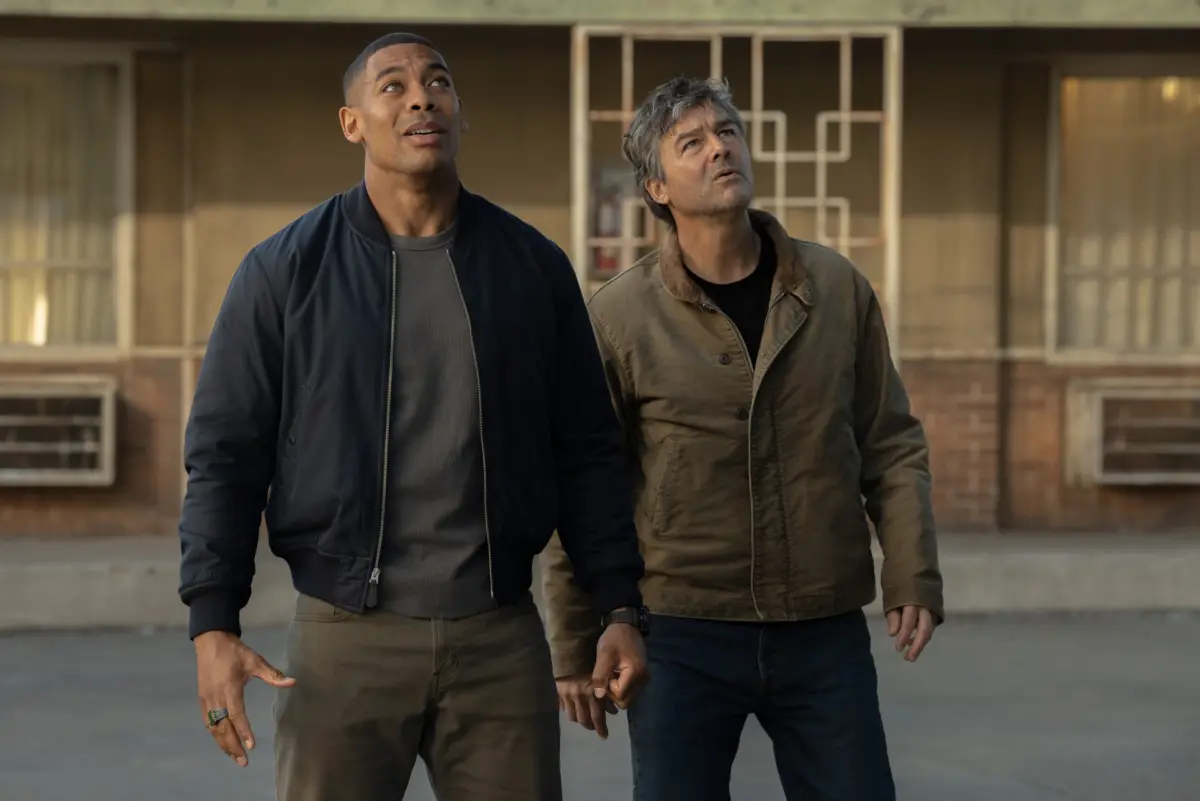
Morrison singled out veteran actor Kyle Chandler, praising his performance by comparing it to the intellectual, world-weary energy of "Doctor McCoy" from Star Trek. Chandler’s portrayal of a seasoned, cynical Lantern grounding a younger partner has provided the show with an emotional anchor that transcends typical genre tropes.
Equally lauded was Aaron Pierre’s performance as John Stewart. Morrison characterized Pierre’s portrayal as a "quiet and uptight performance," capturing the strict discipline, internal conflict, and dignified weight that fans have historically loved about the character. These characterizations have allowed the human element of Lanterns to resonate deeply, even for viewers who might be lukewarm on the muted use of the ring constructs.
The Creative Defense
Co-showrunners and producers have consistently defended the grounded approach not merely as a budget-saving measure, but as a narrative necessity. By starting small—focusing on a localized mystery on Earth before expanding outward—the creative team aims to earn the audience’s emotional investment. The philosophy is simple: make the audience care deeply about the men and women wearing the rings before introducing the sprawling, cosmic operatics of the wider universe.
Future Outlook: Where Does Lanterns Go From Here?
As Lanterns progresses past its initial episodes, the central question hanging over the series is whether it will eventually break free of its terrestrial constraints and evolve into the grand, bombastic sci-fi epic that purists are craving.
The James Gunn Era and DCU Continuity
Under the stewardship of James Gunn and Peter Safran, the newly minted DC Universe is designed to be cohesive, interconnected, and visually diverse. Lanterns is intended to be a cornerstone television project for this new continuity. However, if the flagship live-action representation of the Green Lantern franchise remains stubbornly low-fi, it raises questions about how seamlessly these characters will eventually transition into major, universe-spanning cinematic crossover events alongside cosmic heavyweights like Superman or the New Gods.
Room to Grow
It is vital to contextualize Morrison’s critique within the infancy of the series’ run. We are only a handful of episodes into Lanterns, and television storytelling often relies on deliberate escalation. All narrative signs and insider hints point toward the show expanding its scope significantly as the mystery deepens, promising a gradual descent into the wider, more surreal sci-fi lore of the DC cosmos.
Whether the series will ultimately cross the threshold into the dazzling, space-spanning adventures associated with Morrison’s legendary comic runs remains to be seen. For now, Lanterns stands as a fascinating tightrope walk—balancing the gritty demands of prestige television against the boundless, imaginative potential of one of comic book history’s most vibrant mythologies. As the series continues to air, fans and critics alike will be watching closely to see if the green light finally shines in all its cosmic glory.


Comments
Facebook App ID not configured. Please add it in the Customizer.