
Executive Overview
Melodrama occupies a unique position in cinematic history, floating precisely on the razor-thin boundary separating genuine emotional catharsis from absurd comedy. By design, the genre functions as an elevated parody of classical tragedy, bestowing heroic grandeur upon the mundane lives of everyday figures. When audiences chuckle during a screening of traditional melodrama, the laughter rarely stems from cynicism; rather, it reflects a sense of bewilderment at the extremity of the artifice.
This phenomenon was on full display during the 2024 feature adaptation of Colleen Hoover’s runaway bestseller, It Ends with Us. In that instance, however, the narrative’s inherent improbabilities were largely overshadowed by off-screen legal battles and public relations friction between lead actor Blake Lively and director-co-star Justin Baldoni. The movie itself functioned within the flexible parameters of romantic melodrama, where logical rigor yields to emotional excess.
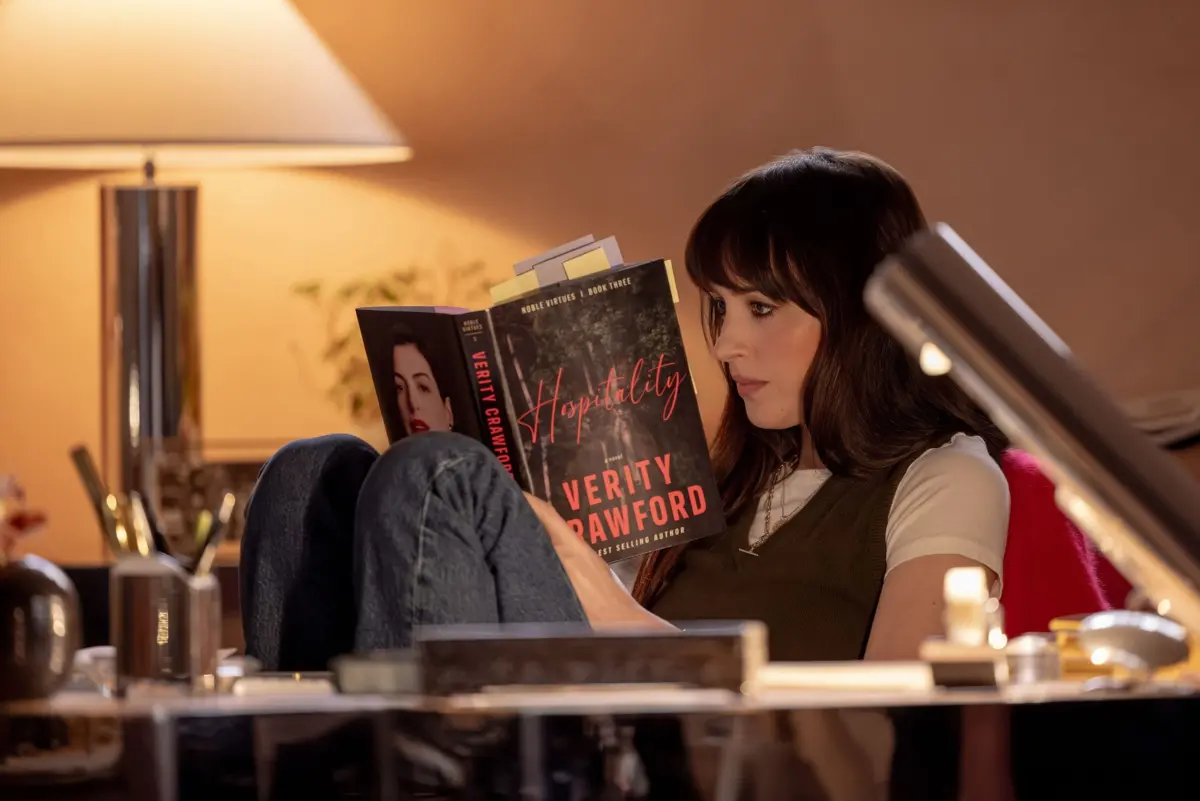
The same leniency cannot be granted to director Michael Showalter’s cinematic rendition of Hoover’s psychological thriller Verity. Adapted for the screen by Nick Antosca, the film attempts to shift genres from domestic romantic tangle to high-stakes crime drama. In doing so, it encounters a vastly different set of structural rules.
Read Also
Unlike pure romance, crime thrillers demand strict adherence to cause-and-effect logic, procedural realism, and spatial integrity. Showalter’s film fails to meet these criteria, resulting in a narrative where narrative breakdowns are displayed directly on screen. Featuring a high-profile cast that includes Dakota Johnson, Anne Hathaway, and Josh Hartnett, Verity ultimately highlights the structural dangers of dressing up trashy fiction in the visual attire of prestige cinema without establishing a solid foundational logic.
Detailed Chronology: From Page to Screen Incoherence
[Lowen's Midtown Encounter]
  │
  ├── Violent Street Accident (Bike messenger crash)
  ├── Blood-splattered encounter with stranger (Jeremy)
  └── Coffee shop clean-up & improbable pristine shirt exchange
  │
[The Publishing Pitch]
  │
  ├── Meeting at Hachette HQ
  └── Ghostwriting contract offered for Verity Crawford's franchise
  │
[Relocation to the Vermont Estate]
  │
  ├── Entry into isolated, lavish modern compound
  ├── Discovery of catatonic Verity & traumatic family history
  └── Uncovering of manuscript files & escalating suspicion
  │
[Structural Collapse]
  │
  ├── Breakdown of procedural logic (Absence of police/press)
  └── Descent into ungrounded psychological vacuum
The Midtown Incident and Foundational Illogic
The narrative framework of Verity begins in Manhattan, setting up a sequence of events that immediately stretches narrative credibility. Lowen Ashleigh (Dakota Johnson) is a struggling author with a modest readership who is invited to Midtown Manhattan for a career-defining meeting at Hachette—the actual publisher of Hoover’s source material. En route, Lowen stands at a pedestrian crosswalk when a vehicle collides with a bike messenger. The impact splatters Lowen with blood from the waist up.
In the immediate aftermath, a bystander named Jeremy (Josh Hartnett) intervenes, directing her to a nearby coffee shop’s restroom. What follows is a scene in which Lowen washes blood from her hair and face inside a men’s room while a romantic spark forms between the two strangers.
From a narrative design standpoint, this sequence collapses under basic scrutiny:
- Legal and Procedural Negligence: Lowen leaves the scene of a fatal or severe traffic incident where she is a key eyewitness, covered in physical evidence.
- Public Visual Incongruity: The character navigates busy Manhattan streets and enters a commercial establishment covered in a stranger’s blood without triggering public concern or police intervention.
- Visual Continuity Errors: Jeremy offers Lowen the white shirt off his back. She puts it on while still covered in blood, yet the garment remains clean throughout the scene.
Rather than establishing a grounded reality, the film immediately asks the audience to suspend disbelief to an extreme degree before the plot has even truly begun.
The Vermont Compound and Genre Transition
The narrative logic breaks down further when Lowen arrives at her publishing meeting and discovers that Jeremy is married to Verity Crawford (Anne Hathaway), a celebrated, bestselling author. Verity has been rendered catatonic following a devastating car crash, leaving her mega-popular book series unfinished. Hachette offers Lowen a lucrative contract to ghostwrite the final three installments of the franchise.
To complete the assignment, Lowen must move into the Crawfords’ isolated, modern estate in rural Vermont, where Verity’s extensive notes and manuscript archives are kept. The household is steeped in tragedy, haunted by the recent loss of a child.
As Lowen sorts through the archived files, she uncovers evidence suggesting that Verity’s catatonic state may be an elaborate fraud masking horrific crimes. As Lowen falls in love with Jeremy, she assumes the role of an informal investigator determined to expose Verity and secure justice for the family.
Supporting Context & Metrics: The Melodramatic Spectrum
To understand Verity’s narrative failures, it is helpful to place the film within the history of cinematic melodrama and analyze the mechanics of the Colleen Hoover literary franchise.
The Colleen Hoover Phenomenon
Colleen Hoover’s rise from self-published author to a dominant force in modern publishing is largely driven by BookTok, a subset of TikTok focused on literature. Her works rely on high-concept twists, intense emotional scenarios, and heightened melodrama.
| Film Adaptation | Source Novel Release | Director | Core Genre | Primary Narrative Challenge |
|---|---|---|---|---|
| It Ends with Us (2024) | 2016 | Justin Baldoni | Romantic Melodrama | Balancing heavy real-world issues with romantic tropes |
| Verity | 2018 | Michael Showalter | Psychological Thriller / Crime | Maintaining procedural logic within a sensationalist plot |
While It Ends with Us operated comfortably within romantic melodrama, Verity tries to function as a dark psychological thriller. Thrillers require a baseline of real-world logic that Hoover’s high-concept fiction often bypasses. When translated literally to the screen, plot devices that worked on the page can easily unravel under visual inspection.
       [ Classical Melodrama ]
(e.g., Sirk's 'All That Heaven Allows')
       │
       ├── Grounded in social realities
       ├── Enriched by supporting casts
       └── Uses heightened drama to critique society
       │
       ▼
       [ Modernist Melodrama ]
(e.g., Rudolph's 'Remember My Name')
       │
       ├── Stylized, self-aware execution
       └── Embraces genre conventions
       │
       ▼
       [ Isolated Thriller Melodrama ]
(e.g., Showalter's 'Verity')
       │
       ├── Operates in a socio-procedural vacuum
       ├── Lacks supporting character texture
       └── Suffers from "aspirational dignity"
Classical Realism vs. Modern Vacuums
Historically, successful screen melodramas grounded their heightened emotional stakes in detailed social contexts.
- Classical Exemplars: Directors like Douglas Sirk (All That Heaven Allows) surrounded their lead characters with expressive supporting casts, cultural commentary, and clear social pressures. The melodrama gained weight because it collided with a recognizable world.
- Modernist Approaches: Films such as Alan Rudolph’s Remember My Name embraced stylistic exaggeration, using self-aware framing to match their over-the-top narratives.
In contrast, Showalter’s Verity operates in an absolute vacuum. The film features almost no meaningful secondary characters—such as legal advisors, journalists, or medical professionals—who might bring grounded commentary to the situation.
The investigative actions taken by Lowen involve severe crimes that would naturally trigger police inquiries and media attention. Yet the film treats these elements with less procedural rigor than a standard television police drama, isolating its characters in a sterile world where actions carry no realistic consequences.
Official Statements & Critical Consensus
Critical response to Verity has centered on the tension between the film’s trashy narrative roots and its polished visual style. Rather than leaning into the wild, campy tone that made the novel a guilty pleasure, the production tries to present itself as a serious, prestigious thriller.
The Problem of "Aspirational Dignity"
Film critics have pointed out that cinema easily tolerates "good bad movies"—films that succeed through wild energy, stylistic excess, and uninhibited commitment to their own absurdities. Verity, however, avoids these entertaining extremes in favor of a clean, prestige-movie aesthetic.
"Maybe Verity could have overcome its mechanical plot and implausible logic through sheer energy and uninhibited expression. Instead, the film is stifled by good taste and aspirational dignity. In the end, an incompetent crime investigation is made worse when wrapped in such serious pretense."
— Critical Summary of the Film’s Aesthetic Ambition
Actor Performance Dynamics
The film’s sterile setup leaves its lead performers with little room to build believable characters:
- Dakota Johnson (Lowen Ashleigh): Tasked with playing a protagonist whose choices are dictated by plot convenience rather than clear psychology, Johnson is forced to deliver dialogue made up largely of broad platitudes.
- Anne Hathaway (Verity Crawford): Confined for much of the film to a silent, catatonic state, Hathaway’s performance relies on sudden shifts in expression that feel detached from any grounded reality.
- Josh Hartnett (Jeremy Crawford): Playing the romantic interest and grieving father, Hartnett operates without the narrative support needed to make his character’s extreme choices believable.
By stripping away realistic human motivations, the direction leaves these talented actors performing in a narrative void where emotional beats feel unearned.
Future Outlook: Lessons for Literary Adaptations
The critical reception of Verity offers an important case study for Hollywood studios adapting viral internet literature for the big screen.
                  [ BookTok / Viral Novel ]
                             │
                             ▼
              [ Adaptation Strategy Decision ]
                             │
         ┌───────────────────┴───────────────────┐
         ▼                                       ▼
  [ Prestige Treatment ]                  [ Genre Realism / Camp ]
  - High budgets, polished look           - Embraces source material's tone
  - Tries to tone down absurdities        - Retains procedural logic or self-awareness
  - Risk: Exposes narrative flaws         - Benefit: Delivers satisfying genre film
The Limits of Polish in Genre Thrillers
- Genre Alignment is Essential: Romantic melodrama allows for heightened, unrealistic plotting because the audience prioritizes emotional chemistry. Psychological crime thrillers, on the other hand, require a solid foundation of real-world logic and procedural believability.
- Prestige Packaging Cannot Fix Weak Logic: Applying high production values, soft lighting, and an A-list cast to a flawed plot only highlights its narrative shortcuts. Studios must decide whether to lean into the fun, campy elements of a story or rework the plot to stand up to cinematic scrutiny.
- The Adaptation Strategy Going Forward: As major publishers and studios continue to adapt BookTok hits, screenwriters will need to carefully re-engineer these stories for the screen. Plots designed for fast-paced reading often require significant restructuring to hold up under the visual transparency of feature films.
Conclusion
Michael Showalter’s Verity serves as a clear example of the challenges that arise when adapting viral, melodramatic thrillers into prestige films. By attempting to present a sensationalist plot with serious artistic dignity—while ignoring basic procedural logic—the film exposes its own narrative flaws.
Until studios learn to balance glossy visuals with coherent screenwriting, adaptations of high-concept literary phenomena will continue to struggle when moving from the printed page to the theater screen.





Comments
Facebook App ID not configured. Please add it in the Customizer.