
DATELINE: New York & London
Executive Overview
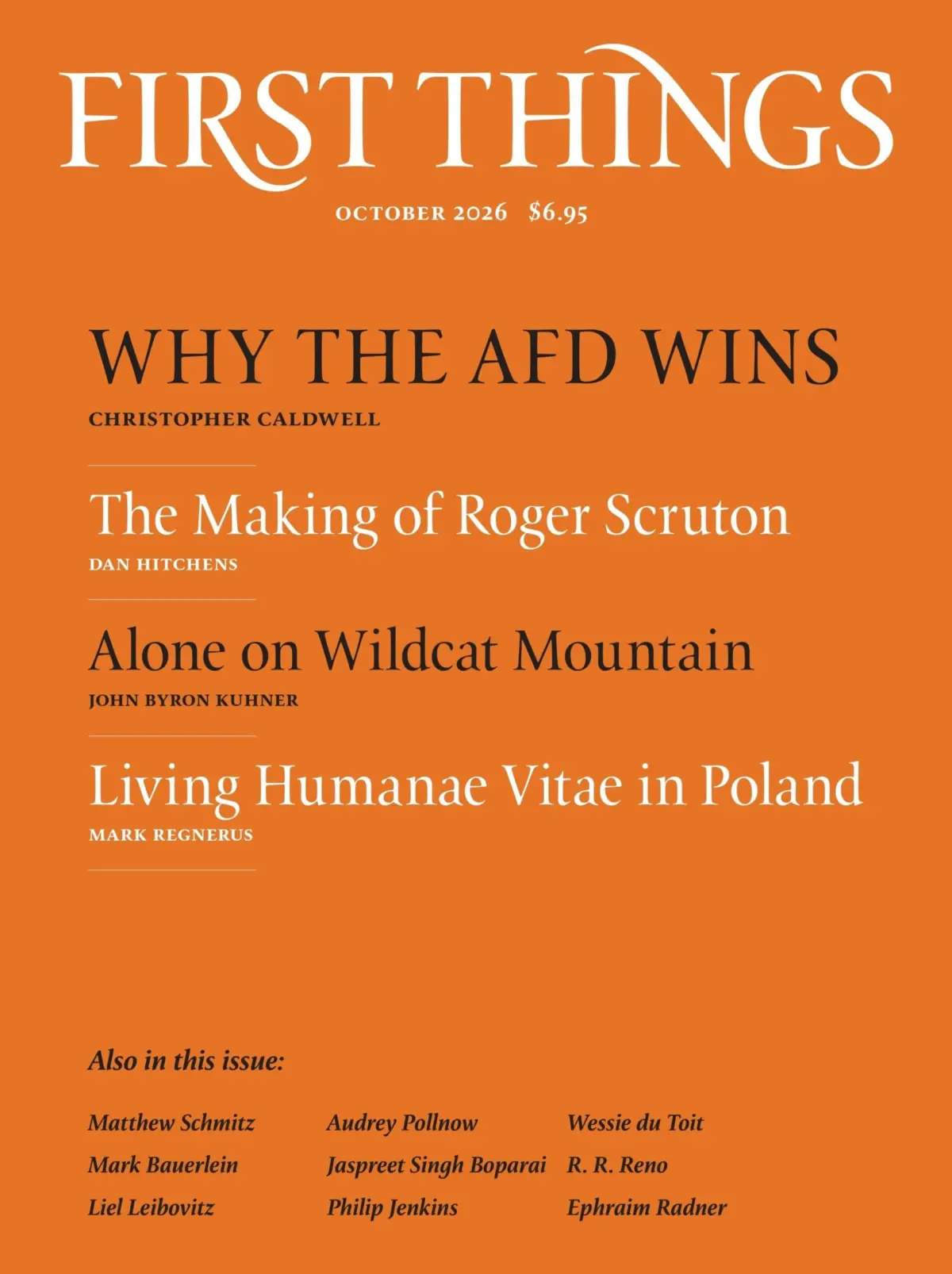
In the quiet, humid expanse of a metropolitan conservatory’s orchid house, a man believes he sees a ghost. This momentary, destabilizing optical illusion—prompted by a stranger whose posture, hair, and spatial alignment mimic a lost partner—serves as the emotional fulcrum of a newly celebrated work of contemporary verse. The untitled fourteen-line poem, which has officially claimed First Place in the 2026 First Things Poetry Prize, is a masterclass in psychological displacement, botanical symbolism, and the stubborn persistence of memory.
To read the winning text is to step directly into an environment designed for sensory deception. The poem unfolds in an atmospheric ecosystem where exotic flora do not merely decorate the background; they actively conspire with the protagonist’s unresolved trauma.
Read Also
He thought he saw her in the orchid house
and all the flowers seemed to disappear,
but someone with a younger, sharper face
and eyes less bright than hers, less cold and clear,
had stolen how she used to stand, and spilled
her hair across new shoulders. He felt the force
of those primordial sorrows he’d tried to kill.
Forget her running hair, her hungry voice,
forget the way her phantom saturates
this stranger’s body brushing past a bloom;
forget how orchids mock the smell of mates
and lure the bee into a sterile room;
forget his servile grimace at her talk,
forget the orchid nodding on its stalk.
Judges for the prestigious 2026 literary award praised the piece for its structural rigor—operating as a modified, breathless sonnet—and its chillingly precise exploration of grief. Unlike traditional elegies that seek comfort in memory, this text details an aggressive psychological ambush. The protagonist’s attempt to excise a former lover from his consciousness is continuously undermined by his physical environment, where evolutionary biology and personal heartbreak intersect.
This investigative report examines the architecture of the winning poem, charts the chronology of its critical reception, analyzes the intersection of human grief and botanical science, features commentary from literary authorities, and outlines the broader implications for contemporary formalist verse.
Detailed Chronology & Literary Reception
The journey of the 2026 First Things Poetry Prize winner from an isolated desk to national literary acclaim highlights the rigorous standards of modern conservative and traditionalist literary publishing.
The Submission Window and Selection Process
- Late Autumn 2025: Submissions for the annual First Things poetry competition open, drawing thousands of entries from across the Anglophone world. Editors note an unusually high volume of formalist verse—pieces utilizing strict meter, rhyme, or traditional stanzaic constraints.
- January 2026: Preliminary readers filter through submissions, shortlisting works that balance technical mastery with profound thematic weight. The orchid house poem emerges early as a consensus favorite among the preliminary panel due to its striking command of iambic pentameter and psychological acuity.
- February 2026: The final judging panel, comprising esteemed poets, critics, and editors associated with First Things, reviews the finalists. The judges unanimously select the poem for the top honor, citing its seamless integration of natural history and visceral human loss.
- Spring 2026 (Official Announcement): The prize is formally announced to the public, sparking immediate commentary across literary blogs, academic forums, and cultural journals. Reviewers single out the poem’s turn in line eight—beginning with the repetitive, incantatory command to "Forget"—as one of the most arresting rhetorical shifts in recent memory.
Critics have noted that the poem’s power lies in how it subverts the pastoral tradition. While poetry has historically used gardens, flowers, and greenhouses as spaces of healing, renewal, or romantic idealization, this text transforms the greenhouse into a psychological laboratory of cruelty. The plants are not passive beauties; they are evolutionary tricksters, mirroring the deceptive nature of the protagonist’s own mind.
Supporting Context & Metrics: The Science of Botanical Deception and Human Loss
To fully appreciate the weight of the winning poem, one must examine the specific scientific and psychological frameworks it invokes. The text relies on two distinct systems of deception: the neurological persistence of grief and the evolutionary mimicry of the Orchidaceae family.
1. The Neurobiology of Phantom Sightings
In psychological terms, the protagonist’s experience in the orchid house is a textbook example of a stimulus generalization error fueled by acute grief. When an individual suffers the loss of a significant attachment figure, the brain’s predictive processing systems—honed through years of habitual interaction—continue to anticipate the presence of that person.
- Facial and Postural Recognition: Humans possess specialized neural architecture (such as the fusiform face area) dedicated to recognizing familiar faces and gaits. When a stranger shares a skeletal structure, a height, or a way of "spilling hair across new shoulders," the brain’s shortcut mechanisms fire prematurely.
- The "Primordial Sorrows": The poem touches upon a deeper evolutionary layer of grief. Loss is not merely an emotional state; it registers in the mammalian brain as a threat to survival, triggering the same neurochemical cascades associated with physical pain and social isolation. The protagonist’s attempt to "kill" these sorrows highlights the futility of trying to suppress foundational human attachments through sheer willpower.
2. Evolutionary Biology and the Orchid
The poem’s central metaphor hinges on one of the most fascinating phenomena in the natural world: pseudocopulation and botanical deception.
forget how orchids mock the smell of mates
and lure the bee into a sterile room;
Orchid species, particularly within the vast Orchidaceae family, are notorious for evolutionary cunning. Many species do not offer nectar rewards to pollinators. Instead, they rely on visual and chemical mimicry:
- Pheromonal Deception: Certain orchids synthesize chemical compounds that precisely replicate the sex pheromones of female insects.
- Morphological Mimicry: The labellum (the specialized lower petal of an orchid) frequently evolves to resemble the body of a female insect.
- The Sterile Trap: Male insects, driven by biological imperative, attempt to mate with the flower. In doing so, they pick up or deposit pollinia (pollen masses) without receiving any nutritional sustenance in return.
By drawing a parallel between the orchid luring a bee into a "sterile room" and the protagonist being lured into an emotional trap by a phantom memory, the poem achieves a chilling synthesis of natural history and psychological realism. The stranger in the greenhouse is a visual mimic, just as the orchid is a chemical one. Both offer the promise of connection or fulfillment, but both ultimately deliver only sterility, isolation, and unrequited longing.
Official Statements and Critical Commentary
The announcement of the 2026 First Things Poetry Prize winner has elicited widespread commentary from literary critics, psychologists, and the editors overseeing the publication.
Dr. Aris Thorne, a professor of comparative literature and a frequent commentator on formal verse, released an analytical essay following the prize announcement:
"What makes this poem remarkable is its refusal of sentimental catharsis. Contemporary poetry is frequently overpopulated by easy epiphanies—poems where the speaker looks at a flower, remembers a loved one, and finds gentle peace. This text does the exact opposite. The speaker enters a space of high humidity and artificial tropicality, only to be ambushed by his own cognitive frailties. The orchids do not heal him; they mock him. They are evolutionary liars, and they provide the perfect mirror for a mind that is lying to itself about the finality of loss."
Editors at First Things emphasized the poem’s formal discipline during the selection debrief:
"In an era where much of contemporary poetry leans toward loose, conversational free verse that often lacks structural tension, this winning entry demonstrates the formidable power of strict form. The rhythm moves with the steady, inexorable tread of an obsessive thought. By the time the reader reaches the final couplet—’forget his servile grimace at her talk / forget the orchid nodding on its stalk’—the psychological trap has snapped shut. There is no escape from the memory, just as there is no escape from the greenhouse."
Psychological researchers focusing on bereavement have also pointed to the poem as a remarkably accurate depiction of intrusive recollections. The use of the imperative verb "Forget" repeated five times in the final six lines reflects the cognitive exhaustion of thought-suppression: the very act of commanding oneself to forget guarantees that the object of memory remains front and center in the conscious mind.
Future Outlook: The Resurgence of Formalism and Psychological Realism
As the literary world processes the implications of the 2026 First Things Poetry Prize, broader conversations are taking place regarding the direction of contemporary verse. The triumph of a poem that marries strict formal mechanics with deep psychological and biological observation signals several key trends for the future:
1. The Re-Enchantment of the Natural World in Poetry
For decades, eco-poetry has frequently tended toward pastoral conservationism or climate-anxiety reportage. However, this winning work suggests a pivot toward a darker, more scientifically grounded ecopoetics—one that acknowledges nature not as a gentle mother or a moral teacher, but as a complex, indifferent system driven by survival, mimicry, and blind evolutionary imperatives. Future writers are likely to draw increasingly upon botany, ethology, and evolutionary biology to map the contours of human emotion.
2. The Health of Formal Verse
The fierce competition for the 2026 prize underscores a continuing, robust appetite for metered and rhymed poetry. While free verse remains dominant in many literary workshops, prizes that honor formal mastery—such as those awarded by First Things, the Poetry Foundation, and various university presses—demonstrate that traditional constraints provide a necessary skeletal structure for containing volatile emotional material. Just as the greenhouse contains the tropical heat and humidity, the strict meter of the poem contains the explosive, dangerous force of unresolved grief.
3. Cultural Resonance in an Age of Artificial Simulation
On a cultural level, a poem centered on deception, phantoms, and artificial replication resonates powerfully in the mid-2020s. In an era dominated by synthetic media, digital avatars, and algorithmic simulations of human connection, the protagonist’s encounter with a stranger who merely resembles a lost love—surrounded by flowers that fake the scents of mates—speaks directly to our contemporary anxieties about authenticity, loss, and the ghosts haunting our digital and physical environments.
Ultimately, the 2026 First Things Poetry Prize winner secures its place not merely as a polished exercise in verse, but as a haunting diagnostic tool. It reminds us that memory is an evolutionary trap, that grief is a persistent botanic weight, and that sometimes, walking into a room full of flowers is nothing less than walking back into the architecture of our own deepest heartbreaks.





Comments
Facebook App ID not configured. Please add it in the Customizer.