
Executive Overview
In an era where technology is engineered to seamlessly adapt to our lives, the humble e-reader has hit a surprisingly analogue roadblock. E-reader users across British Columbia, Canada, are grappling with an irritating, persistent system bug impacting two of the industry’s dominant brands: Amazon Kindle and Rakuten Kobo. The root cause? The province’s unique legislative pivot to remain permanently on Daylight Saving Time (DST), bypassing the traditional bi-annual clock changes that govern the rest of the Pacific Northwest.
As automated location-based services and Network Time Protocol (NTP) servers pull regional time zone data from legacy databases, popular e-readers are failing to account for B.C.’s distinct legal timekeeping. Consequently, devices are defaulting to standard time, throwing local schedules, reading metrics, library syncs, and sleep timers completely out of whack. While major operating systems on smartphones and laptops swiftly adapted to the shift through regular software updates, dedicated e-ink devices—which traditionally rely on simpler, infrequent firmware updates—have been left behind.
For the time being, affected readers are forced to manually override their device settings to ensure correct time displays. This technical oversight highlights a broader fragility in how consumer electronics handle regional legislative changes, serving as a cautionary tale for software developers designing hardware for localized markets.
Read Also
Detailed Chronology: How the Time Zone Glitch Unfolded
The genesis of this issue traces back several years to shifting public sentiment and legislative movements across western North America regarding the biannual ritual of shifting clocks forward and backward.
The Legislative Shift in British Columbia
For decades, British Columbia—alongside its neighbors in Washington State, Oregon, and California—followed the standard North American practice of observing Daylight Saving Time from March to November. However, growing public fatigue over the disruptions caused by the time changes prompted legislative action. The B.C. government consulted its citizens in what became one of the largest public surveys in the province’s history, with over 93% of the more than 200,000 respondents voting in favor of ending the bi-annual time changes.
In response, the provincial government passed legislation to establish a permanent move to Daylight Saving Time. The catch, however, was a clause stating that the transition would wait for neighboring U.S. states—specifically Washington, Oregon, and California—to enact parallel legislation, ensuring economic and logistical alignment along the Pacific Coast. When federal delays in the United States stalled the U.S. legislation (specifically the uniform implementation of the "Sunshine Protection Act"), B.C. ultimately moved ahead to ready its own domestic frameworks.
The Tech Disconnect
While commercial operating systems like Apple’s iOS, Google’s Android, and Microsoft Windows receive constant background time zone database updates (often driven by the IANA time zone database), dedicated e-readers operate differently. Devices like the Amazon Kindle and Rakuten Kobo are designed with energy conservation and minimalist software architectures in mind. They connect to Wi-Fi intermittently, pull time updates from automated network time servers, and rely on pre-compiled regional lookup tables embedded deep within their firmware.
When winter arrived and the rest of the Pacific Time Zone "fell back" by one hour to standard time, British Columbia stayed put on Daylight Saving Time. This created an unprecedented anomaly: during the winter months, B.C. is now functionally in the same time zone as regions one hour ahead (effectively sharing time with Mountain Time zones or breaking sync with standard Pacific patterns, depending on how the coordinate data is mapped).
Because automated time-sync scripts on Kindles and Kobos look at generalized geographic boundaries—often clumping the entire Pacific Northwest into a single algorithmic bucket—they automatically overrode local settings to match the U.S. standard. The result? Every time a B.C.-based e-reader syncs with the internet, its internal clock rewinds by an hour, throwing off daily planning features, library loan expirations, and sleep metrics.
Supporting Context & Metrics: The Modern E-Reader Ecosystem and Regional Tech Dependence
To understand why this bug has caused such widespread frustration among B.C. readers, one must examine the modern e-reader user base and the technical dependencies of e-ink devices.
The Rise of the E-Ink Productivity Ecosystem
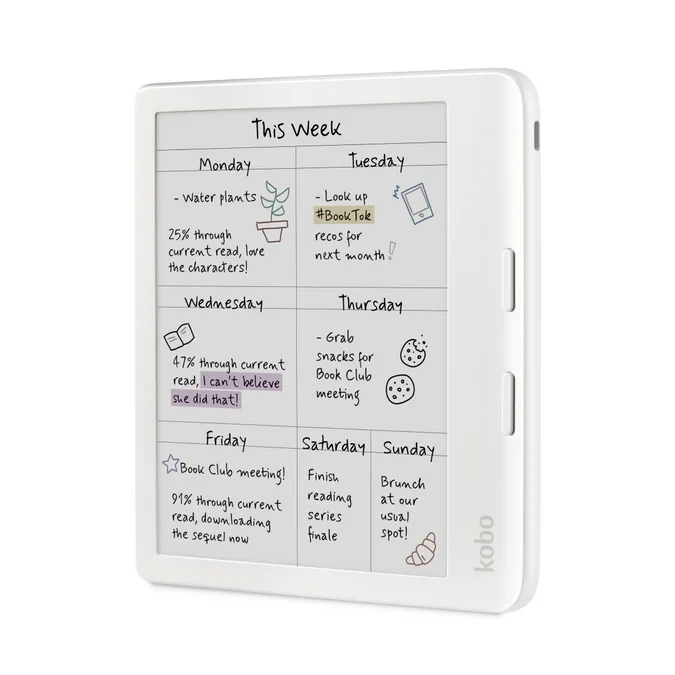
Modern e-readers are no longer passive devices used solely for reading linear novels. Over the last several years, brands like Kobo (with devices such as the Kobo Libra Colour and Elipsa lines) and Amazon (with Kindle Scribe models) have evolved into versatile digital notebooks. Users utilize them for:

- Handwritten weekly and daily calendars.
- To-do lists, journals, and project management layouts.
- Document annotation and digital margin notes.
When an e-reader’s internal clock is off by a full hour, time-sensitive productivity tools—such as calendar templates, scheduled syncs, and reminders—become completely unreliable. A user checking their digital planner at 8:00 AM might find their device logging entries or scheduling syncs as if it were 7:00 AM, disrupting workflows and creating friction in daily organization.
Geographic and Demographic Impact
British Columbia boasts a remarkably high per-capita rate of e-reader adoption. Driven by a tech-savvy population, strong municipal library networks (which seamlessly integrate with both OverDrive/Libby on Kobo and Kindle platforms), and an active literary culture, thousands of users across Vancouver, Victoria, the Okanagan, and Kootenay regions have found their bedside devices malfunctioning.
| Feature / Metric | Standard Operation | Current B.C. Reality |
|---|---|---|
| Clock Synchronization | Automatic via NTP / Wi-Fi | Defaults to US Pacific Standard Time (-1 hour error) |
| Library Loan Expirations | Real-time accurate | Mismatched by 60 minutes |
| Productivity & Calendars | Synced to local time | Out of sync with real-world schedules |
| Remediation Method | "Set Automatically" enabled | Requires manual time zone override |
This localized failure highlights the vulnerabilities of centralized software development. Manufacturers based thousands of miles away—often in Seattle, San Francisco, or Tokyo—frequently code regional features using macro-geographic assumptions rather than hyper-local legislative realities.
Official Statements and Manufacturer Responses
As user complaints flooded community forums such as Reddit’s r/kobo and r/kindle, customer support channels were inundated with inquiries regarding the sudden time discrepancies.
Amazon Kindle Support Position
Amazon representatives initially directed users to standard troubleshooting steps, advising them to restart their devices, toggle Wi-Fi connections, and ensure their software was updated to the latest available firmware release. However, as support tickets mounted from the Pacific Northwest, backend engineering teams acknowledged that the issue stems from how time zone offset calculations are hardcoded into the Linux-based Kindle OS kernel.
An informal advisory circulating among customer service tiers suggests that a comprehensive over-the-air (OTA) patch addressing timezone boundary exceptions will likely be bundled into a future firmware rollout. In the interim, Amazon has confirmed that users must manually adjust their settings.
Rakuten Kobo’s Approach
Rakuten Kobo, headquartered in Toronto with a massive footprint in the Canadian market, has faced particular scrutiny over the bug. Given that the issue originates within Canada itself, local users expressed heightened expectations for a swift localized fix.
Kobo’s software teams rely on time zone definitions provided by underlying system libraries. While Kobo devices are celebrated for their open ecosystem and user-customizable interfaces, rectifying a time zone offset error requires an update to the system’s timezone data tables (tzdata). Because these files are embedded within the core firmware package, pushing an emergency patch requires rigorous quality assurance testing to prevent unintended side effects across global device fleets.
Future Outlook: Preventing Regional Software Blind Spots
The B.C. e-reader time zone glitch, while seemingly minor in the grand scheme of global technology failures, serves as an important case study for the consumer electronics industry. As more regional governments experiment with abolishing seasonal time changes—a movement gaining legislative traction in various U.S. states and European Union territories—hardware manufacturers will face an increasingly fragmented global timekeeping landscape.
The Path Forward for E-Reader Manufacturers
- Decoupled Time Zone Databases: To prevent future bugs, companies like Amazon and Kobo should decouple time zone lookup tables from core firmware updates. Allowing devices to download lightweight, dynamic
tzdatapatches independently of major software updates would ensure rapid responses to legislative changes. - Granular Location Services: Implementing optional, privacy-respecting location-pinpointing mechanisms could allow devices to pull precise regional offsets rather than relying on broad regional generalizations.
- Enhanced User Controls: Providing more transparent, robust manual overrides and clear UI warnings when a network time server conflicts with local settings can drastically improve user experience during transition periods.
Temporary Workaround for Affected Users
Until official patches are deployed by Amazon and Kobo, users living in British Columbia experiencing time synchronization issues should follow these steps:
- Navigate to your device’s Settings menu.
- Locate the Date and Time or Language and Locale section.
- Disable the Set Time Automatically or Automatic Time Zone toggle.
- Manually select your preferred time zone or adjust the clock offset to reflect your current local time accurately.
As legislative bodies continue to grapple with the future of Daylight Saving Time, tech companies must modernize their internal software architectures to keep pace with a world where time is increasingly localized, fluid, and unpredictable.





Comments
Facebook App ID not configured. Please add it in the Customizer.