
Executive Overview
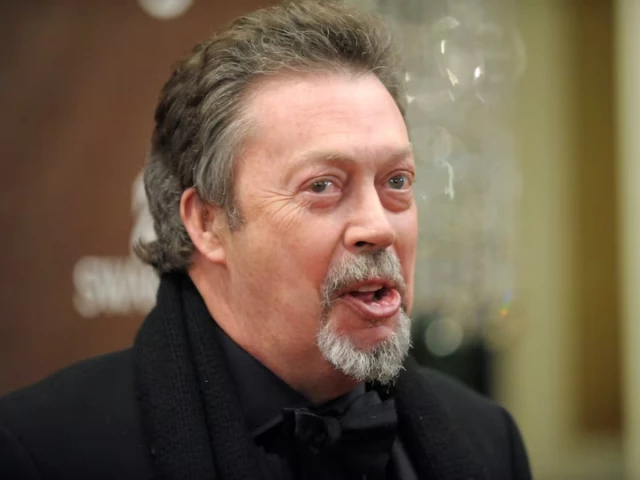
Tim Curry, the chameleon-like British actor whose magnetic baritone, theatrical grandeur, and peerless gift for the eccentric left an indelible mark on stage, screen, and animation, has died at the age of 80. According to his manager, Curry passed away peacefully on Tuesday at his home in Los Angeles. While an immediate cause of death was not disclosed, the beloved performer had navigated a prolonged period of declining health following a severe stroke in 2013.
From the moment he strutted onto the silver screen in fishnets, heavy makeup, and a corset as the "sweet transvestite" Dr. Frank N. Furter in 1975’s The Rocky Horror Picture Show, Curry defied conventional Hollywood leading-man archetypes. He carved out a singular, legendary niche defined by high-octane camp, spine-chilling villainy, and uninhibited physical comedy. Over a career spanning more than five decades, Curry conquered the West End and Broadway—earning three Tony Award nominations—commanded blockbuster and cult-classic cinema, and cemented a prolific legacy as an in-demand voice actor whose distinctively rich timbre brought countless animated icons to life.
His departure marks the end of an era for maximalist performance art. Curry was an actor who understood that risk was the very heartbeat of creativity, famously accepting roles that lesser talents would have deemed career suicide, only to transform them into masterclasses of cultural iconography.
Read Also
Detailed Chronology: From Cheshire Origins to Global Iconography
Early Life and Theatrical Foundations
Born Timothy James Curry on April 19, 1946, in the quintessential English village of Grappenhall, Cheshire, a young Curry was shaped early by tragedy and the arts. His father, a Royal Navy Methodist chaplain, passed away when Curry was only 12 years old, leaving his mother, a school secretary, to raise the family.
Curry’s early exposure to performance came through choral singing and school plays, where his natural charisma and resonant voice began to develop. He pursued his passion for the dramatic arts formally, studying drama and English at the University of Birmingham, where he graduated with combined honors in 1968.
Moving quickly into professional theater, Curry made his West End debut in the musical Hair in London. It was during this burgeoning phase of his stage career in 1973 that he encountered the project that would forever alter the trajectory of his life: Richard O’Brien’s rock musical, The Rocky Horror Show.
The Birth of Dr. Frank N. Furter
Playing the mad scientist and "sweet transvestite" Dr. Frank N. Furter in the original London stage production was a watershed moment. Curry carried the role across the Atlantic to Los Angeles and New York before 20th Century Fox adapted the musical into the 1975 feature film The Rocky Horror Picture Show, co-starring Susan Sarandon and Barry Bostwick.
Initially, the film met with muted commercial reception. However, through midnight screenings across New York City and subsequent global syndication, it metastasized into the longest-running theatrical release in film history, cultivating a zealous, participatory cult following. Audiences dressed in full costume, brandished props, and shouted lines back at the screen—all centered around Curry’s magnetic, leather-and-lace-clad performance.
Speaking in a 1975 television interview, Curry exhibited prescient awareness of the double-edged sword such an outlandish breakout role represented:
"When I read it, I just thought it was very, very witty and funny… I mean, I was hesitant in that, if it worked, it might be a difficult thing to shake off. But, really, I’ve always thought that it wasn’t worth doing unless you took a risk."
Broadway Acclaim and Cinematic Range
Rather than being typecast permanently, Curry leveraged his theatrical training to build an eclectic film and stage resume. On Broadway, he proved his dramatic mettle and versatility across starkly different genres:
- 1981: Earned his first Tony Award nomination for his blistering, tour-de-force portrayal of Wolfgang Amadeus Mozart in Peter Shaffer’s Amadeus.
- 1993: Picked up a second Tony nomination for his charming turn in the musical adaptation of My Favorite Year.
- 2005: Secured his third Tony nomination for bringing gleeful absurdity and physical comedy to the role of King Arthur in Eric Idle’s hit musical Monty Python’s Spamalot.
Simultaneously, Hollywood directors capitalized on his dark-eyed intensity and comedic timing. Curry became the go-to actor for theatrical, over-the-top antagonists. His filmography spanned generations and genres:
- Annie (1982) as the scheming Rooster Hannigan.
- Clue (1985) as Wadsworth the butler, showcasing his impeccable farce and physical timing in a beloved ensemble mystery.
- Legend (1985) as the literal Lord of Darkness, encased in breathtaking, multi-hour prosthetic makeup designed by Rob Bottin.
- Home Alone 2: Lost in New York (1992) as Mr. Hector, the suspicious Plaza Hotel concierge.
- The Three Musketeers (1993) as the villainous Cardinal Richelieu.
- The Shadow (1994) as Farley Claymore.
- Congo (1995) as the sleazy Herkermer Homolka—a performance for which he won a Razzie Award, an accolade he famously and graciously admitted to "richly deserving."
- Muppet Treasure Island (1996) as Long John Silver, blending swashbuckling menace with family-friendly musical numbers.
- Charlie’s Angels (2000) as the eccentric technology mogul Roger Corrington.
Supporting Context & Metrics: The Voice, The Music, and The Legacy
Beyond his physical presence on screen and stage, Curry possessed one of the most recognizable baritone instruments in entertainment. This rich vocal quality made him a titan of the voice-acting industry.
He lent his voice to dozens of animated series and video games, mastering the art of the cartoon villain. In 1991, his work on the animated series Peter Pan & the Pirates (where he voiced the legendary Captain James Hook) earned him a Daytime Emmy Award. Other notable voice credits included The Wild Thornberrys (as Nigel Thornberry), Batman: The Animated Series, and Star Wars: The Clone Wars.
+-------------------------------------------------------------------------+
|                        TIM CURRY: CAREER METRICS                        |
+--------------------------+----------------------------------------------+
| Primary Art Forms        | Film, Theatre, Television, Voice Acting, Rock|
| Tony Award Nominations   | 3 (Amadeus, My Favorite Year, Spamalot)      |
| Daytime Emmy Wins        | 1 (Peter Pan & the Pirates, 1991)            |
| Notable Breakthrough     | The Rocky Horror Picture Show (1975)         |
| Final Major Film Release | Stream (2024)                                |
+--------------------------+----------------------------------------------+
Curry was also a dedicated musician. Balancing acting with a recording career, he performed with his own rock band and released three solo studio albums in the late 1970s and early 1980s: Read My Lips (1978), Fearless (1979)—which featured his minor Billboard Hot 100 hit "I Do the Rock"—and Simplicity (1981).
Official Statements and Tributes
Following the news of his passing, tributes poured in from across the entertainment world, celebrating a man who was as gentle and intellectual in private life as he was bombastic on stage.
Collaborators, fans, and contemporary artists took to social media and press outlets to honor his impact. Former co-stars and admirers highlighted his razor-sharp intellect, professional discipline, and unyielding kindness.
Though a private man who never married and had no children—preferring a quiet life in Los Angeles dedicated to his art, reading, and music—Curry was acutely aware of the profound, communal connection he shared with his global fanbase. Speaking about his villainous and eccentric characters late in his career, Curry noted in a 2011 interview with Andrew Kay:
"I do love those roles, they’re always the best written."
Reflecting on his health struggles after suffering a debilitating stroke in 2013—which required him to use a wheelchair and scale back his public appearances—his representatives repeatedly noted that his legendary wit and sharp sense of humor remained entirely intact. True to his resilient spirit, Curry even made a celebrated, surprise return to the silver screen in 2024, appearing in the horror film Stream.
Future Outlook: Preserving a Singular Cultural Footprint
As the entertainment landscape mourns the loss of Tim Curry, discussions have already begun regarding the preservation of his vast, multifaceted legacy. Film historians and academic institutions are expected to re-evaluate his contributions to gender-fluid performance art, noting how The Rocky Horror Picture Show predated and paved the way for modern discussions surrounding non-binary expression, camp aesthetics, and theatrical liberation.
While physical revivals of his stage triumphs will continue through regional and international theater companies, Curry’s true monument remains the sheer breadth of his recorded work. From midnight movie auditoriums filled with singing fans to households where his voice defined childhood animation, Tim Curry leaves behind a blueprint for artists daring enough to embrace the margins, subvert expectations, and walk comfortably in the shadows of glorious eccentricity.
The curtain may have closed on Tim Curry’s remarkable life, but the music, the laughter, and the midnight shivers he engineered will echo indefinitely.


Comments
Facebook App ID not configured. Please add it in the Customizer.