
Executive Overview
American politics is undergoing a profound and structural transformation, one that is reshaping the architecture of campaigns, redefining public engagement, and resurrecting a dark ghost from the nation’s past. As Abdul El-Sayed celebrates his historic election as the first Muslim U.S. senator—a milestone achieved following a grueling, fiercely contested primary—the broader political establishment is scrambling to dissect the mechanics of his victory. While the GOP and the White House trade blame for the seismic shift, and emboldened progressives maneuver to wrest control of the Democratic agenda, a quieter, more potent revolution is cementing the power of a new, chaotic interest group: the political content creator.
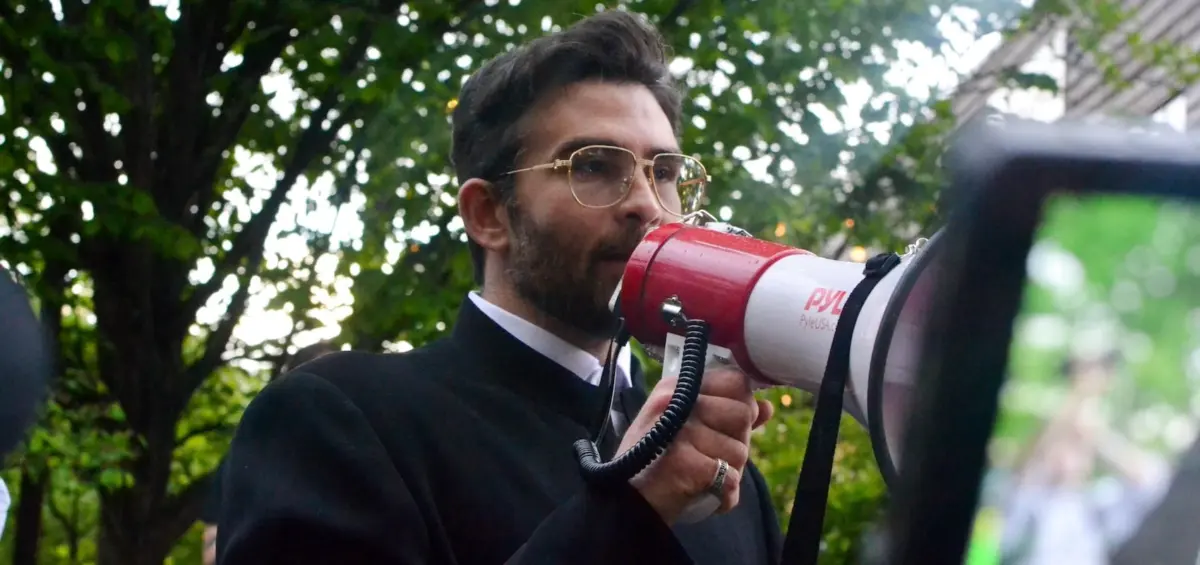
El-Sayed’s path to the Senate was fortified by a well-funded, highly mobilized campaign that heavily leveraged the support of controversial social media influencer Hasan Piker. While the exact numerical impact of Piker’s endorsement remains a subject of intense debate among political scientists and strategists, his presence in the race serves as a jarring illustration of the shrinking distance between high-stakes electoral campaigns and the wild west of internet culture.
Piker’s rise—alongside a parallel ecosystem of right-wing provocateurs, online commentators, and digital subcultures—mirrors the emergence of the 19th-century political machine. Just as urban bosses once dictated popular political preferences with lasting institutional consequences, today’s top digital figures command attention, manufacture outrage, and wield outsize influence over a disillusioned, hyper-online electorate. As institutional trust hits near-record lows and traditional journalism struggles for reach, a new class of digital power brokers has arrived, raising a pressing question for modern democracy: Can a political system run by viral spectacles endure, or are we witnessing the monetization of governance itself?
Read Also
Detailed Chronology: The Road to the Senate and the Rise of Digital Power
To understand how political campaigns have become intertwined with digital streaming and social media culture, one must trace the evolution of the modern primary and the steady integration of online personalities into the electoral mainstream.
The 2024–2026 Shift: From Peripheral Spectacle to Central Strategy
The convergence of political campaigns and social media influencers did not happen overnight. During the 2024 presidential cycle, both major parties realized that traditional television advertising and standard press events were losing their grip on younger, highly fragmented audiences. The Democratic National Committee’s (DNC) newly minted Influencer and Creative Partnerships program, alongside high-profile campaign rollouts leveraging internet trends like "brat summer" and "barstool conservatism," signaled a desperate pivot. Campaigns began treating influencers not as eccentric fringe actors, but as critical interest groups, inviting them to White House briefings, closed-door policy roundtables, and convention press boxes.
By the 2026 midterm elections, this experimental strategy had matured into a full-scale operational doctrine. Candidates facing low voter enthusiasm and deep institutional distrust found themselves looking outward—beyond party committees and editorial boards—to digital creators who could instantly tap into millions of disaffected young voters.
The El-Sayed Primary and the Piker Factor
This dynamic came to a head in the recent Democratic Senate primary featuring Abdul El-Sayed. Running in a competitive, high-stakes race, El-Sayed’s campaign successfully mobilized an energized progressive base, bolstered significantly by campaign support and digital amplification from Hasan Piker.
Piker, who commands an audience of 3.1 million followers on Twitch, represents the apex of this new political machinery. Throughout the primary, Piker’s involvement became a lightning rod. Critics pointed to his radical rhetoric and past controversies—ranging from provocative foreign policy statements to unfiltered takedowns of establishment politicians—as liabilities. Yet, from a strategic standpoint, his endorsement demonstrated the core currency of the modern era: unmediated access to a massive, highly engaged, and intensely loyal digital audience.
While conservative pundits and moderate Democrats alike condemned the alignment, the campaign’s ultimate success underscored a harsh new reality. In a media environment where traditional gatekeepers have lost their monopoly on information, the ability to generate viral momentum and foster digital solidarity can outweigh traditional institutional endorsements.
Supporting Context & Metrics: The Anatomy of Digital Feudalism
The rise of the political influencer does not occur in a vacuum. It is fueled by historic systemic failures, shifting media consumption habits, and the economic realities of platform capitalism.
The Crisis of Institutional Trust
Public confidence in foundational American institutions is resting near historical lows. According to data from Gallup and the Pew Research Center, trust in the federal government, traditional news organizations, and established political parties has plummeted over the past two decades. Citizens are increasingly alienated from legacy political structures that they perceive as out-of-touch, overly sanitized, and unresponsive to material crises—ranging from housing affordability to systemic economic inequality.
Into this vacuum step online personalities. Unlike traditional politicians bound by scripted talking points and strict political correctness, influencers offer raw, unfiltered commentary that blends entertainment with world affairs. They build digital communities that provide a powerful sense of virtual solidarity to individuals who feel isolated in the physical world. Through long-form streaming, podcasts, and short-form video, these creators cultivate deep parasocial relationships with their audiences, lending them an air of authenticity and credibility that corporate media outlets and institutional figures struggle to replicate.
The Economics of Outrage
However, the economic architecture underpinning these digital communities bears a striking resemblance to the darkest chapters of American political history. In his seminal work Politics as a Vocation, sociologist Max Weber drew a sharp distinction between those who live for politics—dedicating their lives to a principled cause—and those who live off politics, treating governance and public engagement primarily as a reliable source of income.
Modern social media influencers firmly occupy the latter category. Their ideological commitments are often fluid, adapting daily to the algorithmic incentives of platforms that reward controversy, spectacle, and emotional engagement. Whether it is the left-wing populism pedgled by Piker or the incendiary provocations of right-wing figures like Nick Fuentes, the underlying business model remains the same: selling outrage and political theater for profit.
[Traditional Party Bosses (19th Century)]       [Digital Influencers (Modern Era)]
------------------------------------------       ----------------------------------
• Controlled party organizations & jobs          • Control algorithmic attention & reach
• Traded favors for personal enrichment         • Trade views/subscribers for monetization
• Operating base: Smoke-filled backrooms         • Operating base: Twitch, TikTok, X
Just as 19th-century machine bosses like William "Boss" Tweed of Tammany Hall bled New York City of millions while trading municipal jobs for political loyalty, today’s online power brokers trade algorithmic attention for personal enrichment, brand sponsorships, and political leverage. The medium has changed from the smoky backroom to the digital livestream, but the transactional nature of the power dynamic remains identical.
Official Statements and Establishment Reactions
The growing influence of digital creators has forced leaders across the political spectrum to grapple with an uncomfortable dilemma: how to court a constituency that refuses to consume traditional media while simultaneously defending the norms of democratic discourse.
Privately, campaign strategists across both parties admit that ignoring online influencers is no longer a viable electoral strategy.
"You can deplore the rhetoric, and you can object to the lack of journalistic standards, but you cannot win a modern primary without addressing the digital ecosystems where voters actually spend their time," noted a veteran Democratic media consultant who spoke on the condition of anonymity. "If a creator can move tens of thousands of young voters to register or show up at the polls in a 4-point race, candidates will pick up the phone."
Conversely, the Republican establishment has voiced sharp alarm over the leftward tilt of mainstream influencer culture, while simultaneously managing its own internal friction regarding fringe right-wing internet personalities. GOP leadership frequently points to figures like Piker as evidence of the Democratic Party’s drift toward radicalism. Yet, the right faces its own paradox: navigating a sprawling, decentralized ecosystem of online commentators and meme-makers whose loyalty to the conservative movement is often secondary to their personal brand expansion and monetization.
Institutional journalists have also raised concerns regarding access and accountability. During recent campaign cycles, tensions frequently flared between traditional beat reporters and campaign-credentialed influencers over press access, briefing room space, and the fundamental standards of political accountability. While journalists are bound by codes of ethics and editorial oversight, influencers operate as independent commercial entities, answering only to their algorithms and their paying subscribers.
Future Outlook: Navigating the Hyper-Online Democracy
As we look toward the remainder of the decade and future federal elections, the trajectory of American politics points toward an even deeper integration of digital subcultures into the electoral process.
If the broader electorate continues to adopt the consumption habits of the chronically online, the transition from traditional party organizations to algorithmic fiefdoms will accelerate. This evolution presents profound risks for the health of American democracy. When political engagement is mediated by profit-driven creators whose primary incentive is maximizing engagement through conflict, substantive policy debates are frequently drowned out by performative outrage.
Yet, this reality also offers a lesson in adaptability. Principled politicians who wish to survive and advance meaningful agendas can no longer afford to dismiss the digital landscape as mere entertainment. They must learn to navigate hyper-partisan, hyper-online environments without sacrificing their integrity to the demands of the click economy.
The challenge for the future lies in whether democratic institutions can reform themselves to rebuild public trust, thereby reducing the systemic hunger for outsider messiahs and digital demagogues. Until then, the modern political machine will continue to hum through fiber-optic cables and server racks—reminding us that while the technology of politics changes, the human struggle for power, influence, and survival remains eternally the same.



Comments
Facebook App ID not configured. Please add it in the Customizer.